

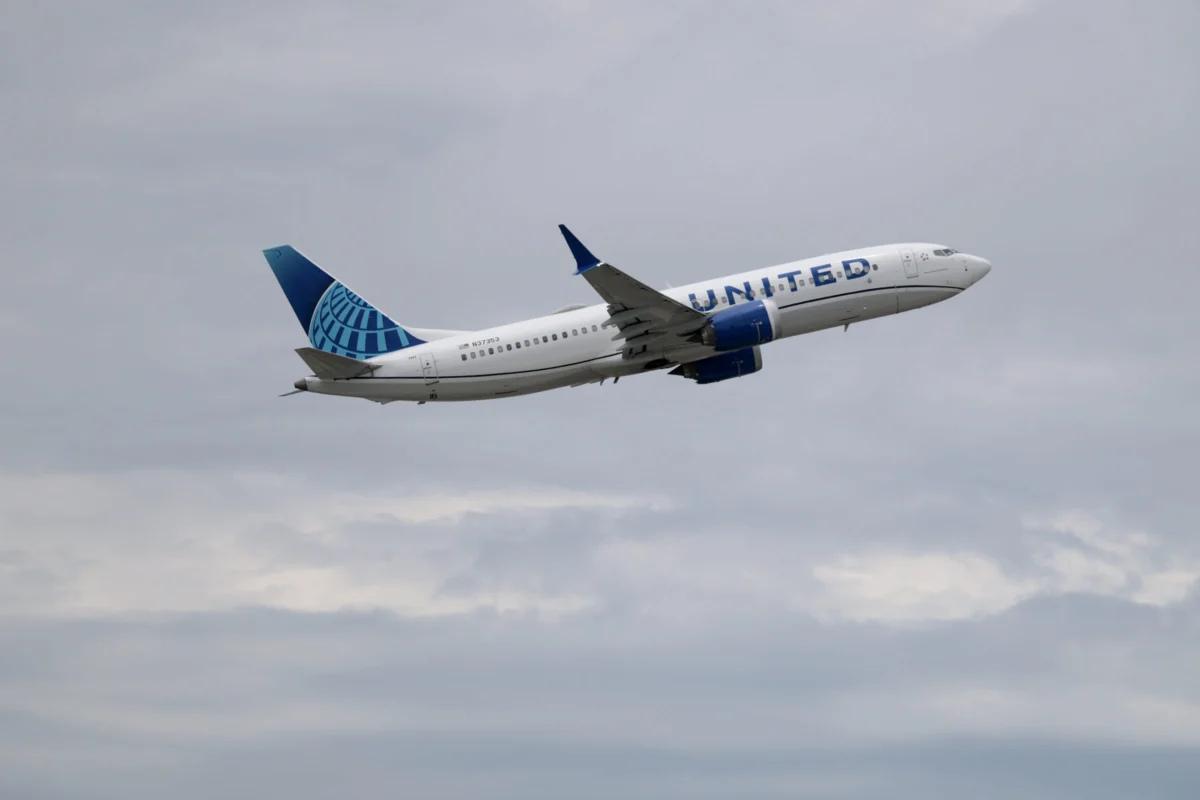
United Airlines reported second-quarter results that surpassed Wall Street’s consensus estimates, a testament to robust travel demand, yet the carrier simultaneously disclosed that billions of dollars in unexpected fuel expenses continue to exert significant pressure on its overall earnings. The Chicago-based airline, a bellwether for the broader travel industry, outlined on Wednesday the complex interplay between strong passenger volumes and the escalating costs driven primarily by renewed geopolitical instability. This dynamic forced the company to issue revised earnings guidance for both the third quarter and the full fiscal year, underscoring the profound impact of external economic and geopolitical forces on airline profitability.
For the third quarter, United projected adjusted earnings per share (EPS) to range between $2.50 and $3.50. This forecast notably fell below analysts’ average estimates, which had anticipated a more optimistic $3.60 per share. Looking further ahead to the full fiscal year, the airline estimated adjusted earnings per share between $9 and $11. While this upper bound represents an improvement from the $7 to $11 range it had previously forecast in April, it still reflects considerable uncertainty. The April revision itself was a downward adjustment from United’s initial January projections, made in the wake of escalating tensions and military actions between the United States and Iran in late February. This sequence of revised forecasts highlights the acute sensitivity of the airline sector to geopolitical events and their subsequent ripple effects on global energy markets.
The Escalating Fuel Crisis: A Deep Dive into Costs
The primary driver behind United’s updated financial outlook is the dramatic surge in jet fuel prices. According to data compiled by Argus and published by the industry advocacy group Airlines for America (A4A), jet fuel prices at major U.S. airports witnessed an alarming 34% increase in July alone, up to the Tuesday preceding United’s earnings announcement. This steep ascent is directly attributed to the volatile "roller coaster" of escalating and de-escalating conflict between the U.S. and Iran, particularly concerning the strategic Strait of Hormuz, a critical chokepoint for global oil shipments. Historically, jet fuel represents the single largest operational cost for airlines after labor, making such drastic price fluctuations a direct and immediate threat to their financial health.
United Airlines quantified the immense financial burden this volatility imposes, stating that the higher fuel prices could add nearly $6 billion to its operational expenses this year compared to its initial expectations at the beginning of 2026. This staggering figure underscores the scale of the challenge. Furthermore, the carrier reported that its second-quarter fuel costs soared by an astonishing 84% from the previous year, reaching $2.3 billion. These estimates were based on the prevailing fuel prices as of Tuesday, July 23rd, implying that any further price increases could exacerbate the situation. In response, United indicated its strategy to mitigate these costs, aiming to cover up to 90% of its higher expenses in the current quarter and fully absorbing them by the fourth quarter, primarily through fare adjustments and operational efficiencies.
This strategy mirrors that of its rivals. Delta Air Lines, another major U.S. carrier, also confirmed its intention to pass on a greater portion of these elevated fuel costs to its customers through increased airfares. Despite these significant price hikes, both airlines have reported that passenger demand has remained remarkably strong, a phenomenon that speaks to the enduring desire for travel post-pandemic and perhaps a degree of inelasticity in demand for air travel among certain consumer segments.
Second Quarter Performance Snapshot
For the quarter concluding on June 30th, United Airlines presented a mixed financial picture. While the airline exceeded analyst expectations on the top line, profitability was significantly impacted by the aforementioned cost pressures. Here is a detailed breakdown of United Airlines’ performance for the second quarter, compared against estimates compiled by LSEG (formerly Refinitiv):
- Adjusted Earnings Per Share (EPS): United reported an adjusted EPS of $1.99 per share.
- Total Revenue: The airline generated $17.67 billion in revenue, representing a robust 16% increase from the same period last year. This figure surpassed analyst estimates, which generally hovered around $17.5 billion.
- Net Income: Despite the strong revenue growth, net income fell more than 17% year-over-year to $805 million, or $2.46 per share on a GAAP basis. Adjusting for one-time items, net income stood at $649 million, or $1.99 per share. This decline in net income, despite a significant rise in revenue, starkly illustrates the erosion of profitability due to the escalating fuel expenses.
The airline’s robust revenue growth was supported by several key metrics. United expanded its flying capacity by 3.5% in the second quarter. Total unit revenue, a crucial measure of an airline’s pricing power and efficiency, climbed by an impressive 12.1% from the prior year. According to FactSet data, this represented the highest unit revenue growth recorded by United since early 2023, signaling strong underlying demand. The airline observed higher revenue contributions across all its ticket categories, including premium, corporate, and no-frills basic economy tickets. Moreover, unit revenue saw increases for both domestic and international trips, indicating a broad-based recovery and sustained demand across its network.
Management’s Perspective and Strategic Adjustments
United CEO Scott Kirby provided an insightful perspective on the current economic landscape and its implications for the airline industry. In an interview with CNBC’s "Squawk Box" on Thursday, Kirby remarked, "We have a strong economy, probably better than people appreciate, because we’re a pretty good real-time indicator." His statement suggests that the sustained demand for air travel, even in the face of rising fares, reflects underlying economic strength that might be underestimated by broader market sentiment. This confidence in the economy underpins United’s ability to pass on some of its increased costs to consumers without a significant drop in demand.
Kirby further clarified that the rising fares are not solely a consequence of elevated fuel prices. He explained that other operational expenses have also seen significant increases, including maintenance, labor costs, and airport fees. This comprehensive rise in the cost base creates a multi-faceted challenge for airlines, requiring a holistic approach to cost management and pricing strategies. The airline sector, having navigated the unprecedented challenges of the pandemic, now faces a new array of inflationary pressures that extend beyond just fuel.

In light of the persistent fuel price volatility, United announced that it is continuously updating its financial forecasts. The company specifically noted that since the beginning of July alone, the surge in fuel prices has negatively impacted its third-quarter adjusted earnings by an estimated $1.12 per share, highlighting the immediate and substantial effect of market fluctuations. To counteract these pressures and maintain financial discipline, United stated in a regulatory filing that it might consider further cuts to its capacity plans for the remainder of the year. Reducing capacity, while potentially impacting revenue growth, is a common strategy employed by airlines to manage costs, particularly fuel, and improve load factors during periods of high operational expenses.
Chronology of Geopolitical Impact and Market Response
The current fuel crisis impacting United Airlines and the broader aviation industry is deeply rooted in a series of geopolitical events that unfolded throughout 2026:
- January 2026: United Airlines issues its initial full-year earnings forecast, reflecting optimistic post-pandemic recovery projections.
- Late February 2026: A significant escalation of tensions between the U.S. and Iran occurs, including reported attacks by the U.S. and Israel on Iranian targets. This event immediately sends shockwaves through global energy markets, raising concerns about oil supply disruptions.
- April 2026: In response to the initial surge in fuel prices following the February events, United Airlines revises its full-year adjusted EPS forecast downward, from its undisclosed initial January figure to a range of $7 to $11 per share. This indicates an early recognition of the financial headwinds.
- May-June 2026: Continued geopolitical uncertainty surrounding the U.S.-Iran relationship keeps crude oil and jet fuel prices elevated and volatile. Analysts begin to factor these higher costs into their airline earnings models.
- July 2026: The conflict between the U.S. and Iran enters a "roller coaster" phase, characterized by alternating periods of escalation and de-escalation. This sustained tension in the Middle East, particularly concerning the Strait of Hormuz, leads to a dramatic 34% increase in jet fuel prices at major U.S. airports in July alone.
- July 24, 2026: United Airlines reports its second-quarter earnings, which surpass revenue estimates but reveal significant profit erosion due to fuel costs. The company simultaneously issues a new, more conservative earnings forecast for Q3 and reiterates its full-year guidance at the higher end of its April range ($9-$11), but still below initial market expectations, specifically citing the $6 billion in unexpected fuel costs. The CEO highlights the immediate $1.12 per share impact on Q3 earnings from July’s fuel price surge.
This timeline illustrates how quickly geopolitical developments can translate into tangible financial pressures for globally interconnected industries like aviation, necessitating rapid adjustments in strategic planning and financial guidance.
Broader Industry Implications and Economic Barometers
The situation at United Airlines is not isolated; it reflects a broader challenge confronting the entire airline industry. The reliance on jet fuel makes carriers highly susceptible to global oil market fluctuations. When prices surge, airlines have limited options: absorb the costs (which erodes profitability), implement fuel surcharges, or raise base fares. The fact that both United and Delta are successfully passing on these higher costs suggests a robust demand environment, at least for now. This indicates that consumers are either willing or able to pay more for travel, possibly due to accumulated savings, a strong job market, or a continued prioritization of experiences post-pandemic.
However, there are underlying concerns. Sustained high fares could eventually dampen demand, especially for leisure travel, as consumers’ discretionary spending budgets face increasing pressure from inflation across all sectors. The decision by airlines to potentially cut capacity further, while a sound financial move in the short term, could also lead to fewer available seats, potentially driving prices even higher and reducing overall connectivity. This could have broader implications for regional economies dependent on air travel for tourism and business.
From an economic perspective, CEO Scott Kirby’s observation that the airline industry is a "pretty good real-time indicator" of the economy holds significant weight. The strength of travel demand, particularly across premium and corporate segments, can signal the health of business activity and consumer confidence. If this demand begins to falter, it could be an early warning sign of broader economic deceleration.
Furthermore, the volatility in fuel prices will likely prompt airlines to revisit their hedging strategies. Fuel hedging, a financial tool used to lock in prices for future fuel purchases, can protect against price spikes but also limits benefits during price drops. The current environment underscores the complex risk management decisions airlines must make to navigate such unpredictable markets.
Looking Ahead: The Path Through Uncertainty
United Airlines executives were scheduled to hold an earnings call on Thursday at 10:30 a.m. ET, where they were expected to delve deeper into these challenges and articulate their detailed strategies for the upcoming quarters. Key areas of focus for investors and analysts would likely include the company’s specific plans for capacity management, the elasticity of demand at higher price points, the effectiveness of their cost mitigation strategies, and any updates on their long-term fleet modernization or network expansion plans.
The airline industry remains in a delicate balancing act. While the underlying demand for air travel is undeniably strong, the external pressures from geopolitical events, volatile energy markets, and persistent inflationary trends present formidable obstacles to consistent profitability. United Airlines, like its peers, must continue to adapt swiftly to these dynamic conditions, leveraging its operational efficiencies and pricing power while carefully monitoring consumer behavior and global developments. The ability to maintain strong demand while effectively managing an increasingly complex cost environment will determine the industry’s trajectory through this period of heightened uncertainty.
