

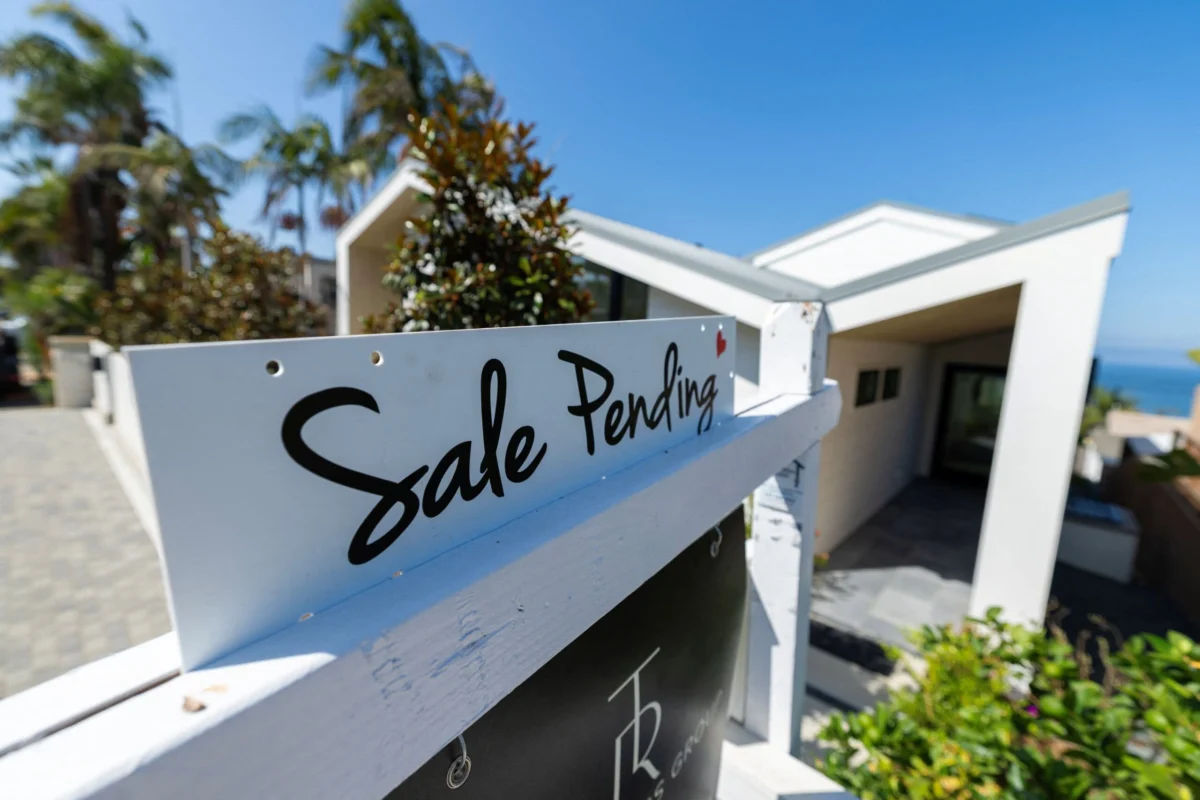
The United States housing market is grappling with an intensifying crisis of affordability, a challenge underscored by two distinct but converging reports released on Thursday. Both datasets paint a stark picture: housing costs, whether for purchase or construction, have reached prohibitive levels, signaling a contraction that is proving particularly punishing for prospective buyers and the industry alike.
The National Association of Realtors (NAR) reported a significant downturn in pending home sales for June, a crucial forward-looking indicator based on signed contracts for existing homes. The index registered a substantial 5.4% decline from May, defying analysts’ expectations for a more modest dip. This figure also represented a 0.3% decrease compared to June 2025, suggesting a prolonged period of market weakness rather than a short-term blip. As the most current measure of buyer commitment, the sharp fall in pending sales indicates a palpable cooling in demand that is directly attributable to the escalating costs of homeownership.
Concurrently, the National Association of Home Builders (NAHB) revealed a persistent slump in sentiment among single-family builders. Their Housing Market Index (HMI) for July fell to 34, a two-point drop from June’s upwardly revised reading of 36. This marks the fifteenth consecutive month that builder sentiment has languished below the critical threshold of 40, an unprecedented stretch since the depths of the 2012 housing downturn. With anything below 50 signifying negative sentiment, the industry’s sustained pessimism underscores systemic issues impeding construction activity.
The Weight of Elevated Mortgage Rates and Record Prices
Lawrence Yun, Chief Economist for the National Association of Realtors, articulated the core challenge: "The highest mortgage rates in nearly a year and the record-high national median home price together are contributing to a tepid housing market that is especially difficult for first-time homebuyers." This dual pressure creates an almost insurmountable barrier for many, particularly those without substantial existing home equity to leverage.
Mortgage rates throughout June fluctuated within a narrow yet elevated range. The average rate for the popular 30-year fixed mortgage, a benchmark for most homebuyers, commenced the month at 6.6% and concluded at precisely the same rate, according to data from Mortgage News Daily. This stability, however, masked the fact that these rates remained stubbornly high, a significant increase from the 5.99% low observed at the end of February, just prior to the onset of the Iran war. The geopolitical instability triggered by this conflict has been cited by economists as a contributing factor to global inflation concerns, which in turn have influenced central bank policies and bond yields, thereby pushing mortgage rates upward. This sustained period of higher borrowing costs has eroded purchasing power, making monthly mortgage payments substantially larger for the same priced home.
The impact of these rates is clearly reflected in mortgage demand. Applications for a mortgage to purchase a home were 2% lower last week compared to the same period the previous year. This decline is particularly telling given that mortgage rates were slightly higher in the comparable week last year, indicating that the cumulative effect of prolonged high rates and ever-increasing home prices has finally reached a breaking point for a significant segment of potential buyers. The cumulative erosion of affordability, rather than just the immediate rate, appears to be weighing heavily on consumer decisions.
A Deep Dive into Builder Despair: Affordability, Land, Labor, and Materials
Robert Dietz, Chief Economist for the NAHB, echoed Yun’s concerns from the supply side, stating, "Affordability remains the home building industry’s primary challenge, as elevated mortgage rates, costly land, rising material prices, and persistent skilled labor shortages continue to affect the market." This comprehensive list of headwinds illustrates the complex array of factors stifling housing production and driving up costs for new constructions.

- Costly Land and Regulatory Hurdles: The scarcity of readily developable land, exacerbated by restrictive zoning regulations and prolonged permitting processes at local levels, drives up land acquisition costs significantly. These costs are then passed on to the consumer. In many desirable urban and suburban areas, "NIMBYism" (Not In My Backyard) sentiment often translates into resistance against higher-density housing, further constraining land supply.
- Rising Material Prices: While some pandemic-era supply chain disruptions have eased, the cost of key building materials, including lumber, concrete, steel, and insulation, has remained stubbornly high. Inflationary pressures across the economy, coupled with ongoing geopolitical tensions affecting global commodity markets, contribute to this elevated cost base. For instance, the price of structural lumber, though off its pandemic peak, has seen renewed volatility, adding uncertainty to project budgeting.
- Persistent Skilled Labor Shortages: The construction industry has faced a long-standing shortage of skilled workers, a problem exacerbated by an aging workforce and insufficient new entrants. Trades such as carpentry, plumbing, electrical work, and masonry are experiencing critical gaps, leading to higher labor costs and extended construction timelines. This shortage is partly a legacy of the 2008 financial crisis, when many construction workers left the industry and did not return.
- Elevated Mortgage Rates: While primarily impacting buyers, high mortgage rates also indirectly affect builders. Reduced buyer demand translates into fewer sales for new homes, leading to increased inventory carrying costs for builders and a reluctance to initiate new projects. This creates a vicious cycle where constrained supply persists despite underlying demand, due to a lack of affordable demand.
In response to these challenging market conditions, a rising share of builders has resorted to price adjustments and incentives. In July, 37% of builders cut prices, an increase from 35% in June and 32% in May. Furthermore, the use of sales incentives, such as mortgage rate buydowns or contributions to closing costs, was prevalent among 63% of builders in July, a slight uptick from 62% in June. This marks the sixteenth consecutive month that the share of builders offering incentives has reached 60% or higher, indicating a sustained effort to attract buyers in a difficult environment. These concessions, while offering some relief to buyers, also squeeze builder margins and reflect the intensity of the market slowdown.
Legislative Efforts and the Road Ahead
In an attempt to address the supply side of the equation, Congress recently enacted new housing legislation aimed at cutting red tape and assisting local governments in accelerating permitting processes for housing developments. This initiative is a critical step, as local regulatory burdens are often cited as a major impediment to increasing housing supply. Streamlining these processes could, in theory, reduce construction timelines and associated costs, ultimately benefiting consumers.
However, NAHB’s Robert Dietz cautioned that while this federal intervention is "a positive step that will help expand housing supply and lower overall housing costs," he stressed that "more policy change is needed at the state and local level." Housing policy in the U.S. is highly localized, with zoning, land-use regulations, and permitting often determined at municipal and county levels. Without comprehensive reforms that encourage denser housing, reduce minimum lot sizes, and facilitate infrastructure development at these local echelons, federal efforts may only yield limited results. The patchwork nature of regulations across thousands of jurisdictions makes a unified approach to increasing housing supply incredibly challenging.
The Paradox of Rising Prices Amidst Dwindling Sales
Despite the significant decline in pending home sales and weakening builder sentiment, the median price for existing homes continued its upward trajectory, reaching a new record in June, according to the NAR. This seeming paradox highlights the profound structural imbalance in the U.S. housing market: a chronic shortage of available homes. While localized pockets of weakness and price adjustments are emerging in certain areas, the overall low supply of housing inventory continues to exert upward pressure on prices nationally.
At the heart of this issue is a decade-long underbuilding trend following the 2008 financial crisis. For years, housing starts lagged behind demographic growth, creating a cumulative deficit of millions of homes. This supply shortage has been exacerbated by homeowners locked into historically low mortgage rates from previous years, making them reluctant to sell and incur a new, higher mortgage rate on a new purchase. This "lock-in" effect further constricts the inventory of existing homes for sale, keeping prices elevated even as demand cools due to affordability constraints.
Broader Economic Implications and Future Outlook
The housing sector’s struggles have far-reaching implications for the broader U.S. economy. Peter Boockvar, chief investment officer of OnePoint BFG Wealth, succinctly summarized the situation, stating, "Bottom line, housing remains the downer in the US economy and according to the NAHB makes up about 15-18% of the US economy all in." This significant contribution means that a prolonged slowdown in housing can ripple through various industries, affecting everything from manufacturing and retail to financial services and employment.
- Impact on GDP: Reduced home sales translate to lower revenues for real estate agents, mortgage lenders, and title companies. Slower construction activity affects material suppliers, contractors, and ancillary service providers, ultimately dampening overall Gross Domestic Product growth.
- Consumer Confidence and Wealth Effect: Housing is often the largest asset for most American households. When the housing market falters, it can erode consumer confidence and reduce the "wealth effect," whereby homeowners feel wealthier and are more inclined to spend. This can lead to a broader slowdown in consumer spending, a key driver of economic activity.
- Generational Wealth Gap: The affordability crisis disproportionately impacts younger generations and first-time homebuyers, preventing them from accumulating wealth through homeownership. This exacerbates existing wealth inequalities and can have long-term societal consequences, limiting intergenerational economic mobility.
- Rental Market Pressures: As homeownership becomes increasingly unattainable, more individuals and families are pushed into the rental market, driving up demand and subsequently, rental costs. This creates a feedback loop, as high rental costs make it even harder for prospective homebuyers to save for a down payment.
- Labor Mobility: The inability to find affordable housing in new locations can hinder labor mobility, making it difficult for individuals to relocate for better job opportunities, thereby impacting overall economic efficiency and growth.
Looking forward, the housing market faces a complex path. A sustained period of economic stability, coupled with a decline in inflation that allows the Federal Reserve to ease its monetary policy, could eventually lead to lower mortgage rates. However, even if rates stabilize, the structural supply deficit and high land and labor costs will continue to exert upward pressure on prices. Comprehensive, multi-level policy interventions addressing zoning reform, infrastructure investment, and skilled labor training are essential for a long-term resolution. Without such concerted efforts, the dream of homeownership for many Americans risks becoming an increasingly distant reality, with significant ramifications for economic stability and social equity. The current data strongly suggests that the U.S. housing market is at a critical juncture, demanding immediate and sustained attention from policymakers and industry stakeholders alike.
