

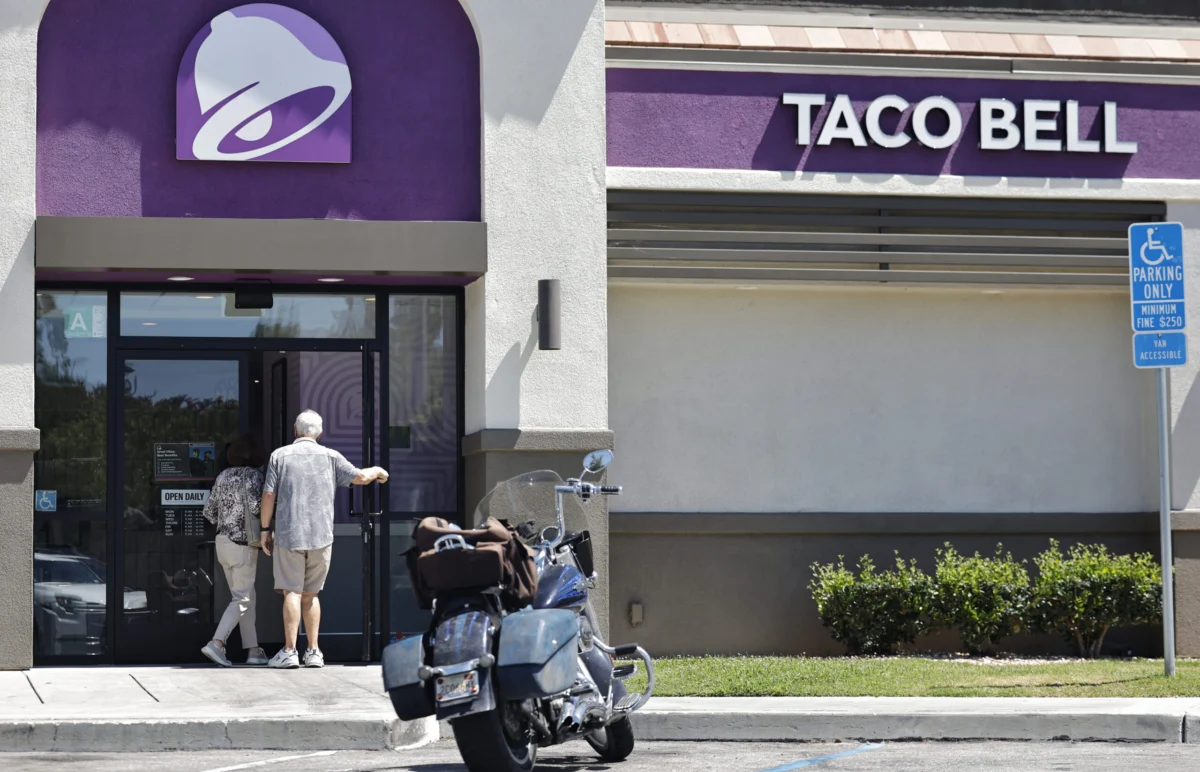
Taco Bell has proactively removed shredded iceberg lettuce linked to a rapidly escalating cyclosporiasis outbreak from its restaurants nationwide, the fast-food giant announced Friday. This decisive action follows an intensive investigation by the Centers for Disease Control and Prevention (CDC) and the U.S. Food and Drug Administration (FDA) that has identified the tainted produce as the likely source of infection for more than 1,600 individuals across five Midwestern states. The swift response from the restaurant chain, a subsidiary of Yum Brands, aims to contain further spread of the parasitic illness and reassure the public amidst growing health concerns, underscoring the critical importance of food safety in large-scale food service operations.
The Cyclosporiasis Outbreak: Scope and Symptoms
The current cyclosporiasis outbreak represents a significant public health challenge, with over 1,600 confirmed cases reported across Indiana, Kentucky, Michigan, Ohio, and West Virginia. Cyclosporiasis is an intestinal illness caused by the microscopic parasite Cyclospora cayetanensis. This parasite is typically transmitted through food or water contaminated with feces. Symptoms, which usually manifest two to three weeks after exposure, can be debilitating and include severe watery diarrhea, often accompanied by loss of appetite, significant weight loss, abdominal cramps, bloating, increased gas, nausea, and profound fatigue. While often resembling a severe stomach bug, the infection can persist for weeks or even months if not properly diagnosed and treated, and symptoms may recur.
The CDC has confirmed that, as of its latest update, no fatalities have been reported in connection with this particular outbreak, a fortunate outcome given the widespread nature of the contamination. However, the sheer volume of cases underscores the potential severity and reach of such foodborne illnesses. Public health officials emphasize the importance of seeking medical attention if symptoms appear, as specific antibiotic treatments are available to combat the parasite effectively and prevent prolonged illness. This incident adds to a recurring pattern of foodborne illnesses linked to fresh produce, highlighting the ongoing complexities and inherent vulnerabilities of ensuring food safety within extensive agricultural and distribution networks. Such outbreaks not only pose immediate health risks but also erode consumer confidence in the safety of the food supply.
Investigation and Source Identification
The joint investigation by the CDC and FDA quickly narrowed down the potential source of the widespread illness. On Thursday, the CDC publicly announced that its comprehensive epidemiological and traceback efforts had established a definitive link between the outbreak and shredded iceberg lettuce served at Taco Bell locations within the initially affected Midwestern states. The traceback process is a meticulous undertaking, involving detailed interviews with affected individuals to identify common food exposures, analysis of purchase records from restaurants, and granular tracking of food products from the consumer back to their origin on the farm.
Following this crucial identification, the FDA is now working diligently with the identified supplier to ascertain the full distribution network of the implicated lettuce. This includes investigating whether the contaminated product was supplied to other food service establishments, such as other restaurant chains, or directly to retailers like grocery stores, potentially extending the reach of the contamination beyond Taco Bell. The rapid identification of the source was critical, enabling a targeted response to prevent potentially thousands more infections and mitigate further public health risks. The efficiency of this collaborative federal investigation highlights the advanced capabilities of public health agencies in responding to widespread foodborne threats.
Taco Bell’s Immediate and Proactive Response
In response to the CDC’s findings and acting with an "abundance of caution," Taco Bell moved swiftly and decisively to voluntarily remove the suspect product from its operations. A company statement affirmed, "Based on ongoing conversations with public health officials, and out of an precaution, Taco Bell worked swiftly to voluntarily remove the product from restaurants and the affected ingredient has been removed from our supply chain nationwide." This proactive and nationwide removal, extending beyond the five initially identified states, demonstrates a comprehensive approach to mitigating risk and prioritizing public health.
For a brand like Taco Bell, which heavily relies on fresh ingredients for many of its signature menu items, including tacos, burritos, salads, and bowls, ensuring the safety and integrity of its produce supply chain is paramount to its brand reputation and consumer trust. The company’s rapid action aligns with best practices in crisis management within the food industry, signaling a commitment to public safety above all else. Such a comprehensive and transparent response is crucial in reassuring a nervous public and beginning the process of rebuilding confidence after a health scare of this magnitude.
The Supplier Link: Taylor Farms and Prior Incidents
Reports from various media outlets, including a notable report from The New York Times on July 16, 2026, have indicated that the affected lettuce supplied to Taco Bell may be traced back to Taylor Farms. Taylor Farms is a prominent and widely recognized player in the fresh produce industry, responsible for distributing products to a vast network of restaurant chains and directly to grocery stores across the United States. This is not the first instance where the company has faced scrutiny regarding food safety; Taylor Farms was previously linked to a McDonald’s E. Coli outbreak in 2024, which involved contaminated onions. These repeat incidents underscore systemic challenges in maintaining consistent food safety across large-scale agricultural operations.
On Friday, Taylor Farms issued its own public statement via social media, confirming its decisive action: the company had removed all iceberg lettuce sourced from central Mexico from its supply chain. The company further clarified its position, stating, "While the FDA traceback is indicating a specific independent farm, which represents less than 1% of the U.S.’s iceberg lettuce supply, as the potential source of the outbreak, we have removed all iceberg lettuce from the region indefinitely." Taylor Farms also sought to reassure consumers that none of its branded salads or kits, which are widely available in grocery stores, are associated with the current cyclosporiasis outbreak. This proactive measure by the supplier is critical in isolating the contamination point and preventing further distribution of potentially unsafe produce, while also attempting to protect its broader product lines.
Broader Industry Reactions and Market Volatility
The revelation of the outbreak and the initial uncertainty surrounding its precise source sent significant ripples through the food service industry and financial markets. Yum Brands, Taco Bell’s parent company, experienced a nearly 7% decline in its stock value over the past five days as investors reacted nervously to the health scare and its potential impact on sales and brand reputation. The broader market also saw declines among other food companies known for their fresh lettuce offerings. Sweetgreen, a popular salad chain that emphasizes fresh, healthy ingredients, saw its shares plunge nearly 13% earlier in the week, reflecting investor anxieties about widespread produce contamination. Similarly, fast-casual competitor Cava experienced a dip of more than 3%.
However, both Sweetgreen and Cava experienced significant rebounds on Friday, with shares rising over 17% and approximately 2% respectively. This swift recovery was largely attributed to a collective sigh of relief among investors after the CDC explicitly identified shredded iceberg lettuce from Taco Bell as the specific source, thereby excluding their ingredients from the immediate investigation. Sweetgreen, in particular, issued a proactive statement affirming it does not use iceberg lettuce on its menu and confirmed it had been in close contact with its suppliers throughout the investigation, verifying no identified links to its supply chain. Similarly, Chipotle, which saw less significant stock movement overall, released a statement clarifying that shredded iceberg lettuce is not served at its locations and expressed confidence that its ingredients are not associated with the outbreak. The initial market volatility underscores the profound sensitivity of consumer-facing brands to food safety concerns, even when the link is indirect or unconfirmed, demonstrating how quickly market sentiment can shift based on new information.
The Economic and Brand Recovery Trajectory
Analysts widely anticipate that the financial repercussions for Yum Brands and Taco Bell, while immediate and noticeable, will ultimately be temporary, following historical patterns observed in similar food safety incidents within the fast-food sector. Andrew Charles, a seasoned analyst at TD Cowen, expressed confidence that the impact of the cyclosporiasis outbreak would be largely contained to a single financial quarter, leading to a swift recovery. "Social media just leads to a lot more short-term memory loss," Charles noted, drawing parallels to the rapid rebounds of McDonald’s and Wendy’s after their respective E. Coli outbreaks in 2024 and 2022. He elaborated that both companies saw impacts lasting a quarter or less, suggesting a similar trajectory for Taco Bell given the nature of this particular incident.
Charles also highlighted a crucial distinction: the current outbreak is linked to a topping rather than a core protein, which tends to have a less severe and shorter-lived impact on overall consumer behavior and sales. Furthermore, the analyst suggested that the experience of the COVID-19 pandemic has, ironically, somewhat desensitized the broader industry and consumers to food safety concerns over the past few years, making them potentially more resilient to such news cycles. Recent data from Placer.ai, an analytics firm, supported the immediate, albeit temporary, downturn, revealing a decline in foot traffic for chains serving fresh lettuce over the past week. Taco Bell’s foot traffic was reportedly down nearly 6%, while Panera Bread, another chain offering fresh produce, saw a drop of more than 7%.
However, analysts at Evercore ISI posited in a Friday note that the narrative would likely shift from a "vendor issue" to a "supplier issue," effectively moving the spotlight away from Taco Bell and towards Taylor Farms. "Our guess is that over the coming weeks this food safety issue fades from the headlines and, to the extent it lingers, attaches more to the supplier than to Taco Bell specifically," the Evercore analysts wrote. They further predicted that while lower demand in the directly impacted Midwest states might persist longer, Taco Bell could realistically return to positive same-store sales growth within a matter of weeks, mirroring McDonald’s recovery in approximately six weeks after its 2024 incident. This optimistic outlook is bolstered by Taco Bell’s strong sales performance preceding the outbreak, indicating a brand that was "firing on all cylinders." The historical playbook for food-safety scares without confirmed brand-level links or fatalities typically points to a "one-to-two-quarter demand air-pocket" and a stock recovery within two quarters, a pattern analysts expect Taco Bell to follow.
Rebuilding Trust and Future Food Safety Protocols
Beyond the financial metrics, the outbreak serves as a critical lesson in marketing, brand loyalty, and crisis communication, according to Gerry Chiaro, an associate professor of marketing at Northwestern University. Chiaro emphasized the imperative for Taco Bell to actively regain consumer trust, a formidable challenge previously faced by other major restaurant chains like McDonald’s, Wendy’s, and Chipotle in the wake of their own health scares. "They have to be accountable for it. They can’t blame anybody, even though in a way, they’re the victim of the policies and processes and the food safety measures of their supplier," Chiaro told CNBC. He stressed that from the consumer’s perspective, Taco Bell is the brand they engage with, and thus the ultimate responsibility for product safety resides with the restaurant.
Chiaro noted that such health scares, while disruptive, are not uncommon for restaurants dealing with fresh food, making the industry’s playbook for recovery increasingly refined. Taco Bell’s prompt issuance of a transparent statement and the immediate removal of the contaminated ingredient align with this established recovery model. He concluded that "a very clear, accountable, transparent communication, a recommitment to our health safety and our food safety processes – it can make them better." This incident is highly likely to prompt a thorough review and potential enhancement of food safety protocols across the entire supply chain, from farm to fork, not just for Taco Bell but for the broader food service industry. Increased scrutiny on suppliers, more rigorous and frequent testing of produce, and enhanced traceability systems may become standard practice to prevent future outbreaks. The long-term implications could include greater investment in advanced food safety technologies and more collaborative efforts between regulatory bodies, agricultural producers, distributors, and food service companies to collectively safeguard public health.
The ongoing investigation will continue to meticulously monitor the spread of cyclosporiasis and ensure that all potential sources of contamination are thoroughly addressed. The rapid response from Taco Bell, coupled with the detailed investigative work by the CDC and FDA, serves as a testament to the continuous vigilance required in safeguarding public health within the complex and interconnected global food supply chain. While the immediate impact is significant for those affected and the companies involved, the incident also presents a critical opportunity for strengthening food safety measures and reinforcing consumer confidence in the long run.
