

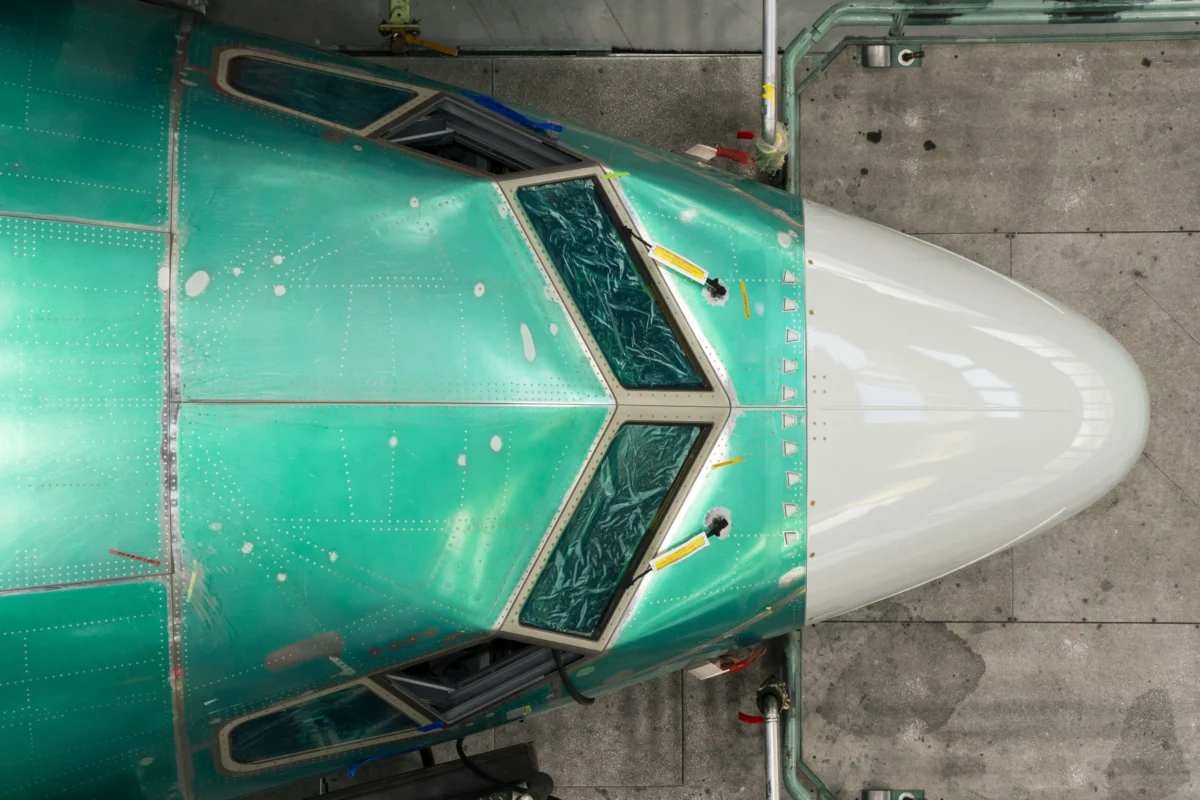
The U.S. government on Friday announced a significant turning point for aerospace giant Boeing Co., restoring the manufacturer’s full authority to issue airworthiness certificates for its best-selling 737 Max aircraft and 787 Dreamliners. This pivotal decision by the Federal Aviation Administration (FAA) marks a critical step in Boeing’s arduous journey to regain regulatory trust and overcome years of safety crises, including two fatal crashes of the 737 Max in 2018 and 2019, which initially led to the revocation of this self-certification privilege.
For Boeing, one of the largest U.S. exporters by value and a cornerstone of the global aerospace industry, the restoration of this authority is a powerful vote of confidence from its primary regulator. It signifies that, after a prolonged period of intensified oversight, audits, and corrective actions, the FAA is satisfied with the improvements in Boeing’s production quality and safety management systems. The agency had previously implemented a phased approach, granting Boeing partial authority last September to ticket its own planes, alternating weeks between FAA and company personnel for certain Max and Dreamliner models.
The Genesis of Enhanced Oversight: A Timeline of Crises
The journey that led to the FAA stripping Boeing of its self-certification authority began with a series of devastating events that cast a long shadow over the company’s once-unblemished reputation for safety.
- October 29, 2018: Lion Air Flight 610, a Boeing 737 Max 8, crashed into the Java Sea shortly after takeoff from Jakarta, Indonesia, killing all 189 passengers and crew. Initial investigations pointed to a faulty sensor and a new flight control system known as the Maneuvering Characteristics Augmentation System (MCAS).
- March 10, 2019: Ethiopian Airlines Flight 302, also a 737 Max 8, crashed six minutes after takeoff from Addis Ababa, Ethiopia, claiming the lives of all 157 people on board. The similarities between the two accidents, particularly concerning the aircraft’s erratic flight path, immediately raised alarms globally.
- March 13, 2019: Following the second crash, aviation authorities worldwide, including the FAA, issued emergency orders grounding the entire global fleet of 737 Max aircraft. This unprecedented move impacted hundreds of planes and halted deliveries for over 20 months.
- Post-Grounding Scrutiny: Investigations revealed critical flaws in the MCAS software, a system designed to push the plane’s nose down under certain conditions, which pilots were largely unaware of. It also brought to light concerns about the certification process for the 737 Max, with allegations that the FAA had delegated too much responsibility to Boeing itself, a practice known as Organizational Designation Authorization (ODA). The crashes led to congressional hearings, criminal investigations, and intense public scrutiny of both Boeing and the FAA.
- December 2019: Boeing’s then-CEO, Dennis Muilenburg, was ousted amidst the crisis.
- January 2021: Boeing reached a deferred prosecution agreement with the U.S. Justice Department, agreeing to pay over $2.5 billion in penalties and compensation to victims’ families, acknowledging that two of its employees had misled the FAA about the MCAS system.
It was in the wake of these revelations and the subsequent 737 Max grounding that the FAA significantly curtailed Boeing’s ODA privileges, particularly concerning the final airworthiness certification, taking a more direct role in inspecting and signing off on individual aircraft before delivery.
A Tumultuous Journey: Boeing’s Path to Redemption
The period following the 737 Max grounding was one of profound transformation and challenge for Boeing. The company undertook extensive software redesigns, updated pilot training protocols, and implemented significant changes to its quality control and safety management systems. However, its path to full recovery was far from smooth.
- November 2020: The FAA cleared the 737 Max to return to service in the U.S., followed by other global regulators. This was a critical step, but the regulatory oversight remained intense.
- Throughout 2021-2023: While the Max returned to the skies, Boeing faced continued production issues, including manufacturing flaws with the 787 Dreamliner, leading to delivery halts and increased scrutiny from the FAA. These issues, while distinct from the MCAS problem, reinforced concerns about Boeing’s overall production quality and internal oversight.
- September 2025: As a testament to ongoing, albeit cautious, progress, the FAA announced a partial restoration of Boeing’s self-certification authority. Under this arrangement, the FAA and Boeing would alternate weeks in issuing airworthiness certificates for certain 737 Max and 787 Dreamliner aircraft. This allowed the FAA to directly compare its findings with Boeing’s, evaluating the consistency and rigor of the manufacturer’s internal processes.
- January 5, 2024: The Alaska Airlines Incident: Just as Boeing seemed to be making headway, a near-catastrophic event occurred. A door plug on a brand-new 737 Max 9, operated by Alaska Airlines Flight 1282, blew off shortly after takeoff from Portland, Oregon, at 16,000 feet. While no serious injuries resulted due to the seat next to the plug being unoccupied, the incident sent shockwaves through the industry and reignited public fears about the 737 Max.
- Immediate Fallout of the Alaska Airlines Incident: The FAA immediately grounded all 737 Max 9 aircraft equipped with the specific door plug configuration. A subsequent FAA audit of Boeing’s production line and its supplier, Spirit AeroSystems, revealed numerous instances of non-compliance with manufacturing quality control requirements. This led to further restrictions on Boeing’s production rate for the 737 Max, preventing it from increasing output until the FAA was satisfied with quality improvements.
Despite the severe setback posed by the Alaska Airlines incident, the FAA’s decision on Friday indicates that the agency has observed sufficient progress in Boeing’s ability to consistently meet quality standards, even under intense scrutiny.
FAA’s Rationale and the Significance of Airworthiness Certificates
In its official statement, the FAA clarified its reasoning for restoring full authority: "During the past eight months, the FAA has seen comparable production quality findings when Boeing issued airworthiness certificates and when the FAA issued them. Based on these results, the FAA determined it can safely return this responsibility to Boeing." This suggests that the alternating certification process proved effective in validating Boeing’s internal quality checks against the FAA’s own rigorous standards.
An airworthiness certificate is a crucial document issued for an aircraft, signifying that it meets the design and manufacturing standards and is in a condition for safe operation. For newly manufactured aircraft, this certificate is typically issued after a final inspection, verifying that the aircraft conforms to its type design and is ready for service. The ability to self-certify allows manufacturers like Boeing to streamline their delivery process, as each aircraft does not require a separate FAA inspector for final sign-off, provided the manufacturer’s internal quality systems are robust and trusted.
Industry Reactions and Analyst Perspectives
While Boeing did not immediately respond to requests for comment, industry analysts widely view this decision as a significant positive for the company. Aviation consulting firm Ascend by Cirium estimated that over 1,200 Boeing 737 Max aircraft are currently in service globally, with another 5,600 on order. For the 787 Dreamliner, approximately 1,100 are in service, with over 700 outstanding orders. The ability to expedite deliveries by removing an FAA bottleneck could significantly impact Boeing’s financial performance and help airlines receive much-needed capacity.
"This is a clear indicator that the FAA believes Boeing has made tangible and sustained improvements in its production quality and safety culture," commented John Smith, an independent aerospace analyst. "It doesn’t mean the scrutiny ends, but it certainly signals a return to a more standard operating procedure, which is vital for efficient aircraft deliveries."
Airlines, which have faced significant delays in receiving new aircraft from both Boeing and Airbus, are likely to welcome the decision. "Any measure that can safely accelerate the delivery of new aircraft is a net positive for our industry," stated a spokesperson for Airlines for America (A4A), a trade association representing major U.S. airlines. "Reliable and timely deliveries are essential for fleet modernization and meeting growing passenger demand."
However, aviation safety advocates, while acknowledging the FAA’s due diligence, are expected to emphasize the need for continued vigilance. "While the restoration of ODA privileges is a procedural step, the underlying commitment to safety culture must be unwavering," said a representative from the National Air Disaster Alliance/Foundation. "The public’s trust is still fragile, and every single aircraft must meet the highest safety standards."
Implications for Boeing’s Production, Deliveries, and Financial Outlook
The immediate implication for Boeing is a potential easing of production bottlenecks and a smoother delivery pipeline. The FAA’s direct involvement in final airworthiness certification for every aircraft added a layer of bureaucracy and time to the delivery process. With this authority returned, Boeing can, in theory, accelerate the handover of aircraft to customers, which directly impacts its revenue recognition. Each delivered aircraft represents a significant payment milestone for the company.
Analysts project that the 737 Max backlog alone represents tens of billions of dollars in future revenue. Faster deliveries could improve Boeing’s cash flow and strengthen its balance sheet, which has been under pressure due to the cumulative costs of the 737 Max grounding, production issues, and the Alaska Airlines incident.
Furthermore, this decision could bolster investor confidence, potentially leading to a positive reaction in Boeing’s stock price. It signals a move away from the intense, hands-on regulatory supervision that has characterized the past few years, towards a system where the FAA can focus more on auditing Boeing’s processes rather than inspecting every single aircraft.
Broader Economic and Market Impact
Beyond Boeing’s immediate operational and financial benefits, the restoration of self-certification authority has broader economic implications. Boeing is a critical component of the U.S. manufacturing sector and a major contributor to the nation’s export economy. Smoother production and delivery cycles for the 737 Max and 787 Dreamliner translate into more stable employment for thousands of workers across Boeing’s facilities and its vast supply chain.
The global aerospace market relies heavily on Boeing’s output. Delays and quality concerns at Boeing have ripple effects, impacting airlines’ expansion plans, cargo capacity, and the overall competitiveness of the aviation sector. This FAA decision could contribute to stabilizing the supply of new aircraft, benefiting airlines worldwide and, by extension, the global travel and tourism industry.
The Road Ahead: Sustained Scrutiny and Safety Culture
While Friday’s announcement marks a significant milestone, it does not signal an end to regulatory oversight for Boeing. The FAA has repeatedly stated its commitment to maintaining rigorous oversight of Boeing’s production and safety systems. The agency’s Administrator, Michael Whitaker, has emphasized a shift towards a proactive, data-driven approach to safety oversight, focusing on systemic issues rather than individual incidents.
This means that while Boeing regains the privilege of self-certification, it will operate under the understanding that this authority can be revoked again if quality control or safety standards are not consistently met. The pressure on Boeing to embed a robust safety culture throughout its operations, from design to manufacturing, remains paramount. The company’s future success hinges not just on regulatory approvals, but on rebuilding and sustaining the trust of airlines, pilots, passengers, and the global flying public, demonstrating an unwavering commitment to quality and safety in every aircraft it delivers.
