

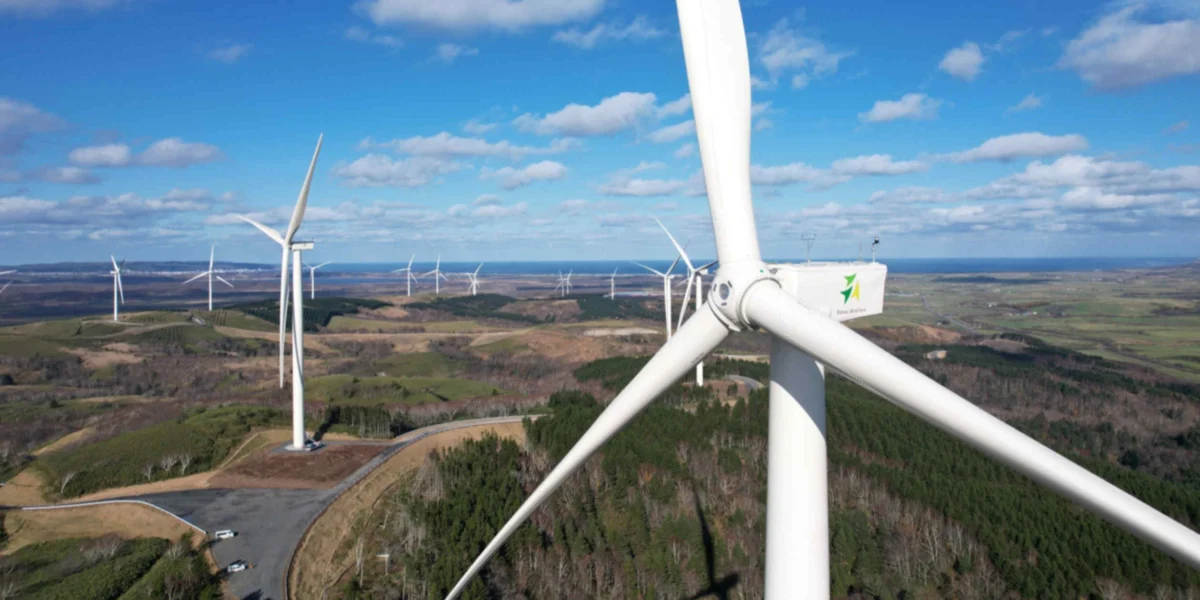
TOKYO — Chinese companies solidified their commanding presence in the global wind turbine market last year, accounting for an impressive 79% of all installations worldwide. This figure represents a significant six-percentage-point increase from the previous year, underscoring a powerful surge fueled by robust domestic demand within China and burgeoning growth in other key Asian and African markets. The trend signals a decisive shift in the renewable energy manufacturing landscape, with Chinese firms increasingly setting the pace for global wind power deployment.
A Year of Unprecedented Growth and Market Consolidation
The year in question, 2025, proved to be a watershed moment for the wind energy sector, marked by both ambitious expansion targets and a notable consolidation of market share among leading Chinese manufacturers. While global investments in renewable energy continued their upward trajectory, the lion’s share of tangible wind power capacity installation was overwhelmingly driven by Chinese-made turbines. This dominance is not a recent phenomenon but rather the culmination of years of strategic investment, technological advancement, and aggressive market penetration by Chinese enterprises.
The report detailing this market share highlights a consistent upward trend for Chinese manufacturers over the past decade. Prior to 2015, the global wind turbine market was more diversified, with European and American companies holding substantial portions of the market. However, a concerted effort by China to build out its domestic wind capacity, coupled with government support and a focus on cost competitiveness, began to reshape the global playing field. By 2020, Chinese companies had already surpassed the 50% mark in global installations, a milestone that appeared formidable at the time. The latest figures indicate that this lead has not only been maintained but significantly widened.
Drivers of Chinese Market Supremacy
Several key factors underpin the extraordinary success of Chinese wind turbine manufacturers.
Domestic Demand as a Powerful Engine
China’s insatiable appetite for renewable energy, driven by its commitment to decarbonization targets and energy security, has been the primary engine of growth. The country has consistently led the world in annual wind power additions, creating a massive and stable domestic market for its manufacturers. This domestic market provides a crucial platform for companies to scale up production, refine their technologies, and achieve economies of scale that are difficult for international competitors to match.
In 2025 alone, China installed a record-breaking amount of wind power capacity, estimated to be in the tens of gigawatts. This sheer volume of domestic deployment allows Chinese firms to benefit from continuous production runs, reduce manufacturing costs through bulk purchasing of components, and gain invaluable real-world operational data. This data then feeds back into research and development, enabling rapid product improvement and innovation.
Expanding Footprint in Asia and Africa
Beyond its domestic market, Chinese wind turbine manufacturers have strategically targeted and successfully penetrated emerging markets in Asia and Africa. These regions are characterized by rapidly growing energy demand, a strong desire to adopt cleaner energy sources, and often, a sensitivity to cost-effectiveness.
In Southeast Asia, countries like Vietnam, the Philippines, and Thailand have seen significant investments in wind power projects, with Chinese turbines frequently favored due to their competitive pricing and readily available supply chains. Similarly, several African nations are embarking on ambitious renewable energy plans, and Chinese manufacturers have positioned themselves as key suppliers, offering turnkey solutions that include financing and installation. This expansion into new geographical territories has provided a vital secondary stream of demand, further bolstering the production capacity and global reach of Chinese firms.
Technological Advancement and Cost Competitiveness
While historically cost has been a major selling point, Chinese wind turbine manufacturers have also made significant strides in technological innovation. Companies like Goldwind, Envision Energy, and Mingyang Smart Energy are now producing turbines that are competitive with, and in some cases surpass, the performance and reliability of those offered by established Western players. These advancements include larger rotor diameters, higher power output, and improved grid integration capabilities, all essential for modern wind farm development.
The ability to offer these advanced technologies at a more competitive price point has been a crucial differentiator. This cost advantage is often attributed to a combination of factors, including efficient manufacturing processes, strong government subsidies and support, and a highly developed domestic supply chain for components. This dual advantage of technological parity and cost leadership has made Chinese turbines an attractive proposition for developers worldwide.
Supporting Data and Market Dynamics
The figures from 2025 paint a clear picture of this market dominance. While specific company market shares within the 79% are proprietary and often fluctuate, industry analysts consistently point to a handful of Chinese giants occupying the top global rankings. Goldwind, for instance, has regularly featured among the top three global turbine suppliers, with Envision Energy and Mingyang Smart Energy also demonstrating significant growth and market penetration.
In contrast, traditional powerhouses in the wind turbine sector, such as Vestas (Denmark), Siemens Gamesa Renewable Energy (Spain/Germany), and GE Renewable Energy (US), have seen their global market share, while still substantial in absolute terms, diminish relative to their Chinese counterparts. These companies remain significant players, particularly in mature markets like Europe and North America, where regulatory environments, grid standards, and established relationships can favor them. However, their ability to compete on price and speed of deployment in emerging markets has been increasingly challenged.
The surge in Chinese market share is also reflected in the global manufacturing capacity. China has invested heavily in building large-scale, modern manufacturing facilities for wind turbine components, including blades, nacelles, and towers. This has created a robust domestic ecosystem that supports the rapid deployment of wind farms, both within China and for export.
Timeline of Shifting Market Power
- Pre-2010: Global wind turbine market dominated by European and North American manufacturers. China is a nascent but growing market with limited domestic manufacturing capability.
- 2010-2015: China rapidly expands its domestic wind capacity, fostering the growth of its own turbine manufacturers. Government support and technology transfer play a key role. Chinese companies begin to make inroads into some emerging markets.
- 2015-2020: Chinese manufacturers achieve economies of scale and technological parity in several key areas. Their global market share steadily climbs, surpassing 50% by the end of this period.
- 2021-2025: The dominance of Chinese companies accelerates. Fueled by continued strong domestic demand and aggressive expansion into Asia and Africa, their global market share reaches unprecedented levels, culminating in the 79% figure for 2025.
Broader Implications and Future Outlook
The escalating dominance of Chinese manufacturers in the global wind turbine market carries significant implications for the renewable energy sector and international trade.
Impact on Global Energy Transition
On one hand, the increased availability of cost-effective wind turbines from China can accelerate the global transition to renewable energy. Lower costs can make wind power projects more financially viable in developing nations, helping them to meet their climate goals and improve energy access. This widespread deployment of wind energy is crucial for achieving global emissions reduction targets.
Geopolitical and Supply Chain Considerations
On the other hand, the concentration of manufacturing power raises geopolitical and supply chain concerns. Over-reliance on a single country for a critical component of the clean energy transition could create vulnerabilities. Western governments and industries are increasingly discussing strategies to bolster domestic manufacturing capabilities and diversify supply chains for renewable energy technologies. This may involve targeted subsidies, research and development investments, and the establishment of new manufacturing hubs.
Competition and Innovation Landscape
The intensified competition from Chinese firms is also forcing established players to re-evaluate their strategies. This could lead to increased innovation as companies strive to differentiate themselves through technology, service, and specialized solutions. It may also prompt further consolidation within the Western market as companies seek to achieve greater scale and efficiency.
Official Responses and Industry Reactions
While official statements from global energy bodies and governments are often measured, the trend has undoubtedly prompted discussions and strategic reviews. International Energy Agency (IEA) reports have consistently highlighted China’s pivotal role in renewable energy manufacturing. Industry associations in Europe and North America have voiced concerns about maintaining a competitive industrial base and ensuring fair trade practices.
For instance, some European policymakers have suggested exploring avenues to incentivize local manufacturing and secure critical raw material supplies to reduce dependence on any single nation. Similarly, industry leaders in the United States have called for policies that support domestic production and job creation in the renewable energy sector.
The Road Ahead
The trajectory of the global wind turbine market suggests that Chinese manufacturers will likely maintain their strong position in the near to medium term. Their established scale, cost advantages, and growing technological prowess provide a formidable competitive edge. However, the increasing focus on supply chain resilience, energy security, and the desire by many nations to foster domestic green industries may lead to greater diversification efforts. The next decade will likely see a dynamic interplay between the established dominance of Chinese firms and the strategic responses of other major economies seeking to secure their own stakes in the rapidly expanding renewable energy future. The adoption of wind power continues to grow around the world, and the manufacturing landscape shaping this growth is increasingly defined by the success of Chinese enterprises.
