

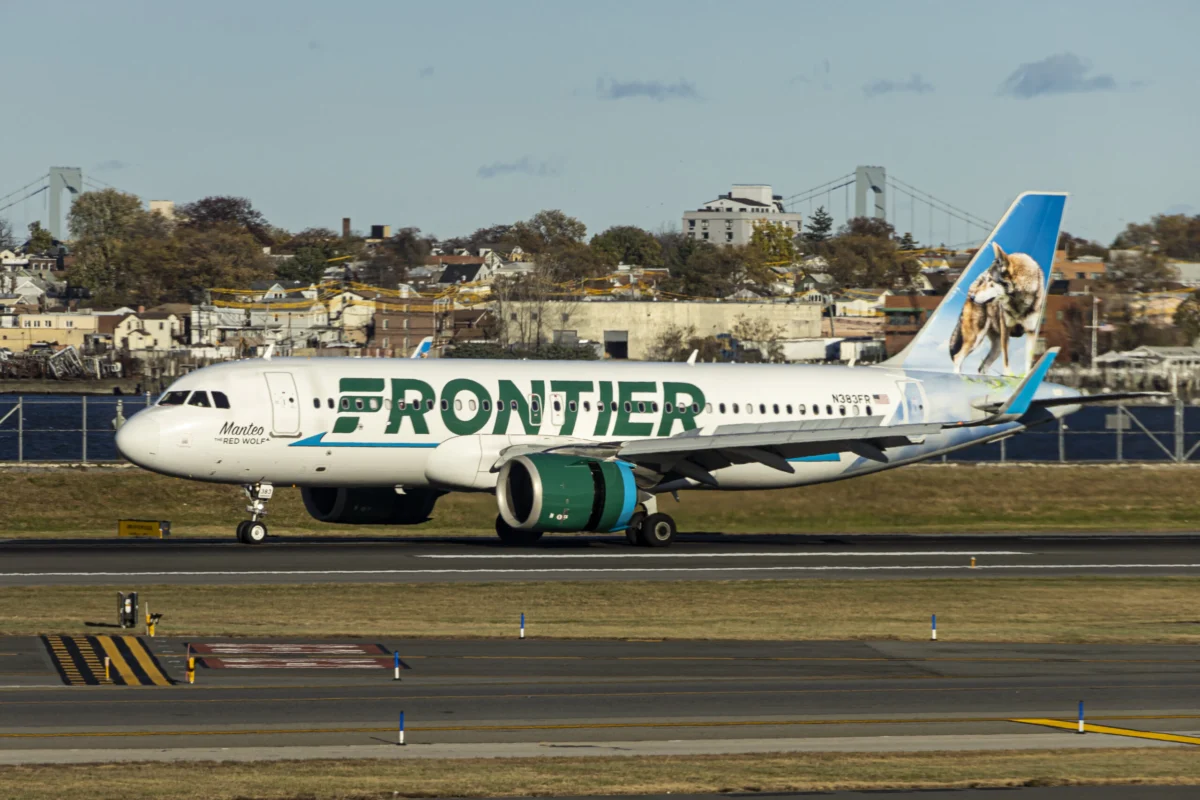
Denver, CO – Frontier Airlines, alongside four other prominent budget carriers – Mexico’s Volaris, European low-cost giant Wizz Air, Chile’s JetSmart, and the Philippines’ Cebu Pacific – are poised to significantly transform the landscape of in-flight connectivity by adopting SpaceX’s Starlink satellite internet service. This strategic move, set to debut across the group as early as next year with Frontier specifically targeting an early 2027 rollout for its first equipped aircraft, marks a substantial victory for Starlink and a pivotal moment for the ultra-low-cost carrier (ULCC) model, which has historically eschewed premium amenities like Wi-Fi. Collectively, these five airlines command a formidable fleet of over 1,000 aircraft, signaling a major expansion of high-speed, low-latency internet access to a broader segment of global air travelers.
The announcement underscores a growing trend where even the most cost-conscious airlines are compelled to enhance their passenger experience amidst evolving customer expectations and fierce competition. Frontier Airlines, long a holdout in offering in-flight Wi-Fi, confirmed on Tuesday that its initial Airbus aircraft outfitted with Starlink internet will commence service in early 2027. This development follows earlier reports from CNBC in 2022, which revealed that Frontier was in advanced discussions with Starlink to integrate its pioneering in-flight Wi-Fi service, marking a significant departure from its established no-frills operational philosophy.
A Strategic Pivot for Frontier and the ULCC Model
Frontier’s decision is particularly noteworthy given its historical reluctance to incorporate Wi-Fi. Former CEO Barry Biffle had previously articulated concerns regarding the added weight of Wi-Fi equipment, which directly impacts fuel consumption and, consequently, operational costs—a critical consideration for an airline meticulously focused on minimizing expenses. The ULCC model, epitomized by Frontier, thrives on unbundled services, allowing passengers to pay only for what they need, thereby keeping base fares exceptionally low. Adding a complex and potentially heavy system like in-flight internet traditionally ran counter to this philosophy.
However, market dynamics and passenger demands have evidently shifted. A spokeswoman for Frontier declined to comment on whether the service would be offered complimentary to flyers, a common practice among major carriers for their loyalty program members. This leaves open the possibility of a tiered pricing model, where basic access might be free, with higher bandwidth options available for purchase, or a fully paid service, aligning with the ULCC strategy of generating ancillary revenue. The transition to offering Wi-Fi, alongside Frontier’s plans to debut first-class seats next year, indicates a strategic evolution of the ULCC model, blurring the lines between traditional full-service and budget airlines. This move reflects a broader industry trend where even discounters are feeling pressure to "go upmarket" as larger rivals capitalize on premium cabin revenue growth.
Starlink’s Expanding Dominance in Aviation Connectivity
SpaceX’s Starlink, a subsidiary of Elon Musk’s aerospace venture, has rapidly emerged as a dominant force in the in-flight connectivity (IFC) sector. Its growing portfolio of partnerships now spans over 40 carriers worldwide, including major players like United Airlines and American Airlines. While the financial terms of these agreements remain undisclosed, the sheer volume of partnerships highlights Starlink’s aggressive market penetration and the airline industry’s increasing appetite for reliable, high-speed internet. SpaceX itself did not immediately comment on the latest deals.
The appeal of Starlink lies primarily in its technological superiority. Unlike traditional geostationary (GEO) satellite systems, which orbit at approximately 35,786 kilometers above the Earth and suffer from high latency due to the long signal travel distance, Starlink operates a vast constellation of satellites in Low Earth Orbit (LEO) at altitudes ranging from 340 to 1,200 kilometers. This proximity drastically reduces latency, allowing for internet speeds and responsiveness comparable to terrestrial broadband services. For passengers, this translates into a seamless online experience, enabling activities like video streaming, video conferencing, and online gaming, which were previously impractical or impossible on aircraft.
Moreover, Starlink’s aviation terminal, designed to be compact and aerodynamically efficient, addresses some of the weight and drag concerns historically associated with in-flight Wi-Fi equipment. Its relatively straightforward installation process further enhances its attractiveness to airlines seeking to quickly upgrade their fleets without extensive downtime. This combination of high performance and operational efficiency makes Starlink a compelling choice for airlines aiming to meet the burgeoning demand for "at-home-quality internet in the sky."
The Indigo Partners Connection: A Coordinated Strategy
A significant common thread connecting the five budget carriers in this latest Starlink deal—Frontier, Volaris, Wizz Air, JetSmart, and Cebu Pacific—is their shared investment by Indigo Partners. This private equity firm, led by serial airline investor Bill Franke, has a well-documented strategy of investing in and developing ultra-low-cost airlines globally. Franke’s vision has been instrumental in shaping the ULCC landscape, and the coordinated adoption of Starlink across multiple portfolio companies suggests a deliberate and unified strategic decision.
Indigo Partners has a history of fostering synergy among its portfolio airlines, often sharing best practices, operational models, and even procurement strategies. This collective adoption of Starlink indicates a strong belief from Indigo Partners in the value proposition of enhanced connectivity, even within the stringent cost framework of the ULCC model. It implies that the firm views Starlink not merely as a cost center, but as a potential driver of ancillary revenue, customer satisfaction, and competitive differentiation, thereby validating the shift in the ULCC paradigm. Other notable airlines that have been part of Indigo Partners’ portfolio include Spirit Airlines and Allegiant Air, showcasing their deep expertise in the budget airline sector.
Timeline and Rollout Expectations
While the announcement indicates that the collective group of five carriers will "debut in-flight Wi-Fi early next year" (presumably early 2025, given the context of the initial article’s publication in late 2024), Frontier Airlines has specified a later timeline for its own fleet. Frontier’s first Airbus plane equipped with Starlink internet is scheduled to roll out in early 2027. This suggests that other Indigo Partners-backed airlines in the group might see earlier deployments, or that "early next year" refers to the initial stages of installation and testing rather than widespread availability across all 1,000+ planes.
Such a phased rollout is typical for complex technological integrations within aviation. Certification processes, installation logistics, and ground testing all contribute to extended timelines. For Frontier, a 2027 target allows ample time for careful planning and integration, ensuring that the service meets both operational requirements and passenger expectations. The staggered implementation across the Indigo Partners portfolio could also serve as a learning process, allowing the group to refine its deployment strategies and optimize the passenger experience based on initial feedback from the earlier adopters.
Broader Implications for the Aviation Industry
The widespread adoption of Starlink by these budget carriers carries several significant implications for the broader aviation industry:
-
Erosion of the "No-Frills" Differentiator: The move by Frontier and its peers further blurs the traditional distinctions between ULCCs and full-service carriers. As basic amenities like Wi-Fi and even premium seating become standard offerings, ULCCs will increasingly compete on factors beyond just the lowest base fare, such as overall value, network reach, and passenger experience. This could intensify competition across the board, pushing all airlines to innovate.
-
Increased Pressure on Competitors: Other budget airlines that currently lack robust in-flight connectivity will face heightened pressure to follow suit. Carriers like Ryanair, for example, which have also historically shied away from extensive Wi-Fi offerings, might find themselves at a competitive disadvantage if a significant portion of the budget market begins offering high-quality internet. This could trigger a domino effect, making Wi-Fi a ubiquitous expectation rather than a luxury.
-
Validation of Starlink’s Aviation Strategy: For SpaceX, these new deals solidify Starlink’s position as a leading provider of in-flight connectivity. The ability to secure contracts with a diverse group of airlines, including cost-sensitive budget carriers across different continents, demonstrates the scalability, cost-effectiveness, and global reach of its LEO satellite network. This could accelerate Starlink’s growth in the aviation sector and provide a strong competitive edge against established players like Viasat, Gogo, Inmarsat, and Intelsat.
-
Enhanced Ancillary Revenue Opportunities: For the budget carriers, offering Wi-Fi presents a new avenue for ancillary revenue. While some may offer basic complimentary access, the potential for selling premium tiers or data packages aligns perfectly with the ULCC business model of unbundling services. This could partially offset the installation and operational costs, contributing to the airlines’ profitability.
-
Improved Passenger Experience and Loyalty: In an increasingly connected world, passengers expect to remain online even at 30,000 feet. Providing reliable, high-speed internet can significantly enhance the travel experience, leading to greater customer satisfaction and potentially fostering stronger brand loyalty, especially among business travelers and younger demographics who prioritize connectivity.
The Future of In-Flight Connectivity and the ULCC Model
The entry of Starlink into the fleets of Frontier and its Indigo Partners counterparts marks a significant milestone in the evolution of both in-flight connectivity and the ultra-low-cost carrier business model. It signals a pragmatic adaptation to modern consumer expectations, recognizing that while low fares remain paramount, a completely "no-frills" experience may no longer be sustainable in a hyper-connected world. The strategic coordination facilitated by Indigo Partners suggests a calculated move to upgrade the collective offering of these carriers, positioning them for continued growth and competitiveness in diverse global markets.
As the rollout progresses from "early next year" for some carriers to Frontier’s specific 2027 target, the industry will closely watch the operational impact, passenger adoption rates, and financial performance of these initiatives. The success of this endeavor could solidify Starlink’s position as the preferred IFC provider and fundamentally redefine what passengers can expect from a budget airline, pushing the entire industry towards a more connected future. The skies are not just getting faster; they are getting smarter, and budget travelers are increasingly part of this digital transformation.
