

The federal regulatory landscape and the private energy sector reached a critical juncture last week following a high-stakes technical conference hosted by the Federal Energy Regulatory Commission (FERC). The focus of the proceedings was the governance and operational efficiency of PJM Interconnection, the largest regional transmission organization (RTO) in the United States. As the grid operator for 13 states and the District of Columbia, PJM serves more than 65 million people, making its internal reforms a matter of national economic and energy security. The underlying message from federal regulators was unequivocal: PJM must modernize its stakeholder processes and accelerate its interconnection queue, or face a top-down federal mandate to do so.

Federal Energy Regulatory Commission Chair Laura Swett set a stern tone for the proceedings, characterizing the conference as the beginning of an inevitable path toward reform. Swett’s remarks suggested that while the commission prefers a stakeholder-led solution, the window for internal consensus is closing. By the end of September, PJM is expected to present a framework for meaningful change. This ultimatum comes at a time when the RTO is struggling to balance the rapid retirement of traditional baseload generation with a massive influx of demand from data centers and the burgeoning artificial intelligence sector.
The PJM Capacity Crisis and the Cost of Inaction
The urgency surrounding PJM’s governance is driven by stark economic data. PJM’s system is currently facing a projected 30-gigawatt (GW) increase in electricity load by 2030, largely attributed to the proliferation of data center developments in Northern Virginia and surrounding regions. However, the grid operator’s ability to meet this demand is hampered by a notoriously congested interconnection queue. Industry analysts have long criticized PJM’s "black-box" stakeholder processes and its perceived slow pace in integrating renewable energy and battery storage systems.

The financial implications for ratepayers have already begun to manifest. An independent analysis indicates that annual customer costs within the PJM footprint have surged by $12.5 billion since June 2023, rising from $2.2 billion in 2024 to a projected $14.7 billion in 2025. These cost increases were underscored by the grid operator’s latest power auction, which reached its federally mandated price collar. This price spike reflects a looming capacity shortfall exceeding 6.8 GW, as supply fails to keep pace with the retirement of fossil fuel plants and the rising demand for reliable, 24/7 power.
Peter Lake, senior director of power at the National Energy Dominance Council, described the current state of PJM as a "broken system." Lake emphasized that the failure to reform PJM’s market and queue management could jeopardize America’s global leadership in AI and technology. Possible reforms include a total restructuring of the PJM Board of Managers, a revised input process for members, and a fundamental overhaul of how the operator runs its markets. Without these changes, there is a growing risk of "utility secession," where states or individual utilities may seek to operate outside the PJM framework to ensure their own energy security.

Avantus and the Evolution of Independent Power Producers
While regulatory battles continue in the East, the Western United States is witnessing a significant shift in the business models of renewable energy firms. Avantus, formerly known as 8minute Solar Energy, recently announced its transition from a pure-play developer to an independent power producer (IPP). This metamorphosis was marked by the commencement of commercial operations at the Aratina 1 project in Kern County, California.
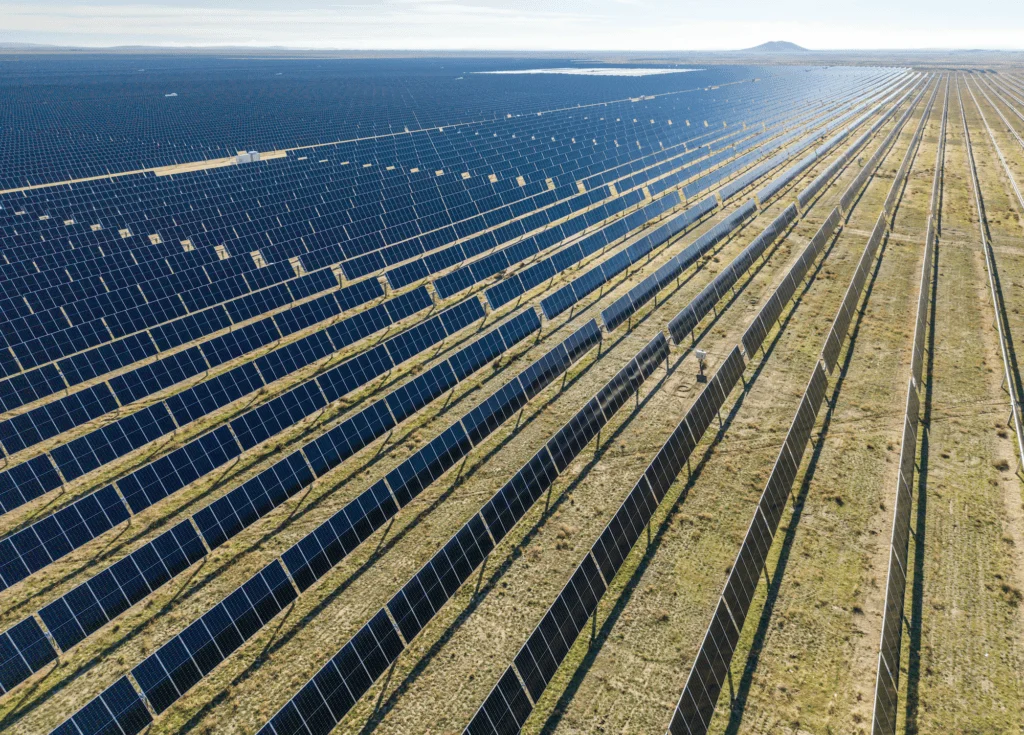
Aratina 1 is a dual-purpose facility delivering 200 megawatts (MW) of solar energy and 500 megawatt-hours (MWh) of energy storage to the California grid. Unlike previous projects where Avantus might have sold the asset upon completion, the company plans to maintain a controlling stake and manage the project’s long-term operations. This shift allows Avantus to capture long-term value and provide more stable returns for its investors while contributing to California’s aggressive decarbonization goals.

The project secured more than $500 million in financing from a consortium led by Sumitomo Mitsui Banking Corporation, Truist Securities, ING Capital, and Mizuho. Additionally, it received a $300 million tax equity commitment from Truist Bank. Aratina 1 serves two major community choice aggregators (CCAs): Central Coast Community Energy (3CE) and Silicon Valley Clean Energy (SVCE). At peak construction, the project created 500 jobs, and its second phase, Aratina 2, is already under construction with a target completion date before the end of 2026. Once fully operational, the combined Aratina Solar Center will represent 350 MW of solar capacity and nearly 1 GW of energy storage.
Idaho’s Clean Energy Expansion Driven by Big Tech
In the Pacific Northwest, Idaho is experiencing an unprecedented surge in solar development, largely fueled by the energy needs of Meta (formerly Facebook). The developer rPlus Energies recently commissioned the 125 MWac Pleasant Valley Solar 2 project in Ada County and simultaneously broke ground on the 400 MWac Blacks Creek Energy Center. Meta will serve as the primary offtaker for both projects through a partnership with Idaho Power.

This development represents a combined investment of $750 million in Idaho’s infrastructure. Lisa Grow, president and CEO of Idaho Power, noted that these projects are essential for maintaining a balanced energy portfolio as the state’s population and industrial base grow. Beyond the electricity generation, the projects provide significant fiscal benefits to the state. Idaho imposes a 3.5% solar energy tax on gross earnings, creating a long-term revenue stream for local taxing entities. Furthermore, rPlus Energies and its partners have contributed $375,000 in scholarships to Boise State University and the College of Western Idaho, aiming to build a local workforce capable of maintaining the state’s 14 utility-scale solar farms, which currently boast a total capacity of 827 MW.
Strategic Financing and the Scaling of Clean Energy Platforms
The ability to scale these massive infrastructure projects depends heavily on access to liquid capital. Strata Clean Energy, a vertically integrated clean energy platform, recently announced the upsizing of its revolving credit and letter of credit facility from $300 million to $450 million. This $150 million increase is intended to support the expansion of Strata’s operational fleet and the commercialization of its diversified development pipeline.

The facility is led by Nomura Securities International and First Citizens Bank. Alex Wilhelm, Strata’s chief financial officer, stated that the increased liquidity provides the company with the flexibility needed to meet growing demand for engineering, procurement, and construction (EPC) services, as well as operations and maintenance (O&M) business. This financial maneuvering reflects a broader trend in the industry where established developers are seeking more robust credit lines to navigate the high-interest-rate environment and the rising costs of raw materials.
Repurposing Coal Lands for Wind Generation in Pennsylvania
In the heart of PJM territory, Competitive Power Ventures (CPV) and Harrison Street Asset Management have announced the start of commercial operations at CPV Rogue’s Wind. The 114 MW project in Cambria County, Pennsylvania, is a notable example of the "all-of-the-above" energy strategy frequently cited by state officials. The project is CPV’s third in the county, joining a natural gas-fired facility and a solar farm.

One of the most compelling aspects of Rogue’s Wind is its location. The project utilizes more than 6,000 acres of former coal mining land, demonstrating a viable path for the economic transition of Rust Belt communities. The site also maintains a unique partnership with the Rock Run Recreation Area, an active ATV park. This allows for the dual use of land, where recreational enthusiasts can ride through trails that lead directly to the base of the project’s 19 Vestas wind turbines. The project highlights how renewable energy can integrate into existing local economies without displacing established land uses.
The Rise of Shared Solar and Ratepayer Protection in Virginia
Finally, the community solar market is seeing renewed activity in the Mid-Atlantic. Altus Power recently acquired five community solar projects in Virginia from New Leaf Energy. The 32 MW portfolio will participate in Appalachian Power Company’s (APCo) shared solar program, which is designed to provide clean energy benefits to approximately 5,000 homes.

Community solar, or shared solar, allows households and businesses that may not be able to install rooftop panels—such as renters or those with shaded properties—to subscribe to a portion of a local solar farm. In exchange, they receive credits on their monthly utility bills. Abhi Parmar, CIO of Altus Power, noted that Virginia’s commitment to protecting ratepayers from rising electricity costs through shared solar programs was a primary driver for the acquisition. As power prices continue to climb across the PJM region, these decentralized energy solutions are becoming increasingly vital for economic equity.
Conclusion: A Transition Defined by Pressure and Innovation
The events of the past week illustrate a dual reality in the American energy sector. On one hand, there is significant friction at the regulatory and grid-management level, as legacy systems like PJM struggle to adapt to the speed of the digital age and the demands of decarbonization. On the other hand, the private sector is demonstrating remarkable agility, with developers transitioning into owners, big tech companies financing state-wide energy shifts, and innovative land-use agreements breathing new life into former coal regions.

As the September deadline for PJM reform approaches, the industry remains in a state of high anticipation. Whether through collaborative stakeholder reform or federal intervention, the structure of the American grid is poised for its most significant transformation in decades. The success of this transition will depend on the ability of regulators to clear bureaucratic hurdles and the capacity of developers to secure the financing and community support necessary to bring the next generation of power online.
