

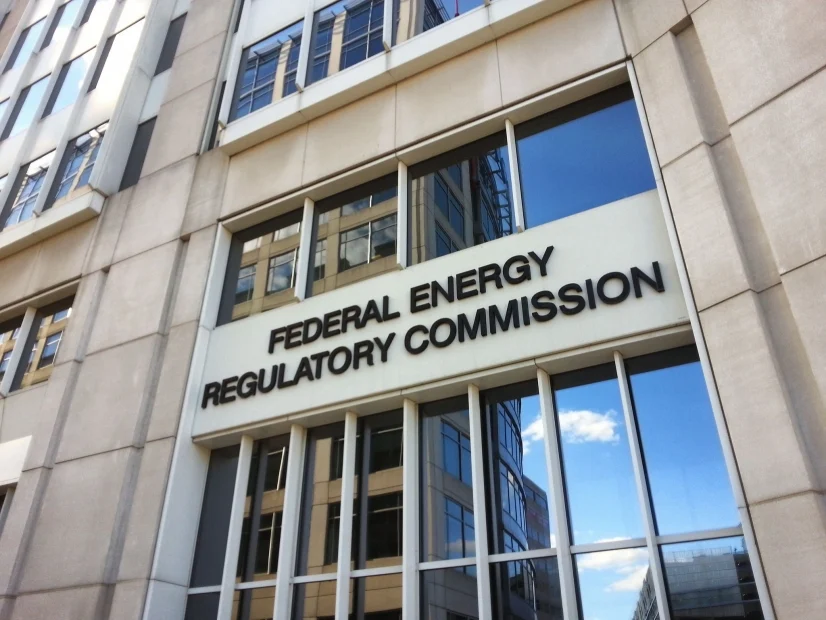
Permeta, a purpose-built artificial intelligence platform, has officially announced the beta launch of FERC.ai, a specialized service designed to transform the extensive and often difficult-to-navigate public records of the Federal Energy Regulatory Commission (FERC) into a conversational and easily searchable database. By integrating with leading large language models (LLMs) including Anthropic’s Claude, OpenAI’s ChatGPT, and Microsoft’s Copilot, FERC.ai allows legal professionals, energy developers, and regulatory analysts to query one of the most complex federal archives using natural language. The service marks a significant shift in how stakeholders interact with federal regulatory data, moving away from traditional keyword-based searches toward a generative AI-driven interface that provides cited answers and direct links to source filings within FERC’s eLibrary.
The Federal Energy Regulatory Commission is an independent agency that regulates the interstate transmission of electricity, natural gas, and oil. It also reviews proposals to build liquefied natural gas (LNG) terminals and interstate natural gas pipelines, as well as licensing hydropower projects. Given the scale of the North American energy infrastructure, the volume of documentation generated by these proceedings is immense. Permeta’s new platform currently provides access to more than 500,000 filings, with the system designed to ingest new records every hour to ensure that users have access to the most current regulatory developments.
A New Paradigm for Regulatory Research
The launch of FERC.ai addresses a long-standing bottleneck in the energy sector: the labor-intensive nature of regulatory due diligence. Traditionally, searching the FERC eLibrary required a deep understanding of docket structures, specific legal terminology, and a significant time investment to manually parse through thousands of pages of PDF documents, exhibits, and staff reports. According to Permeta, FERC.ai streamlines this process by allowing users to ask complex questions, such as how specific environmental concerns were mitigated in previous hydropower applications or how corporate ownership was structured in various Section 203 applications.
The platform’s utility is underscored by its ability to surface relevant passages even when filings utilize varying terminology. This semantic search capability ensures that researchers do not miss critical precedents simply because a different technical or legal term was used in a filing ten years ago. By providing cited answers, the tool allows users to click through directly to the source material, maintaining a high standard of evidentiary integrity required for legal and regulatory proceedings.
Chronology of AI Integration in Federal Oversight
The development and launch of FERC.ai come at a time when both the private sector and federal agencies are exploring the potential of generative AI. The timeline of this technological evolution reflects a broader trend toward data accessibility:
- 2021–2022: The rise of Large Language Models (LLMs) demonstrated the potential for AI to summarize complex texts, but challenges regarding "hallucinations" and the lack of real-time data access remained hurdles for professional use.
- Late 2023: The emergence of Retrieval-Augmented Generation (RAG) and specialized protocols allowed AI platforms to "ground" their answers in specific, verified datasets rather than relying solely on pre-trained information.
- Early 2024: Permeta began the development of a purpose-built architecture to index the FERC eLibrary, focusing on the specific needs of energy law and policy professionals.
- November 2024: The formal beta launch of FERC.ai was announced, utilizing the Model Context Protocol (MCP) to bridge the gap between FERC’s public records and commercial AI assistants.
This progression indicates a shift from general-purpose AI to "vertical AI"—tools designed specifically for a single industry or regulatory body where accuracy and source attribution are paramount.
Technical Specifications and the Model Context Protocol
One of the most significant technical features of FERC.ai is its use of the Model Context Protocol (MCP). MCP is an open standard that enables AI assistants to securely and efficiently access data from external sources. Instead of forcing users to leave their preferred AI environment, FERC.ai connects the FERC eLibrary directly to the user’s existing interface in Claude, ChatGPT, or Copilot.
This integration allows the AI to act as a specialized researcher that has "read" every document in a specific docket. Because the research takes place within the assistant, users can engage in iterative questioning. For example, a user might ask for a summary of a specific protest filed against a pipeline project, and then follow up by asking the AI to compare that protest to similar objections raised in a different region. The coverage of the platform is comprehensive, spanning electric, natural gas, hydropower, and oil proceedings. This includes a wide array of document types:
- Initial applications and amendments
- Commission orders and notices
- Public comments and formal protests
- Technical exhibits and maps
- Internal staff reports and environmental impact statements
Industry Reactions and Practical Applications
The introduction of FERC.ai has been met with interest from high-level legal and regulatory experts who have historically managed large teams dedicated solely to document review. MardiLyn Saathoff, a former general counsel for Oregon Governor Ted Kulongoski and former senior vice president of regulatory affairs at Northwest Natural, highlighted the platform’s efficiency.
"FERC.ai brings the contents of FERC’s e-library inside the AI assistant I already use," Saathoff stated. She noted that the ability to validate every point through cited sources is critical for legal work. "It provides me with a summary comparison of how other parties approached an issue across proceedings and flags what needs deeper analysis—all without spending hours digging through eLibrary."
For energy companies, the implications are largely economic. The cost of regulatory delays can run into millions of dollars, particularly for large-scale transmission projects or natural gas facilities. Permeta CEO Eric Redmond emphasized that understanding the history of similar proceedings is a critical component of preparing a successful application or evaluating the risk of a new project. "FERC.ai saves days of digging and gives you the source documents to double-check the answer," Redmond said.
During the testing phase, the platform demonstrated its ability to perform high-level analytical tasks that would typically require a senior paralegal or junior associate. Users were able to trace how FERC applied specific statutes across different dockets over several years, locate specific company filings hidden within massive multi-party proceedings, and map out complex corporate ownership structures derived from Section 203 filings.
Economic Impact and Subscription Model
The beta version of FERC.ai is currently available to the public under a subscription-based model. To encourage early adoption and gather user feedback, Permeta is offering a discounted rate of $200 per month for beta participants. This follows a 14-day free trial period, allowing firms to test the tool’s efficacy on active dockets before committing to the service.
From a market perspective, this pricing positions FERC.ai as an affordable alternative to traditional legal research databases, which often carry high overhead costs and may not offer the same level of specialized AI integration for FERC-specific data. Beta users who sign up during this period are also granted the ability to lock in their trial pricing for one year and will receive priority access to new features as the platform evolves.
Broader Implications for the Energy Transition
The launch of FERC.ai comes at a pivotal moment for the United States energy sector. As the nation undergoes a significant energy transition, FERC is at the center of critical debates regarding grid modernization, the integration of renewable energy, and the build-out of interstate transmission lines. Recent regulatory moves, such as FERC Order No. 1920—which seeks to reform regional transmission planning and cost allocation—have created a surge in new filings and complex legal arguments.
For environmental groups, tribal nations, and smaller market participants, tools like FERC.ai could potentially level the playing field. These entities often lack the vast legal resources of major utilities or fossil fuel companies. By lowering the barrier to entry for high-quality regulatory research, AI-driven platforms may allow for more robust participation in the public comment process and more effective intervention in proceedings that affect local communities and the environment.
Furthermore, the transparency provided by conversational AI could lead to more consistent regulatory outcomes. When all parties have easier access to precedent and can quickly identify how the Commission has ruled on similar matters in the past, it may lead to more standardized applications and fewer procedural delays.
Limitations and Independent Status
Despite its capabilities, Permeta has been clear that FERC.ai is an independent product. It is not affiliated with, endorsed by, or sponsored by the Federal Energy Regulatory Commission. The platform functions as a sophisticated bridge to public data, but it does not replace the need for professional legal counsel. Users are encouraged to use the provided citations to verify all AI-generated summaries against the original filings.
As the beta period progresses, Permeta intends to expand the platform’s capabilities, potentially including more advanced data visualization tools for mapping energy infrastructure or automated alerts for specific docket updates. The success of FERC.ai may serve as a blueprint for similar AI-driven interfaces for other "mammoth" federal records, such as those held by the Environmental Protection Agency (EPA) or the Securities and Exchange Commission (SEC).
In an industry where time is a critical commodity and the volume of data continues to grow exponentially, the arrival of FERC.ai represents a significant step toward the "democratization" of complex regulatory information. By turning a static archive into a dynamic conversation, Permeta is providing the energy sector with a tool that matches the speed and complexity of the modern regulatory environment.
