

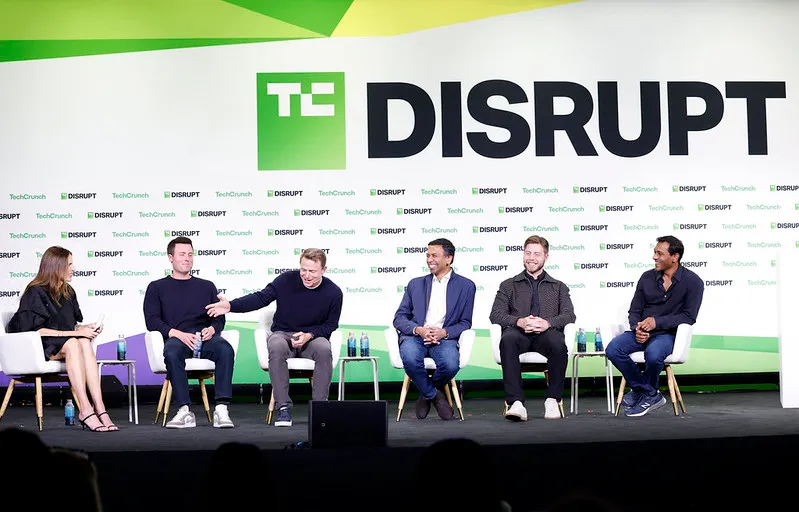
Venture capital stalwart Benchmark recently unveiled significant shifts in its fund structure and partner roster, signaling a pragmatic adaptation to the dynamic tech investment environment while reaffirming its deeply entrenched, founder-centric philosophy. At the recent TechCrunch Disrupt conference, the firm’s five general partners — Peter Fenton, Ev Randall, Jack Altman, Chethan Puttagunta, and Eric Vishria — presented a united front, articulating a strategy that balances increased capital commitments with a steadfast adherence to its distinctive, concentrated investment approach. This evolution comes at a pivotal moment for the venture capital industry, characterized by unprecedented capital inflows, rapid technological advancements, and increasing market volatility, particularly within the burgeoning artificial intelligence sector.
A Legacy of Lean Investment Meets Modern Demands
For decades, Benchmark has stood as an outlier in the venture capital world, known for its remarkably small partnership size, focused fund structure, and a hands-on approach that eschewed the mega-fund trend. Historically, the firm maintained a $500 million core fund for two decades, a testament to its philosophy of concentrated, early-stage bets. This summer, however, marked a significant departure, with Benchmark announcing $2 billion across two new funds: an expanded core fund and a novel growth fund. This move is only the second time in its 31-year history that the firm has significantly scaled up its capital commitments, reflecting a strategic response to market inflation and the burgeoning capital requirements of modern startups.
Peter Fenton, a long-serving general partner, elaborated on this evolution, explaining that the core fund’s increase was primarily an adjustment to economic realities. "The craft that hasn’t changed is the core fund: working closely with founders at the beginning," Fenton stated. "It’s usually a 10-to-15-year commitment, [working] shoulder to shoulder, and that doesn’t scale. There’s also been inflation. We held the core fund at $500 million for 20 years, and it has just inflated to be consistent with the existing economy, which we hadn’t done, and that was probably a tactical error on our part." This inflationary pressure is well-documented across the venture ecosystem, where seed and Series A rounds have seen substantial increases in average check sizes over the past decade. According to PitchBook data, the median Series A deal size in the US rose from $8.5 million in 2016 to $15 million in 2022, necessitating larger initial investments from early-stage firms to maintain meaningful ownership stakes.
The introduction of a $1.25 billion growth fund represents an even more pronounced strategic shift. Fenton described this as an "expansion of our mandate," addressing what was previously "a fork in our eye." Benchmark had observed numerous opportunities for significant returns (10 to 1,000x) in later-stage rounds that its early-stage focus prevented them from participating in. This new fund aims for a highly concentrated portfolio, with Fenton suggesting "four to six, maybe seven to eight" investments, aligning with the firm’s belief that a small number of exceptional deals drive the vast majority of returns, a principle famously highlighted in J.P. Morgan’s "The Agony and the Ecstasy" paper on venture capital portfolio dynamics. This move positions Benchmark to support its most successful portfolio companies through later growth stages or to selectively invest in high-potential growth-stage companies, a domain traditionally dominated by larger growth equity firms.
The Enduring Power of a Small, Cohesive Partnership
Despite the expanded capital base, Benchmark’s core operational philosophy remains rooted in its small, equal partnership structure. The firm’s commitment to a close-knit team of five general partners, an anomaly in an industry increasingly populated by large, multi-tiered investment teams, was a recurring theme at Disrupt. The partners reiterated their investment pace of just two or three new bets per year per partner, a stark contrast to many rivals who are accelerating their deployment in a competitive market. This deliberate pace underscores a belief in deep diligence, hands-on founder support, and long-term commitment over volume.
A hallmark of Benchmark’s unique culture is its Monday partner meeting, famously held without a formal agenda. Eric Vishria explained, "It’s weirdly arbitrary, honestly. It’s an ongoing conversation. In a time of rapid change, you’re trying to figure out what’s becoming possible that wasn’t possible six months ago, and who’s bending light." This unstructured approach fosters open dialogue, allows for reactive support for portfolio companies, and encourages a collective stretching of intellectual boundaries, often involving discussions with external industry leaders. Chethan Puttagunta emphasized the practical benefit: "Part of not having an agenda is you need space to be reactive. If a founder needs help landing an executive or a strategic partnership, the five of us can be at their disposal." This model stands in stark contrast to the highly systematized investment committees and product group federations found in many larger venture firms, which can sometimes introduce bureaucratic hurdles.
The partnership’s "equal" status extends to its deal-making process, where the concept of a formal veto remains largely unarticulated. When pressed on whether a single partner could "put the kibosh on a deal," Puttagunta playfully admitted, "Nobody knows. We don’t have rules around it." Jack Altman, one of the newer partners, echoed this, confessing, "I actually don’t know. I was waiting to see what someone else [said]." This absence of formal structure is not an oversight but a deliberate feature, enabled by the firm’s low volume of deals and deep internal trust. Fenton added, "One of the differentiating aspects of our brand is we’re not so cocksure to come in and say ‘winner’ or ‘loser.’ It’s not Shark Tank… The occasional case where someone comes in who’s polarizing – the entrepreneurs feel that. If someone in the room doesn’t like you, we’re not a great partner." This implies a tacit consensus-driven model, where deep alignment among partners is paramount before committing to a founder.
New Blood Reinforces Core Values
The past year has seen significant changes in Benchmark’s partnership, with Ev Randall joining late last year and Jack Altman coming on board in February. These additions follow a period where three of the four partners interviewed just three years prior are no longer with the firm, highlighting the fluid nature of venture partnerships. However, both new partners emphasized that Benchmark’s enduring culture and values were key attractors.
Ev Randall, with a distinguished background at firms like Founders Fund, Bond, and Kleiner Perkins, offered a comparative perspective on Benchmark’s distinctiveness. "Every firm is ultimately a collection of the people within the firm and how they work together," Randall noted. "Very early in my career, I was drawn to small partnerships because they allow a higher level of throughput and fidelity in your conversations, where you don’t feel like you’re making decisions through some Byzantine corporate structure. You’re going out on the field together, like a sports team." She particularly highlighted the mutual admiration and learning among Benchmark’s current GPs as a "very rare" mix of attributes.
Jack Altman, who joined Benchmark after successfully raising a $275 million fund for his own firm and building a widely popular podcast, underscored the firm’s founder-first ethos. "So much in this industry gets tied up in money and status," Altman observed, "and what I felt from the Benchmark team then, and ten times more as I’ve gotten to know them so well, is it’s a group that really cares about founders and helping companies." For Altman, the opportunity to learn from a group of "so smart and focused and driven" partners in a "crazy market" was a compelling draw, providing a collaborative environment he valued over individual investing. His background, particularly his extensive network cultivated through his podcast, is expected to be a significant asset to Benchmark’s deal sourcing and founder engagement efforts.
Navigating Market Dynamics: AI, Competition, and Geographic Focus
The partners also offered insights into pressing industry trends, from the complexities of VC-founder relationships in a rapidly evolving market to the hype surrounding artificial intelligence and the enduring gravitational pull of San Francisco.
On the increasing phenomenon of VCs backing competing companies, Eric Vishria acknowledged the challenge. "The harsh reality of this world is every company is evolving very quickly, and so you do have companies that will naturally evolve from one thing to another, or pivot or change, and you are going to get conflicts," he stated. Benchmark emphasizes maintaining confidentiality and avoiding "insane direct conflict," but the firm recognizes that in an era where "the cost of coding new products effectively goes to zero" (as Puttagunta noted), founders are "ultra ambitious" and will increasingly expand into adjacent territories, leading to more potential overlaps. This issue is a growing concern for founders, as investment firms often seek to maximize returns across their portfolio, sometimes leading to perceived conflicts of interest. The implicit "VC-founder pact" of unwavering loyalty is being tested by the rapid expansion of companies and the sheer volume of capital deployed.
The conversation invariably turned to artificial intelligence, a sector currently experiencing both unprecedented investment and significant market volatility. Ev Randall vehemently pushed back against narratives of an "AI chill effect," particularly in response to the recent bankruptcy filing of Character.AI. She dismissed such interpretations as products of a "hyperactive X echo chamber," clarifying that Character.AI was the "leftover corpse of a company whose founder and team were acqui-hired into Google a year and a half ago, and it was already sold for $2.3 billion." Randall highlighted the fundamental health of the AI ecosystem, citing strong demand from customers willing to pay for AI services at good gross margins, often exceeding the available compute capacity. She suggested that the public listings of major AI players like OpenAI and Anthropic would bring much-needed stability to a market currently swinging wildly based on unverified information and anonymous estimates. Data from sources like CB Insights and PitchBook show record-breaking funding rounds for AI startups in 2023 and early 2024, with valuations soaring for foundational model companies and AI infrastructure providers.
Benchmark’s willingness to invest in "heretical" ideas was exemplified by its 2016 investment in Cerebras Systems, an AI chip company. Eric Vishria recounted the unusual nature of the bet – the firm’s first hardware investment in a decade – and the initial skepticism from partners like Peter Fenton, who eventually flipped after hearing the pitch. "The romanticism of falling in love with a founder and an idea is why we do this," Vishria shared. Fenton underscored the importance of backing non-consensus ideas: "If it’s consensus, why is there a startup?" This philosophy embraces risk in pursuit of potentially transformative technologies, a core tenet of early-stage venture capital. The post-IPO volatility of Cerebras’s stock, which saw a significant surge and then a return to its initial pricing, was acknowledged by Vishria as typical for public tech companies, requiring a "stomach of titanium" from employees and investors alike. He also addressed Bill Gurley’s long-standing advocacy for direct listings, noting that while they "can for sure make sense," the immense capital needs of current AI companies (Cerebras raised $6 billion) make traditional IPOs, which generate capital, a more likely path for many.
Finally, the partners discussed the enduring importance of San Francisco as a hub for innovation, particularly in the AI era. While remote work has gained traction, the consensus at Benchmark is that San Francisco retains a powerful gravitational pull. Jack Altman stated, "I don’t know that you have to be here as a founder, but I think it is right now by far the easiest place to get talent, capital, and customers." Peter Fenton added historical context, noting that "90%-plus percent of the capital returns have come from companies founded here." The "ecosystem effect" – the concentration of experienced executives, ambitious individuals, and a high bar for success – remains unparalleled. Ev Randall observed that even non-SF based founders she meets are often "spending time in San Francisco, or they’re planning to move out to San Francisco," underscoring the city’s role as a crucible where "iron sharpens iron." This collective sentiment highlights that despite decentralization trends, the serendipitous collisions and deep networks fostered in a concentrated innovation hub like San Francisco continue to offer a unique advantage for startups, especially those operating at the bleeding edge of AI.
Implications for the Venture Landscape
Benchmark’s strategic evolution provides a fascinating case study in how established, high-performing venture firms adapt to systemic shifts in the industry. By expanding its fund size to accommodate market inflation and introducing a growth fund, Benchmark acknowledges the necessity of evolving its capital deployment to remain competitive and capture later-stage opportunities. This move could be interpreted by some as a capitulation to the mega-fund trend, yet the firm’s steadfast commitment to a small partnership, concentrated portfolio, and hands-on engagement distinguishes its approach from many larger, more institutionalized players.
The emphasis on partnership cohesion, the "no agenda" meetings, and the implicit consensus model for investments suggest a deliberate effort to protect the firm’s unique culture and decision-making agility, even with increased capital. For founders, Benchmark’s approach offers a compelling value proposition: access to significant capital and a highly engaged, experienced partnership, but with the expectation of a deep, long-term commitment. In a market where founders increasingly weigh the "smart money" factor, a firm like Benchmark that prioritizes intimate, hands-on support may continue to attract top talent.
The firm’s nuanced perspective on the AI market, distinguishing between media hype and fundamental demand, offers a valuable counter-narrative to the prevailing anxieties about a potential bubble. Its continued bias towards San Francisco also reinforces the idea that despite the rise of distributed teams, geographic concentration of talent and capital still offers a critical advantage for certain high-growth sectors. Benchmark’s journey reflects a broader challenge for the venture capital industry: how to scale capital and adapt to new market realities without diluting the core values and operational advantages that defined its success. The firm’s ongoing narrative will undoubtedly continue to influence discussions around best practices in venture investing for years to come.
