

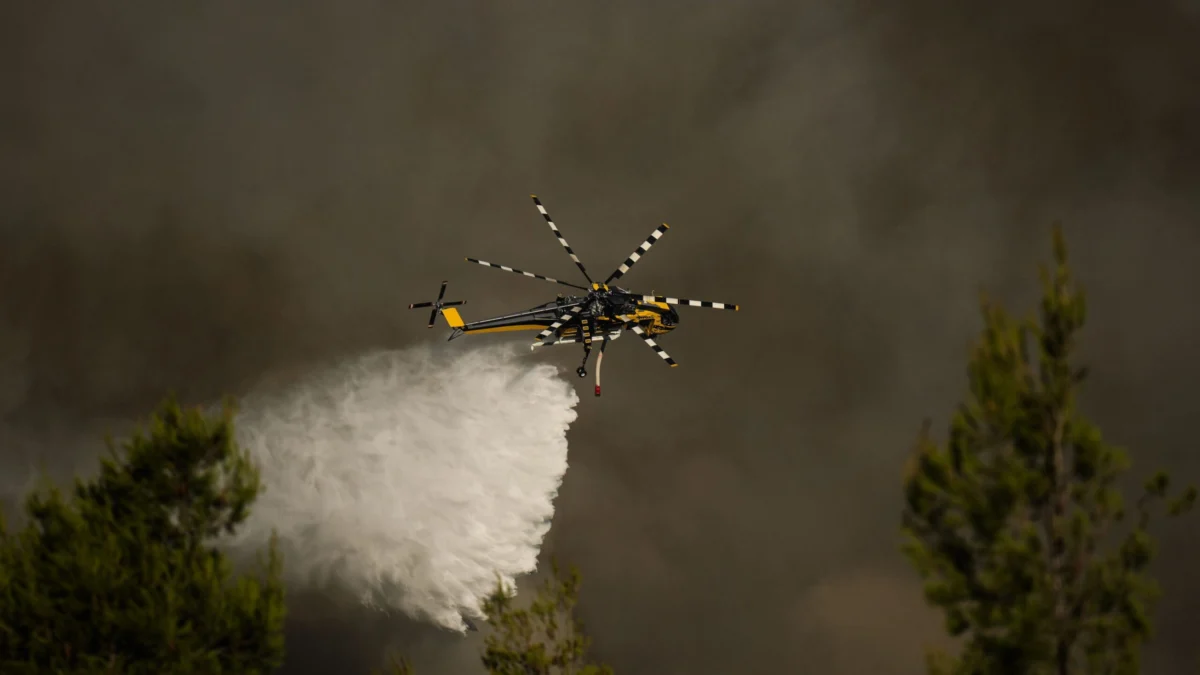
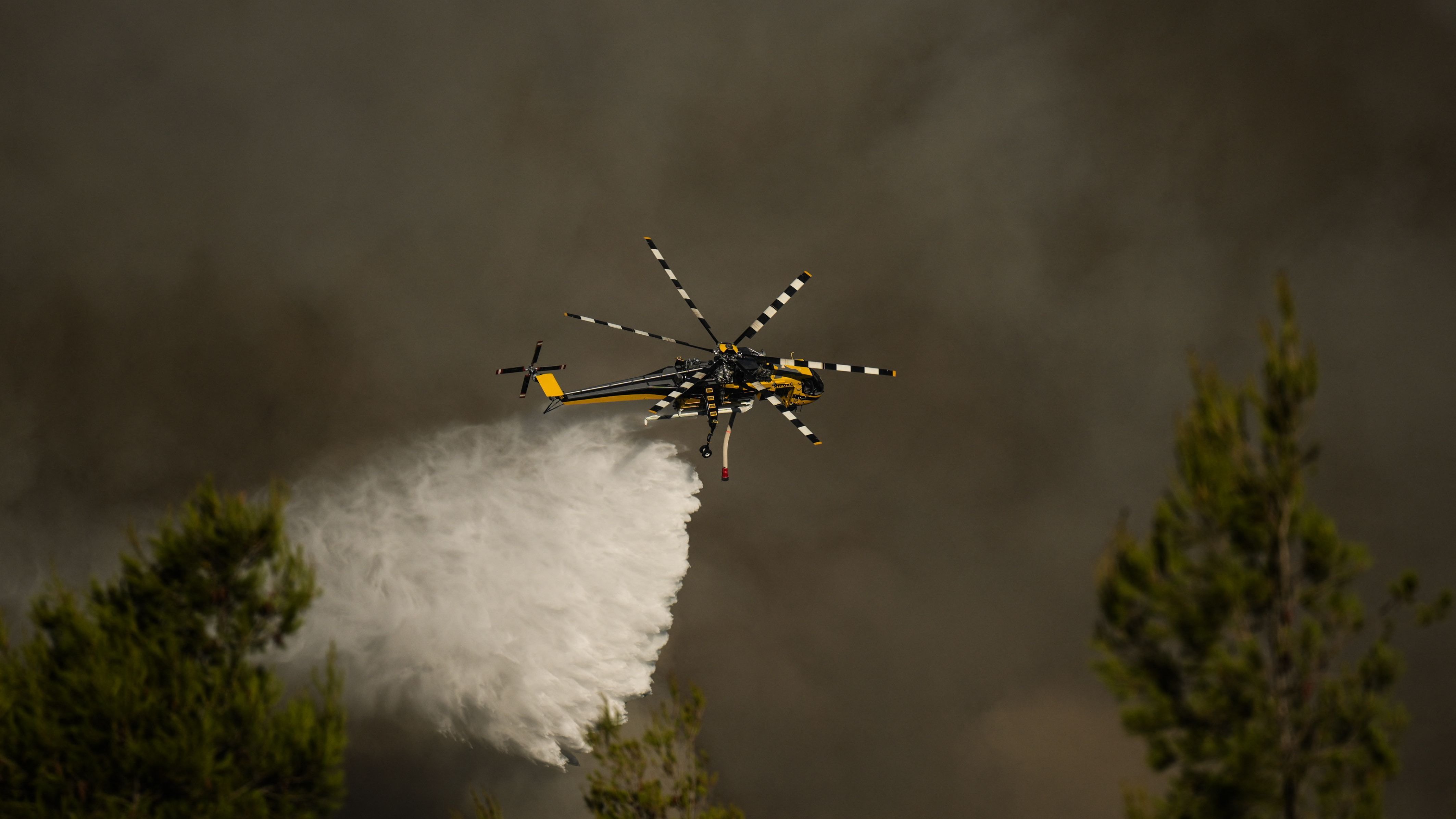
The ongoing battle against severe wildfires across Europe has taken a tragic turn in Greece, where the pilot and co-pilot of a firefighting helicopter lost their lives on Sunday during a critical mission west of Athens. The incident occurred when their aircraft collided with another helicopter while actively engaged in combating the inferno. This loss brings the total number of fatalities in Greece due to the wildfires to five, a stark reminder of the peril faced by emergency responders. While the situation in Greece remains dire, with the battle against the flames far from over, there is a palpable sense of relief in Spain, where the intensity of the fires has significantly abated. France, too, is experiencing a more stable period, though new ignitions continue to require vigilant monitoring.
Greece Reels from Dual Tragedy: A Nation Under Siege by Flames
The catastrophic wildfires plaguing Greece have cast a long shadow of grief over the nation. The crash of the firefighting helicopter west of Athens, a region particularly hard-hit by the blazes, claimed the lives of its two crew members, a Danish pilot and his Greek co-pilot. This devastating incident tragically elevates the death toll from the current wave of fires to five. Earlier in the week, three firefighters had already perished in the line of duty on the islands of Crete and the Peloponnese peninsula, underscoring the extreme dangers confronting those on the front lines of these environmental disasters. The ferocity of the fires has led to widespread destruction, with vast swathes of forestland consumed, numerous homes and agricultural structures reduced to ashes, and countless livestock and wild animals perishing.
State broadcaster ERT released harrowing footage capturing the moments leading up to the helicopter collision. The video appears to show one aircraft inadvertently touching the rotor of another, a catastrophic contact that resulted in an explosion and the subsequent plummet of one helicopter, which became a fireball before crashing to the ground. The grim discovery of the two pilots’ bodies later confirmed the tragic outcome. The pilot of the second helicopter, however, managed to execute an emergency landing, and both occupants of that aircraft survived the ordeal, according to Greek media reports.

The Uncontrolled Inferno West of Athens: A Landscape Scarred
The massive wildfire raging west of Athens remains a critical concern, stubbornly defying containment efforts. The inferno has advanced perilously close to the town of Megara, a densely populated area with approximately 36,000 inhabitants. Initial assessments indicate that over 10,000 hectares of forestland have been annihilated in this region alone, transforming a once verdant landscape into a scorched and desolate panorama. The ecological and economic devastation is immense, with profound impacts on biodiversity and local livelihoods.
The challenging terrain and arid vegetation exacerbate the already arduous task of firefighting. Firefighters, supported by the army and civil protection units, are employing heavy machinery to create firebreaks in a desperate attempt to halt the relentless advance of the flames, particularly in the densely wooded Kithairon mountain range. International solidarity has been a crucial component of the response, with firefighters from France and Romania offering vital assistance to their Greek counterparts.

Potential Wind Farm Connection: A New Angle in the Investigation
Adding a layer of complexity to the investigation into the origins of the major blaze west of Athens, preliminary theories suggest a possible link to a private wind farm’s power lines. It is suspected that strong winds may have caused these lines to sway, leading to sparks that ignited the dry underbrush. In connection with this line of inquiry, two individuals have been taken into custody, signaling a potential shift in understanding the genesis of this devastating event. This development highlights the intricate interplay between natural phenomena and human infrastructure in the context of escalating wildfire risks.
A Glimmer of Hope: Spain’s Fires Subside, France’s Situation Stabilizes
In stark contrast to the grim reality in Greece, Spain is experiencing a significant de-escalation of its wildfire crisis. A specialized unit from North Rhine-Westphalia, comprising over 50 firefighters, has been deployed to the northwestern region of Castile and León, lending crucial support to their Spanish colleagues. Their primary focus has been on locating and extinguishing smoldering embers, a critical phase in preventing re-ignition. According to Frank Frenser, a spokesperson for the Bonn fire department, the situation has improved considerably over the weekend.

Nationwide, the Spanish wildfire portal reported over 40 active fires as of the weekend, predominantly smaller blazes in the regions of Castile and León, Catalonia, Valencia, and Castile-La Mancha. While the intensity has waned, the threat remains, necessitating continued vigilance.
France is also reporting a more stable wildfire situation, although the constant threat of new ignitions demands ongoing preparedness. On Sunday, a new wildfire erupted near the city of Carcassonne in the south of France. Within hours, the blaze had consumed 100 hectares, prompting the deployment of firefighting aircraft. Media reports, citing fire officials, indicate that the fire was triggered by a burning vehicle on the A61 motorway. As a precautionary measure, approximately 100 residents in the municipality of Cazilhac were evacuated, along with individuals at rest stops along the highway.

Further south, in the Var department, where a rekindled fire had rapidly spread just three days prior, evacuation orders and curfews have been lifted. However, authorities have cautioned that the risk of re-ignition persists, particularly due to prevailing winds. Media reports, referencing the prefecture, state that 41 houses were destroyed by the flames in this area.
Broader Implications and the Shadow of Climate Change
The series of intense wildfires across Southern Europe this summer serve as a stark and urgent reminder of the escalating threat posed by climate change. Record-breaking heatwaves, prolonged droughts, and increasingly erratic weather patterns are creating a fertile ground for these devastating events. The loss of life, destruction of property and natural habitats, and the immense economic costs associated with firefighting and recovery efforts underscore the urgent need for robust climate mitigation and adaptation strategies.

The coordinated international response in Greece and Spain highlights the growing recognition of the transboundary nature of these crises. As weather patterns become more unpredictable and extreme, fostering cross-border cooperation and resource sharing among nations will be paramount in effectively combating future wildfire threats. The long-term implications extend beyond immediate environmental damage, impacting tourism, agriculture, public health, and the overall resilience of communities in fire-prone regions. The ongoing struggle against these infernos is not merely a localized event but a critical symptom of a global environmental challenge demanding immediate and sustained attention. The coming days will be crucial for monitoring the situation in Greece, as efforts to fully contain the remaining fires continue under the watchful eye of a nation grappling with profound loss.
