

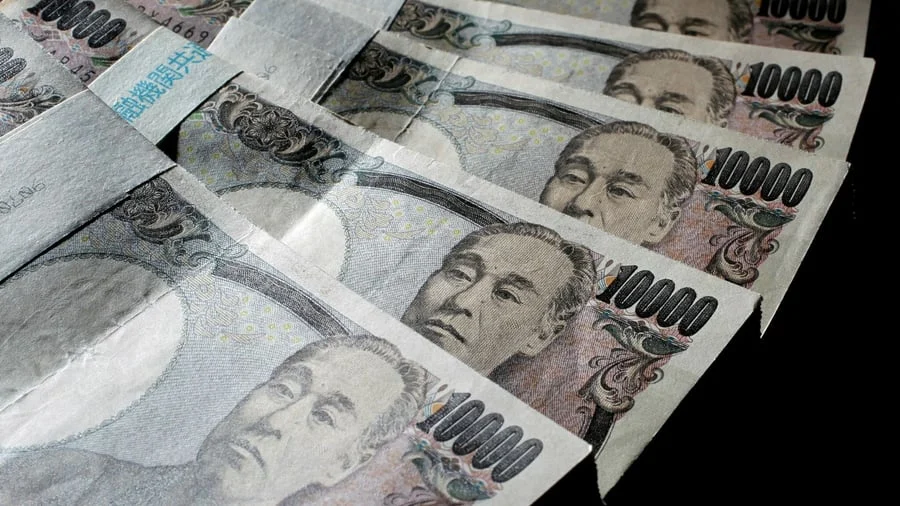
The United States and Japan are joining forces in an unprecedented currency market intervention aimed at arresting the steep decline of the Japanese Yen. The coordinated action, confirmed by U.S. President Donald Trump, marks a significant shift in international economic policy and underscores the growing concerns over the Yen’s rapid depreciation, which had reached levels not seen in decades.
Historic Intervention Signals Economic Alliance
Speaking from aboard Air Force One en route to Tokyo, President Trump stated on Sunday (local time) that the U.S. would provide assistance to bolster the Japanese currency, framing it as a gesture of friendship and a mutually beneficial economic strategy. "The Yen is weakening, and they wanted a little help. And we are always there for Japan," Trump told reporters, responding to inquiries about the intervention. He further elaborated that the joint action would be beneficial for the global economy and that the U.S. would also derive financial advantages from the agreement. Following Trump’s remarks, the U.S. dollar saw a slight dip of 0.2 percent against the Yen, settling at 157.07 Yen. Earlier, the dollar had surged to nearly 164 Yen, its highest point since 1986, highlighting the urgency of the situation.
Sources within the Japanese government indicated that Finance Minister Satsuki Katayama was expected to officially announce the joint intervention on Monday morning, confirming that Tokyo and Washington had acted in concert the previous week. This decisive measure was reportedly taken to halt the Yen’s slide to a 40-year low, according to two Japanese government officials familiar with the matter who spoke to Reuters. The intervention signifies the first instance of joint market action by the two nations in 15 years, underscoring the severity of the currency’s decline and its broader economic ramifications.
Deepening Crisis: The Yen’s Unprecedented Fall
The Japanese Yen has been on a persistent downward trajectory for an extended period, exacerbated by a widening interest rate differential between Japan and other major economies, particularly the United States. The Bank of Japan (BOJ) has maintained its ultra-loose monetary policy, including negative interest rates, in an effort to stimulate inflation and economic growth. In contrast, the U.S. Federal Reserve has been engaged in a series of interest rate hikes to combat rising inflation. This divergence in monetary policy has made U.S. dollar-denominated assets more attractive to investors, leading to a significant outflow of capital from Japan and a weakening of the Yen.
The implications of a rapidly depreciating Yen are multifaceted and have a direct impact on Japan’s economy. For consumers and businesses, a weaker Yen translates to higher import costs for essential goods, including energy and raw materials. This inflationary pressure can erode purchasing power and dampen domestic demand, posing a significant challenge to Prime Minister Fumio Kishida’s administration. The rising cost of living has already contributed to a decline in public approval ratings, making the stabilization of the Yen a critical political imperative.
Timeline of Intervention and Market Reactions
While the official announcement was slated for Monday, evidence suggests that the intervention efforts began earlier. Data from the Bank of Japan indicated that Tokyo may have sold approximately $59 billion worth of U.S. dollars on Thursday to support the Yen. This was reportedly followed by another suspected intervention on Friday.
U.S. Treasury Secretary Scott Bessent confirmed on Friday that the coordinated action had helped counter "disorderly" movements in the Yen. He emphasized the U.S.’s commitment to further joint interventions if necessary, stating, "We will not hesitate to participate in further coordinated interventions." Bessent also expressed his support for Japan’s "resolute steps" to address the significant undervaluation of its currency.
The market’s initial reaction to the intervention was a slight strengthening of the Yen. However, currency markets are notoriously sensitive to policy shifts, and sustained stabilization will likely depend on the perceived commitment and scale of future actions by both governments and their central banks. The historical precedent of joint intervention, while rare, suggests a high level of concern and a unified intent to manage currency fluctuations.
Economic Rationale and Broader Implications
The intervention serves multiple economic objectives. For Japan, it aims to curb imported inflation, protect household purchasing power, and create a more stable environment for businesses that rely on imports. A more stable Yen can also encourage foreign investment by reducing currency risk.
From the U.S. perspective, while the direct financial benefit might be less pronounced, a stable global economic environment is crucial for its own growth and trade. A severely weakened Yen could potentially disrupt trade balances and create competitive disadvantages for U.S. exporters. Furthermore, the intervention demonstrates a commitment to international cooperation and financial stability, reinforcing the U.S.’s role as a key global economic partner.
The coordinated effort also involves a suggestion from Bessent to potentially increase the FIMA Repo Facility in the coming months. The FIMA Repo Facility is a crucial tool for central banks, allowing them to temporarily exchange U.S. dollars for other currencies, thereby providing liquidity and acting as a mechanism for currency swaps. Enhancing this facility could provide an additional layer of support for the Yen and further solidify the financial ties between the two nations.
Analysis of the Intervention’s Effectiveness and Future Outlook
The effectiveness of currency interventions is often debated. While they can provide short-term relief and signal strong policy intent, their long-term impact is contingent on addressing the underlying economic fundamentals driving the currency’s movement. In the case of the Yen, the persistent interest rate differential remains a significant factor.
Analysts will be closely watching whether this intervention is a one-off event or the beginning of a sustained effort. The commitment of both the U.S. Treasury and the Bank of Japan will be crucial. If the Federal Reserve continues its hawkish stance on interest rates while the BOJ maintains its accommodative policy, the pressure on the Yen could persist.
However, the fact that the U.S. has chosen to intervene alongside Japan suggests a heightened level of concern that transcends typical market fluctuations. It indicates a recognition that the Yen’s rapid decline poses risks not only to Japan but also to broader global financial stability. The joint action could also be interpreted as a signal to speculative traders who have been betting on further Yen depreciation.
The intervention also raises questions about the future of currency management. In an era of increasingly interconnected financial markets and volatile capital flows, coordinated interventions, though complex and rare, may become a more prominent tool in the arsenal of major economies seeking to maintain financial stability. The success of this U.S.-Japan joint effort could set a precedent for future responses to currency crises.
Historical Context: Previous Interventions and Their Impact
The last significant joint intervention by the U.S. and Japan occurred in 2000, when both countries intervened to sell Yen and buy dollars. At that time, the Yen had been strengthening, and the intervention was aimed at preventing its appreciation from harming Japanese exporters. This current intervention, therefore, represents a reversal of roles and highlights the dynamic nature of currency markets and international economic cooperation.
The period leading up to this intervention has been characterized by a gradual weakening of the Yen, which accelerated in recent months. Several factors contributed to this:
- Interest Rate Differentials: As mentioned, the widening gap between U.S. and Japanese interest rates made dollar-denominated assets more attractive.
- Inflationary Pressures in Japan: While the BOJ aims for inflation, the rapid rise in import costs due to the weak Yen has created a difficult situation for consumers.
- Global Economic Uncertainty: Geopolitical tensions and concerns about global economic growth can often lead investors to seek the relative safety of the U.S. dollar, further strengthening it against other currencies.
The decision to intervene is not taken lightly by any central bank or government. It involves significant financial resources and carries the risk of unintended consequences. However, the unprecedented nature of the Yen’s decline and its potential to destabilize regional and global markets appears to have prompted this decisive, albeit costly, joint action.
The Path Forward: Sustaining Stability
The immediate aftermath of the intervention will be closely watched. The markets will analyze trading patterns, official statements, and any further indications of coordinated action. The Bank of Japan’s next monetary policy meeting will be particularly scrutinized for any shifts in its forward guidance or potential adjustments to its policy stance, even if a change in interest rates is not immediately anticipated.
For the United States, the commitment to intervention signals a pragmatic approach to economic diplomacy, recognizing that currency stability is a shared responsibility. The emphasis on the FIMA Repo Facility also suggests a willingness to utilize existing financial mechanisms to ensure liquidity and manage exchange rate volatility.
In conclusion, the joint intervention by the U.S. and Japan to support the Yen is a landmark event in international finance. It reflects a shared commitment to economic stability and a recognition of the interconnectedness of global markets. While the long-term effectiveness will depend on various factors, this coordinated action represents a significant attempt to arrest a worrying trend and restore confidence in the Japanese currency. The coming weeks and months will reveal the full impact of this unprecedented measure.
