

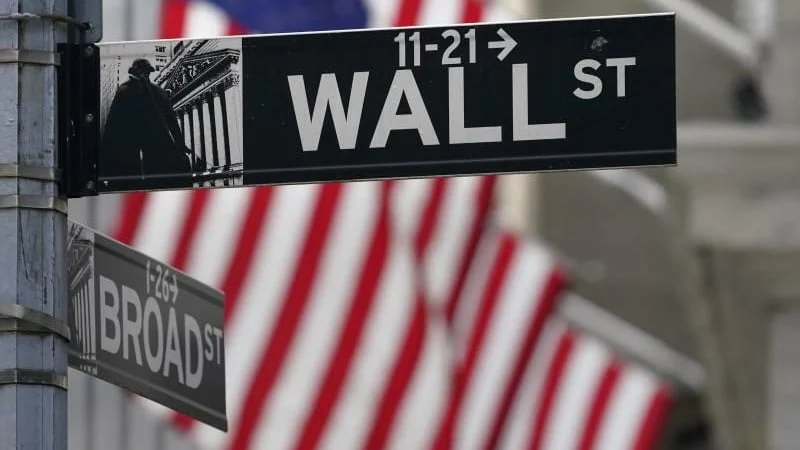
New York – Following two consecutive trading sessions marked by declines, major indices on Wall Street staged a comeback on Wednesday, signaling a growing conviction among market participants regarding an impending interest rate hike by the Federal Reserve. This upward movement in the stock market suggests a recalibration of investor sentiment, with a greater focus shifting towards the central bank’s monetary policy decisions. The current market environment is characterized by a delicate balance, where economic data, particularly concerning the labor market, is being scrutinized for clues about the Fed’s next move.
Softening Job Growth Fuels Rate Hike Speculation
The primary economic indicator dominating discussions on Wednesday was the latest report on the U.S. labor market. Data released from ADP, a leading provider of human resources management software and services, revealed that private sector job creation in August decelerated to its slowest pace since the beginning of the year. According to the ADP National Employment Report, a mere 38,000 new jobs were added to the private economy last month. This figure fell short of the 48,000 new positions anticipated by economists surveyed by Reuters. The July figure was also revised downward to 46,000 from an initial estimate.
This moderation in job growth, while seemingly negative in isolation, has been interpreted by many market observers as a key piece of evidence supporting the case for a Federal Reserve interest rate increase. The rationale behind this interpretation is rooted in the Fed’s dual mandate: to foster maximum employment and maintain price stability. A cooling labor market, characterized by slower job creation, can potentially alleviate inflationary pressures by reducing the upward pressure on wages. If the economy is not overheating, the Fed may feel more comfortable in adjusting its monetary policy without the immediate risk of igniting runaway inflation.
The Crucial Nonfarm Payrolls Report on the Horizon
The ADP report serves as a precursor to the more comprehensive and closely watched official government employment figures, the Nonfarm Payrolls report, scheduled for release on Friday. This upcoming report will provide a broader picture of the U.S. labor market, encompassing job creation in both the private sector and government entities. Economists are forecasting a rebound in job creation in the official report, projecting an addition of 56,000 jobs for August. This forecast comes after a surprising decline of 23,000 jobs in July, which had previously introduced a degree of uncertainty into the economic outlook.
The divergence between the ADP figures and the consensus expectations for the Nonfarm Payrolls report underscores the complexity of assessing the current state of the labor market. While the ADP data points to a slowdown, the anticipation of a stronger official report suggests that the underlying momentum in job creation may still be present, albeit at a more measured pace. The market will be keenly observing how these two datasets align and what narrative they collectively tell about the health of the U.S. economy.
Historical Context and Federal Reserve’s Dilemma
The Federal Reserve has maintained its benchmark interest rate, the federal funds rate, within a target range of 3.50% to 3.75% for an extended period. This period of accommodative monetary policy has been in place to support economic recovery following previous downturns. However, with the economy showing signs of resilience and inflation remaining a persistent concern, the Fed has been under increasing pressure to normalize its monetary policy.
Recent statements from Fed officials have hinted at a potential shift in stance. Notably, Federal Reserve Governor Kevin Warsh has, in recent public remarks, indicated a recognition of the need for action in the face of persistently high inflation. His comments suggest that the central bank is closely monitoring inflationary pressures and is prepared to adjust its policies if these pressures do not abate. The current economic landscape presents a nuanced challenge for the Fed: on one hand, the desire to maintain economic growth and support employment; on the other, the imperative to control inflation and preserve the purchasing power of the dollar.
JP Morgan’s Analysis: The Impact of Job Creation on Equities
Adding another layer of insight into the market’s anticipation, a recent analysis from major bank JP Morgan has shed light on how different job creation scenarios might impact the stock market, particularly the S&P 500 index. According to reports, JP Morgan’s research suggests that an excessively strong job creation number in the upcoming Nonfarm Payrolls report could actually be detrimental to the S&P 500. This counterintuitive finding implies that the market may be positioned for a moderate increase in employment rather than a surge.
The reasoning behind this perspective likely stems from the Federal Reserve’s potential reaction to robust job growth. If the labor market appears to be accelerating rapidly, it could strengthen the argument for an earlier or more aggressive interest rate hike by the Fed. Such a move could increase borrowing costs for businesses, potentially dampen corporate earnings, and lead to a reevaluation of stock valuations. Therefore, a "Goldilocks" scenario, where job creation is strong enough to indicate economic health but not so strong as to trigger immediate and aggressive monetary tightening, might be the most favorable outcome for equity markets.
Broader Implications for the Global Economy
The decisions made by the U.S. Federal Reserve have far-reaching implications, not only for the domestic economy but also for global financial markets. As the world’s largest economy and issuer of the primary reserve currency, U.S. monetary policy influences capital flows, exchange rates, and investment decisions worldwide.
An interest rate hike by the Fed could lead to a strengthening of the U.S. dollar, making dollar-denominated assets more attractive to foreign investors. Conversely, it could also put pressure on emerging market economies that have borrowed heavily in U.S. dollars, as servicing their debt becomes more expensive. Furthermore, changes in U.S. interest rates can affect global commodity prices, as many commodities are priced in dollars.
The current market sentiment, characterized by a growing expectation of a rate hike, suggests that investors are, to some extent, already pricing in this possibility. However, the precise timing and magnitude of any rate increases remain key uncertainties. The upcoming Nonfarm Payrolls report, along with other key economic data, will be critical in shaping these expectations and guiding the Federal Reserve’s future policy decisions.
Navigating Market Volatility Amidst Uncertainty
The financial markets have demonstrated a heightened sensitivity to economic data in recent months. Fluctuations in inflation figures, consumer spending, and manufacturing output have all contributed to periods of volatility. The labor market, being a cornerstone of economic health, naturally commands significant attention.
The observed recovery in Wall Street indices on Wednesday, despite the softer-than-expected ADP jobs data, suggests a complex interplay of factors at play. While the labor market slowdown might raise some concerns about economic momentum, it appears to be overshadowed, in the short term, by the anticipation of monetary policy adjustments. Investors may be weighing the immediate implications of a potential rate hike against the longer-term benefits of a more stable and inflation-controlled economic environment.
The coming days will be crucial as market participants digest the official jobs report and any further commentary from Federal Reserve officials. The ability of the U.S. economy to sustain growth while navigating inflationary pressures remains the central theme, and the labor market will continue to be a key indicator in this ongoing narrative. The market’s reaction to the upcoming data will provide further insights into investor confidence and their outlook for the economic trajectory ahead. The path forward for the Federal Reserve, and consequently for the global financial landscape, will be closely scrutinized.
