

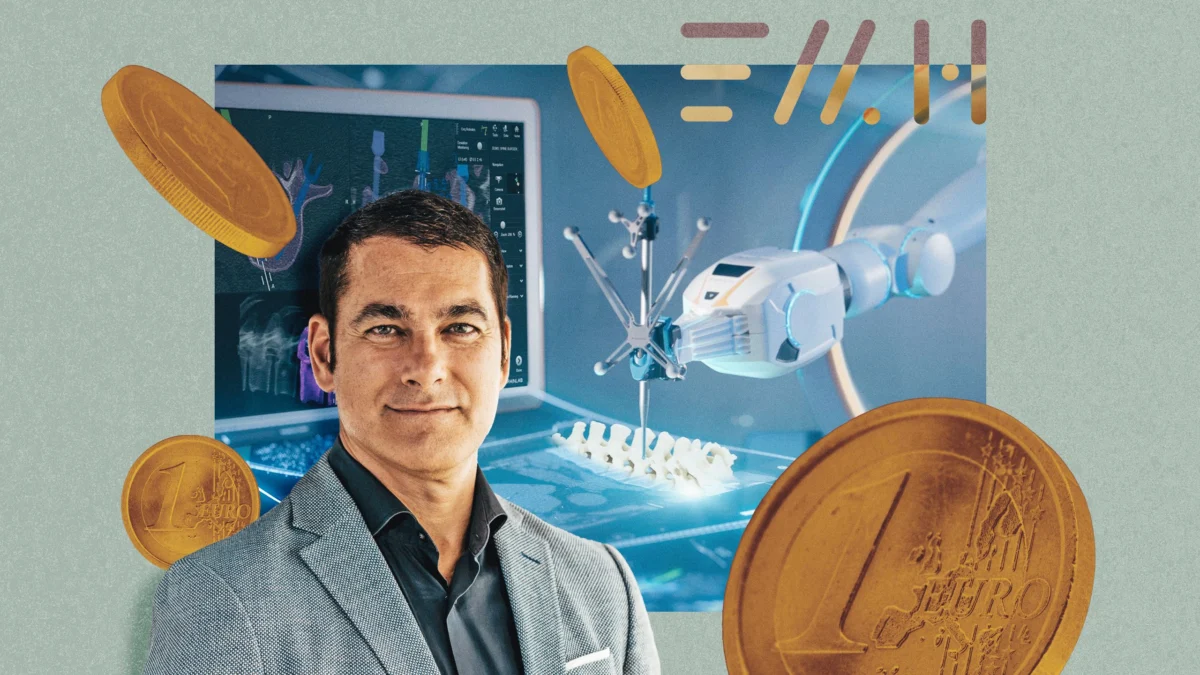
The opulent setting of Schloss Elmau, a luxurious resort nestled in the Bavarian Alps, has become the stage for a dramatic dispute between prominent figures in the German healthcare technology sector. What began as a seemingly collaborative event celebrating innovation has devolved into a bitter legal battle, pitting financial investor Sebastian Kuss, founder of EMH Partners, against Stefan Vilsmeier, the visionary entrepreneur behind Brainlab, a pioneering medical technology firm. The crux of the conflict lies in accusations of self-serving actions and a fundamental breakdown of trust, culminating in a significant lawsuit demanding damages and an irreparable rift in a once-lauded business relationship.
A Tale of Two Meetings: From Harmony to Hostility
The genesis of this public fallout can be traced back to September 25, 2025. On that date, Schloss Elmau buzzed with the energy of over 110 distinguished guests, gathered for an event hosted by Sebastian Kuss. The occasion was a panel discussion on the theme of "Healthcare Champions Made in Germany," featuring Kuss himself alongside Stefan Vilsmeier, the founder of Brainlab. The discourse, as EMH Partners later summarized, centered on the vital role of shared vision and trust in fostering growth. This initial gathering appeared to underscore a successful synergy between Kuss’s investment firm and Vilsmeier’s innovative company, a partnership that had evidently reached a significant milestone.
However, the subsequent year witnessed a stark reversal of fortune and sentiment. In September 2026, EMH Partners convened its tenth annual meeting, again at the prestigious Schloss Elmau. The guest list was undoubtedly curated, but the absence of Stefan Vilsmeier was conspicuous. The reason for his non-attendance, and the souring of the atmosphere, was revealed by EMH Partners’ subsequent actions: the firm had initiated legal proceedings against Vilsmeier, alleging that he had prioritized his personal interests above those of his company, Brainlab. EMH Partners is reportedly seeking substantial damages stemming from these alleged transgressions.
Vilsmeier, however, has vehemently refuted these accusations. His response, conveyed through the official channels of Brainlab, paints a picture of a broken partnership where trust has evaporated. The company’s statement declared a complete loss of faith in Kuss, characterizing his continued involvement as "no longer tenable." This strong repudiation from Brainlab signals a deep chasm that has opened between the investor and the company’s founder, threatening to destabilize a business that has been at the forefront of medical innovation.
Brainlab: A Pioneer in Surgical Technology
To understand the gravity of this dispute, it is essential to appreciate the significance of Brainlab. Based in Munich, the company has established itself as a trailblazer in the field of software-assisted surgery. Its innovative solutions integrate advanced software and high-precision cameras to provide surgeons with real-time visual guidance during complex procedures. This technology allows medical professionals to accurately pinpoint the location of surgical instruments, particularly in intricate operations such as brain surgery, thereby enhancing precision and minimizing risks.
Beyond neurosurgery, Brainlab’s technological prowess extends to the precise control of radiation therapy for tumor treatment. This dual focus on surgical navigation and radiation oncology underscores the company’s impact across critical areas of modern medicine. Stefan Vilsmeier, the company’s founder, remains a significant shareholder, reportedly holding approximately half of the company’s equity. EMH Partners, in turn, possesses a substantial stake, exceeding one-third of Brainlab’s ownership. This significant ownership structure highlights the substantial financial and strategic interests at play.
The impending confrontation between Vilsmeier and EMH Partners, scheduled to take place before shareholders in Munich on Monday, is therefore not merely a personal dispute but a critical juncture for Brainlab’s future, its operational direction, and its continued leadership in the global medical technology market.
The Chronology of a Falling Out
The escalating conflict between EMH Partners and Stefan Vilsmeier can be pieced together through a discernible timeline, marked by key events and evolving sentiments:
September 25, 2025: The celebratory atmosphere at Schloss Elmau. Sebastian Kuss hosts a prominent panel discussion on "Healthcare Champions Made in Germany," featuring Stefan Vilsmeier. The event is characterized by a narrative of shared vision and trust as foundational elements for growth. EMH Partners’ subsequent statement reflects this positive outlook.
Early to Mid-2026: Underlying tensions likely begin to surface. While specific details remain undisclosed, it is during this period that the foundation for the legal dispute is presumably laid. Potential disagreements over strategic decisions, financial management, or operational directives could have emerged.
September 2026: The tenth annual meeting at Schloss Elmau. The stark contrast to the previous year is immediately apparent. Stefan Vilsmeier is notably absent. EMH Partners formally initiates legal action against Vilsmeier, alleging breaches of fiduciary duty and self-dealing.
Post-September 2026: Public pronouncements and counter-accusations. Vilsmeier denies all allegations. Brainlab, as a corporate entity, issues a statement expressing a loss of trust in Sebastian Kuss and deeming his presence "untenable." The company aligns itself with its founder, indicating a united front against the investor.
Leading up to Monday’s Shareholder Meeting: Both parties prepare for a critical confrontation. The legal proceedings are underway, and the shareholder meeting in Munich is poised to become a forum where these deeply entrenched disagreements will be publicly aired and potentially resolved, or further exacerbated.
Supporting Data and Industry Context
The medical technology sector, particularly in Germany, is a vital and rapidly evolving industry. Germany has long been recognized as a global leader in medical innovation, boasting a robust ecosystem of research institutions, manufacturing capabilities, and skilled professionals. Companies like Brainlab contribute significantly to this reputation, driving advancements that improve patient outcomes and reduce healthcare costs.
Market Size and Growth: The global medical device market is projected to continue its strong growth trajectory. Reports from industry analysis firms indicate a compound annual growth rate (CAGR) of around 6-8% for the coming years, driven by factors such as an aging global population, increasing prevalence of chronic diseases, and technological advancements. The software-assisted surgery segment, where Brainlab operates, is a particularly high-growth area within this market.
Investment Landscape: Financial investors, including private equity firms like EMH Partners, play a crucial role in fueling the growth of these innovative companies. They provide capital for research and development, market expansion, and strategic acquisitions. However, this investment often comes with expectations of significant returns, which can sometimes lead to friction with company founders and management, especially when differing visions for the company’s future emerge.
Brainlab’s Financial Performance (Inferred): While specific financial figures for Brainlab were not provided in the original text, the fact that it is a target for a major financial investor and has a significant market presence suggests it has achieved considerable financial success and growth. The dispute, therefore, impacts not just the individuals involved but potentially the financial health and market valuation of a company with a significant footprint in a critical industry.
German Healthcare System: Germany’s sophisticated healthcare system provides a fertile ground for medical technology development and adoption. The country’s commitment to high-quality patient care and its strong regulatory framework ensure that innovative solutions are rigorously evaluated and, when proven effective, are integrated into clinical practice. Brainlab’s success is undoubtedly linked to this supportive environment.
Potential Implications and Broader Impact
The conflict between EMH Partners and Stefan Vilsmeier carries significant implications, extending beyond the immediate legal battle:
- Brainlab’s Future Trajectory: The most immediate impact will be on Brainlab itself. A protracted legal dispute can be a major distraction for management, divert resources, and potentially hinder innovation and strategic decision-making. The loss of confidence expressed by Brainlab in Kuss suggests that the company may seek to distance itself from EMH Partners, potentially through a buy-out or by seeking new investment.
- Investor-Founder Relations: This case highlights the inherent tensions that can arise in the relationship between financial investors and company founders. While investors bring capital and strategic guidance, founders often possess deep domain expertise and a long-term vision for their creation. Disagreements over control, strategic direction, and profit maximization can easily emerge. The public nature of this dispute could serve as a cautionary tale for other investor-founder partnerships in the tech and healthcare sectors.
- Reputational Damage: For both Sebastian Kuss and Stefan Vilsmeier, the public nature of this legal battle can have reputational consequences. Investors may become more hesitant to partner with Kuss if he is perceived as overly aggressive or litigious. Similarly, Vilsmeier’s reputation as a visionary founder could be tarnished by allegations of self-dealing, regardless of their veracity. Brainlab’s brand could also be affected, even if the company is not directly implicated in the alleged wrongdoing.
- Impact on the German Healthcare Innovation Scene: While Germany’s healthcare innovation ecosystem is robust, high-profile disputes can create a ripple effect. Other investors and entrepreneurs may scrutinize partnership agreements more closely, potentially leading to more cautious investment strategies or a greater emphasis on clearly defined governance structures.
- Shareholder Value: The outcome of the legal proceedings and the shareholder meeting will directly impact shareholder value. A resolution that leads to stability and a clear strategic path for Brainlab would likely be positive for investors. Conversely, prolonged conflict and uncertainty could depress the company’s valuation.
Official Responses and Stakeholder Reactions
While the original text provides limited direct quotes, the stated positions of the parties offer a clear indication of their stances:
EMH Partners (Sebastian Kuss): The firm’s initial framing of the 2025 event emphasized "growth as a shared vision and trust as its foundation." This implies that their current legal action stems from a perceived violation of this foundational trust. Their allegations suggest a belief that Vilsmeier acted in a manner detrimental to the company and, by extension, to EMH Partners’ investment. Their demand for damages underscores the seriousness with which they view these alleged breaches.
Brainlab (Stefan Vilsmeier and Corporate Statement): Brainlab’s declaration of "no longer having trust" in Kuss and deeming him "no longer tenable" is a powerful repudiation. This indicates a complete breakdown in the working relationship from the company’s perspective. By aligning with its founder, Brainlab signals a united front against EMH Partners’ claims. This stance suggests that the company believes Vilsmeier’s actions, if any, were either justified or that the investor’s demands are unreasonable and damaging.
Shareholders: The shareholders of Brainlab are now central figures in this drama. Their decisions at the upcoming meeting could have a profound impact on the company’s governance and future direction. They will be tasked with evaluating the evidence presented by both sides and determining the best course of action for their investment. Their reactions will likely be influenced by the perceived strength of the allegations, the potential financial and operational impact on Brainlab, and their confidence in the leadership of either Kuss or Vilsmeier.
The unfolding events at Schloss Elmau and the subsequent legal battle between EMH Partners and Stefan Vilsmeier represent a significant development in the German medtech landscape. As this high-stakes dispute progresses, the industry will be watching closely to see how this conflict is resolved and what lessons can be learned about the delicate balance of power and trust in entrepreneurial ventures backed by substantial financial investment.
