

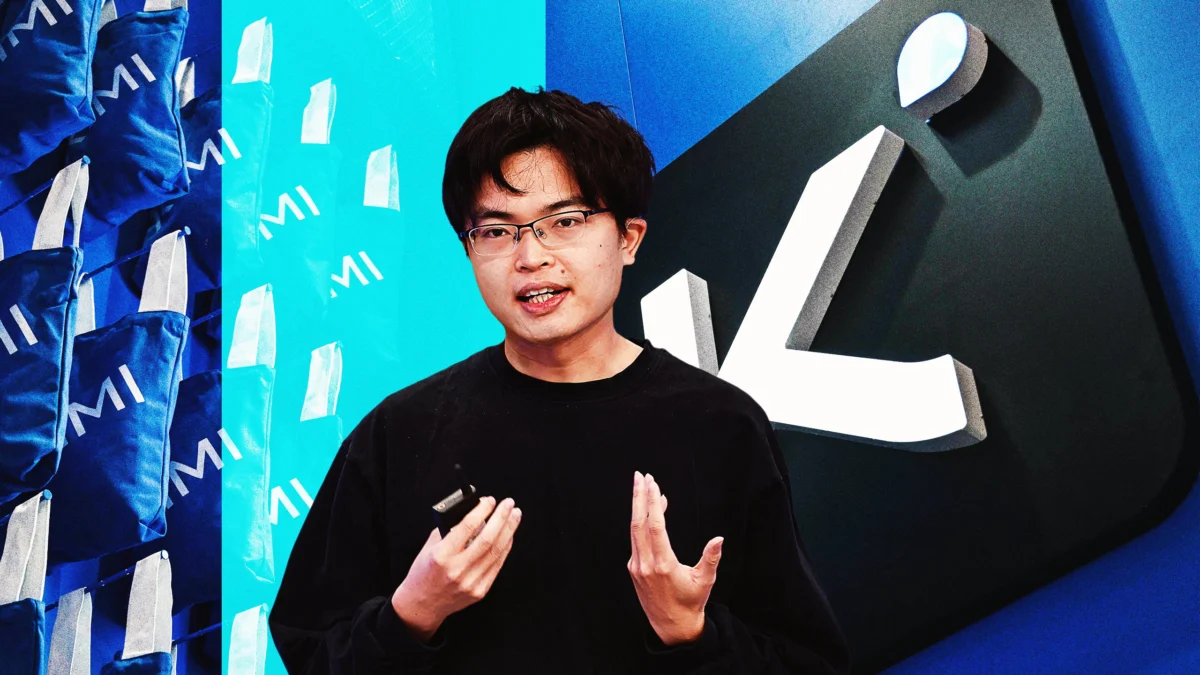
The race for artificial intelligence (AI) supremacy between tech giants in the United States and China has entered a new, accelerated phase. On Friday, Beijing-based startup Moonshot unveiled its latest AI model, Kimi K3, a development that has rapidly positioned the company as a formidable contender, closing the gap with global leaders like OpenAI and Anthropic, and in some benchmarks, even surpassing them. This advancement is not merely a technological leap; it signals a significant shift in the global AI landscape and has prompted speculation about Moonshot’s ambitious future, including a potential initial public offering (IPO).

Moonshot’s Ascent: A New Challenger Emerges
Moonshot’s Kimi K3 model has generated considerable excitement within the AI community. Early tests indicate that the model demonstrates remarkable capabilities in understanding and processing extensive amounts of text, a critical factor for many advanced AI applications. This focus on long-context windows is a key differentiator that allows Kimi K3 to analyze and synthesize information from documents that would overwhelm many competing models. For instance, the ability to process entire books or lengthy legal documents in a single pass opens up new avenues for research, analysis, and creative content generation. This enhanced efficiency and capacity are precisely what Moonshot founder Yang Zhilin refers to when he states, "If you double the efficiency, it’s almost like magic."
The Kimi K3 Advantage: Technical Pillars
The effectiveness of Moonshot’s Kimi K3 can be attributed to several key technical concepts that the company has prioritized. While specific architectural details remain proprietary, industry observers and initial reports highlight four core areas of innovation:
- Efficient Architecture: Moonshot appears to have developed a novel neural network architecture that significantly reduces computational requirements without sacrificing performance. This efficiency is crucial for both cost-effectiveness and the scalability of AI models, especially in an era where AI development is resource-intensive.
- Enhanced Context Window: As mentioned, Kimi K3 boasts an exceptionally large context window. This allows the model to retain and process a much greater volume of information in a single interaction, leading to more coherent and contextually aware responses. This capability is particularly valuable for tasks involving complex documents, legal analysis, and extensive research.
- Specialized AI Agents: Moonshot is reportedly leveraging a swarm of specialized AI agents, each designed for specific tasks. By coordinating these agents, the company can achieve a level of task-specific performance and adaptability that is difficult for monolithic models to replicate. This modular approach allows for greater flexibility and optimization.
- Transparency and Interpretability: While the intricacies of AI can often be opaque, Moonshot has indicated a commitment to greater transparency in its model’s operations. This focus on interpretability not only aids in debugging and improvement but also builds trust with users and developers who need to understand how AI decisions are made.
Ambitions Beyond Technology: A Potential IPO
The rapid advancement of Kimi K3 has coincided with significant financial ambitions for Moonshot. A report by Bloomberg on Sunday indicated that the startup has initiated preparations for an IPO, aiming for a valuation of $30 billion. This ambitious target underscores the immense confidence placed in Moonshot’s technology and market potential. The company, which reportedly receives backing from the Chinese tech conglomerate Alibaba, is aiming to complete its stock market debut in Hong Kong within the next six months. This potential listing comes just a year after the company was valued at $4 billion during a previous funding round, demonstrating a remarkable tenfold increase in valuation in a short period.
A Rapid Rise to Prominence
Moonshot’s trajectory is a testament to the accelerated pace of innovation within China’s AI sector, even in the face of U.S. export controls. The company’s journey can be broadly outlined:
- Early Stages & Funding Rounds: Founded with a vision to push the boundaries of AI, Moonshot secured significant early-stage funding. A pivotal moment was its $4 billion valuation just one year ago, which provided the capital necessary for extensive research and development.
- Development of Kimi Models: The company has been steadily developing its Kimi series of AI models. Each iteration has shown marked improvement, building towards the current breakthrough with Kimi K3.
- Kimi K3 Launch: The recent unveiling of Kimi K3 represents a culmination of these efforts, placing Moonshot in direct competition with established global AI players.
- IPO Preparations: The reported move towards an IPO signals a strategic shift towards becoming a publicly traded entity, a move that would further solidify its position and provide substantial capital for future growth.
Geopolitical and Economic Implications
The emergence of Moonshot as a significant player in the AI landscape carries substantial geopolitical and economic implications. For years, the narrative surrounding advanced AI development has been dominated by U.S. companies like OpenAI, Google, and Anthropic, alongside efforts from other Western tech hubs. China’s AI industry, while robust, has often been perceived as playing catch-up, particularly in foundational model development.
However, Moonshot’s success with Kimi K3 challenges this perception. It demonstrates that Chinese startups, even under the weight of international sanctions and trade restrictions, are capable of developing cutting-edge AI technology that can compete on a global scale. This development has several key implications:

- Intensified Competition: The AI market is now likely to become even more competitive. Moonshot’s ability to offer powerful models that are potentially more efficient and cost-effective could disrupt the existing market dynamics, forcing established players to innovate at an even faster pace.
- Shifting Global Power Balance: A successful IPO and sustained technological advancement by Moonshot would further bolster China’s position in the global AI race. It could signal a more multipolar future for AI development, with China playing a more central role.
- Impact on U.S. Export Controls: The success of companies like Moonshot raises questions about the effectiveness of U.S. export controls designed to limit China’s access to advanced AI technology. It suggests that domestic innovation in China is reaching a level where external restrictions may have diminishing returns.
- Investment Landscape: The potential $30 billion valuation of Moonshot reflects the immense investor interest in the AI sector. This could spur further investment into AI startups globally, but also highlights the strategic importance of Chinese tech companies.
Alibaba’s Strategic Role
The involvement of Alibaba as a supporter of Moonshot is noteworthy. As one of China’s largest technology conglomerates, Alibaba’s backing provides Moonshot with not only financial resources but also strategic insights and potential access to a vast ecosystem of users and businesses. This synergy could accelerate Moonshot’s adoption and integration into various industries, further solidifying its market position. Alibaba’s interest in AI is well-documented, with significant investments in cloud computing, e-commerce, and logistics, all of which can be enhanced by advanced AI capabilities.
Looking Ahead: The Future of AI and Moonshot
The "moonshot moment" for this Chinese startup signifies more than just a technological breakthrough; it represents a pivotal point in the ongoing global AI revolution. Moonshot’s Kimi K3 model, with its focus on efficiency, expansive context windows, and innovative architecture, positions the company as a serious contender against established Western AI giants. The potential IPO further underscores its ambition and the significant market interest it has garnered.

As the world watches, Moonshot’s journey will be closely scrutinized. Its ability to translate technological prowess into sustained market leadership and financial success will not only define its own future but also contribute significantly to the evolving narrative of global AI development. The competition between nations and corporations for AI dominance is far from over, and Moonshot has just made a powerful statement that it intends to be at the forefront of this transformative technology. The efficiency gains it promises are not just about processing power; they are about unlocking new possibilities and reshaping industries, truly embodying the ambitious spirit of a "moonshot" endeavor.
