

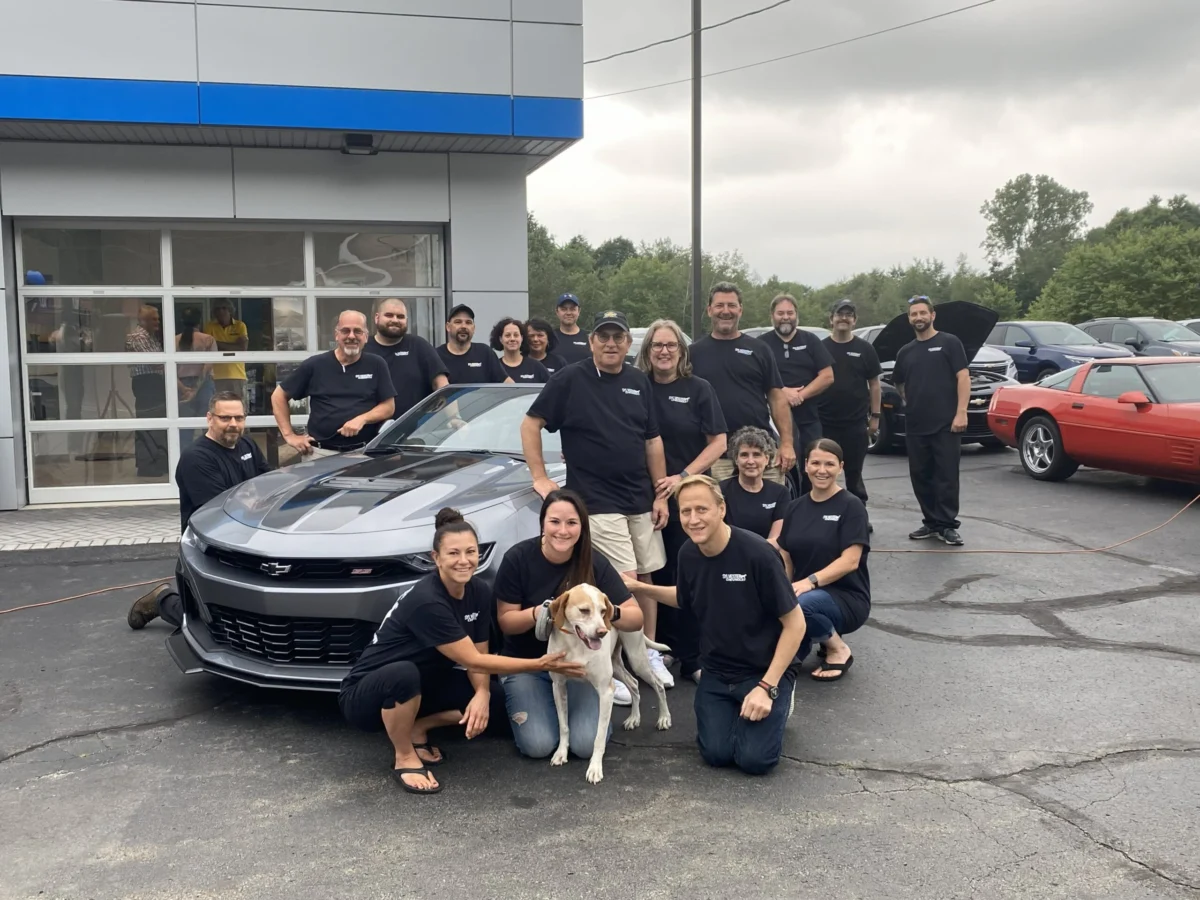
Peckville, Pennsylvania, a quiet rural village outside Scranton, recently marked the end of a significant local era with the sale of Sylvester Chevrolet. The dealership, a cornerstone of the community since its establishment in 1972 by Derek Sylvester’s father with his own hands, finalized its acquisition by a New York-based dealer group late last month. This transaction, while deeply personal for the Sylvester family, underscores a profound, accelerating shift across the trillion-dollar U.S. automotive retail industry: a rapid consolidation driven by evolving market dynamics, technological advancements, and the relentless pursuit of scale.
Derek Sylvester, 67, cited a combination of factors for the family’s decision, prominently noting the increasing difficulty for smaller, independent dealerships to compete and maintain profitability. "Unless you’re a larger store, a much larger store, it’s a little bit harder to make money. … It’s just scale," Sylvester articulated, encapsulating the sentiment of many long-standing family operations facing an increasingly complex landscape. While several Sylvester family members are set to continue their roles under the new ownership, the decision to divest was rooted in a candid assessment of their capacity to navigate the rapidly transforming automotive retail environment, which now grapples with the tumultuous adoption of all-electric vehicles (EVs), the integration of artificial intelligence (AI), and escalating demands from original equipment manufacturers (OEMs).
A Decades-Long Trend Reaches a Tipping Point
The sale of Sylvester Chevrolet is far from an isolated incident. Across the nation, automotive dealerships are changing hands at an unprecedented pace, marking a significant acceleration of a consolidation trend that has been simmering for decades. Once largely the domain of independent "mom-and-pop" enterprises, the business of selling cars has matured into a highly attractive, lucrative industry attracting substantial interest from Wall Street investors, private equity firms, and rapidly expanding regional dealer groups. This influx of capital and strategic acquisitions is fundamentally reshaping the competitive landscape.
Data from the National Automobile Dealers Association (NADA) consistently highlights that while the vast majority of its U.S. franchised dealers remain small business owners operating fewer than six stores, the largest retailers are experiencing exponential growth. According to Automotive News’ annual ranking of top automotive retailers, the top 150 dealers collectively sold 27% of all retail and fleet new vehicles in 2025, a notable increase from 24.3% in 2021 and 21.2% in 2015. Furthermore, these dominant groups owned approximately a quarter of all dealerships last year, a significant jump from less than 20% just a decade prior.
Publicly traded automotive retail giants, such as Lithia Motors and AutoNation, exemplify this trend, boasting market capitalizations exceeding $6 billion each. Even online used-car retailer Carvana, with a staggering $74 billion market cap that surpasses many of the car manufacturers whose vehicles it sells, has quietly begun acquiring new vehicle franchises, signaling a potential expansion into traditional retail channels. "There’s a lot of money that wants to come to the industry," observed Brian Gordon, president of dealer advisor and broker Dave Cantin Group, a prominent firm facilitating many of these transactions. "And, generally, the industry is sort of aligned on how to value these things. That makes for a good climate for [mergers and acquisitions]."
The Imperative of Scale: Grow or Perish
The underlying philosophy driving this consolidation is increasingly a "grow-or-die" mentality. Multibillion-dollar dealership groups are not merely expanding; they are aggressively building economies of scale to better absorb rising operational costs, invest in necessary technological upgrades, and meet increasingly stringent OEM requirements. NADA reports that while the average dealership owner still possesses between two and three stores, the most significant growth over the past decade has occurred among medium-sized dealerships, those owning between six and 25 stores.
A closer look at NADA’s membership statistics reveals a clear shift: 90.5% of its nearly 17,000 dealers now own between one and five stores, down from 94.4% in 2016. Conversely, the proportion of dealers owning 50 stores or more has doubled, albeit from a small base, from 0.1% to 0.2% within the same timeframe. "It’s clear that it’s a consolidating industry, and it’s an industry that is going to continue to consolidate," Gordon reiterated, emphasizing that this expansion is occurring across all levels, from smaller operators evolving into regional powerhouses to national behemoths acquiring multiple locations.
Matthews Auto Group: A Regional Success Story
The acquisition of Sylvester Chevrolet by Matthews Auto Group serves as a prime example of this regional expansion strategy. Dave Cantin Group, which advised Matthews Auto Group on the deal, handles dozens of such transactions annually and anticipates a sustained increase in the pace of consolidation throughout the current year. Matthews Auto Group, a family-owned enterprise, embarked on its journey in Vestal, central New York, in 1973 with a single Chrysler-Plymouth store. Over five decades, it has blossomed into an approximately $800 million business, encompassing 18 locations and employing 800 individuals.
Rob Matthews, a second-generation owner and CEO of Matthews Auto Group, articulated his company’s continuous growth strategy as a means to enhance profitability and strengthen its competitive standing within its core markets of New York and Pennsylvania. "I think that’s certainly a competitive advantage. I think staying still is probably not the best play. You’re seeing continued scale," Matthews stated, underscoring the necessity of expansion in today’s market. "The trend is you’re just going to continue to see consolidation to allow you to stay competitive."
This strategic alignment was a key factor for Derek Sylvester in choosing Matthews Auto Group, particularly their commitment to retaining the dozens of employees at Sylvester Chevrolet – a common stipulation in many such sales. Matthews confirmed this approach, explaining, "There’s a lot of things that, because of our scale, we see we can really unlock a store like his. I think, honestly, it’s exciting in the sense that we’re just looking to give them more tools and hopefully let everyone work going forward." The integration promises enhanced resources, advanced training, and broader career opportunities for the existing staff, mitigating the disruption often associated with such transitions.
The Rise of Mega-Dealers and Wall Street’s Embrace
The U.S. franchised dealership system, uniquely structured and heavily regulated to facilitate new vehicle sales through independent dealers rather than direct manufacturer sales, has proven to be remarkably resilient and lucrative. This inherent protection, coupled with substantial profit margins, particularly post-pandemic, has drawn significant attention from institutional investors and Wall Street.
Jeff Dyke, President of Sonic Automotive, a publicly traded company with a market cap exceeding $2 billion, highlighted the immense potential within the sector. "I think there’s endless upside. The opportunity for growth in our company is just endless," Dyke told CNBC. While acknowledging the value of independent dealers, he added a crucial caveat: "The thing is, the mom-and-pop dealer is going to have to advance their thinking." Sonic Automotive itself has expanded significantly, growing from 96 franchised dealership stores in 2015 to 134 by the end of last year. This expansion, alongside a massive build-out of its EchoPark used vehicle stores and Sonic Powersports division, propelled the company’s revenue by 58% to $15.2 billion last year.
Lithia Motors, based in Medford, Oregon, represents an even more aggressive growth trajectory. Surpassing AutoNation in 2022 to become the leading U.S. new vehicle franchised dealer, Lithia, with a $6.3 billion market cap, has executed an audacious expansion plan. Its revenue soared from $8.7 billion in 2016 to $37.6 billion last year, nearly tripling its new and used store count from 154 to 455 locations within that period.
John Murphy, a veteran automotive analyst and managing director of strategic advisory at Haig Partners, a prominent buy-sell advisory firm, underscored the enduring attractiveness of dealerships for investors. Despite a normalization of profits after the inflated margins seen during the COVID-19 pandemic, Murphy believes the sector offers substantial structural upside. "There is an increasing level of attention by existing capital in the dealership community as it stands right now from outside players, private equity family offices, other pools of capital on this limited number of dealers and finite number of dealers," he noted. "The earnings upside is increasing and there’s increasing attention, or demand, on the buy side of the equation."
Challenges for the Independent Dealer: The "Mom-and-Pop" Dilemma
The confluence of these factors—investor interest, OEM demands, technological shifts, and the pursuit of scale—creates a challenging environment for smaller, independent dealerships, often making them prime candidates for acquisition or compelling them to expand. "There’s just so many factors that make competition for a small mom-and-pop dealership more difficult," explained Talon Fee, a managing director at Dave Cantin Group who orchestrated the Sylvester Chevrolet sale. While acknowledging that small dealerships can still "exist and thrive and survive," Fee stressed that they "do need to have a plan."
Industry experts like Fee and Gordon identify several key drivers prompting owners to sell: a lack of robust succession planning within family businesses, the escalating competitive pressure from a rapidly changing industry, and a reluctance or inability to reinvest the substantial capital required to modernize and adapt. The need for significant investment in charging infrastructure for EVs, advanced diagnostic tools, training for new vehicle technologies, sophisticated digital marketing, and AI-driven customer relationship management systems often proves prohibitive for smaller operators.
Furthermore, the automotive retail landscape is being challenged by new entrants. Automakers such as Tesla, Rivian, and Lucid are actively attempting to bypass the traditional franchised dealer model entirely, opting instead for direct-to-consumer sales. These companies have engaged in continuous legal battles against state laws designed to protect the franchise system, with Rivian recently securing a victory against car dealers in Washington state by threatening a ballot measure to permit direct sales. This ongoing tension introduces another layer of complexity and competition that owners like Derek Sylvester and his wife, who also worked at the dealership, had not previously encountered. For many smaller, independent stores, selling their businesses offers an escape from this evolving competitive front.
Derek Sylvester, contemplating a well-deserved retirement to care for his 92-acre Pennsylvania farm, reflected on his journey: "I lived a great life, don’t get me wrong. But, hey, good things come to an end." He added, "We made a good living. You know, we helped the community out." His story, and that of Sylvester Chevrolet, is a microcosm of a larger narrative unfolding across the U.S. automotive retail sector—a narrative of heritage meeting the inevitable forces of modernization and consolidation, where the pursuit of scale is not merely an ambition, but increasingly, a prerequisite for survival. The era of the solitary "mom-and-pop" dealership, while not entirely over, is undeniably giving way to a new chapter dominated by larger, more integrated, and technologically advanced retail groups.
