

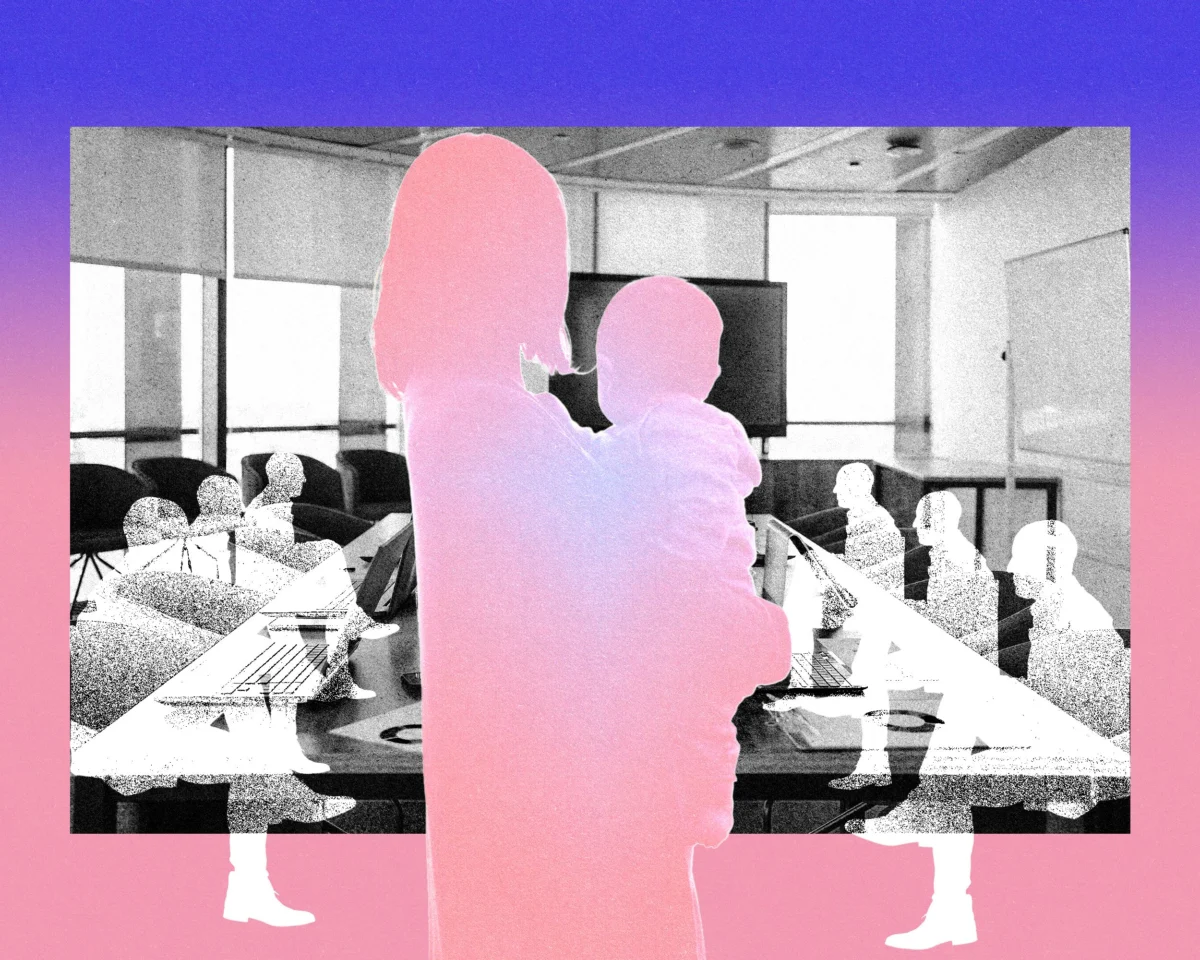
The rapid advancement and integration of Artificial Intelligence (AI) into the software development landscape have created an unprecedented career crisis for new mothers, particularly those who took maternity leave during a critical period of technological transition. What was once a field lauded for its stability and promising career trajectory has been fundamentally reshaped by AI-powered coding tools, leaving many women feeling vulnerable, undervalued, and uncertain about their professional futures.
The Shifting Sands of Software Development
For software developers like Danielle, who requested her first name be used to protect her professional prospects, the return to work after maternity leave in mid-2025 was a stark awakening. Having left the workforce in mid-2024, she found that the industry she once knew had undergone a seismic shift. The prevalence of AI in code generation, which was nascent at best before her leave, had become an expectation.
"The skills that I had learned—rote development skills—we are now expected to outsource to AI," Danielle stated, reflecting on the fundamental change in job requirements. Her previous reliance on fundamental coding abilities, once a cornerstone of job security, was now perceived as a legacy skill.
This dramatic reinvention of the software development profession is not an isolated incident but a harbinger of a broader industry trend. Leading AI companies are projecting a future where AI plays a central role in virtually all aspects of software creation. Mark Zuckerberg, CEO of Meta, predicted in April that AI would be responsible for writing the majority of Meta’s code within the next 18 months. Similarly, Sam Altman, CEO of OpenAI, recently described AI coding as a potential "multitrillion-dollar market," underscoring the economic magnitude of this technological leap.
The implications of this accelerated pace of change are far-reaching, impacting software engineers across the board. However, the effects are particularly acute for new mothers who, by the coincidence of their leave period, found themselves on the sidelines during this transformative phase. Their absence from the immediate adoption and learning curve of AI coding tools has created a significant disparity compared to colleagues who remained in the active workforce.
The AI Disruption and the Maternity Leave Disconnect
The emergence of sophisticated AI coding automation tools, such as those released by Anthropic and OpenAI in May 2025, has fundamentally altered the nature of software development. The focus has shifted from the intricate process of writing code from scratch to a more supervisory role, often described as "babysitting" the AI’s output. While learning these new workflows might not be inherently complex, new mothers returning to work face the challenge of catching up with colleagues who have had a substantial head start in mastering these AI-driven processes.
A UK project manager, currently on maternity leave, shared her unease when her manager suggested she "brush up on AI" during her absence. "It made me feel very vulnerable," she confessed, requesting anonymity due to concerns about potential employer retaliation. She noted that prior to her leave, AI was used sporadically for minor tasks like code auto-completion. However, the agency’s current eagerness to integrate AI more broadly signals a significant shift in operational strategy.
The financial strain of pursuing further education during maternity leave is a significant barrier for many. "The likelihood of me spending my statutory maternity pay on an AI course…is slim to none," she stated. "This is not something I should be spending my maternity leave doing." Yet, the fear of being perceived as outdated and becoming a target for layoffs looms large.
Navigating the New Landscape: Individual Experiences and Strategies
Not all experiences are uniformly negative. Mary McCreary, a data engineer at a US-based health tech company, found her employer supportive in facilitating her acclimatization to new AI tools upon her return. Initially skeptical, McCreary came to appreciate AI’s utility in deciphering the code written by her colleagues. "The thing that I hate most about being an engineer is having to review other people’s code," she admitted, highlighting AI’s efficiency in this often-tedious task.
However, McCreary also acknowledged the trade-offs. The ability to offload less mentally taxing tasks meant she was consistently presented with more complex problems. "The downside is that I don’t get any time to do tedious tasks that would be not a lot of effort for my brain," she explained. "I’m always looking at hard problems, because I’ve offloaded all of the tedium."
Another software engineer in Minnesota, working for a marketing software company, found AI coding tools to be an unexpected aid in managing postpartum fatigue and other symptoms. "I definitely was not ready to return," she shared anonymously. "Your body is filled with all these hormones and your brain changes to the point that all you can fixate on is that child." The capability of AI to handle tasks requiring sustained concentration, such as debugging code, proved "incredibly helpful" for her.
This engineer’s experience illustrates a rapid evolution within her company. Upon her return in September 2024, AI tools were primarily used as an enhanced version of online coding forums. By the following year, all code modifications were being processed through AI for error detection. Subsequently, AI began to assume the majority of coding responsibilities, leading to internal leaderboards ranking engineers by their AI utilization. "It’s like, instead of being a software engineer, I’m more like a puppet master," she commented.
The release of Claude Opus 4.5 in November 2025, a significant iteration of Anthropic’s AI model, further accelerated this trend. The engineer described its capabilities as revolutionary: "Opus was, like, holy shit… I did a quarter’s worth of work [for a team of developers] just by myself. It was quick and dirty, but it got the job done." This remarkable productivity, however, also fueled her concern that her role could soon become obsolete.
The Reconfigured Job Market and Systemic Challenges
The reconfigured job market presents a formidable challenge for software engineers seeking new employment. Danielle, laid off three months before her daughter’s birth, found that most job postings for software roles now required some level of AI proficiency, though the specific applications were often vague. "The ambiguity was nerve-wracking," she admitted. "I didn’t know how to investigate what skill I was missing."
Experts highlight that women returning from extended maternity leave often encounter systemic barriers, including employer reluctance to accommodate caregiving responsibilities, misconceptions about their commitment, and broader societal biases. Daniela Gulie, who leads the German branch of the nonprofit Bring Women Back to Work, stated, "The system treats it as an exit, not a pause. It’s a design failure." In the tech sector, the rapid rise of AI has exacerbated these issues, creating an "AI-literacy gap" between mothers and their colleagues and distorting the labor market to their disadvantage. Rachel Grocott, CEO of the UK-based think tank Pregnant Then Screwed, characterized this as "yet another way in which women are being screwed over… You’re layering disadvantage on inequality."
Danielle’s job search has been arduous, with only one of her 40 applications progressing to an interview. Other engineers echo her sentiment of a highly competitive job market, where an oversupply of qualified candidates vie for junior and mid-level positions. "There’s this huge, huge pool of incredibly smart and talented people that you don’t want to be a part of," the Minnesota engineer observed.
To bridge the widening gap, Danielle is planning to develop personal coding projects alongside AI tools. However, the relentless pace of technological change prompts introspection about the value of such investment. "Every day, I am getting even further removed," she expressed. "It’s really a terrifying moment to feel like I don’t understand the future of this industry."
Career and Family Planning in the Age of AI
The pervasive fear of being left behind during a maternity absence, or of outright displacement by AI, is now influencing critical decisions regarding career progression and family planning. The Minnesota engineer articulated her internal conflict: "I’m trying to figure out, do I want to be a mother to a second child?… I want to be a present parent and actually be there for my child. But I’m scared to have one. It’s very complicated."
For some women, initially drawn to the software industry for its perceived job security, the current climate is prompting a reconsideration of entirely different career paths. Danielle is exploring vocational training in fields less susceptible to immediate automation, such as landscape architecture. "I don’t derive meaning from training artificial intelligence, or just fixing code generated by artificial intelligence," she reflected. "If that is the future of this industry, is that a job I want?" This sentiment underscores a growing desire for work that offers personal fulfillment beyond the rapid, and at times unsettling, evolution of AI-driven professions. The current scenario highlights a critical juncture where technological advancement intersects with deeply personal life choices, forcing a reevaluation of what constitutes a sustainable and meaningful career.
