

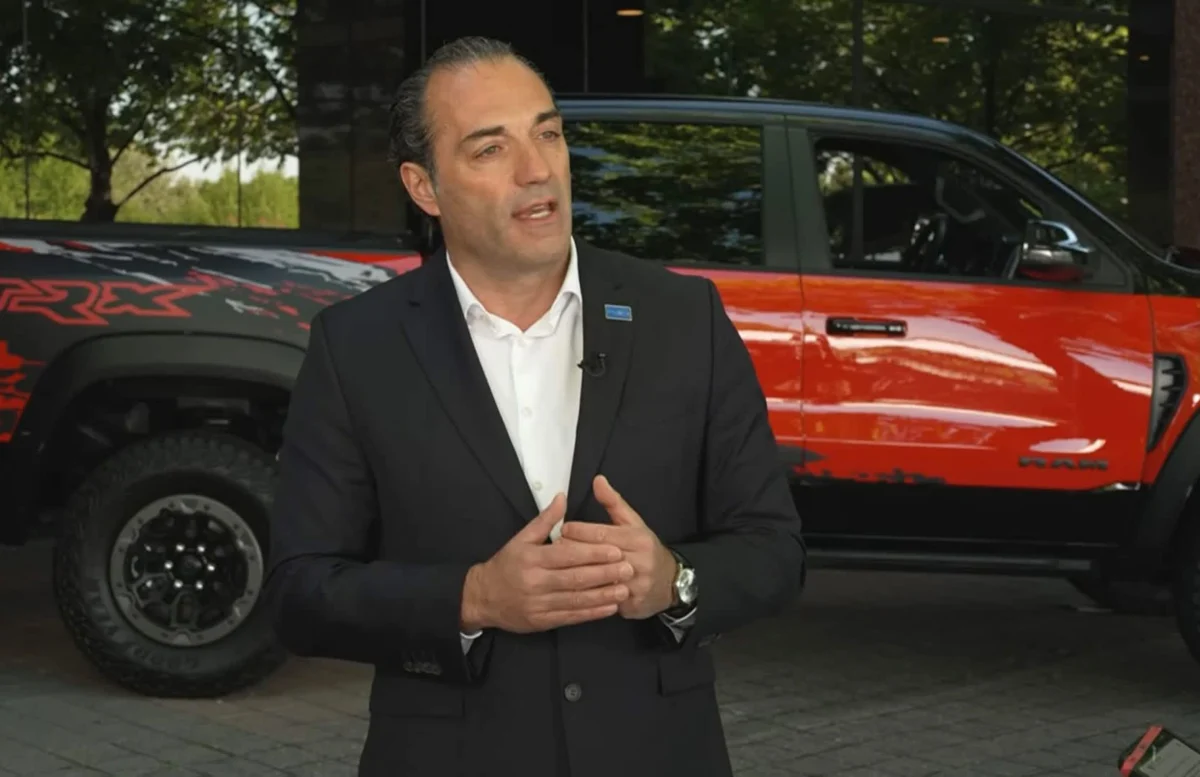
Auburn Hills, Mich. — Stellantis, one of the world’s leading automakers, on Thursday announced a comprehensive five-year strategic initiative, "FaSTLAne 2030," spearheaded by CEO Antonio Filosa. The ambitious plan commits 60 billion euros ($69.7 billion) in investments and targets a significant financial turnaround, aiming for positive free cash flow by 2027. This blueprint, unveiled at the company’s North American headquarters near Detroit during Filosa’s inaugural investor day as CEO, outlines aggressive growth targets, a refined brand strategy, extensive product launches, and substantial cost efficiencies designed to solidify Stellantis’s position in a rapidly evolving global automotive landscape.
A Bold Financial Reimagining
The core of the "FaSTLAne 2030" strategy revolves around a substantial financial restructuring and growth trajectory. Stellantis plans to allocate 36 billion euros toward its vast portfolio of automotive brands, with a significant 60% of this investment earmarked for the crucial North American market. This substantial regional focus underscores the strategic importance of North America as a primary growth engine for the conglomerate. The company anticipates introducing more than 60 new vehicles and conducting major refreshes of 50 existing models across its diverse brand spectrum. This extensive product offensive will embrace a "freedom of choice" approach, encompassing all-electric vehicles (BEVs), plug-in hybrids (PHEVs), extended-range electric vehicles (EREVs), conventional hybrids, and traditional internal combustion engine (ICE) vehicles, reflecting a pragmatic response to varied consumer demands and market maturity levels.
The remaining 24 billion euros of the investment will be directed towards developing global vehicle platforms and pioneering new technologies, crucial for enhancing the automaker’s product offerings and ensuring future competitiveness. These technological advancements are expected to underpin the next generation of Stellantis vehicles, improving performance, safety, and connectivity across its brands.
From a financial performance standpoint, Stellantis is targeting a dramatic reversal in its industrial free cash flow. After reporting a loss of 4.5 billion euros last year, the company projects a positive industrial free cash flow of 3 billion euros by 2028, further accelerating to 6 billion euros by 2030. This turnaround is particularly significant given the 22.3 billion euro loss reported last year, which included a substantial 22 billion euro restructuring charge stemming from a strategic recalibration that saw the company pull back from an initial, more aggressive all-electric vehicle focus.
Beyond cash flow, Stellantis aims for approximately 23% revenue growth, projecting an increase from 154 billion euros last year to 190 billion euros by 2030. Concurrently, it targets an adjusted operating margin of 7% by the end of the decade. Regionally, North America is expected to lead with 25% revenue growth and an adjusted operating income (AOI) of between 8% and 10%. Enlarged Europe is targeted for 15% revenue growth and an AOI of 3% to 5%. Emerging markets are also poised for significant expansion, with double-digit revenue increases anticipated in South America, the Middle East, and Africa, alongside an AOI of 4% to 6% in Asia-Pacific, signaling a truly global growth ambition.
Strategic Pillars and Operational Excellence
CEO Antonio Filosa, who assumed leadership less than a year ago, presented the "FaSTLAne 2030" plan built upon six core pillars: "sharper management" of the brand portfolio, strategic new investments, enhanced partnerships, an optimized manufacturing footprint, "excellence in execution," and the empowerment of the company’s regional and local teams. These pillars collectively form a holistic approach to address current industry challenges while capitalizing on future opportunities.
"What we want you to take away from today is that Stellantis, with all its assets, its capabilities, and its new strategic plan, is well positioned to succeed," Filosa stated during his opening remarks. He emphasized the company’s intent to "leverage our regional roots, our global scale, our partnerships, and the new technologies in our journey going forward," highlighting the multifaceted strategy. Stellantis Chairman John Elkann, a scion of Fiat’s influential Agnelli family and CEO of the prominent European holding company Exor, endorsed the plan as "ambitious, but realistic," acknowledging both the inherent industry challenges and the significant opportunities available under Filosa’s leadership.
A critical component of the operational strategy is an aggressive cost-saving initiative, targeting annual savings of 6 billion euros by 2028. A major enabler of these efficiencies will be the introduction of the new "STLA One" vehicle platform in 2027. This innovative platform is designed to consolidate five existing architectures into "one scalable architecture, reducing complexity and expanding coverage." Stellantis projects that STLA One will achieve a remarkable 20% cost efficiency. By 2030, the company aims for 50% of its total vehicle volume to be produced on just three global platforms, leveraging up to 70% component reuse, a move that promises to streamline production, reduce supply chain complexities, and significantly cut manufacturing costs.
Revitalizing a Diverse Brand Portfolio

Stellantis’s brand strategy under "FaSTLAne 2030" is characterized by preservation and strategic integration rather than divestment. The company confirmed it would not eliminate any of its 14 distinct automotive brands. Instead, it will streamline operations by folding the European units of DS and Lancia into Citroen and Fiat, respectively. This consolidation aims to enhance operational synergies and focus resources more effectively within Europe while maintaining brand identity.
The portfolio is strategically segmented into "global brands" and "regional brands." The designated global brands include Jeep, Ram Trucks, Peugeot, and Fiat, alongside the Pro One commercial operations. These brands are expected to drive volume and market presence across multiple continents. Regional brands will comprise Chrysler, Dodge, Citroen, Opel, and Alfa Romeo, catering to specific market tastes and demands. The luxury segment will continue to be represented by Maserati, a brand known for its high-performance and opulent vehicles.
The product offensive is extensive, with plans for 29 battery-electric vehicles, 15 plug-in hybrid or extended-range electric vehicles, 24 hybrids, and 39 mild hybrids or traditional internal combustion engine vehicles. This diverse powertrain strategy directly reflects Filosa’s "freedom of choice" philosophy, acknowledging that consumer adoption of EVs varies by region and that hybrids are gaining traction. "The interest of consumers around hybrids is growing, also pushed by the oil prices, and range-extended [vehicles] actually is a more customer-centric idea," Filosa explained in an interview with CNBC, indicating a flexible approach to electrification.
Strategic Partnerships and Manufacturing Optimization
Stellantis is actively forging and expanding strategic partnerships to bolster its global reach and technological capabilities. Just prior to the investor day, the company announced several significant tie-ups, including an expanded collaboration with Jaguar Land Rover for the U.S. market, as well as new alliances with Chinese automakers Leapmotor and Dongfeng Group, primarily focusing on expansion in Europe and China. These partnerships are critical for market penetration, technology sharing, and leveraging expertise in competitive regions.
Interestingly, while partnering with Chinese automakers, Stellantis also acknowledges the intense competition they pose, particularly as many Chinese brands increase their sales presence in Europe. To counter this, Stellantis plans to optimize its European manufacturing footprint, aiming to cut capacity by over 800,000 units. Crucially, Filosa affirmed that these reductions would occur through repurposing plants and leveraging partnerships, without resorting to outright plant closures. This strategy aims to improve efficiency and maintain employment while adapting to market realities. The company targets an 80% plant utilization rate in both Europe and the U.S. by 2030, a key metric for manufacturing efficiency and profitability.
A Glimpse into the Future: New Product Unveilings
The investor day also served as a showcase for Stellantis’s future product pipeline, with media and analysts treated to a preview of dozens of new or upcoming vehicles. Twenty of these vehicles are destined for the crucial U.S. market, ranging from the anticipated Chrysler "Arrow" and "Airflow" crossovers to a surprise "Copperhead" performance car, a spiritual successor reminiscent of Dodge’s iconic Viper, which was discontinued in 2017. Ralph Gilles, Stellantis’s head of design, emphasized the tangible nature of these vehicles, stating, "We mean business here," despite some being well-developed clay models, such as the Copperhead, Ram Ramcharger SUV, and a Jeep Scrambler SUV.
The Chrysler Airflow was highlighted as a "super vehicle" and is slated to be the first U.S. model built on the company’s newly announced scalable platform. Other notable reveals for the U.S. included a new Dodge GLH, a moniker previously associated with a performance hatchback, as well as a midsize Ram Dakota pickup truck and a compact Rampage pickup truck, the latter having previously been offered outside the U.S. For the European market, Stellantis showcased current models alongside future offerings like the four-door Citroen 2CV hatchback, and announced plans to launch 13 new vehicles for its historic Fiat brand by 2030.
Implications and Outlook
The "FaSTLAne 2030" plan represents a pivotal moment for Stellantis. Its successful execution could lead to a significant financial turnaround, solidifying its position among the top global automakers. The pragmatic "freedom of choice" powertrain strategy, coupled with aggressive cost-saving measures and manufacturing optimization, positions the company to navigate the complexities of global electrification and evolving consumer preferences.
The substantial investment in North America underscores its critical role in Stellantis’s growth narrative, while strategic partnerships and a streamlined brand portfolio aim to maximize efficiency and market penetration worldwide. The plan’s emphasis on operational excellence and empowering regional teams reflects a commitment to agility and responsiveness in a dynamic industry. As Stellantis embarks on this ambitious journey, the market will closely monitor its progress, particularly the realization of its free cash flow and profitability targets, which will be crucial indicators of the plan’s ultimate success and the company’s long-term sustainability.
