

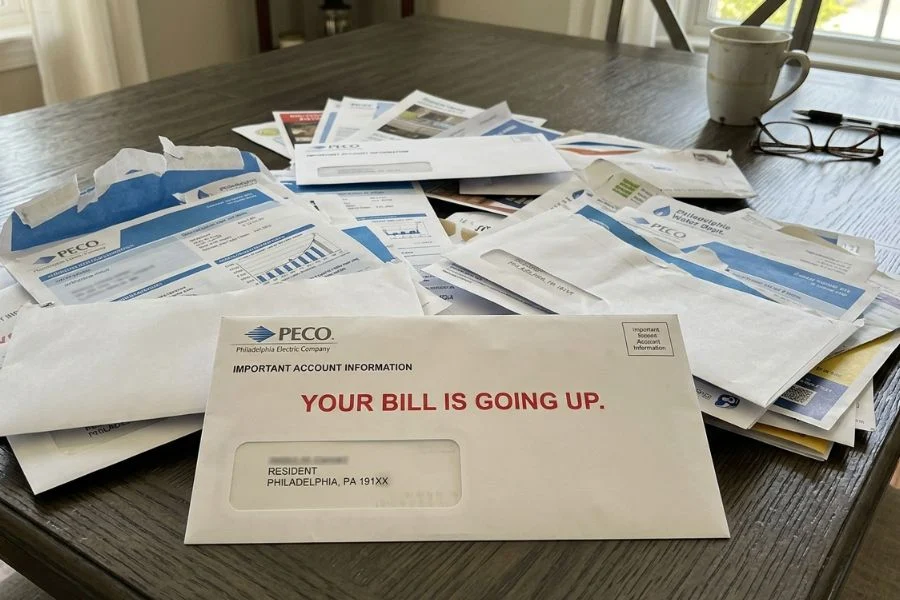
Southeastern Pennsylvania utility PECO, an Exelon subsidiary serving approximately 1.7 million electric and 553,000 natural gas customers, has formally submitted a request to the Pennsylvania Public Utility Commission (PUC) for a significant increase in its annual distribution revenue. The filing, which seeks an additional $429 million in electric revenue and $81 million in natural gas revenue, marks a major step in the utility’s multi-billion-dollar infrastructure modernization strategy. If the PUC approves the proposal, the adjusted rates are scheduled to take effect on January 1, 2027. This request comes exactly two years after a previous $354 million rate increase was enacted, which added roughly $30 to the monthly bills of many residential customers.
Detailed Breakdown of Proposed Rate Adjustments
The financial impact of the proposed rate hike varies across customer classes, reflecting the utility’s assessment of the costs associated with serving different types of energy users. According to PECO’s estimates, the average residential electric customer using approximately 700 kilowatt-hours (kWh) per month would see their monthly bill increase by 12.5%, or $20.08. For natural gas customers, the impact is similarly pronounced; a typical residential customer can expect an 11.4% increase, amounting to an additional $14.52 per month.
Commercial and industrial users are also slated for adjustments, though the percentage increases are lower due to the economies of scale in high-voltage and high-volume delivery. Commercial customers utilizing 10,000 kWh per month are projected to see a 5.9% increase, while large-scale industrial users consuming 200,000 kWh per month will see an increase of approximately 4.2%.
PECO President and CEO David Vahos addressed the potential financial strain on households and businesses in a prepared statement, emphasizing the necessity of the request. "We understand that any increase in costs is difficult for families and businesses, and we don’t take this request lightly," Vahos stated. "Our customers deserve a system they can count on—especially as severe weather grows more frequent. These investments will strengthen the grid, reduce outages, and ensure we’re delivering the safe, reliable service our customers expect every day."
Financial Rationale and the Need for Capital Investment
The utility’s justification for the rate hike is rooted in a massive capital expenditure program aimed at modernizing aging infrastructure and preparing for a shifting energy landscape. PECO reports that between the beginning of 2024 and the end of 2025, it will have invested more than $2.8 billion in new and replacement electric distribution assets. This is part of a broader, five-year $10 billion upgrade plan.
A critical component of the filing involves the utility’s "rate of return," a metric that determines the profit a utility is allowed to earn on its investments. PECO argues that without the proposed rate increase, its overall rate of return would drop to 5.4%, with a return on common equity (ROE) falling to 5.94%. The utility characterizes these figures as "inadequate by any reasonable standard," asserting that such low returns would hinder its ability to attract the necessary capital from investors to fund essential infrastructure projects. In the utility sector, a competitive ROE is typically required to maintain credit ratings and ensure that the cost of borrowing remains manageable for the company and, ultimately, its ratepayers.
Infrastructure Modernization: LTIIP III and Grid Resilience
A substantial portion of the requested funds is earmarked for the Long-Term Infrastructure Improvement Plan (LTIIP III), which was approved by the Pennsylvania PUC in late 2025. This $1.97 billion initiative focuses on targeted reliability projects designed to mitigate the impact of severe weather events, which have become increasingly frequent and intense in the Northeast.
Key projects within LTIIP III include:
- Substation Modernization: Replacing or retiring aging substation equipment and small, inefficient substations to improve overall system stability.
- Cable Replacement: Upgrading underground and overhead electric cables to prevent age-related failures.
- Load Growth Support: Preparing the grid to handle increased demand from large-scale users, most notably data centers, which require high levels of power density and reliability.
- Clean Energy Integration: Enabling the adoption of electric vehicles (EVs), residential solar, and other distributed energy resources (DERs) through grid enhancements that allow for two-way power flows.
Furthermore, PECO intends to deploy an upgraded Advanced Distribution Management System (ADMS). This technology provides real-time operational tools that allow grid operators to respond more effectively to outages, balance loads dynamically, and integrate renewable energy sources more efficiently.
Innovative Cost-Mitigation Mechanisms
Recognizing the potential for "rate shock" among its customer base, PECO has proposed two specific regulatory tools intended to spread the cost of certain initiatives over a longer timeframe. These mechanisms, known as the Vegetation Strategic Initiative Rider and the EE&C Regulatory Asset Rider, are designed to extend the cost recovery period from the traditional one-year cycle to a ten-year period.
The utility estimates that by utilizing these riders, it can provide an $88 million revenue reduction in 2027 compared to standard recovery methods. Over the long term, PECO claims these tools could deliver nearly $300 million in total savings to customers by smoothing out the financial impact of large-scale, multi-year projects.
One of the primary beneficiaries of this funding would be the "Vegetation Strategic Reliability Improvement Initiative." This program aims to reset the baseline for tree trimming and vegetation management in areas prone to high rates of service interruption. Given that falling trees and branches are a leading cause of outages during storms, PECO views this proactive approach as essential for reducing the duration and frequency of blackouts.
The Residential BESS Leasing Pilot: A New Frontier
A notable and innovative feature of PECO’s filing is the proposal for a residential battery energy storage system (BESS) leasing pilot. Buried within the extensive documentation of the court docket is a plan to offer discounted leases on home battery systems to a select group of 200 residential customers.
The pilot specifically targets customers who have already installed rooftop solar panels but lack an energy storage component. PECO estimates the average installed cost of each BESS unit at $15,000, representing a total investment of $3 million for the pilot. Participating customers would make a one-time upfront payment equal to 70% of the installed cost, securing a 10-year lease.
Steven DeMott, PECO’s senior manager of strategic planning, detailed the pilot’s objectives in testimony to the PUC. The utility aims to use these customer-sited batteries to reduce demand during peak periods, a process known as "peak shaving." By discharging stored energy when the grid is most stressed, PECO can defer expensive distribution system expansions and reduce transmission capacity costs—savings that theoretically benefit all customers, not just those participating in the pilot.
For the participants, the BESS provides two primary advantages:
- Backup Power: The battery can provide electricity during grid outages, a major selling point for solar owners who otherwise lose power when the grid goes down.
- Time-of-Use (TOU) Optimization: Customers can charge the battery when rates are low and discharge it when rates are high, further reducing their monthly bills.
PECO intends to issue a request for proposals in the second half of 2026 to select equipment manufacturers and installers. If approved, the pilot is expected to launch in mid-2027.
Chronology of the Rate Case and Regulatory Process
The filing initiates a formal legal and regulatory process that typically spans nine months. The timeline for this case is expected to follow a standard trajectory:
- Early 2026: The Pennsylvania PUC will likely suspend the rate request for investigation, a standard procedure that allows for public hearings and testimony from interested parties.
- Mid-2026: Formal testimony will be submitted by stakeholders, including the Office of Consumer Advocate (OCA), the Office of Small Business Advocate (OSBA), and various industrial and environmental groups.
- Late 2026: An Administrative Law Judge will issue a recommended decision, followed by a final vote from the PUC Commissioners.
- January 1, 2027: If approved or modified, the new rates would be implemented.
Broader Implications and Stakeholder Reactions
While PECO emphasizes the need for reliability and modernization, the request is likely to face opposition from consumer advocacy groups. In previous rate cases, organizations like the Pennsylvania Office of Consumer Advocate have argued that high rates of return and rapid capital deployment place an undue burden on low-income residents and seniors on fixed incomes.
The request also highlights the broader challenge facing utilities across the United States: the "utility trilemma" of balancing reliability, affordability, and the transition to clean energy. As Pennsylvania seeks to meet its climate goals and accommodate the growth of the digital economy, utilities are being forced to over-haul legacy systems built for a different era.
PECO’s emphasis on data centers is particularly relevant. The Philadelphia region has seen growing interest from data center developers, who require massive amounts of reliable power. The proposed infrastructure upgrades are designed to ensure that PECO can support this economic growth without compromising service to residential neighborhoods.
As the PUC begins its review, the debate will likely center on whether the proposed $510 million increase is the most cost-effective way to achieve these goals. The outcome will set the tone for PECO’s operations and customer relations through the end of the decade.
