

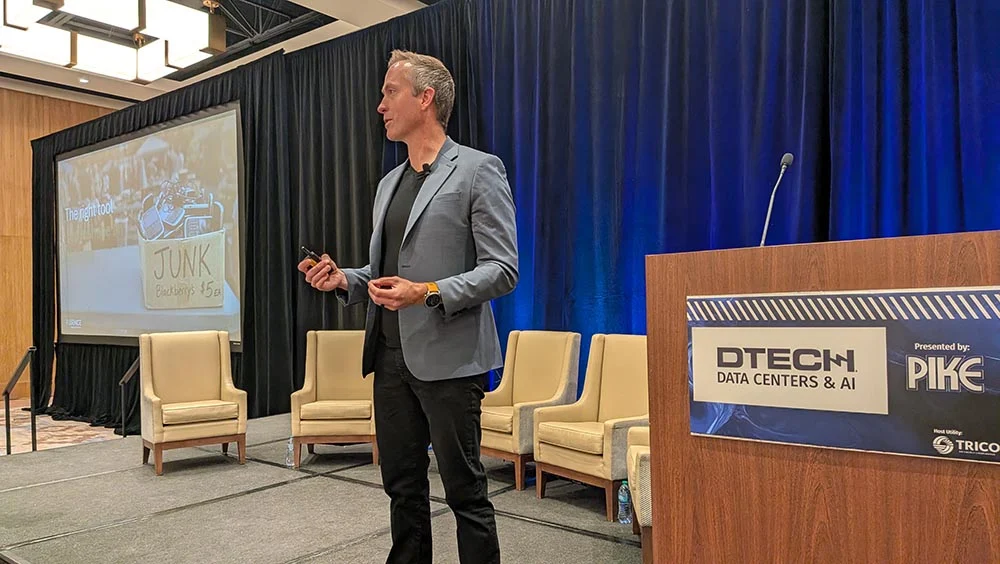
The convergence of artificial intelligence and global energy infrastructure reached a critical turning point in Scottsdale, Arizona, as the DTECH Data Centers & AI conference concluded on May 14, 2026. The three-day summit, which drew thousands of stakeholders from regulated utilities, data center developers, Engineering, Procurement, and Construction (EPC) firms, and technology innovators, focused on a singular, pressing challenge: how to power the exponential growth of AI-driven computing without destabilizing the national power grid. As the industry grapples with what many are calling a once-in-a-century structural shift in electricity demand, the consensus emerging from the event suggests that the solution lies not just in adding raw capacity, but in reimagining the fundamental architecture of the grid itself.
Central to this transformation is the evolution of battery energy storage from a secondary, intermittent support tool into the "operating system" of the modern energy economy. Jeff Monday, Chief Growth Officer at Fluence, delivered a keynote address on the final day of the conference that served as a manifesto for this new era. Monday argued that the traditional distinction between "load" and "generation" is dissolving, replaced by a model where flexibility and millisecond-level responsiveness define the value of an energy asset.
The Interconnection Crisis and the Rise of BYOP
The primary catalyst for this shift is a widening temporal chasm between the technology sector and the utility sector. While AI hardware cycles, driven by giants like NVIDIA and AMD, evolve every 18 months, the physical infrastructure required to support them—substations, transmission lines, and high-voltage transformers—operates on a 10-to-15-year planning and construction horizon. This mismatch has resulted in a backlog of interconnection queues across the United States, with some regions seeing wait times of five to seven years for new large-load connections.
In response, a "Bring Your Own Power" (BYOP) strategy has shifted from a niche alternative to a standard industry requirement. Data center developers are increasingly arriving at the interconnection point with pre-integrated power solutions, including on-site generation and massive battery storage arrays. This approach allows developers to bypass long-term grid studies by proving they can operate as "good grid citizens"—entities that can ramp their own power up or down without stressing the wider network.
Monday noted that BYOP is no longer a temporary workaround for slow utility paperwork. Instead, it represents the birth of a new interconnection model. He highlighted the Southwest Power Pool’s (SPP) HILLGA (High Impact Load Loss/Gain Analysis) process as a primary example. This regulatory pathway allows large loads paired with on-site generation to achieve a 90-day interconnection path, a radical departure from the multi-year standard. Similarly, in Texas, the Electric Reliability Council of Texas (ERCOT) is implementing mandatory curtailment protocols under Senate Bill 6, effectively making paired storage and generation the "price of admission" for new high-demand facilities.
Storage as a Three-Tiered Systemic Asset
A recurring theme throughout the Scottsdale summit was the necessity of viewing battery storage as a complex system rather than a modular component. Monday’s address detailed a three-pillar framework for storage-integrated architecture that provides the "certainty" required by institutional investors and grid operators.
The first pillar is hardware that is "bankable" and built for a 20-year lifecycle, ensuring that the physical asset does not degrade prematurely under the heavy cycling required by AI loads. The second pillar is the software and control layer, which must coordinate load-shaping and ramp-control at the millisecond level. This allows a data center to show up to the grid as a predictable, flat demand profile. The third pillar is a comprehensive services wrap that guarantees performance over two decades, even as the specific use cases for the battery evolve from simple power quality to sophisticated market participation.
This systemic approach addresses the risk of "stranded assets." As chip-level power management improves over the next decade, the primary function of on-site storage may shift. A system-oriented asset can pivot from a power buffer for the data center into a tradable grid asset that provides ancillary services to the utility, such as frequency regulation or voltage support, thereby improving the long-term Return on Investment (ROI).
Bridging the Temporal Gap: 18-Month Chips vs. 10-Year Grids
One of the most significant technical insights shared at DTECH 2026 was the role of storage as a temporal bridge. The industry is currently facing a "compute-infrastructure mismatch" where the speed of innovation in AI chips far outpaces the speed of physical grid expansion. Storage acts as the "architectural layer" that absorbs this friction.

Because battery storage can respond in milliseconds, it can manage the highly variable and often unpredictable power surges associated with training large language models (LLMs). This responsiveness prevents these surges from ever reaching the utility substation, effectively insulating the multi-decade infrastructure from the volatility of the 18-month chip cycle. Experts at the event noted that storage is the only grid asset capable of operating at the "speed of compute" while maintaining the "lifecycle of infrastructure."
Data-Driven Growth and Market Reactions
Supporting data presented during the conference underscored the scale of the challenge. Industry analysts from Wood Mackenzie and BloombergNEF shared projections indicating that data center power demand in the U.S. could grow by over 25 gigawatts (GW) by 2030, representing nearly 9% of total domestic electricity consumption. In some regions, such as Northern Virginia’s "Data Center Alley," the demand is expected to exceed the current capacity of the existing transmission network within the next 36 months.
Reactions from the utility sector have been a mix of caution and rapid adaptation. Representatives from major utilities like Duke Energy and Arizona Public Service (APS) participated in panel discussions, acknowledging that the influx of AI load is forcing a move away from traditional "top-down" planning. Instead, utilities are looking toward decentralized models where the customer (the data center) provides the flexibility needed to maintain grid stability.
EPC firms also reported a shift in their project portfolios. Leading contractors noted that nearly 70% of new data center bids now include a significant energy storage component, compared to less than 15% just four years ago. This shift is driving a massive increase in demand for lithium-iron-phosphate (LFP) and long-duration storage technologies, creating a secondary boom in the battery manufacturing sector.
From Grid Liabilities to Flexibility Assets
The conference concluded with a call to shift the industry’s mindset regarding data centers. For years, massive loads were viewed by grid operators as "liabilities"—shocks to the system that required expensive upgrades and increased thermal generation. The discussions at DTECH 2026 suggested that when paired with storage, these data centers can be transformed into "flexibility assets."
"Data centers aren’t grid shocks; they’re dynamic loads with highly variable operating profiles," Monday stated during the post-keynote Q&A. "Storage isn’t a complementary technology—it’s a flexibility asset that makes every other generation source, whether thermal or renewable, work better."
This shift in perspective has profound implications for decarbonization. By using storage to smooth the demand profile of a data center, developers can more effectively integrate renewable energy sources like wind and solar, which are inherently intermittent. This "firming" of renewable power at the site of consumption reduces the need for the utility to fire up "peaker" gas plants during periods of high demand.
Conclusion and Future Outlook
As the delegates departed Scottsdale, the roadmap for the next two years of energy development appeared clearer. The "batteries vs. gas" debate that dominated the early 2020s has been largely superseded by a more integrated view of the energy mix. The focus has shifted to the speed of implementation and the sophistication of the control systems managing these hybrid sites.
The DTECH Data Centers & AI event demonstrated that the "Operating System of the AI Economy" is already being installed. The challenge moving forward will be the synchronization of regulatory frameworks with this new technological reality. While technology providers like Fluence and developers like Microsoft or Google are moving at "AI speed," the success of this transition will ultimately depend on whether utilities and regulators can adopt the same flexibility-first mindset that now defines the vanguard of the data center industry.
The emergence of storage as core infrastructure marks the end of an era of passive grid management. In its place is a highly engineered, responsive, and autonomous system where every megawatt is managed with the same precision as the data it helps to process. The question is no longer whether the grid will change, but how quickly the industry can scale these integrated systems to meet the insatiable demand of the AI era.
