

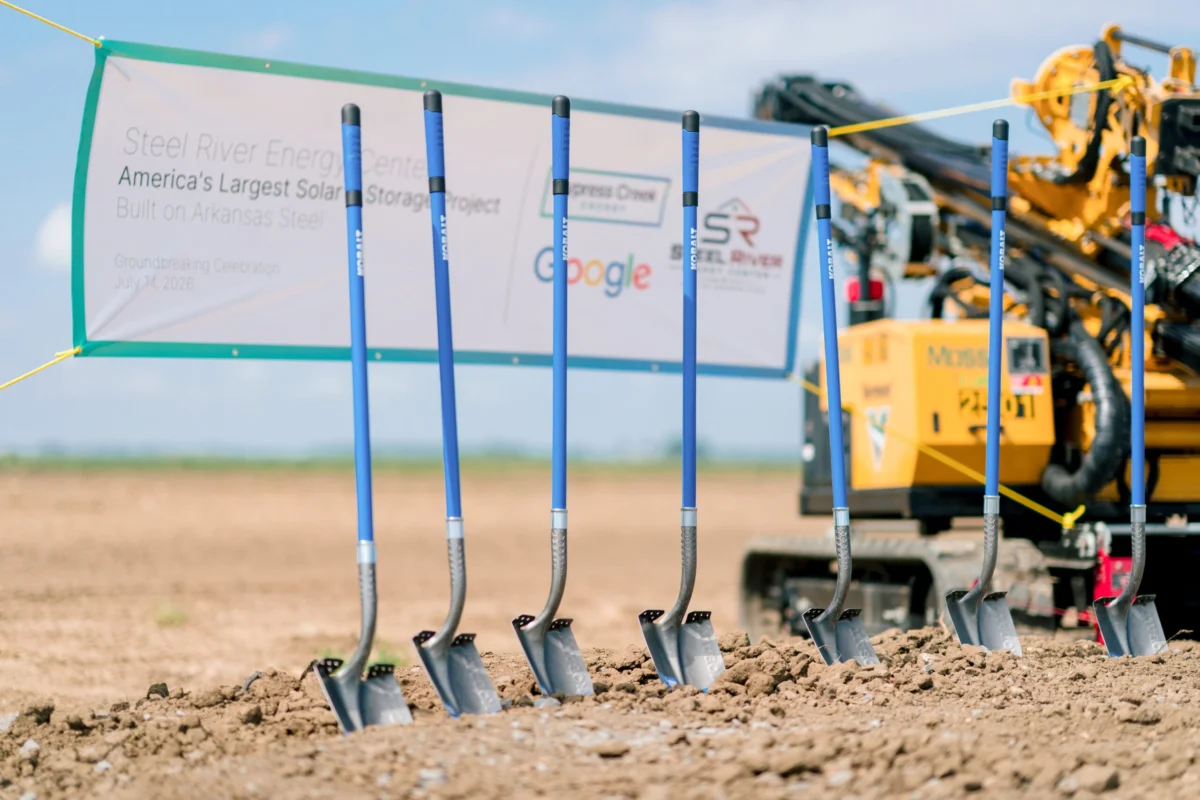
The landscape of American renewable energy infrastructure reached a significant milestone this week as Cypress Creek Energy and Google officially broke ground on the Steel River Energy Center in Arkansas. This massive undertaking, which represents a 2.5 gigawatt-direct current (GWdc) solar and 2.9 gigawatt-hour (GWh) battery energy storage system (BESS), is positioned to become one of the largest integrated clean energy facilities in the nation. The project is not merely a feat of engineering but a central component of a strategic partnership aimed at decarbonizing the regional power grid while fueling the rapid expansion of Arkansas’s industrial and technological sectors.
The commencement of construction marks the beginning of the first two phases of the project, which are slated to deliver 1.6 GWdc of solar generation and 1.9 GWh of battery storage capacity. Upon its total completion, scheduled for 2029, the three-phase development will provide a reliable, high-capacity energy source that integrates intermittent solar power with long-duration storage, ensuring a steady supply of electricity even when the sun is not shining. For Google, the project represents the largest solar and storage investment within its global portfolio to date, underscoring the tech giant’s commitment to operating on 24/7 carbon-free energy by the end of the decade.
Strategic Collaboration and the Role of Google
The Steel River Energy Center is underpinned by a robust power purchase agreement (PPA) between Google and Cypress Creek Energy, the project’s owner and operator. This agreement ensures that the energy generated during the initial two phases will be directed toward Google’s growing operational footprint. As data centers continue to proliferate across the United States to support artificial intelligence and cloud computing, the demand for "always-on" clean energy has reached unprecedented levels.
Will Conkling, Google’s head of data center energy, emphasized that the investment serves dual purposes: meeting corporate sustainability targets and bolstering the local economy. According to Conkling, the collaboration with Cypress Creek Energy will strengthen the regional grid, ensuring that affordable and reliable clean energy is available not just for Google, but for the wider community and the industrial businesses that form the backbone of the Arkansas economy.
The integration of 2.9 GWh of battery storage is particularly critical. In the past, the primary criticism of solar energy was its variability. By pairing 2.5 GWdc of solar capacity with a massive battery array, the Steel River Energy Center can store excess energy produced during peak daylight hours and discharge it during periods of high demand or low sunlight. This capability is essential for supporting the "industrial economy," which in Arkansas includes energy-intensive steel manufacturing and the high-uptime requirements of modern data centers.
A New Benchmark in the National Solar Landscape
To understand the scale of the Steel River Energy Center, it must be compared to existing record-holders in the American renewable energy sector. Until recently, the title of the largest operating solar-plus-storage facility in the U.S. belonged to the Edwards & Sanborn Solar + Energy Storage project in Kern County, California. That facility, which became fully operational in early 2024, features 875 MW of solar capacity and 3,287 MWh of energy storage.

While Edwards & Sanborn currently holds the edge in total storage duration (MWh), the Steel River project is set to eclipse it significantly in solar generation capacity. With 2.5 GWdc planned, Steel River will nearly triple the solar output of the Kern County site. Furthermore, Steel River enters a competitive field of "mega-projects" currently in various stages of development:
- The Darden Clean Energy Project: Located in Fresno County, California, this project is designed for 1.15 GW of solar and 4.6 GWh of storage. It is currently under construction with an expected completion date in 2028.
- The Perkins Renewable Energy Project: Situated in Imperial County, California, this project aims for 1.15 GW of solar and 4.6 GWh of storage but remains in the permitting phase.
By targeting a 2029 completion for its full 2.5 GWdc capacity, Steel River is positioning itself as the flagship of the next generation of American utility-scale renewables. Its location in Arkansas also signals a geographic shift in the industry, proving that massive renewable energy investments are no longer confined to the traditional "Sun Belt" states like California, Arizona, or Texas.
The Domestic Supply Chain and Economic Impact
One of the most distinctive features of the Steel River Energy Center is its reliance on a domestic, "Made in America" supply chain. At a time when the solar industry has faced scrutiny over its dependence on overseas manufacturing, Cypress Creek Energy has leveraged local resources to build the facility.
The project’s structural integrity is literally forged in Arkansas. Nearly all of the structural steel for the project is being sourced from Mississippi County. For the first two phases alone, PACO Steel will provide over 400,000 steel piles manufactured in Blytheville. These piles are made using more than 142,000 tons of steel coils produced at U.S. Steel’s Big River Steel facility in Osceola, Arkansas.
Kevin Smith, CEO of Cypress Creek Energy, noted that the project serves as a definitive answer to skeptics of the domestic solar supply chain. By using 100% U.S.-made solar panels and structural steel, the project supports American manufacturing jobs and reduces the carbon footprint associated with international shipping.
The project’s technical components further reflect this commitment to domestic sourcing:
- Solar Trackers: Supplied by Nextpower, these trackers utilize steel with significant content from Big River Steel.
- Solar Modules: The project will utilize modules from First Solar, the largest American solar manufacturer.
- Battery Systems: The BESS units are provided by LG Energy Solution Vertech. These systems are assembled in the United States using battery cells manufactured in North American factories.
Clint O’Neal, executive director of the Arkansas Economic Development Commission (AEDC), hailed the project as a "welcome addition" to the state’s business community. He pointed out that the facility’s ability to provide vital energy storage services would directly support the state’s manufacturing operations, creating a circular economic benefit where local steel builds the energy source that then powers the local steel mills.

Chronology and Future Milestones
The development of the Steel River Energy Center follows a structured timeline designed to integrate seamlessly into the regional grid managed by the Midcontinent Independent System Operator (MISO).
- 2023-Early 2024: Permitting, environmental assessments, and the finalization of the PPA with Google.
- Late 2024: Groundbreaking and commencement of Phase 1 and Phase 2 construction.
- 2025-2026: Installation of the first 400,000 steel piles and delivery of First Solar modules.
- 2027: Expected commissioning of the first two phases, bringing 1.6 GWdc and 1.9 GWh online.
- 2028: Commencement of Phase 3 construction to add the remaining 900 MWdc of solar and 1 GWh of storage.
- 2029: Full project completion and integration of all 2.5 GWdc of solar and 2.9 GWh of battery storage.
Broader Implications for the U.S. Energy Transition
The Steel River Energy Center represents more than just a large-scale construction project; it is a blueprint for the future of the American energy transition. The project highlights three major trends currently shaping the industry: the rise of the "Solar + Storage" model, the revitalization of domestic manufacturing through the Inflation Reduction Act (IRA) incentives, and the increasing role of "Big Tech" as a primary driver of renewable energy demand.
By combining solar and batteries at this scale, Cypress Creek is addressing the "duck curve" and grid instability issues that have plagued earlier renewable energy adoptions. The massive storage capacity allows the facility to act more like a traditional "baseload" power plant, providing a steady flow of electricity that can be dispatched according to the needs of the grid operator.
Furthermore, the emphasis on Arkansas-made steel demonstrates how renewable energy projects can serve as catalysts for industrial revitalization in the "Steel Alley" of the South. As more companies seek to qualify for domestic content bonuses under federal tax credit programs, projects like Steel River provide a roadmap for how developers can partner with local manufacturers to create a mutually beneficial ecosystem.
As construction continues in Mississippi County, the Steel River Energy Center stands as a testament to the scale of ambition currently driving the U.S. energy sector. By the time the final phase is completed in 2029, the project will not only be a cornerstone of Google’s clean energy strategy but a vital asset for the state of Arkansas and a landmark achievement in the nation’s journey toward a carbon-free future.
