

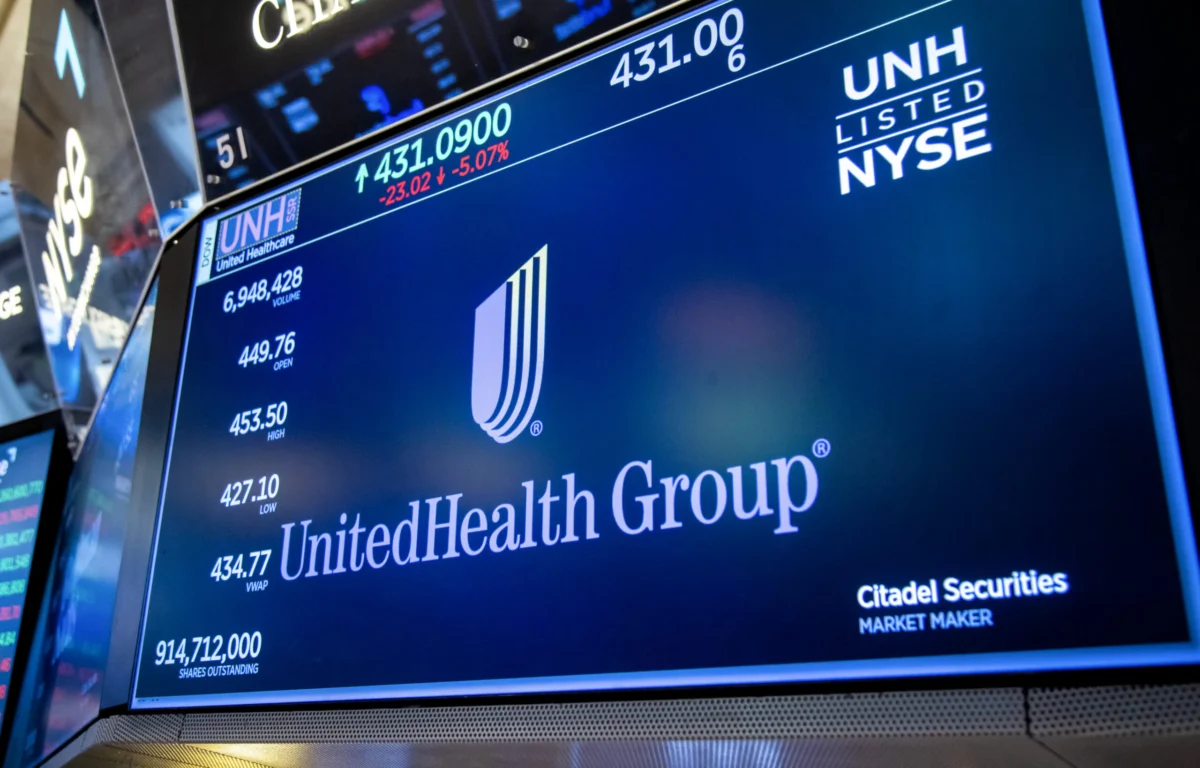
UnitedHealth Group, the nation’s largest private health insurer, on Thursday reported second-quarter earnings that significantly surpassed Wall Street estimates, prompting an upward revision of its full-year profit outlook. The impressive performance was attributed by company executives to more effective management of persistently high medical costs and the strategic deployment of artificial intelligence to streamline operations across its vast enterprise. This strong showing sent the company’s stock soaring by more than 7% in morning trading, signaling investor confidence in its strategic recalibration amidst a challenging healthcare landscape.
The healthcare behemoth now anticipates adjusted earnings of $19.50 to $20 per share for 2026, a notable increase from its previous projection of more than $18.25 per share. While UnitedHealth is maintaining its full-year revenue guidance of greater than $439 billion, Chief Financial Officer Wayne DeVeydt suggested in an interview that the company expects to "do better than that" given the robust second-quarter results and ongoing operational improvements. This optimistic outlook comes as the broader insurance industry grapples with elevated medical expenses that have plagued the sector for over two years.
Strong Financial Performance Outpaces Expectations
For the second quarter, UnitedHealth Group reported net income of $5.48 billion, or $6.04 per share, a substantial increase compared to $3.41 billion, or $3.74 per share, in the same period a year ago. Excluding certain items such as business divestitures, restructuring charges, and the expected reduction of reserves for unprofitable contracts, the company’s adjusted earnings reached $6.38 per share. This figure comfortably exceeded analyst expectations. Revenue for the quarter climbed to $112.03 billion, up from $111.62 billion in the prior-year quarter, also surpassing analyst sales estimates compiled by StreetAccount for both its insurance arm, UnitedHealthcare, and its diversified healthcare services unit, Optum.
This financial rebound is particularly significant given the prevailing macroeconomic pressures and industry-specific challenges. The company’s medical benefit ratio (MBR), a critical metric representing total medical expenses paid relative to premiums collected, improved to 86.7% for the second quarter. This marks a notable improvement from the 89.4% reported in the year-earlier period and came in well below analysts’ expectations of 88.5%. A lower MBR typically indicates greater profitability for an insurer, reflecting more effective cost containment strategies and claims management. The improvement in MBR underscores UnitedHealth’s success in navigating the elevated cost environment, turning an industry-wide headwind into a competitive advantage.
Strategic Turnaround and the Power of AI
UnitedHealth’s impressive results are not merely a reflection of market fluctuations but a testament to a deliberate and comprehensive turnaround plan gaining significant traction. This multi-pronged strategy involves a major restructuring, an executive shuffle aimed at infusing new leadership and perspectives, and a sharpened focus on profitability. Key components of this strategy include shrinking membership in less profitable segments, exiting specific unprofitable contracts, and a substantial investment of $1.5 billion into artificial intelligence technologies designed to streamline operations and enhance efficiency.
CFO Wayne DeVeydt emphasized that the company’s current efforts are not about "trend bending or coming under control," but rather "pushing down what is already an elevated number" in terms of medical costs. This distinction highlights a proactive approach to managing an intractable industry problem through internal efficiencies rather than relying on a broader market correction. The company views its AI investment as central to this strategy, aiming to improve both operational efficiency and, ultimately, patient care.
The application of AI within UnitedHealth is multifaceted. For instance, AI tools are being deployed to accelerate processes such as prior authorizations, a perennial pain point for both providers and patients due to their often lengthy and complex nature. By using AI to automate routine checks and expedite approvals for standard procedures, UnitedHealth aims to reduce administrative burdens and improve access to care. Furthermore, AI is crucial in enhancing payment accuracy by identifying potential instances of fraud, waste, and abuse. These sophisticated algorithms can analyze vast datasets to detect anomalous billing patterns or fraudulent claims, thereby lowering costs and ensuring that resources are directed appropriately. DeVeydt clarified that these AI tools are strictly used for process optimization and detection, not for determining whether care is approved or denied, addressing common concerns about algorithmic bias and ethical decision-making in healthcare.
"I would say the turnaround, and I would emphasize that on our culture, it’s really happening… that turnaround is translating to strong, strong earnings," DeVeydt told reporters. He added, "So it shows that when we can do things the way we think they should be done, that we can be both a solution and be profitable." This statement encapsulates the company’s ambition to simultaneously address healthcare system challenges and achieve financial success, framing its innovations as beneficial for all stakeholders. However, he cautioned that this transformation is a "multiyear journey," indicating sustained commitment and ongoing efforts.
Navigating Elevated Medical Costs and Industry Challenges
The healthcare industry has been grappling with persistently high medical costs for over two years, a phenomenon driven by a confluence of factors. The post-pandemic surge in deferred care, where patients are now seeking treatments and procedures they put off during the COVID-19 lockdowns, has significantly increased utilization. Additionally, the proliferation of high-cost specialty drugs, notably GLP-1 agonists for weight loss and diabetes, has added considerable pressure on pharmaceutical spending. Inflationary pressures affecting labor costs for healthcare providers, supply chain expenses, and overall operational expenditures have further exacerbated the situation.
UnitedHealth’s ability to improve its medical benefit ratio in this environment is a significant achievement. It suggests that its internal strategies – including enhanced care management programs, more efficient network contracting, and the aforementioned AI-driven operational improvements – are effectively mitigating these cost pressures. While the company acknowledges that the underlying trend of elevated medical costs remains, its proactive measures are creating a buffer against these systemic challenges.
Membership Dynamics and the Affordability Conundrum
Despite its strong financial performance, UnitedHealth reported a decline in membership during the second quarter. The company served 48.5 million people, a decrease of 525,000 from the previous quarter. DeVeydt attributed these membership losses largely to affordability pressures stemming from the very healthcare cost increases that insurers are struggling to manage. As medical costs rise, insurers are often compelled to raise premiums and adjust benefits, which in turn can lead to members opting out of plans, particularly in competitive markets.
UnitedHealth forecasts further membership losses in 2026, anticipating a reduction of approximately 500,000 Affordable Care Act (ACA) exchange members and 1.1 million Medicare Advantage (MA) members. The MA market, in particular, has seen increased scrutiny and adjustments in recent years, with insurers facing higher utilization rates from an aging population and more stringent regulatory requirements.
Ironically, despite the decline in enrollment, UnitedHealth’s revenue has remained stable, primarily because higher pricing is offsetting the reduction in member volume. While this dynamic has protected the company’s top line in the short term, DeVeydt expressed concern about its long-term implications for the healthcare system. "That dynamic is not a good thing for the system long term," he stated, highlighting the growing affordability crisis that could lead to more people being uninsured or underinsured, further straining public health resources and exacerbating health disparities. This sentiment resonates with broader concerns among policymakers and consumer advocates about the sustainability of healthcare costs for individuals and families.
Optum’s Enduring Strength and Diversification
A crucial component of UnitedHealth Group’s diversified strategy and overall resilience is its Optum healthcare unit. Optum provides a wide array of healthcare services, including pharmacy care services (OptumRx), health care delivery (OptumCare), and data analytics and technology services (OptumInsight). Both UnitedHealthcare and Optum topped analysts’ sales estimates for the quarter, underscoring the success of the company’s integrated approach.
Optum’s strong performance offers a strategic hedge against the volatility inherent in the insurance market. By providing direct care, managing pharmacy benefits, and offering technology solutions, Optum diversifies UnitedHealth’s revenue streams and provides opportunities for synergistic value creation. For example, Optum’s data analytics capabilities can inform UnitedHealthcare’s risk assessment and care management strategies, while OptumCare clinics can provide cost-effective, high-quality care to UnitedHealthcare members. This integrated model is increasingly seen as a differentiator in the fragmented U.S. healthcare system.
Regulatory Landscape and Ongoing Investigations
The positive earnings report comes approximately a year after UnitedHealth publicly disclosed it is facing Department of Justice investigations concerning its Medicare billing practices. Such investigations are not uncommon in the highly regulated Medicare Advantage market, where allegations of "upcoding" (billing for more severe conditions than medically necessary) or other fraudulent activities can lead to significant penalties and reputational damage.
DeVeydt confirmed that the company has no new updates regarding the investigation but reiterated its commitment to cooperating fully with the government. These investigations underscore the intense regulatory scrutiny faced by large healthcare players, particularly in government-sponsored programs like Medicare Advantage, which rely on accurate billing and transparent practices to ensure the integrity of federal funds. The long-term implications of such an investigation, while not directly impacting current operational results, remain a factor in the company’s broader risk profile and public perception.
Broader Implications and Future Outlook
UnitedHealth Group’s second-quarter performance and raised outlook offer a compelling narrative of strategic execution in the face of significant industry challenges. The company’s focus on AI-driven efficiency and proactive cost management appears to be yielding tangible results, setting a potential precedent for how large insurers can navigate the complex dynamics of rising medical costs and evolving regulatory environments.
For investors, the strong earnings and positive outlook reinforce UnitedHealth’s position as a leader capable of delivering value even in a turbulent market. For the broader healthcare industry, UnitedHealth’s approach to AI and cost control may serve as a blueprint, compelling competitors to accelerate their own technological adoption and efficiency drives. However, the acknowledged "multiyear journey" suggests that sustained effort will be required to maintain this momentum.
The CFO’s concern about membership losses due to affordability underscores a critical long-term challenge for the U.S. healthcare system. While UnitedHealth can offset these losses with higher pricing in the short term, the growing burden on consumers raises questions about equitable access to care and the future stability of health insurance markets. Addressing this affordability crisis will likely require broader policy solutions in conjunction with ongoing innovation from industry players like UnitedHealth. As the company continues its transformation, its ability to balance profitability with its role as a "solution" provider will be closely watched by investors, policymakers, and the millions of Americans it serves.
