

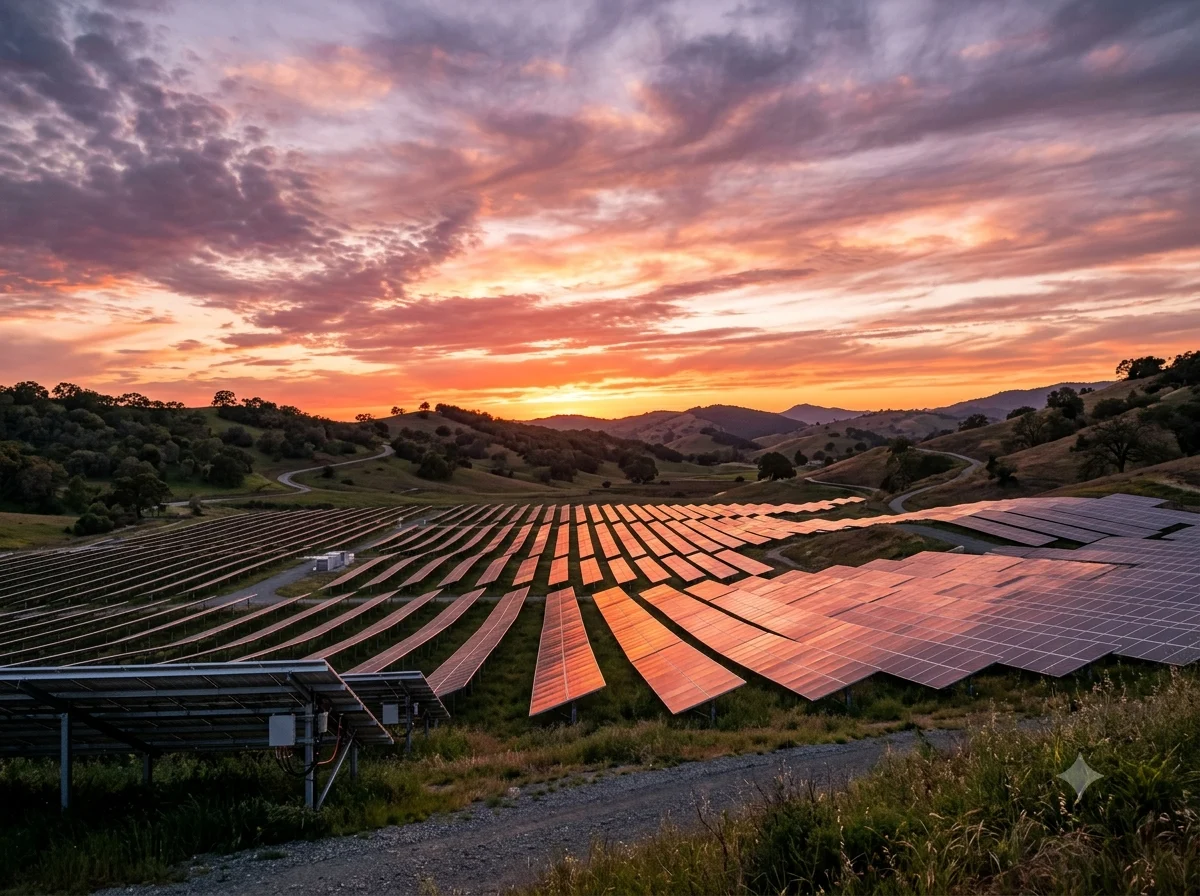
On July 4, 2025, President Donald Trump signed the One Big Beautiful Bill (OBBB) into law, a sweeping piece of legislation that fundamentally alters the landscape of the American energy sector. While the holiday is traditionally marked by celebrations of independence, the renewable energy industry spent the weekend analyzing the final text of a bill that significantly curtails the financial incentives previously established under the Biden administration. The OBBB represents a decisive pivot in federal energy policy, prioritizing fossil fuel interests and domestic energy dominance while sunsetting critical support mechanisms for wind and solar power.
The legislation’s most immediate impact is the establishment of a definitive expiration date for the Investment Tax Credit (ITC) eligibility for specific renewable technologies. Under the new law, wind and solar projects will see their access to these credits cut off effective July 4, 2026—exactly one year from the bill’s signing. This move has triggered a "mad scramble" across the industry, as developers rush to "safe-harbor" equipment and satisfy "start of construction" requirements to lock in legacy incentives before the window closes permanently.
The Legislative Shift: From the IRA to the OBBB
The One Big Beautiful Bill serves as a functional repeal and replacement of key provisions within the 2022 Inflation Reduction Act (IRA). While the IRA provided a ten-year runway of tax credits intended to decarbonize the U.S. power grid, the OBBB reallocates federal resources toward traditional energy sources and specific emerging technologies. Notably, battery storage systems have retained many of the incentives promised by the IRA, a move analysts suggest is intended to bolster grid reliability and support domestic manufacturing of energy storage components.
However, the exclusion of wind and solar from long-term ITC eligibility marks a stark departure from previous federal trajectories. Proponents of the OBBB argue that wind and solar are now "mature technologies" that should compete in the open market without permanent government subsidies. Critics, conversely, warn that the sudden removal of these credits could stall the deployment of the cheapest and fastest-to-build generation sources at a time when national electricity demand is surging.
The industry response leading up to the July 4 signing was characterized by a frantic procurement of essential components. To qualify for the legacy ITCs, developers had to prove that construction had physically begun or that they had incurred at least 5% of the total project cost. This led to a surge in orders for long-lead-time items, such as high-voltage transformers and custom racking systems. With the signing of the bill, the "well has run dry" for new projects seeking those upfront financial offsets, leaving the industry to navigate a more expensive and uncertain development environment.
The Four Cs of Investment and the FEOC Quagmire
A primary concern for energy investors in the wake of the OBBB is the lack of regulatory clarity regarding Foreign Entities of Concern (FEOC). Under the new legislative framework, a project’s eligibility for any remaining tax credits—including those for batteries—is strictly tied to its supply chain. If a project utilizes components or minerals sourced from an FEOC, it faces disqualification.
Industry experts, including Bryan Didier and Walter L. McLeod of Monarch Private Capital, have highlighted the paralysis caused by "sub-regulatory guidance." Currently, the industry relies on an Internal Revenue Service (IRS) notice issued in February 2025, which provides a mathematical framework for calculating material assistance but fails to define critical ownership prongs and input definitions.
Didier identifies "Four Cs" essential for a stable investment environment:
- Certainty: The knowledge that a specific law or policy exists.
- Clarity: A clear understanding of what that law entails.
- Consistency: An assurance of how the law will be applied over time.
- Confidence: The resulting ability for firms to pursue long-term business plans.
Without finalized Treasury guidance on FEOC rules, many investors are hesitant to commit capital. Dylan Reed, Managing Director at Advanced Energy United and former Department of Energy official, noted that while some developers are attempting to move forward, the lack of certainty has created a financing bottleneck. "Until there’s actual certainty… we can’t get financing, and we can’t have investors that are willing to do that until they know exactly where that’s going," Reed stated.
State and Federal Synergy: The Red State Paradox
One of the more unexpected developments in the clean energy transition has been the geographical distribution of project deployments. Since the passage of the IRA, a majority of renewable energy investment has flowed into "red" states rather than "blue" states. This trend is largely attributed to more flexible permitting processes and less restrictive local regulatory environments in Republican-led states.
Walter L. McLeod observed that the disconnect between federal incentives and state-level execution has created significant bottlenecks. "You can have the most powerful, most generous federal subsidies… but if you can’t deploy at the state level because it’s a quagmire there, it just creates a bottleneck," McLeod explained.
The OBBB aims to address some of these discrepancies by encouraging a more unified approach to the energy value chain. However, the disparity in permitting timelines remains a major hurdle. While some states have managed to approve and develop projects in under five years, others face timelines exceeding 15 years. This "permitting quagmire" is increasingly viewed as a threat to national security and economic competitiveness, particularly as data centers—driven by the explosion of Artificial Intelligence—demand massive amounts of new power in record time.
Data Center Growth and the Need for Speed
The urgency of the energy transition is no longer driven solely by climate goals but by the practical necessity of meeting rapid load growth. The rise of AI and the expansion of domestic manufacturing have placed the U.S. power grid under unprecedented strain. Data centers, in particular, require 24/7 baseload power, a requirement that traditional wind and solar struggle to meet without the very battery storage systems the OBBB chose to protect.
The "speed-to-power" metric has become the new benchmark for success in the energy sector. Industry leaders argue that the federal government must move faster on permitting elements without necessarily rolling back environmental protections. The goal is to implement better processes and state laws that allow for infrastructure to be built at the pace of modern technology.
Dylan Reed emphasized that improving these processes is essential for maintaining public trust and managing consumer costs. "We’re talking about how we can move things faster just by having better processes… so that when my mom calls me, I can say, ‘Trust me, your bills are going to start coming down,’" Reed remarked.
Chronology of Energy Policy Transformation (2022–2025)
To understand the impact of the OBBB, it is necessary to view it within the context of the last three years of American energy policy:
- August 2022: The Inflation Reduction Act is signed, providing $369 billion in climate and energy spending, including long-term extensions of the wind and solar ITCs.
- 2023–2024: Renewable energy installations hit record highs, with a significant concentration of manufacturing and generation projects located in the Southeast and Midwest.
- February 2025: The IRS issues preliminary guidance on FEOC and "Foreign Entity" definitions, creating initial confusion regarding supply chain compliance.
- January–June 2025: The Trump administration signals a shift toward fossil fuels and "Energy Dominance," culminating in the drafting of the OBBB.
- July 4, 2025: President Trump signs the OBBB, effectively ending the "gold rush" for wind and solar ITCs and initiating a one-year countdown for existing projects to reach construction milestones.
Broader Economic and Global Implications
The global implications of the OBBB are significant. By tightening FEOC requirements, the U.S. is effectively attempting to decouple its energy supply chain from China, which currently dominates the production of solar ingots, wafers, and battery chemicals. While this move is intended to foster a domestic industrial base, the short-term reality is a "dry well" of available, compliant components.
Economically, the shift may lead to a bifurcated energy market. Large-scale utility projects that were "safe-harbored" before the July 2025 deadline will likely proceed, but new projects starting in late 2025 and 2026 will face higher capital costs. This could lead to a temporary slowdown in new wind and solar capacity additions, potentially leading to increased reliance on natural gas to meet the immediate needs of the tech sector.
Furthermore, the OBBB’s focus on fossil fuels reflects an "all-of-the-above" strategy that prioritizes immediate availability and cost-efficiency over long-term carbon targets. For the renewable energy industry, the path forward involves a pivot toward storage-integrated projects and a renewed focus on state-level advocacy to overcome the permitting hurdles that the federal government has yet to resolve.
As the industry digests the 2025 legislative changes, the focus shifts to the 2026-2028 window. Stakeholders are now looking for a "blueprint" that creates unity between federal and state energy policies. The goal is to ensure that the U.S. can support its grid amid rapid load growth while navigating a landscape where the "fireworks" of federal subsidies have largely faded for the wind and solar sectors.
