

NEW YORK — Lucid Group, the luxury all-electric vehicle manufacturer, has articulated a comprehensive strategy aimed at achieving cash flow positivity by the late 2020s. The ambitious roadmap, presented during the company’s first investor day in nearly five years as a public entity, outlines a significant expansion of its vehicle lineup, a diversification into software and technology offerings, and a broadening of its international market presence. The announcement, made on Thursday to dozens of investors and Wall Street analysts, underscored the company’s commitment to long-term financial stability amidst a challenging electric vehicle (EV) market.
The cornerstone of Lucid’s strategy for positive cash flow generation rests on several key pillars: aggressive market expansion into midsize vehicle segments and the nascent robotaxi market, coupled with international growth in strategically vital regions such as Europe and Saudi Arabia. Furthermore, the company anticipates achieving substantial efficiency gains across its operations and generating new revenue streams through advanced software offerings, including improved advanced driver assistance systems (ADAS) and a proprietary Lucid artificial intelligence assistant. Interim CEO Marc Winterhoff, who unexpectedly took the helm last year following founder Peter Rawlinson’s departure, emphasized that "accelerating to profitability" serves as the company’s "north star," though executives refrained from pinpointing an exact year for achieving this crucial financial milestone.
Despite the detailed unveiling of its product and expansion plans, Lucid’s stock closed Thursday at $9.84, marking a 7.9% decline. Shares fluctuated between a 6% and 8% loss throughout much of the event, a reaction that analysts attributed to the prevailing tough market conditions for EV companies. Ben Kallo, an analyst at Baird, noted in a Thursday investor brief, "We view the midterm and late decade targets as an important benchmark against which investors can measure LCID’s progress which will improve transparency. The near-term backdrop for EVs remains challenging with headwinds such as tariffs and policy muting investor sentiment." This market response highlights the skepticism surrounding long-term projections in a sector currently grappling with slowing demand and intense competition.
Navigating a Challenging EV Landscape: Financial Realities and Market Headwinds
Lucid’s aspiration for cash flow positivity by the end of the decade is particularly challenging given its current financial performance and the broader downturn in demand for EVs in the U.S. and other key markets. While the company has made strides in increasing sales and narrowing its operational losses, the path to profitability remains steep. In 2025, Lucid reported a substantial net loss of $2.7 billion against a revenue of $1.35 billion. The company’s free cash flow was a negative $3.8 billion in the same year, a deficit that widened by approximately 31% compared to the previous year. These figures underscore the significant capital expenditure required for scaling production, developing new technologies, and expanding market reach in the highly competitive automotive industry.
The waning demand for electric vehicles, particularly in the premium segment where Lucid currently operates with its Air sedan and Gravity SUV, is a critical headwind. Factors contributing to this trend include higher interest rates impacting consumer purchasing power, concerns over charging infrastructure availability and reliability, and a general cooling of early adopter enthusiasm. Consumers are increasingly price-sensitive, pushing manufacturers to offer more affordable options, a strategic pivot Lucid is now actively pursuing with its upcoming midsize vehicle platform. This shift reflects an industry-wide recognition that sustained growth requires broader market appeal beyond the luxury segment.
The Midsize Vehicle Offensive: Cosmos, Earth, and Beyond
A central component of Lucid’s growth strategy is its foray into the midsize vehicle market, a segment projected to significantly expand the company’s total addressable market (TAM) from an estimated $40 billion (for its current Air sedan and Gravity SUV) to a staggering $700 billion. The company announced plans to produce three distinct midsize vehicles, beginning with a model dubbed "Cosmos" slated for launch later this year. This will be followed approximately a year later by a vehicle named "Earth," with an unnamed third model to follow at an unspecified future date.
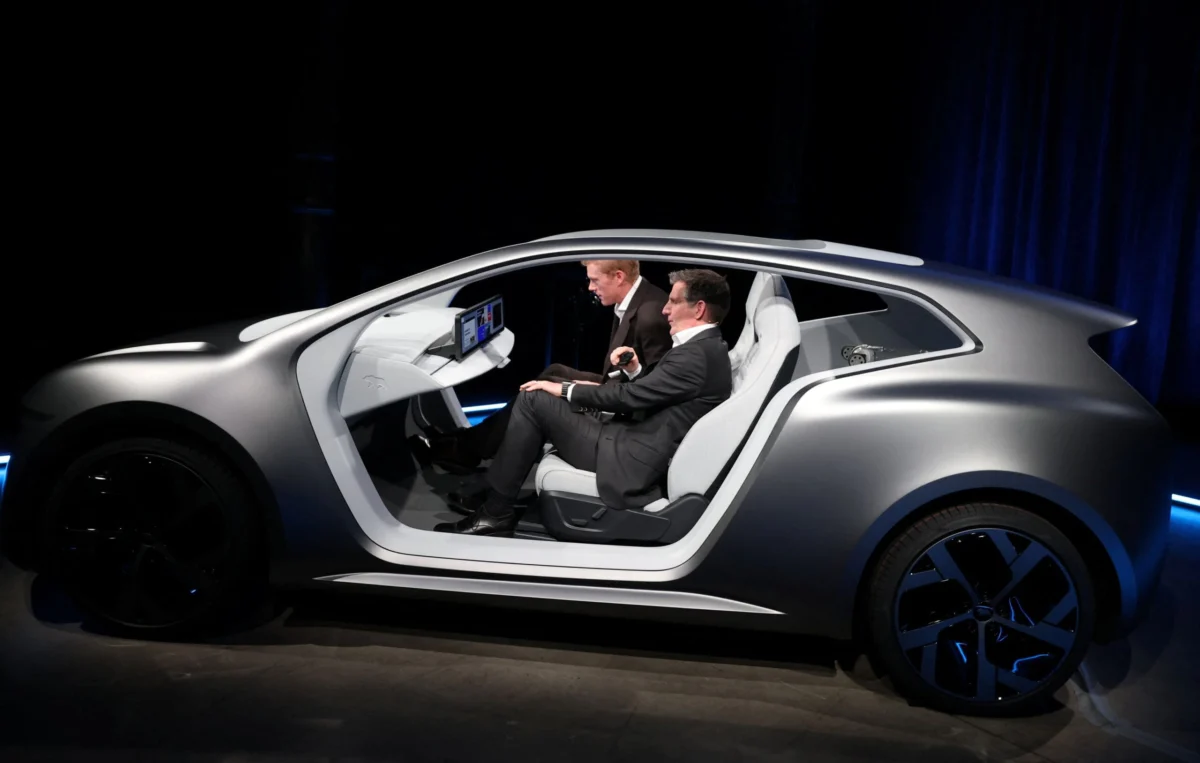
Derek Jenkins, Lucid’s senior vice president of design and brand, articulated the strategic intent behind this diversified midsize lineup: "We think these three unique products will give us maximum opportunity to hit the widest audience possible. And that audience is where we are today, but it’s a different audience than our current market." The Cosmos, previewed to event attendees, showcased a more muscular aesthetic, featuring thinner headlights and a silhouette reminiscent of the Gravity SUV but in a more compact package. The interior design continues Lucid’s signature emphasis on spaciousness, ample storage, and a large, integrated one-piece screen dominating the front dash, reinforcing its commitment to luxury and technological sophistication.
These three midsize vehicles are designed to target distinct demographic segments: upscale buyers, younger "trendsetting achievers," and outdoor enthusiasts. The latter category positions Lucid in direct competition with fellow EV manufacturer Rivian Automotive, which is poised to release its R2 midsize vehicle this spring, starting at approximately $58,000. Lucid has indicated that its midsize vehicle line is expected to begin at around $50,000, aligning it with the average transaction prices of new vehicles in the U.S. and directly challenging entry-level models from competitors like Rivian’s R2. This strategic pricing is crucial for capturing a broader consumer base and accelerating sales volumes, which are essential for achieving the efficiency gains and economies of scale necessary for profitability.
Software, Autonomy, and Robotaxis: Unlocking New Revenue Streams
Beyond vehicle sales, Lucid is aggressively pursuing new revenue streams through software and advanced driving technologies. The company projects achieving approximately $1 billion in annual incremental, non-vehicle revenue through services such as recurring software subscriptions by the latter half of the decade. This ambitious target underscores a broader industry trend where software-defined vehicles and subscription services are becoming increasingly vital for sustained profitability.
Lucid provided a glimpse into its future mobility solutions, including plans for a two-seat robotaxi. A design concept car for this autonomous vehicle was previewed, although a specific timeframe for its market introduction was not provided. Interim CEO Marc Winterhoff clarified to CNBC following the event that the dedicated robotaxi is a "mid-term" target for the company in the coming years.

A significant portion of the investor day was dedicated to discussing Lucid’s upcoming driving technologies. Kay Stepper, Lucid’s vice president of advanced driving systems, declared that "Autonomy plays an outsized role in the future of Lucid." The company intends to launch a subscription service by early 2027, with pricing expected to range from $69 to $199 per month, depending on the capabilities offered. Furthermore, Lucid aims to introduce vehicles capable of self-driving under certain circumstances by 2029, signaling a long-term commitment to autonomous driving. Winterhoff expressed confidence that the company’s autonomy technologies would effectively match Tesla’s current Full Self-Driving (FSD) capabilities by as early as next year, highlighting the competitive pressure and rapid pace of innovation in this domain.
In a strategic move to bolster its robotaxi ambitions, Winterhoff and Uber President and Chief Operating Officer Andrew Macdonald announced plans to expand their previously disclosed tie-up for robotaxis. This expanded partnership will now include Lucid’s upcoming midsize vehicles, suggesting a broader collaboration aimed at integrating Lucid’s autonomous driving technology into Uber’s ride-hailing network. Such partnerships are critical for sharing development costs, accelerating deployment, and gaining market traction in the capital-intensive autonomous vehicle sector.
International Ambitions and Strategic Partnerships
Lucid’s strategy for achieving cash flow positivity is not solely reliant on product diversification and software innovation; international market expansion is also a critical component. The company specifically highlighted Europe and Saudi Arabia as key markets for growth. The Public Investment Fund (PIF) of Saudi Arabia, Lucid’s largest shareholder, plays a pivotal role in this international strategy. The PIF’s substantial investment and its recent shift in investment strategy from direct capital injections to a revolving credit facility underscore its continued support while also signaling a maturing financial relationship. This revolving credit facility provides Lucid with a flexible source of capital, allowing it to manage its liquidity more efficiently as it scales operations and expands globally.
The Middle East, particularly Saudi Arabia, represents a significant growth opportunity for Lucid, not only due to the PIF’s involvement but also due to a burgeoning market for luxury EVs and a strategic vision to diversify its economy away from oil. Expanding into Europe, a mature and competitive EV market with stringent emissions regulations and a strong consumer preference for premium electric vehicles, offers another avenue for substantial growth and brand building. These international ventures, however, will require significant investment in charging infrastructure, sales and service networks, and localized marketing efforts.
Leadership, Capital, and Investor Sentiment
The transition of leadership from founder Peter Rawlinson to interim CEO Marc Winterhoff last year introduced an element of uncertainty, which Winterhoff is now working to address by providing a clear strategic direction. His emphasis on "accelerating to profitability" aims to reassure investors and instill confidence in Lucid’s long-term viability. The market’s initial lukewarm reaction to the investor day announcements, as evidenced by the stock’s decline, reflects the high bar for EV companies to demonstrate a credible path to sustainable profitability.
Capital remains a central concern for investors in high-growth, capital-intensive industries like EV manufacturing. Lucid has stated that its total liquidity of $5.5 billion, which includes a roughly $2 billion delayed draw term loan credit facility from Saudi’s PIF, is sufficient to fund its operations through the first half of 2027. This capital runway is crucial for executing its ambitious product roadmap and market expansion plans. Comparatively, Rivian, another EV startup vying for market share, ended the fourth quarter with $6.59 billion in total liquidity, including nearly $6.1 billion in cash, cash equivalents, and short-term investments, as it prepares to ramp up production of its R2 midsize vehicle and new autonomy technologies. The ability of both companies to effectively manage their cash burn and secure adequate financing will be paramount to their long-term success.
The Broader EV Market: A Race for Viability
Lucid’s announcements come at a time when the global EV market is undergoing a significant transformation. After years of rapid growth, the industry is entering a more mature phase characterized by intense competition, price wars, and a re-evaluation of growth projections. Established automakers are aggressively electrifying their lineups, while new entrants like Lucid and Rivian are battling to scale production and achieve profitability. The success of market leader Tesla, which has successfully navigated the complexities of EV manufacturing and established a robust charging network, serves as both an inspiration and a formidable competitor. Lucid’s aspiration to match Tesla’s FSD capabilities by next year underscores the competitive intensity in the autonomy space.
Both Rivian and Lucid are under immense pressure to reassure investors of their ability not only to compete but to thrive in this evolving environment. Their strategies, which involve expanding into more accessible vehicle segments and diversifying into high-margin software and services, are indicative of the broader industry’s efforts to adapt. The success of Lucid’s midsize EV platform, its ability to generate substantial software revenue, and its effective execution of international expansion will be closely scrutinized by the market.
Outlook and Analyst Perspectives
Lucid’s investor day provided the most detailed product and expansion plans since its public debut, offering investors a clearer picture of its strategic direction. While the near-term market reaction was cautious, analysts like Ben Kallo highlighted the importance of these targets for transparency and as benchmarks for measuring progress. The long-term viability of Lucid, like many other EV startups, hinges on its ability to transition from a high-growth, cash-burning enterprise to a self-sustaining, profitable entity. The path is fraught with challenges, including intense competition, fluctuating consumer demand, and the substantial capital requirements of automotive manufacturing and technological development.
Lucid’s strategy to diversify its product portfolio, leverage software as a key revenue driver, and expand geographically is a logical response to the current market dynamics. However, the execution of this ambitious plan will be critical. The company’s ability to bring its midsize vehicles to market on schedule and at competitive price points, to develop and monetize its advanced autonomy features, and to efficiently scale its operations will ultimately determine whether it can achieve its "north star" of accelerating to profitability by the end of the decade. The coming years will be pivotal for Lucid as it navigates these complexities in its quest to establish itself as a dominant force in the global electric vehicle industry.
