

The escalating geopolitical tensions involving the U.S., Israel, and Iran have reached a critical juncture, with Iran’s effective closure of the Strait of Hormuz passage sending immediate and profound shockwaves through the global economy. This strategic maritime chokepoint, vital for a significant portion of the world’s energy and trade flows, has become a flashpoint in a conflict that could soon translate into significantly higher prices for consumers across a vast array of goods and services, from essential foodstuffs to fuel and manufactured products. The reverberations are already being felt in disrupted supply chains, volatile commodity markets, and a looming threat to global economic stability, prompting urgent reassessments from logistics providers, retailers, and economic analysts alike.
The Geopolitical Crucible: A Deeper Look at the Conflict and Hormuz’s Significance
The Strait of Hormuz, a narrow waterway connecting the Persian Gulf with the Arabian Sea and the open ocean, is arguably the world’s most critical oil transit chokepoint. An estimated 20% of the world’s total petroleum liquids consumption and roughly one-third of the world’s liquefied natural gas (LNG) pass through this strait daily, originating from major producers like Saudi Arabia, Iran, Iraq, Kuwait, Qatar, and the United Arab Emirates. Its strategic importance extends beyond energy, facilitating the movement of countless container ships carrying everything from raw materials like metals and fertilizers to finished goods destined for markets worldwide.
The current crisis stems from an ongoing, complex U.S.-Israeli conflict with Iran, characterized by long-standing disputes over Iran’s nuclear program, its regional proxy networks, and broader geopolitical influence. While the precise trigger for Iran’s "effective closure" in early March 2026 remains subject to international scrutiny, it represents a significant escalation, weaponizing a vital global artery in response to perceived threats or actions from its adversaries. This move echoes historical instances of tension in the strait, which has frequently been a flashpoint for naval confrontations, mine-laying incidents, and tanker attacks, underscoring its inherent volatility. Previous incidents, though often temporary, have consistently highlighted the fragility of global supply chains reliant on this narrow passage. The current situation, however, appears to signal a more sustained and deliberate disruption, with potentially far-reaching economic consequences.
A Chronology of Escalation and Economic Fallout (March 2026)
The first week of March 2026 saw tangible signs of the burgeoning crisis. By March 6, reports emerged of significant disruptions in air freight, particularly affecting the fast-fashion industry. Shipments of garments for major retailers like Zara owner Inditex, alongside other clothing brands, were stranded as flights in the Middle East were canceled, signaling the conflict’s immediate impact on logistical networks beyond sea routes.
As the week progressed, the gravity of the situation became clearer. On March 11, the global economic community received a dual dose of news: the Consumer Price Index (CPI) report, which "came in as expected," yet was overshadowed by mounting concerns over the Strait of Hormuz. The CPI data, while perhaps not signaling immediate inflationary spikes directly linked to the conflict, set the stage for how future inflation would be perceived in light of the unfolding crisis. Concurrently, news broke detailing the severe disruption to global supply chains caused by the strait’s closure, impacting everything from the availability of critical fertilizers – a direct threat to global food security – to essential industrial metals and, most notably, fuel. CNBC reported that day on the potential for rising food prices due to fertilizer shortages and the cascading effects on the automotive industry.
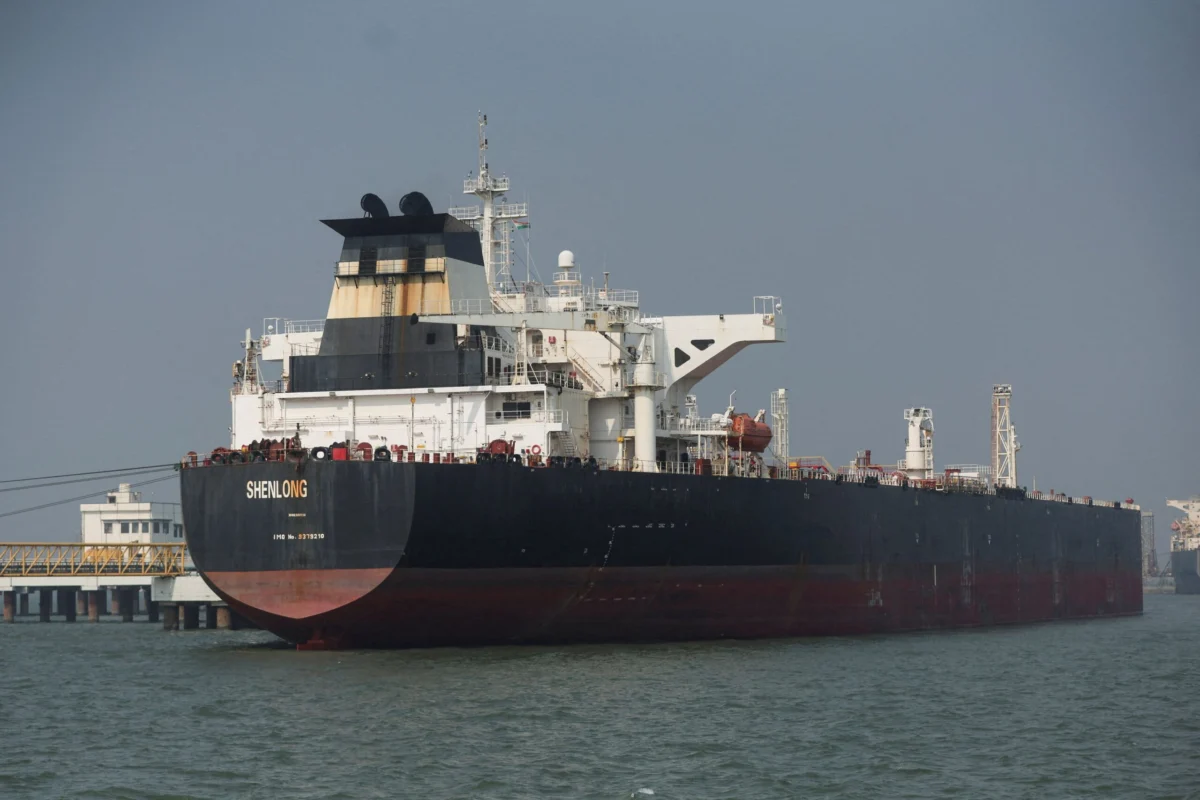
The situation intensified on March 12. The Liberia-flagged tanker Shenlong Suezmax, laden with Saudi Arabian crude, managed to arrive at a port in Mumbai, India, after transiting the Strait of Hormuz, a journey now fraught with heightened risk and uncertainty. This event, captured by Reuters, served as a stark visual reminder of the precariousness of energy supplies. On the same day, Iran’s newly appointed supreme leader, Mojtaba Khamenei, made his first public statement, asserting that the closure "should be continued as a tool to pressure the enemy." This declaration solidified Iran’s intent to maintain the blockade, signaling a prolonged period of disruption rather than a temporary measure. The implications for jet fuel and airfare prices also became a prominent concern, affecting travel and air cargo logistics.
By March 13, the international community was grappling with the implications. U.S. Defense Secretary Pete Hegseth, in a Pentagon press briefing, sought to downplay concerns, stating, "We have been dealing with it, and don’t need to worry about it." His remarks, however, did little to assuage fears among industry leaders and analysts who were already witnessing significant logistical challenges. Logistics provider C.H. Robinson, in a Friday statement, acknowledged the ongoing volatility, urging shippers to plan for "continued variability." The company highlighted that "While cargo is moving, carriers are managing constrained capacity, selective acceptance, and fuel-related cost impacts, resulting in pricing volatility and variable service conditions." This statement underscored the operational realities facing the shipping industry, which has had to reroute vessels, face longer transit times, and absorb increased insurance premiums and fuel surcharges, all of which ultimately contribute to higher end-consumer costs.
The Global Supply Chain Under Siege: Beyond Oil
While the immediate focus often gravitates towards oil and gas prices, the closure of the Strait of Hormuz has a far broader and more insidious impact on the global supply chain. The passage is a conduit for a diverse array of critical commodities and finished goods. Fertilizers, essential for agricultural productivity worldwide, are particularly vulnerable. A significant portion of global phosphate and potash exports, along with ammonia and urea, either originate from or transit through the Persian Gulf. Disruptions here translate directly into higher agricultural input costs, threatening to push up food prices globally and potentially exacerbating food insecurity in vulnerable regions.
Similarly, the metals industry is facing severe headwinds. Base metals, specialty alloys, and rare earth elements, critical for manufacturing everything from consumer electronics to automotive components and aerospace parts, are often shipped through the strait. Delays and increased costs in this sector cascade through countless industries, impacting production schedules, raising manufacturing costs, and ultimately inflating prices for durable goods. The automotive sector, already scarred by recent supply chain crises, is particularly sensitive to disruptions in metal supplies and energy costs, which affect both production and the cost of transporting finished vehicles.
The energy sector, predictably, is at the epicenter of the crisis. While the initial CPI report "came in as expected," the sustained closure of Hormuz virtually guarantees upward pressure on crude oil and natural gas prices. This directly translates to higher gasoline prices at the pump for consumers and increased jet fuel costs for airlines, driving up transportation expenses across all modes. Higher energy costs inflate operational expenses for businesses, from manufacturing plants to local retailers, further contributing to inflationary pressures. Analysts from AAA have already indicated that higher gas prices will likely compel consumers to reduce discretionary spending to cover essential transportation costs, thus creating a ripple effect across the retail sector.
Retailers on the Brink: Navigating Unprecedented Headwinds
The retail industry, still adapting to the aftershocks of the pandemic and persistent inflationary pressures, finds itself navigating an entirely new set of challenges posed by the Hormuz crisis. Max Kahn, President of Coresight Research, articulated the industry’s precarious position, noting that while retailers have improved their supply chain flexibility, the current disruption pushes them close to their limits. "Retailers have become much better at building flexibility in their supply chains, and that got accelerated a lot last year with tariffs," Kahn told CNBC. "The bigger worry is if this continues to last."
Kahn suggested that grocery stores would likely be the first to experience significant price hikes. Food items typically operate with less flexible supply chains due to perishability and just-in-time delivery requirements. In contrast, apparel retailers, while affected by increased shipping costs and potential delays, might have more leeway to "slow production and bulk it up again later without disrupting inventory." However, even for apparel, the Reuters report on stranded garments underscores the immediate operational headaches.
Retailers are now confronted with a dual challenge: "input cost pressure and demand pressure." Rising fuel, raw material, and shipping costs directly increase the cost of goods sold. Simultaneously, consumers grappling with higher gas prices and general economic uncertainty are likely to curtail discretionary spending, thus weakening demand. Kahn noted that retailers demonstrated resilience in 2022 and 2023 by "able to raise prices, and that raising of prices sort of offset some weakening in units." He anticipates a similar strategy this time, but the extent of consumer tolerance for further price increases remains to be seen.
The impact on consumer confidence is already palpable. Even if the CPI report initially met expectations, the specter of sustained high energy prices and supply chain disruptions erodes consumer optimism, leading to more cautious spending habits. This shift has broader economic implications, with Kahn suggesting that the ongoing uncertainty could affect GDP growth, as retail performance is a significant component of national economic output.
A Divergent Retail Landscape: Winners and Losers in a K-Shaped Economy
The crisis is not expected to affect all retailers equally. Analysts predict a divergence in performance, further accentuating the "K-shaped economy" where higher-income consumers remain relatively robust while lower-income households face intensified financial strain.
Value retailers are poised to fare better. Max Kahn specifically named Walmart, Kroger, Dollar General, and Dollar Tree as likely beneficiaries. As household budgets tighten, consumers prioritize essential goods and seek out more value-priced options, directing their spending towards these discount-oriented stores.
Conversely, retailers heavily reliant on discretionary spending are expected to suffer. Wolfe Research analysts, in a Sunday note, identified "Retailers with a bigger discretionary mix, like Five Below and Target," as facing significant headwinds "as consumer confidence comes under pressure and they mix down." These companies may struggle as consumers cut back on non-essential purchases.
Some specialty retailers and those appealing to higher-income consumers might also find ways to mitigate the impact. Costco, for example, is seen as potentially benefiting. Wolfe Research analysts added, "Costco should benefit as their price leadership on gas becomes more important, and consumers are more willing to wait 20+ minutes for gas." The ability to offer competitive fuel prices acts as a significant draw for members, bolstering store traffic even in challenging times. Retailers with unique or high-end offerings that cater to a less price-sensitive demographic, such as Ulta (which has historically seen same-store sales increase alongside oil inflation), might also prove more resilient.
However, the UBS analysts painted a stark picture in a Monday note, emphasizing that the rise in oil prices "should add a meaningful burden to household budgets and intensify strains already visible across the consumer landscape." They specifically highlighted that companies serving lower-income shoppers, such as Ollie’s Bargain Outlet and Dollar General, are likely to see sales decrease despite their value proposition, simply because these consumers have less disposable income to begin with. This suggests that even value retailers may face a ceiling on their growth if the economic squeeze becomes too severe for their core demographic.
Looking Ahead: Risks, Resilience, and Long-Term Implications
The ongoing crisis in the Strait of Hormuz is a stark reminder of the interconnectedness of global geopolitics and economics. The current situation poses not only immediate inflationary risks but also the potential for prolonged economic stagnation if the disruption persists. International bodies like the International Maritime Organization (IMO) and major energy agencies like the International Energy Agency (IEA) are undoubtedly monitoring the situation closely, though public statements on contingency plans for such a sustained closure have been scarce in the immediate aftermath of Khamenei’s declaration.
The immediate future hinges on diplomatic efforts to de-escalate the conflict and secure the free passage through Hormuz. However, even if a resolution is found, the incident will likely accelerate existing trends toward supply chain diversification and resilience. Companies may further explore near-shoring or friend-shoring strategies, prioritizing security and stability over pure cost efficiency. Investments in alternative energy sources and logistics routes could also gain renewed urgency.
For consumers, the message is clear: prepare for sustained upward pressure on prices, particularly for necessities like food and fuel. Discretionary spending will likely be curtailed, and household budgets will require careful management. The crisis underscores the vulnerability of the globalized economy to regional conflicts and highlights the critical role of strategic chokepoints in maintaining the delicate balance of international trade and energy security. The world watches with bated breath as the U.S.-Israeli conflict with Iran continues to unfold, with the Strait of Hormuz serving as a potent symbol of the economic costs of geopolitical instability.
