

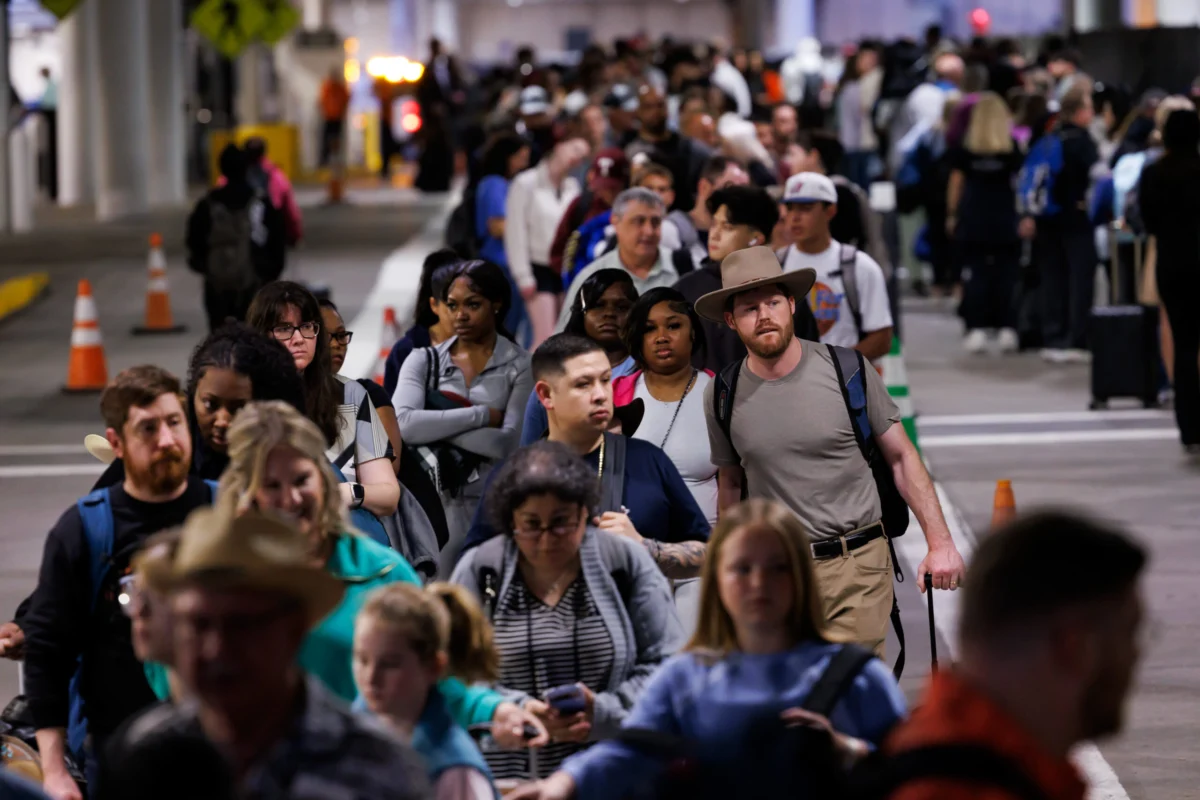
The escalating geopolitical tensions in the Middle East, particularly following the U.S. and Israel’s attacks on Iran nearly two weeks ago, have sent global fuel prices soaring, directly translating into a significant uptick in airfares. Airlines worldwide are grappling with the sudden and substantial increase in operational costs, with consumers’ sustained appetite for travel becoming the critical determinant of just how much higher ticket prices will climb throughout the year.
Immediate Impact on Global Carriers
The repercussions of the volatile energy market have been swift and widespread, prompting airlines across continents to adjust their pricing strategies. Cathay Pacific, a major Asian carrier, announced on Thursday that it would roughly double fuel surcharges on tickets issued from March 18, signaling a direct pass-through of increased costs to passengers. This move highlights the immediate financial pressure airlines are experiencing from the unexpected surge in jet fuel prices.
Similarly, Australia’s Qantas has confirmed it is raising fares to help mitigate its escalating operational expenses. Scandinavian Airlines (SAS) also cited the "unusually rapid and substantial increase" in fuel costs as the primary driver behind its recent price adjustments. New Zealand’s national carrier, Air New Zealand, went a step further, pulling its entire financial outlook, stating it would remain withdrawn "until fuel markets and operating conditions stabilize." The airline acknowledged making "initial fare adjustments" and warned that if the conflict leads to persistently elevated jet fuel costs, it "may need to take further pricing action and adjust its network and schedule as required." These collective actions from diverse global carriers underscore the universal challenge presented by the current fuel crisis.
In the United States, airline executives are preparing to provide updates to investors at the eagerly anticipated J.P. Morgan Industrials Conference in Washington, D.C., scheduled for Tuesday. Analysts widely anticipate an earnings hit for U.S. carriers, at least in the first quarter, if not extending into the first half of the year, with the ultimate impact dependent on the duration of elevated fuel prices. UBS airline analysts Atul Maheswari and Thomas Wadewitz articulated this concern in a recent note, stating, "We think a hit to 1Q EPS appears almost certain at this point."
Scott Kirby, CEO of United Airlines, offered a candid assessment last week on the sidelines of a Harvard University event, confirming that higher fares were an almost certainty given the dramatic surge in fuel prices. Despite this, Kirby, along with two other senior U.S. airline executives who spoke anonymously, noted that travel demand remains robust. This sustained demand, if it persists, could provide airlines with significant pricing power, allowing them to more effectively pass on increased costs to consumers, though the longevity of this trend hinges critically on the duration and intensity of the Middle East conflict.
The Geopolitical Catalyst: A Deep Dive into the Conflict’s Origins
The current surge in energy prices is directly traceable to the U.S. and Israel’s coordinated attacks on Iran, which commenced around February 28, 2026. This escalation introduced a significant layer of instability into an already volatile region, reverberating through global oil markets. The initial strikes immediately sent crude oil prices to roughly four-year highs, reflecting market fears of supply disruptions.
The Strait of Hormuz, a narrow waterway separating Iran from the Arabian Peninsula, has emerged as a focal point of these concerns. As a vital chokepoint through which approximately one-fifth of the world’s total oil consumption, and a substantial portion of its liquefied natural gas, passes, any threat to its navigability sends jitters across global energy trading floors. Reports of a cargo ship being struck near the Strait of Hormuz further amplified these anxieties, contributing to the wild swings observed in energy prices as traders attempt to assess the potential for prolonged conflict and its logistical headaches for shipping.
The broader context includes a history of on-and-off conflict in the Middle East and the lingering effects of Russia’s 2022 invasion of Ukraine, which previously led to extensive airspace closures and rerouting for many carriers. The current events represent a fresh, potent shock to an industry still navigating a complex geopolitical landscape.
Fuel: The Airline’s Second-Largest Cost and Its Volatility
Jet fuel constitutes an airline’s second-largest operational expense, typically accounting for about a fifth or more of total costs, varying by carrier. This makes airlines exceptionally vulnerable to price fluctuations in the energy market. To illustrate the scale, United Airlines alone reported spending $11.4 billion on fuel last year, at an average price of $2.44 per gallon, according to its securities filings. As of Wednesday, U.S. jet fuel prices had climbed to $3.78 per gallon, according to Platts, representing an increase of over 50% from United’s reported average.
The impact of this surge is stark when examining specific flight costs. On February 27, the day before the attacks began, fueling a Boeing 737-800 would have cost approximately $17,000, based on average prices across key U.S. hubs like New York, Houston, Chicago, and Los Angeles, as compiled by Argus. Less than a week later, by March 5, the same operation would have exceeded $27,000. Following President Donald Trump’s comment on March 9 that the Iran conflict could end "very soon," oil prices saw a temporary dip, bringing the cost to around $23,000 by Tuesday, highlighting the extreme sensitivity of fuel prices to geopolitical rhetoric.
It is crucial to note that jet fuel prices can rise by a greater degree than crude oil because they encompass not only the cost of the raw crude but also the expenses associated with processing, refining, and the increasingly complex and costly transportation from oil fields to refineries and ultimately to aircraft fuel tanks. Since the initial U.S.-Israel attacks on Iran on February 28, jet fuel has more than doubled in some regions, with U.S. jet fuel prices peaking last week at over 60% higher than pre-attack levels, according to Platts pricing data.
Historically, airlines have responded to prior fuel price surges by introducing or increasing ancillary fees. In the past, this led to the widespread adoption of baggage fees or increased charges for existing services. Airlines also implement seemingly minor changes to reduce weight, which collectively save millions in fuel costs annually. For instance, United Airlines in 2018 switched to a lighter paper stock for its in-flight magazine, and American Airlines in 2014 transitioned to digital manuals for flight attendants and pilots, estimating annual fuel savings of $650,000. These examples demonstrate the industry’s meticulous approach to managing fuel consumption.

Analyst Perspectives and Financial Outlook
Analysts are closely monitoring the situation, offering nuanced perspectives on the financial implications for airlines. Sheila Kahyaoglu, an airline analyst at Jefferies, stated in a Thursday note that she anticipates "the most acute financial impact to airlines from surging oil prices to be in the next 30-90 days." This is because airlines typically set yields for close-in flights assuming a much lower fuel price, and they cannot retroactively raise fares for tickets already sold.
Kahyaoglu also suggested that Delta Air Lines and United, which generate the majority of U.S. airline profits, are relatively better positioned than other carriers due to their strong demand from high-end customers. However, she warned of potential risks to demand, especially from more price-sensitive leisure travelers, exacerbated by the recent jump in gasoline prices, which directly impacts consumer discretionary spending and the overall cost of travel.
A significant shift in the airline industry over the past decade has been the widespread abandonment of fuel hedging strategies. Most U.S. airlines no longer hedge fuel costs, meaning they do not lock in prices using futures contracts or other financial securities. Southwest Airlines, once a notable exception for its successful hedging strategies, ceased the practice last year, and a spokesman confirmed to CNBC that the Dallas-based carrier currently has "no plans" to resume hedging. This leaves U.S. carriers highly susceptible to immediate price swings, amplifying the direct impact of market volatility on their bottom lines.
Rick Joswick, who leads near-term oil research and analytics at S&P Global Energy, underscored the inelastic nature of jet fuel demand. "Demand for jet fuel is inelastic. You cannot shortchange an airport," Joswick told CNBC. "If the cost of jet fuel goes up, it’s not like the plane will choose not to fly that day. You can’t dry up an airport." This fundamental requirement for fuel means airlines must absorb the costs, making fare increases almost inevitable in a high-price environment.
Consumer Response and Booking Strategies
For travelers, the prospect of rising airfares naturally raises questions about how to navigate the current market. Scott Keyes, founder of flight deal company Going (formerly Scott’s Cheap Flights), advises consumers that they "can’t lose by booking early," provided they avoid restrictive basic economy tickets. His rationale is that by booking in advance, customers retain the flexibility to exchange or cancel their tickets and repurchase cheaper ones if airfare happens to fall.
Keyes articulated this strategy simply: "If you book a $500 summer flight today, and two weeks from now the price drops to $350, you can call up the airline and get the $150 difference back as a credit. Heads you win; tails the airlines lose." This advice empowers consumers to proactively manage the uncertainty of fluctuating airfares, capitalizing on airline policies that often allow for changes without fees (or with minimal fees) in the current market climate, particularly for non-basic economy fares.
Capacity, Demand, and Operational Adjustments
High fuel prices do not automatically guarantee higher fares; the interplay between strong travel demand and airline capacity is equally crucial. Airlines strategically adjust fares to prevent empty seats, as Courtney Miller, founder of Visual Approach Analytics, an airline industry advisory firm, explains: "Airlines love to say fuel is expensive so you have to pay more. What they’re doing is they’re setting the expectation. They price to prevent empty seats." Conversely, if fuel prices decrease, airlines are unlikely to suddenly lower fares, but "they are likely to add another flight" to meet demand.
The current geopolitical climate has significantly constrained capacity, especially for flights to and from the Middle East. Airspace closures and intermittent flight disruptions have resulted in over 46,000 flights being canceled to and from the region since the February 28 attacks began, according to aviation data firm Cirium. These constraints are paradoxically driving up fares and demand on alternative routes, as travelers seek to bypass affected areas.
Airspace closures are also forcing airlines to adopt longer, more fuel-guzzling routes. For example, Qantas informed CNBC that its direct flight from Perth, Australia, to London is temporarily making a stop in Singapore to refuel. This additional stop, however, allows the airline to pick up an extra 60 customers, capitalizing on high demand. Qantas also reported that its Perth-London and Perth-Paris routes are operating at over 90% capacity this month, a remarkable 15 percentage points higher than typical for this time of year. Similarly, Finnair noted that increased demand for travel to Asia from Helsinki has pushed its prices up by an average of 15%. The airline added that "the impact of higher fuel prices will be reflected in market fares with a delay, as airlines typically hedge at least part of their fuel purchases."
Despite the operational challenges, the current environment appears "conducive for passing along fare increases," according to UBS analysts. They suggest that if jet fuel prices remain elevated for an extended period, it should also "help push off-peak capacity lower," which in turn supports unit revenues, indicating a potential long-term adjustment in airline operational strategies to maintain profitability.
Long-Term Implications and Industry Resilience
The current fuel crisis underscores the airline industry’s inherent vulnerability to external shocks, particularly geopolitical events and energy market volatility. While the immediate focus is on managing costs and adjusting fares, the long-term implications could include an accelerated push towards more fuel-efficient aircraft and a renewed exploration of alternative fuels, though these are complex, capital-intensive endeavors.
The industry’s history demonstrates a remarkable resilience and adaptability to adverse conditions. From global pandemics to economic recessions and previous fuel surges, airlines have consistently found ways to innovate, optimize operations, and adjust their business models. However, the current confluence of sustained high fuel prices, geopolitical instability, and persistent strong travel demand presents a unique set of challenges and opportunities. The coming months will reveal the true extent of the financial impact on airlines and how consumers ultimately respond to the inevitable increase in the cost of air travel.
