

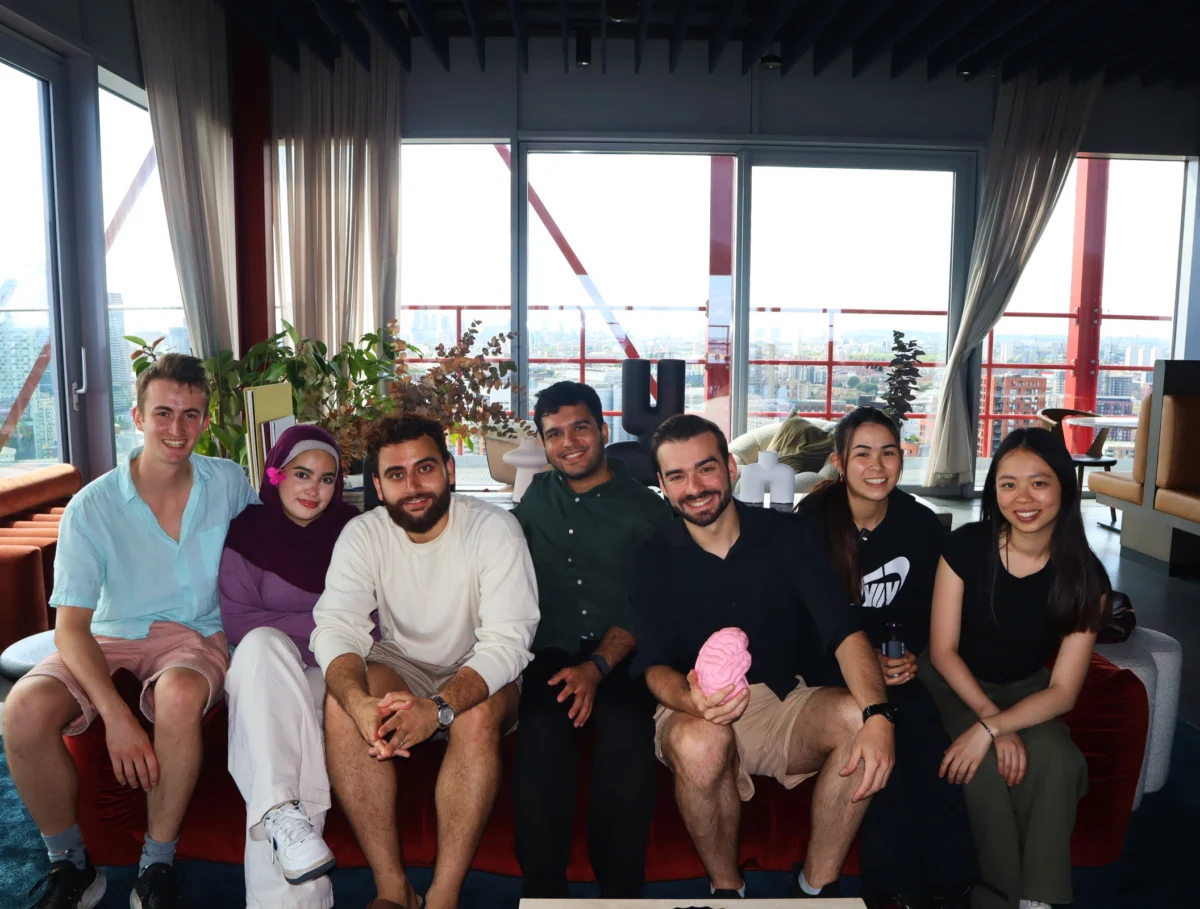
Six ambitious twentysomethings in East London are pioneering a new model for startup incubation and co-living, deliberately positioning their venture, the London Island Founder House – affectionately known as "Lift House" – as the antithesis of the archetypal San Francisco hacker house. The driving philosophy, as articulated by 26-year-old co-founder Rowan Aldean, is a commitment to "holistic improvement in life" rather than the relentless, short-term pressure of "12 weeks, Demo Day is coming." This innovative approach, deeply embedded within the burgeoning "Londonmaxxing" trend, signals a mature evolution in the global tech ecosystem, where sustainable well-being is increasingly seen as a catalyst, not a casualty, of entrepreneurial success.
The nascent movement away from Silicon Valley’s often-criticized "hustle culture" finds a tangible home in East London. The Lift House, a striking six-story edifice overlooking the tranquil waters of a modern development, stands as a testament to this alternative vision. Its very name, a clever double entendre, refers both to the building’s elevator and its overarching mission to "uplift" tech founders, not just professionally but personally. This deliberate fostering of a balanced environment stands in stark contrast to the often-chaotic and relentless pace associated with many of its Californian counterparts.
The Genesis of a New Philosophy: Challenging the Status Quo
The concept of a "hacker house" originated in the vibrant, sometimes frenetic, tech landscape of Silicon Valley. These co-living, co-working spaces gained notoriety for their intense focus on product development, often characterized by long hours, communal living, and an unwavering dedication to achieving rapid startup milestones. Stories abound of San Francisco hacker houses operating out of unconventional spaces like warehouses, hosting extravagant galas to attract attention, or even promoting punishing "996" work cultures – 9 am to 9 pm, six days a week – or even more extreme 72-hour sprints. While these environments have undeniably fostered innovation and accelerated many startups, they have also drawn criticism for their potential to lead to burnout, neglect of personal well-being, and a highly competitive, sometimes cutthroat, atmosphere.
London, with its distinct cultural fabric and burgeoning tech scene, is now charting a different course. The Lift House officially launched in March, with Aldean and his wife, Zahraa, 22 – an aspiring pharmaceutical research PhD candidate – moving in just two months later in May. Aldean, who successfully sold his previous company for millions last year, now leads an "applied AI" startup dedicated to helping companies deploy intelligent agents. His personal journey, coupled with the collective aspirations of the house’s residents, embodies a desire to build enduring companies without sacrificing mental and physical health. "I don’t expect the performative and over-the-top events will be a thing here," Aldean stated, pointing to the success of London-born AI giant DeepMind, which "won Nobel prizes and built frontier innovation without any song and dance." This sentiment encapsulates the "Londonmaxxing" ethos: an optimization of everything the London tech scene offers, favoring a less showy, less "startup bro-y" environment while retaining the core ambitions of success, wealth, and market domination.
London’s Ascendance as an AI Powerhouse

The timing of Lift House’s emergence aligns perfectly with London’s undeniable rise as a global hub for artificial intelligence. Recent data from Dealroom highlights the city’s impressive trajectory: London AI startups have collectively raised a staggering $12 billion so far in 2026, representing the lion’s share of the $14.7 billion raised by all London startups during the same period. This phenomenal growth is underscored by the emergence of six companies that have each secured over $500 million in funding: Wayve, Superintelligence, ElevenLabs, Recursive, Ineffable Intelligence, and Isomorphic Labs. Notably, three of these high-flyers – Recursive, Ineffable Intelligence, and Isomorphic Labs – were founded by alumni of DeepMind, further cementing London’s reputation as a hotbed for AI talent and innovation.
This unprecedented excitement surrounding AI has provided a significant morale boost to the entire U.K. tech scene. It has inspired a new generation of founders, including those residing in the Lift House, to "take big swings" and pursue ambitious ventures with renewed confidence. The availability of capital, coupled with a deep pool of academic and research talent from institutions like Oxbridge, creates a fertile ground for technological advancement, fostering an environment where deep, meaningful innovation can thrive away from the sometimes distracting spectacle of Silicon Valley.
A Day in the Life: Journaling, Volleyball, and Rooftop Dinners
The distinct culture of the Lift House is evident in its daily rhythms and shared activities, which prioritize well-being and community as much as professional output. Unlike the rigid, often unwritten rules of some hacker houses, the tenure for residents at Lift House is flexible, with some staying for a month and others planning for six months or more. While residents manage their own groceries, communal cooking and shared ingredients are common, fostering a sense of camaraderie. Cleaning duties are equitably split among the group, reinforcing the collective responsibility for their shared living and working space.
The residents are united by a common goal: to achieve a balanced approach to ambition, a concept almost revolutionary by traditional San Francisco startup standards. Sundays are dedicated to a group journaling session, a practice introduced by David Amor, 28, who runs a brain coaching and training company. His work focuses on helping founders and business leaders optimize their brain performance. The journaling exercise encourages residents to track aspects of their well-being, such as time spent in nature, dietary habits, and physical activity. Luke, 27, who leads an AI-marketing company, attests to the positive impact: "I’m eating healthier, working out more, and sleeping more. I always make sure to have lunch now, which is something that is simple, but I wasn’t doing before I lived here." This emphasis on fundamental self-care underlines the house’s holistic philosophy.
Evenings often feature shared recreational activities. Tuesdays are reserved for competitive volleyball, where the founders participate as a house team in a local league, blending physical activity with team building. On other evenings, Wan Ying L, 25, who recently transitioned from an AI startup to work on a new venture, might serenade the house with piano melodies in the living room. Spontaneous group activities like board games (Catan is a favorite) or visits to London’s myriad art exhibitions further enrich the social fabric, ensuring that life extends beyond the confines of their screens and projects.
Presence Plumb, 25, a tech strategist, frequently hosts rooftop dinner parties. These gatherings are not merely social events but strategic networking opportunities, bringing together invited founders, researchers, investors, and operators. The diverse culinary offerings, reflecting the varied nationalities within the house – from Iraqi to Spanish – mirror the diverse discussions on tech trends and investment opportunities. Plumb observes that London’s ecosystem fosters a "calmer, balanced, authentic" vibe, where individuals "don’t want too much of that only startup tech bro vibe. They want a bit of balance."

Individual work routines vary, yet they all integrate this balanced ethos. David Amor, for instance, is an early riser, up by 8 a.m., with a strict 30-second rule before diving into his "no distractions" morning work. He then incorporates a cold shower, believing it "increases your dopamine by 250% and that gives me that motivation, that spark." Luke typically starts his workday around 8:30 a.m., often with his co-founder Varun, 27, who travels to Lift House for collaborative work, commencing with a team call at 9 a.m. Rowan Aldean, by contrast, rarely wakes before 10 a.m. unless a critical event, such as a "crazy angel [investor] call," demands an earlier start.
Uniquely British: Beyond Tea and Filtered Coffee
The distinction between the London and Silicon Valley startup environments goes far deeper than Aldean’s playful quip about Brits drinking tea while Californians opt for filtered coffee. British founders, he explains, navigate a unique set of cultural pressures. These include a societal aversion to overt risk-taking, a deeply ingrained inclination towards humility, and a significant shame associated with perceived failure. Instead of the American idealization of relentless "hustle and grind" – often at the expense of sleep – British entrepreneurs contend with what they term "tall poppy syndrome." This phenomenon describes a cultural tendency where the media and public opinion may initially laud successful individuals only to "ruthlessly tear them down should they become too successful." This makes some founders in the ecosystem wary of overtly displaying their wins, fostering a more understated approach to achievement.
Luke emphasizes that London remains a compelling choice for early-stage founders, citing a robust network, ample early-stage capital opportunities, and crucially, the option for a fulfilling life outside of the tech bubble. He suggests that London, culturally, bears a closer resemblance to New York City for founders than to San Francisco, offering a vibrant, diverse urban experience that extends beyond professional pursuits. Amor adds, "London is so diverse that if you look properly enough, you’ll always find something fun to get involved with, whether that’s a founder-run club, wellness events, [or going] to jazz nights."
The U.K. government also plays a supportive role through initiatives like the Seed Enterprise Investment Scheme (SEIS) and Enterprise Investment Scheme (EIS). These programs are designed to incentivize angel investments into local startups by offering significant tax relief to investors. Luke, whose company with Varun largely avoided venture capital funding by leveraging SEIS/EIS, explains, "There’s people who will pay basically the same rate of tax if they give us the money versus if they pay income tax." This provides a tangible advantage for nascent companies in London.
Aldean further notes that the London ecosystem feels less cutthroat than the Valley. He recalls his experience living in a Bay Area hacker house where "everyone’s desk had to face the wall, and it was heads-down, product-building." He perceived an ecosystem sometimes too willing to gossip, a stark contrast to what he observes in the U.K. "There’s nothing like ‘oh my god did you hear that the CTO just, like, did this,’" Aldean said, describing a constant worry in the Valley that negative stories might be spread, especially if it benefited a competitor.
Another key differentiator lies in the sales approach. Aldean believes London startups are more inclined to sell into slow-moving, large corporations rather than primarily targeting other startups. This means founders can build their businesses without feeling the constant need to "kiss up or posture" to gain peer approval. Varun and Luke echo this sentiment, with Varun describing the U.S. market as "relatively fleeting… You get quick wins. Here, it’s hard to close a customer, but if they close, they stay with you longer." This suggests a preference for long-term, stable relationships over rapid, high-turnover client acquisition.

The Transatlantic Pull: The "Coming to America" Dilemma
Despite London’s burgeoning strengths and unique advantages, a persistent tension underlies the U.K. tech ecosystem, and indeed much of Europe’s: the almost inevitable pull towards the United States. For many U.K. startups, the road to hyper-growth and global market dominance often leads directly to America.
The U.K. offers undeniable benefits for early-stage companies: access to affordable top-tier talent from world-renowned universities like Oxford and Cambridge, and a convenient time zone that facilitates collaboration with partners across Europe, the Middle East, Asia, and even parts of North America. However, the U.S. offers unparalleled access to the world’s largest economy and, crucially, a vast pool of investors willing to write substantially larger checks across all funding stages, from pre-seed to growth. "It’s almost like a factory line in a way," Varun observed. "You start here, and then you expand there or vice versa."
This transatlantic dynamic often creates a dilemma for British founders. American investors frequently exert pressure, even demanding, that companies relocate to the U.S. to secure funding. The article recounts the story of a startup founder who moved to the U.S. at an investor’s insistence, though she chose to keep her family in the U.K. for her children’s upbringing. Luke confirmed this trend: "We had an investor in Miami who said the same thing," referring to an attempt to persuade him and Varun to move. "It’s quite a common practice." Despite their affection for London, Luke and Varun have already embarked on their U.S. expansion and have not ruled out a full relocation to be closer to their growing customer base.
This "brain drain" or "talent migration" represents a significant challenge for the U.K. and broader European tech ecosystems. Presence Plumb acknowledges this, stating, "I work with a lot of people trying to support the European ecosystem more." Yet, as Aldean succinctly puts it, founders "talk about London; everyone is bullish on the country until they get the opportunity to leave." This sentiment highlights the ongoing struggle to retain top talent and scaling companies in Europe in the face of the immense capital and market opportunities presented by the U.S.
The Broader London Hacker House Landscape and Future Outlook
While the Lift House represents a unique proposition, London’s hacker house scene is still relatively nascent compared to San Francisco, where dozens, if not hundreds, operate concurrently. The city does host various short-term gatherings, such as the Solana Hacker House meet-up series, but dedicated co-living hacker houses are fewer. However, this landscape is evolving, with global chains like the San Francisco-based network The Residency having expanded into London last year, and BaseJump announcing a London version of its hacker house program soon. These developments indicate a growing recognition of the co-living/co-working model’s potential within the London market.

Interestingly, the Lift House is not London’s first foray into the hacker house concept. In 2024, two founders launched "The London Founder House," which was notably covered by Sifted under the headline "The people here don’t want work-life balance." That house, now wound down, represented the opposite end of the spectrum, with strict entry requirements – prospective residents needed to have raised at least half a million dollars – and an explicit rejection of work-life balance. Despite its eventual closure, it left an indelible mark on the ecosystem through its concept, events, and the network of connected players it fostered.
The Lift House, in many ways, is a direct evolution, or perhaps a thoughtful counter-narrative, to its predecessor. Its entry requirements emphasize not just entrepreneurial drive but a commitment to personal enrichment: prospective residents must demonstrate a hobby outside their companies and an interest in fitness. This is precisely the core message that the "Londonmaxxing" ecosystem is employing to retain its talent: the promise that here, one can genuinely "have it all" – ambitious professional success coupled with a rich, balanced personal life.
With its lease having about a year left, there is a strong sentiment among the residents to continue the Lift House for as long as possible. It embodies a crucial cultural shift, challenging the long-held assumption that intense sacrifice is a prerequisite for startup success. As Rowan Aldean concludes, the prevailing culture in London is "to build something that lasts, not necessarily burn out chasing a flash." The Lift House, therefore, is more than just a co-living space; it is a living experiment, a quiet revolution proving that innovation can thrive in an environment that nurtures its founders, fostering not just groundbreaking companies, but also well-rounded, resilient individuals poised for sustainable impact.
