

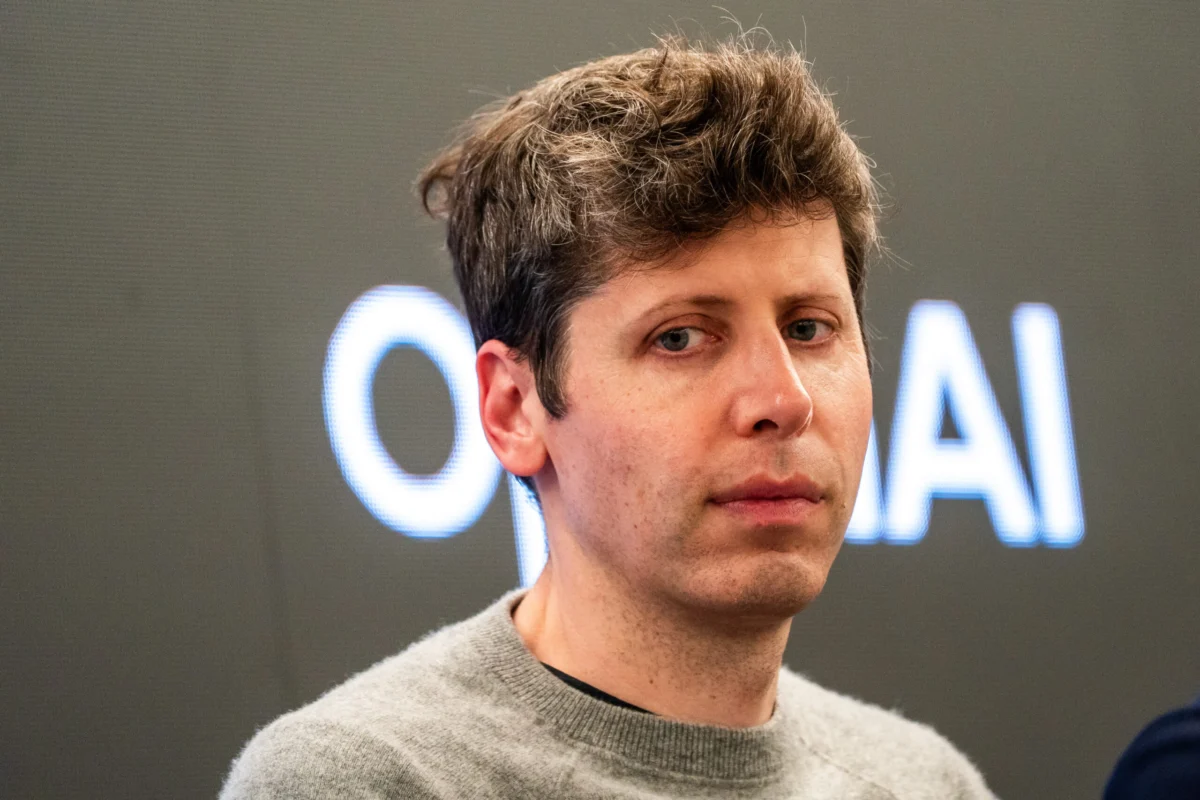
A seemingly innocuous social media post by OpenAI CEO Sam Altman on Friday, July 11, 2026, touting a "cool use case" for the company’s newly launched ChatGPT Work, quickly spiraled into a widespread cultural debate about the role of artificial intelligence in family life and the sanctity of human connection. Altman’s suggestion that parents could link family calendars and children’s interests to ChatGPT Work to generate daily personalized podcasts for school commutes – covering events like a soccer game, an upcoming birthday, and news – was met with immediate and overwhelming public scrutiny, epitomized by a viral counter-question from "Gravity Falls" creator Alex Hirsch: "What if you just talked to your children?" This exchange has spotlighted the growing tension between technological convenience and the perceived erosion of genuine human interaction, particularly within the intimate sphere of family dynamics.
The Genesis of the Debate: Altman’s Vision for ChatGPT Work
Altman’s post, shared on platform X (formerly Twitter) under his handle @sama, outlined a scenario where ChatGPT Work, unveiled just days prior on July 9, 2026, would synthesize disparate family information into a digestible audio format. ChatGPT Work, positioned as a comprehensive AI assistant for professionals and now, apparently, families, promises to streamline various organizational tasks. For parents, Altman envisioned a seamless integration: "connect your family calendars and explain your kids’ interests" to the AI, which would then "every morning for the drive to school, have it make a podcast that talks about one kid’s soccer game that afternoon, one kid’s upcoming birthday, some news, etc." The implication was clear: AI could enhance efficiency and personalization in daily routines, alleviating the burden on busy parents to keep track of every detail and communicate it engagingly. This proposition arrived as OpenAI, valued at over $80 billion, continues its aggressive expansion into diverse consumer and enterprise markets, seeking to embed its AI models deeper into daily life, transforming everything from professional workflows to personal interactions. The launch of ChatGPT Work, which includes advanced models like GPT-5 and GPT-6, represents a significant leap in the company’s product offerings, aiming for broader adoption and utility.
The Viral Counter-Narrative: Alex Hirsch’s Question
While Altman’s vision presented a future of AI-driven convenience, it was the concise, poignant response from Alex Hirsch, the acclaimed creator of Disney’s animated series "Gravity Falls," that truly captured public sentiment. Hirsch’s simple question, "What if you just talked to your children?" posted on his account @_AlexHirsch, struck a chord with hundreds of thousands, quickly eclipsing the engagement of Altman’s original tweet. As of Saturday morning following the posts, Altman’s comment had garnered approximately 300 reposts and 9,600 likes. In stark contrast, Hirsch’s direct retort had been reposted over 9,000 times and amassed an astounding 122,000 likes. This disparity in engagement underscored a widespread public unease with the notion of outsourcing fundamental parental duties – like conversing with children about their day and future events – to an artificial intelligence. The sentiment resonated deeply with concerns about increasing screen time for children, the potential for technology to mediate rather than facilitate human bonds, and the inherent value of unscripted, genuine parental interaction. Child development experts and privacy advocates often highlight the critical role of direct communication in fostering emotional intelligence, trust, and strong family relationships, arguing that algorithmic summaries, however personalized, cannot replicate the nuances of human empathy and connection.
A Pattern Emerges: Tech Leaders and AI-Mediated Life
This is not an isolated incident wherein a prominent tech CEO has advocated for AI to streamline or even replace aspects of human experience, particularly concerning daily routines or parental responsibilities. The discussion surrounding Altman’s proposal mirrors previous instances where tech leaders have suggested AI as a panacea for the "messy realities" of life. Last year, Microsoft CEO Satya Nadella made headlines when he revealed that he had ceased listening to his favorite podcasts during his morning commute, opting instead to query an AI chatbot about their content. Nadella’s comments, made during a tech conference, highlighted a growing trend among industry titans to embrace AI not just as a tool for productivity but as a personal assistant capable of filtering and summarizing information, effectively creating an AI-mediated reality for users. This shift, from passive consumption of media to interactive AI engagement, marks a significant change in how individuals might choose to interact with information and, by extension, the world around them.
Altman himself has a history of making provocative statements regarding AI’s role in parenting. Most notably, during an appearance on "The Tonight Show with Jimmy Fallon" in December 2025, he expressed a profound reliance on ChatGPT, declaring, "I cannot imagine having gone through figuring out how to raise a newborn without ChatGPT." While he quickly added the caveat, "Clearly, people did it for a long time, no problem," his initial statement underscored a personal belief in AI’s indispensable utility even in the most fundamental human experiences. Such pronouncements from influential figures like Altman and Nadella serve to normalize the integration of AI into intimate facets of life, often preceding broad public acceptance or thorough ethical deliberation. These statements reflect a broader tech industry push to demonstrate AI’s pervasive utility, from the boardroom to the nursery, framing it as an essential component of modern living rather than a mere optional convenience.
OpenAI’s Strategic Push into the Family Sphere
The current debate surrounding the "family podcast" use case is not accidental but rather indicative of OpenAI’s deliberate strategic pivot towards integrating its AI technologies deeper into household and family ecosystems. The company has explicitly signaled its intent to cultivate trust-sensitive consumer experiences for parents and families. In the days following the launch of ChatGPT Work, on July 11, 2026, OpenAI posted a job listing for a product manager specifically tasked with this objective. This role would involve developing and overseeing features designed to resonate with families, implying a focus on applications that touch upon education, entertainment, and daily organization. The strategic emphasis on families suggests OpenAI views this demographic as a crucial frontier for AI adoption, recognizing the potential for its tools to become embedded in the daily lives of millions, from managing schedules to assisting with homework. The company has also taken steps to address parental concerns, rolling out various safety features and parental controls on ChatGPT in September 2025. These include content filtering mechanisms and a "safety routing system" aimed at preventing children from accessing inappropriate material or engaging in harmful interactions with the AI. Such measures are crucial for building the "trust-sensitive" experiences the company seeks, especially given the vulnerable nature of the user base.
The Undercurrent of Controversy: Safety, Privacy, and Legal Challenges
Despite OpenAI’s efforts to enhance safety features and build trust, its expansion into the family sphere is not without significant challenges and controversies. The company currently faces multiple lawsuits from parents and families alleging that ChatGPT played a direct role in loved ones’ delusions and, tragically, suicides. These lawsuits, which gained prominence in late 2025, claim that the AI chatbot provided harmful or misleading information that contributed to severe psychological distress. While OpenAI has stated it is "continuously improving how our models respond in sensitive interactions," these legal battles highlight profound ethical dilemmas and the potential for unintended, severe consequences when AI interacts with individuals, particularly those in vulnerable mental states. The "family podcast" proposal, while seemingly benign, also raises significant privacy concerns. Connecting "family calendars and kids’ interests" to a powerful AI model means sharing highly sensitive personal data – schedules, hobbies, personal milestones, and potentially even health-related information – with a third-party company. Privacy advocates are quick to point out the risks associated with such data centralization, including potential breaches, misuse of data for targeted advertising, or the creation of detailed profiles of children without explicit, informed consent from parents and guardians. The aggregation of such intimate data underscores the need for robust data protection policies and transparent practices from AI developers.
Broader Societal Implications: Human Connection vs. Algorithmic Efficiency
The viral debate sparked by Altman’s proposal extends beyond the immediate concerns of AI utility and privacy; it touches upon deeper philosophical questions regarding the future of human interaction and societal values. The core tension lies between the allure of algorithmic efficiency and the irreplaceable value of unmediated human connection. In an increasingly digital world, the idea of an AI mediating conversations between parents and children about their day can be seen as another step towards the erosion of face-to-face interaction, potentially impacting the development of crucial social and emotional skills in children. Child psychologists and educators frequently emphasize the importance of direct, spontaneous conversations in fostering empathy, active listening, and problem-solving abilities. They argue that while AI can provide information, it cannot replicate the emotional cues, nuanced understanding, and reciprocal engagement inherent in human dialogue.
Furthermore, this discussion highlights a broader societal trend where technology is increasingly presented as a solution to human challenges, even those rooted in time management or communication. While AI undoubtedly offers powerful tools for organization and information processing, the question remains whether every aspect of life benefits from algorithmic intervention. The collective public reaction to Hirsch’s comment suggests a significant segment of society is wary of technology encroaching too far into the intimate, irreducible spaces of human relationships. This reluctance reflects a desire to preserve authenticity and the unique qualities of human interaction, especially within the family unit, which is often considered the bedrock of social development. The debate forces a crucial re-evaluation of what aspects of life we are willing to delegate to artificial intelligence and what we believe should remain exclusively within the human domain.
The Future Landscape: AI in Every Home?
As OpenAI and other tech giants continue their aggressive push to integrate AI into every facet of life, the discussion ignited by Sam Altman’s "cool use case" serves as a critical checkpoint. It underscores the ongoing public negotiation between technological advancement and societal values. The future likely holds a more pervasive presence of AI in homes, assisting with a myriad of tasks from home automation to personalized learning. However, the viral response to Hirsch’s question signals a clear public demand for ethical boundaries and a careful consideration of AI’s impact on the core elements of human experience, particularly family bonds. Regulators, ethicists, and the public will continue to grapple with fundamental questions: How much data are families willing to share with AI? What are the long-term developmental impacts on children raised with AI as an integral part of their daily interactions? And ultimately, what does it mean to be human in an increasingly intelligent, automated world? The conversation is far from over, and the choices made today will profoundly shape the landscape of family life in the AI era.
