

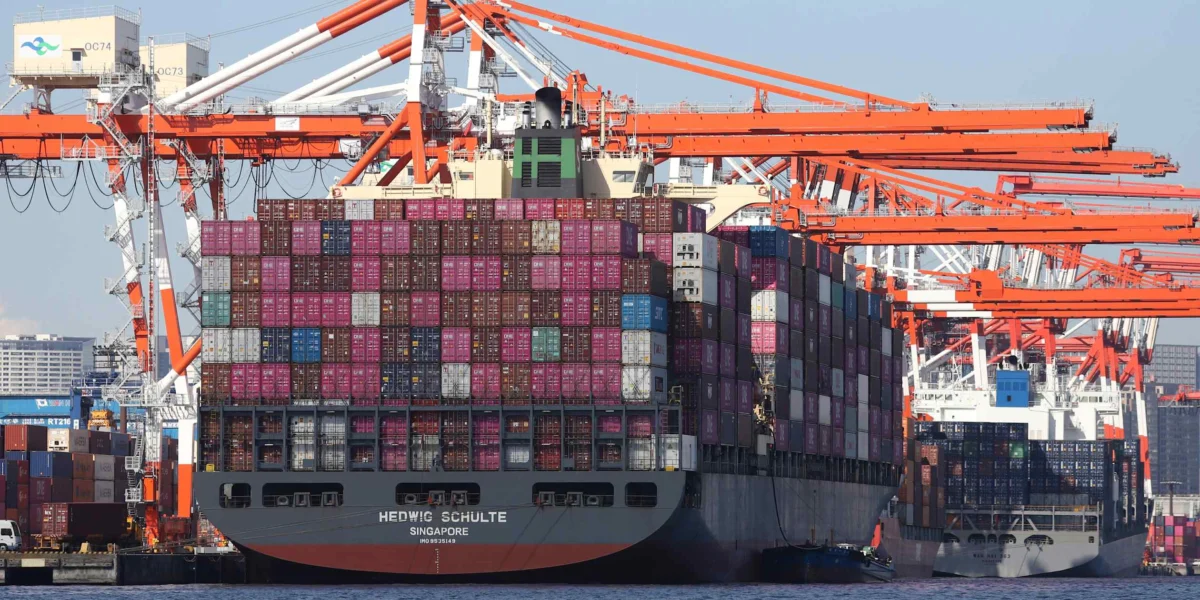
Japan recorded its sixth consecutive month of trade deficit in October, a trend driven by a significant increase in import values, largely attributed to elevated global commodity prices. While exports continued their upward trajectory, bolstered by strong demand for semiconductors and related components, the surge in import costs proved more substantial, tipping the trade balance into the red. This persistent deficit highlights ongoing challenges for the Japanese economy, particularly concerning energy security and the impact of global inflationary pressures.

Persistent Deficit Reflects Global Economic Dynamics
The latest trade figures, released by the Ministry of Finance on Wednesday, underscore the complex interplay of global economic forces impacting Japan. The deficit, a recurring feature in recent months, signals a continued strain on the nation’s current account. While the underlying growth in export volumes, particularly in high-tech sectors, remains a positive indicator of Japan’s manufacturing competitiveness, the rising cost of essential imports, especially energy and raw materials, is presenting a significant headwind.
The data revealed that total exports in October rose by a notable percentage year-on-year, continuing a pattern of export-led growth that has been a cornerstone of Japan’s economic recovery post-pandemic. This expansion was largely fueled by a robust demand for semiconductors, a critical component in a wide array of modern technologies, from consumer electronics to advanced industrial machinery. Japan’s re-emergence as a significant player in the global chip supply chain, with companies investing heavily in new fabrication facilities and research, is now translating into tangible export gains. Other key export sectors, including automobiles and industrial equipment, also contributed to the positive export performance, reflecting sustained global demand.

However, this export strength was overshadowed by an even more pronounced increase in imports. The value of imports surged, primarily driven by the persistently high prices of crude oil, liquefied natural gas (LNG), and other essential raw materials. Japan, a nation heavily reliant on imported energy resources, has been particularly vulnerable to the global energy price shocks exacerbated by geopolitical tensions and supply chain disruptions. The increased cost of these vital commodities directly inflates the import bill, even if the physical volume of goods imported has not seen a commensurate rise. This divergence between volume and value in imports is a critical factor contributing to the widening trade deficit.
Timeline of Recent Trade Performance
To understand the current trade deficit, it is important to examine the recent historical context. Japan’s trade balance has been a dynamic indicator of its economic health, oscillating between surplus and deficit in previous years. However, the period following the global economic recovery from the COVID-19 pandemic has seen a shift towards a more consistent deficit.

- Early 2022: The global economic recovery began to gather pace, leading to increased demand for Japanese exports. However, the initial signs of rising commodity prices also started to impact import costs.
- Mid-2022: Geopolitical events, including the conflict in Ukraine, significantly escalated global energy prices. This marked a turning point, with import costs beginning to outpace export growth more consistently. Japan, heavily dependent on imported energy, felt the brunt of these price increases.
- Late 2022 – Early 2023: The trend of trade deficits became more entrenched. While exports continued to show resilience, particularly in manufactured goods, the rising cost of energy and raw materials consistently pushed the import bill higher, leading to monthly trade deficits.
- Throughout 2023: The pattern persisted, with each month’s trade data reinforcing the narrative of a deficit driven by import inflation. The government and Bank of Japan closely monitored these trends, seeking to balance support for economic growth with measures to curb inflation.
- October 2026: The latest data continues this established trend, marking the sixth consecutive month of trade deficit. The subhead highlights the core drivers: export growth in semiconductors and import growth due to elevated prices.
Supporting Data and Analysis
While specific figures for the October 2026 trade balance were not provided in the initial snippet, general trends from previous months offer context. Typically, Japan’s trade deficit is measured in billions of yen. For instance, in recent months, monthly deficits have ranged from approximately ¥1 trillion to ¥2 trillion (approximately $7 billion to $14 billion USD, depending on the exchange rate).
The composition of exports has shown a clear shift towards higher-value, technology-intensive goods. The semiconductor industry, a sector where Japan has made significant strategic investments, has become a key driver of export revenue. This includes the export of semiconductor manufacturing equipment, raw materials for chip production, and, increasingly, memory chips themselves. Companies like Tokyo Electron and Shin-Etsu Chemical have been at the forefront of this resurgence, benefiting from global demand for advanced electronics.

On the import side, the energy sector remains the dominant factor. Japan’s reliance on imported crude oil and LNG means that global price fluctuations have a direct and immediate impact on its trade balance. The prolonged period of high energy prices, influenced by factors such as OPEC+ production decisions, geopolitical instability, and the global transition to cleaner energy sources, has created a structural challenge for Japan’s trade economics.
The analysis of this persistent deficit suggests several key implications:

- Impact on Inflation: While the Bank of Japan has maintained a highly accommodative monetary policy, the rising cost of imports contributes to imported inflation, putting upward pressure on domestic prices. This poses a challenge for the central bank as it navigates the dual objectives of supporting economic growth and maintaining price stability.
- Currency Fluctuations: The yen’s exchange rate plays a crucial role. A weaker yen can make exports cheaper and more competitive internationally, potentially boosting export volumes. However, it also makes imports more expensive, exacerbating the trade deficit. The interplay between export competitiveness and import costs, influenced by the yen’s value, is a critical economic dynamic.
- Energy Security and Diversification: The sustained impact of high energy prices underscores the importance of Japan’s ongoing efforts to enhance its energy security. This includes diversifying energy sources, investing in renewable energy technologies, and exploring new import routes and suppliers.
Official Responses and Economic Outlook
The Japanese government and the Bank of Japan have been closely monitoring the trade deficit and its implications. While the Ministry of Finance releases the trade data, other governmental bodies, such as the Ministry of Economy, Trade and Industry (METI), are involved in formulating policies to support export industries and manage import costs.
The Bank of Japan, under Governor Kazuo Ueda, has acknowledged the inflationary pressures stemming from import costs. However, the central bank has largely maintained its ultra-loose monetary policy, arguing that the current inflation is largely cost-push and that the underlying domestic demand is not yet strong enough to warrant significant tightening. The focus remains on achieving sustainable inflation driven by wage growth and robust domestic consumption.

Economists and analysts have offered varied perspectives on the long-term implications of the persistent trade deficit. Some view it as a temporary phenomenon driven by global commodity cycles, expecting it to narrow as global energy prices stabilize. Others express concern that it could become a more structural issue, particularly if Japan’s import dependence remains high and its export growth faces new challenges from global economic slowdowns or increased competition.
The continued resilience of Japanese exports, particularly in the high-tech sector, offers a degree of optimism. Investments in advanced manufacturing, including the burgeoning semiconductor industry, are expected to bolster Japan’s export competitiveness in the coming years. However, the persistent vulnerability to global energy price shocks remains a key economic challenge that will require strategic policy responses and a continued focus on energy diversification and efficiency. The October trade data serves as another reminder of the complex global economic landscape in which Japan operates and the ongoing need for adaptive economic strategies.
