

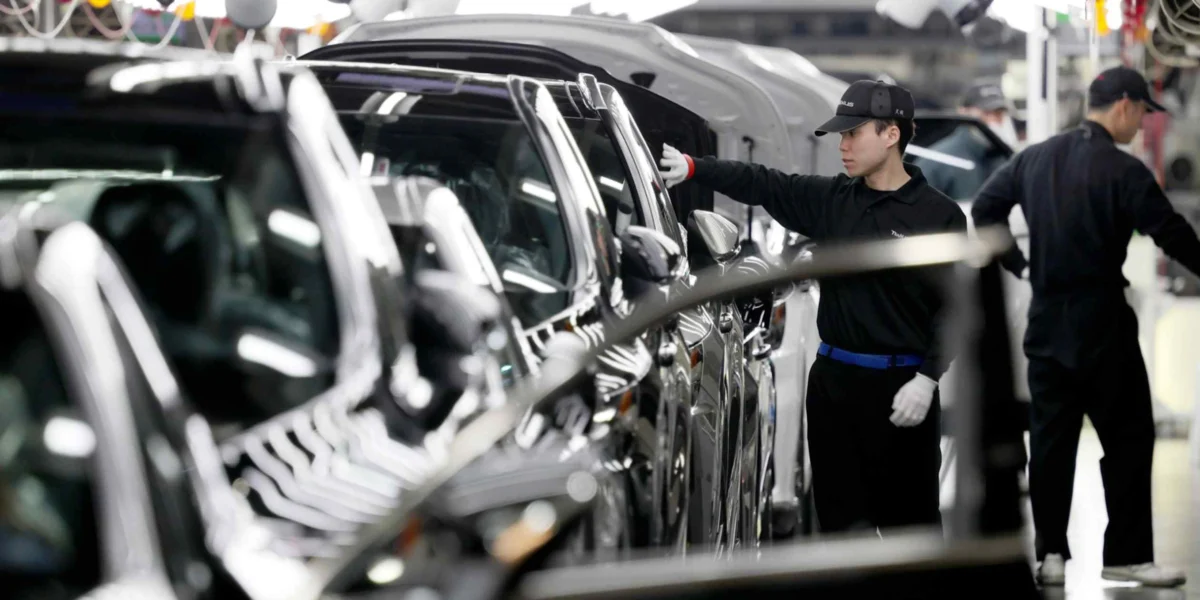
The Japan Automobile Manufacturers Association (JAMA) is spearheading a significant initiative to establish unified industry-wide standards for automotive components and materials. This strategic move is designed to enhance procurement efficiency and bolster the competitive edge of Japanese automakers, particularly in the face of formidable challenges posed by rapidly advancing global rivals, most notably those emerging from China. The move signifies a crucial pivot for Japan’s storied automotive sector, which has long prided itself on innovation and quality but now faces a landscape increasingly defined by scale, speed, and cost-effectiveness.
For decades, the Japanese automotive industry has operated with a degree of fragmentation at the component and material specification level. While this bespoke approach often fostered unique innovations tailored to individual brands, it has inadvertently created inefficiencies within the broader supply chain. Component suppliers, compelled to adhere to a multitude of differing standards from various automakers, have faced increased costs and reduced economies of scale. This has, in turn, limited their capacity to invest in next-generation technologies and to achieve the cost reductions necessary to compete effectively in a global market that is increasingly sensitive to price.
The genesis of this standardization effort can be traced back to a growing recognition within JAMA and its member companies of the shifting global automotive dynamics. The rise of Chinese automakers, in particular, has been a significant catalyst. These companies, often benefiting from strong government support, a rapidly developing domestic supply chain, and a focus on mass production of electric vehicles (EVs) and advanced digital features, have begun to make significant inroads into both established and emerging markets. Their ability to rapidly scale production and bring innovative, competitively priced vehicles to market has put traditional automotive powerhouses, including Japan, on notice.
H2 The Strategic Imperative: Efficiency and Competitiveness
The core objective behind establishing industry-wide standards is to unlock significant efficiencies throughout the automotive value chain. By creating common specifications for a range of components, from basic nuts and bolts to more complex electronic modules and battery materials, Japanese automakers aim to achieve several key benefits:
- Streamlined Procurement: A unified standard will allow for larger, more consolidated orders for components and raw materials. This increased volume will grant Japanese automakers greater purchasing power, leading to lower unit costs.
- Enhanced Supplier Collaboration: With standardized specifications, component suppliers can optimize their production lines, invest in more efficient manufacturing processes, and potentially develop specialized expertise in producing high-quality, cost-effective parts for a broader market. This can foster deeper partnerships and innovation within the supply chain.
- Reduced Development Cycles: When component specifications are standardized, automakers can potentially reduce the time and resources required for vehicle development. Instead of redesigning or re-qualifying components for each new model or platform, they can leverage existing, pre-approved standards.
- Accelerated EV Transition: The transition to electric vehicles demands significant investment in new technologies and supply chains, particularly for batteries, electric motors, and power electronics. Standardization in these areas could accelerate the development and adoption of these critical EV components, helping Japanese automakers keep pace with global EV leaders.
- Improved Quality Control: While Japanese automakers are renowned for their quality, standardized processes and materials can further reinforce this reputation by ensuring a consistent baseline of quality across the industry.
H3 A Timeline of Shifting Gears
The recognition of the need for greater standardization is not entirely new, but the urgency and scope of the current initiative mark a significant escalation. While specific timelines for the implementation of all proposed standards are still being finalized, the groundwork has been laid over the past few years through internal discussions and working groups within JAMA.
- Early 2020s: Growing awareness of the rapid technological advancements and market share gains by Chinese automakers, particularly in the EV segment, begins to fuel discussions within JAMA about the need for a more coordinated approach to supply chain management and cost competitiveness.
- Mid-2020s: JAMA formally establishes working committees comprised of representatives from its member companies and key industry stakeholders to identify areas where standardization would yield the greatest benefits. Initial focus areas include common materials for chassis components, standardized interfaces for electronic control units (ECUs), and potentially common battery chemistries or module designs.
- Late 2020s (Current Phase): The initiative gains significant momentum with the formal announcement of JAMA’s intent to lead the development and implementation of industry-wide standards. Pilot projects and the development of specific technical specifications are expected to commence in earnest.
- Future Projections: The full impact of these standards will unfold over the next decade, with phased implementation across different component categories. The success of this initiative will likely be measured by its ability to reduce costs, accelerate innovation, and ultimately improve the global competitiveness of the Japanese automotive sector.
H2 The Competitive Landscape: A Global Arena
The automotive industry is undergoing a profound transformation, driven by electrification, autonomous driving, and increasingly sophisticated digital integration. This shift has created opportunities for new players to emerge and challenge established giants. China, in particular, has leveraged its vast domestic market, government backing, and a strong focus on R&D to become a dominant force in EV production and battery technology.
Data from various industry reports illustrates this shift:
- EV Market Share: Chinese brands have rapidly increased their share of the global EV market, with some reports indicating they now account for over 60% of all electric vehicle sales worldwide. This dominance is particularly pronounced in the battery electric vehicle (BEV) segment.
- Battery Production: China controls a significant majority of the world’s battery production capacity, including the processing of critical raw materials like lithium and cobalt. This gives Chinese EV manufacturers a crucial advantage in terms of cost and supply chain security for batteries, the most expensive component of an EV.
- Export Growth: Chinese automakers are increasingly exporting their vehicles to markets in Europe, Southeast Asia, and even South America, often at price points that are highly competitive with established foreign brands.
This competitive pressure extends beyond EVs. Traditional internal combustion engine (ICE) vehicles, while still dominant globally, are also subject to intense cost competition. Automakers that can produce vehicles more efficiently and at a lower cost will be better positioned to capture market share, especially in price-sensitive developing economies.
H3 Supporting Data and Analysis: The Cost Factor
The impact of standardization on cost reduction can be substantial. For example, if a common specification for a specific type of sensor can be adopted across multiple Japanese automakers, the collective purchasing volume could potentially reduce its unit cost by 10-20% or more, depending on the component’s complexity and existing production volumes. Over the lifecycle of a vehicle, these seemingly small savings can accumulate to a significant competitive advantage.
Furthermore, the ability to secure raw materials at more competitive prices is crucial. By consolidating demand for materials like high-strength steel, aluminum alloys, and specific plastics, Japanese automakers could negotiate better terms with suppliers, mitigating the impact of global commodity price volatility.
The adoption of common platforms and modular designs, which standardization facilitates, can also lead to significant savings in research and development (R&D) and manufacturing. Instead of developing unique platforms for each model, automakers can leverage a shared architecture, reducing engineering costs and simplifying production processes.
H2 Reactions and Implications: A United Front
The initiative by JAMA has been met with cautious optimism from industry observers and some initial support from member companies. While specific public statements from individual automakers are likely to be measured, the underlying sentiment is one of recognizing the necessity of this strategic shift.
"This is a vital step for the Japanese automotive industry," commented a senior executive at a major Japanese component supplier, speaking on condition of anonymity. "For too long, our industry has been hindered by a lack of commonality. Standardizing components and materials will allow us to invest more strategically in cutting-edge technologies and to compete on a more level playing field globally. It’s about survival and future growth."
The implications of this standardization effort are far-reaching:
- For Component Suppliers: This presents both an opportunity and a challenge. Opportunities lie in securing larger, more stable orders and in focusing R&D on areas of true innovation. The challenge will be in adapting existing production lines and investing in new capabilities to meet the standardized specifications. Those that can adapt quickly and efficiently stand to gain significant market share within Japan’s automotive ecosystem.
- For Consumers: While the direct impact on consumers might not be immediately apparent, the long-term benefits could include more competitively priced vehicles, faster introduction of new technologies, and potentially improved vehicle reliability due to a more robust and efficient supply chain.
- For Global Competitors: This move signals that Japanese automakers are not standing still. It represents a concerted effort to address their cost and efficiency challenges, potentially making it harder for international rivals to gain market share based solely on price advantages. It also encourages other automotive regions to consider similar collaborative efforts.
- Technological Advancement: By freeing up resources and fostering collaboration, this initiative could paradoxically lead to even greater innovation. With less effort spent on replicating components or managing disparate specifications, automakers and suppliers can redirect their focus towards developing breakthrough technologies in areas like advanced battery chemistry, next-generation autonomous driving systems, and sustainable manufacturing processes.
H3 The Path Forward: Collaboration and Adaptation
The success of JAMA’s standardization initiative will hinge on several critical factors. Firstly, it requires deep collaboration and a willingness from all member companies to set aside brand-specific preferences for the greater good of the industry. Secondly, it necessitates a commitment to robust testing and quality assurance processes to ensure that standardized components meet the high-quality benchmarks expected of Japanese vehicles. Finally, ongoing dialogue with international standards bodies will be crucial to ensure that Japanese industry standards are compatible with global trends and to avoid creating new trade barriers.
The road ahead for the Japanese automotive industry is undoubtedly challenging, but this move towards industry-wide standardization represents a significant and necessary evolution. By embracing efficiency and collaboration, Japan’s automakers are positioning themselves to not only weather the current storm of global competition but to emerge stronger and more resilient in the future of mobility. The commitment to unified standards is more than just a tactical adjustment; it is a strategic imperative for securing the long-term viability and leadership of one of Japan’s most vital industrial sectors.
