

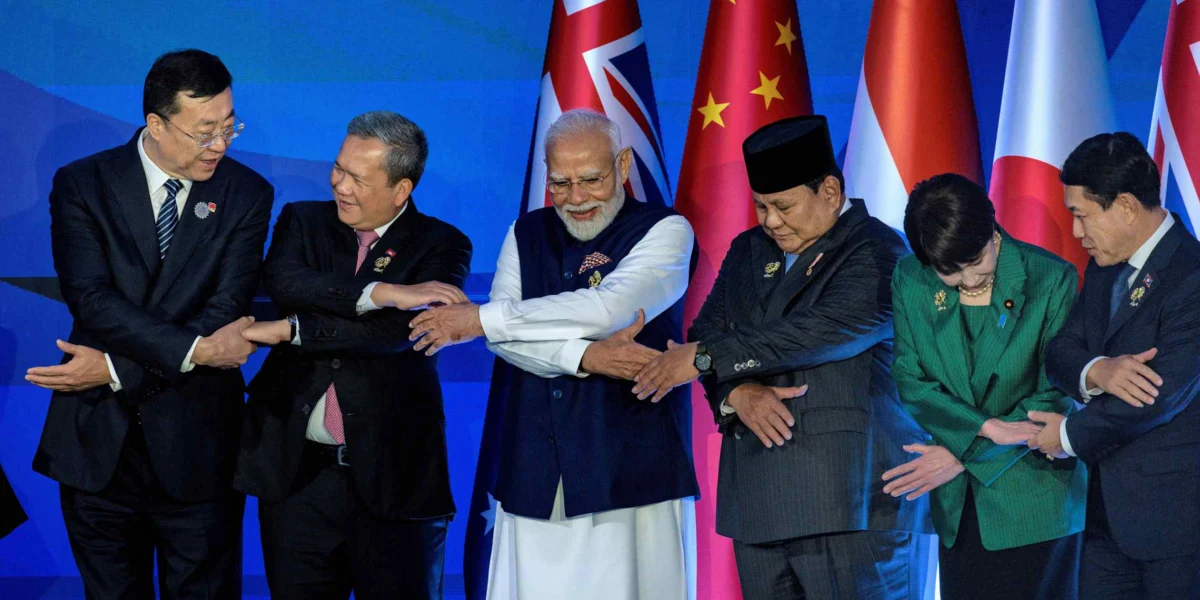
MANILA – Leaders from the Association of Southeast Asian Nations (ASEAN) and its key dialogue partners, including China, India, and Japan, convened for the East Asia Summit in Manila on Tuesday, November 17, 2026. The summit, a pivotal regional forum, placed a significant emphasis on collaborative efforts to combat transnational and online crimes. Concurrently, the United States reportedly sought to moderate the language surrounding contentious issues such as climate change and diversity within the summit’s declarations, reflecting the complex geopolitical currents at play in the Indo-Pacific region.
The annual East Asia Summit, established in 2005, serves as a premier leaders-led forum for discussion on critical political, security, and economic issues facing the Indo-Pacific. Its membership comprises the ten ASEAN member states, plus Australia, China, India, Japan, New Zealand, South Korea, Russia, and the United States. The summit’s agenda typically addresses regional challenges and opportunities, fostering cooperation and dialogue among Asia’s leading economies and powers. This year’s gathering in Manila, the Philippines’ capital, underscored the region’s growing concerns about interconnected threats, from cybercrime and illicit trade to the broader implications of technological advancement.
Combating Transnational and Online Crimes: A Priority Agenda
The heightened focus on transnational and online crimes reflects a growing regional challenge that transcends national borders. In an era of rapid digitalization and increasing global connectivity, criminal networks are leveraging technology to engage in a wide array of illicit activities, including cyber fraud, money laundering, human trafficking, and the proliferation of illegal online content. Official reports from Interpol and regional law enforcement agencies have consistently highlighted the escalating scale and sophistication of these threats. For instance, a 2025 report by the UN Office on Drugs and Crime estimated that global cybercrime losses reached over $10.5 trillion annually, with a significant portion impacting businesses and individuals across Asia.
The summit’s discussions were expected to center on strengthening intelligence sharing mechanisms, enhancing cross-border law enforcement cooperation, and developing unified strategies to dismantle criminal organizations operating in the digital space. Leaders were also likely to deliberate on legal frameworks and legislative measures needed to effectively prosecute cybercriminals and to recover illicitly obtained assets. The participation of major economic powers like China and India, both significant hubs for technological development and consumer markets, is crucial for any effective regional response. Their commitment to information sharing and joint operations will be a key determinant of the success of these initiatives.
U.S. Stance on Climate and Diversity Sparks Diplomatic Nuance
Reports from attendees indicated that the United States delegation, led by a senior representative, engaged in diplomatic efforts to refine the wording on climate change and diversity within the summit’s official communiqué. This approach suggests a strategic prioritization by Washington, potentially aimed at achieving consensus among a diverse group of nations with varying levels of commitment and capacity to address these global challenges.
The issue of climate change has become increasingly urgent, with Southeast Asia particularly vulnerable to its impacts, including rising sea levels, extreme weather events, and agricultural disruptions. While there is broad recognition of the threat, differing national priorities and economic development stages can lead to varied approaches to mitigation and adaptation. The U.S. may have sought language that emphasizes practical, collaborative solutions and technological transfer, rather than prescriptive mandates that could face resistance from some nations. Data from the Intergovernmental Panel on Climate Change (IPCC) consistently underscores the accelerating pace of global warming and the disproportionate impact on low-lying coastal regions prevalent in Southeast Asia.
Similarly, the inclusion of diversity as a core tenet in regional dialogues can be a sensitive topic, touching upon cultural, social, and political differences among participating countries. The U.S. has often championed principles of inclusivity and human rights in its foreign policy. However, in a multilateral forum like the East Asia Summit, achieving universal agreement on such nuanced social issues requires careful diplomatic maneuvering. The U.S. delegation’s reported efforts to "tone down" statements might reflect a pragmatic approach to ensure broader agreement on other critical agenda items, such as economic cooperation and security.
Background and Historical Context of the East Asia Summit
The East Asia Summit (EAS) was officially launched in Kuala Lumpur, Malaysia, on December 14, 2005, building upon the framework of the ASEAN Plus Three (APT) mechanism, which includes China, Japan, and South Korea. The inaugural summit was attended by leaders from all ten ASEAN member states, as well as China, Japan, South Korea, India, Australia, and New Zealand. Russia joined in 2011. The establishment of the EAS was a significant step in broadening the scope of regional dialogue beyond economic issues to encompass political and security matters.
The summit’s objectives are multifaceted, aiming to foster strategic dialogue, promote peace, security, and economic prosperity in the region, and address common challenges. Over the years, the EAS has evolved into a key platform for leaders to discuss pressing issues such as maritime security, counter-terrorism, disaster management, and public health. Major initiatives have emerged from past summits, including commitments to address pandemics and enhance regional economic integration.
Chronology of Key Events Leading to the 2026 Summit
The 2026 East Asia Summit in Manila follows a year of heightened regional activity and diplomatic engagements.
- Late 2025: ASEAN foreign ministers and senior officials met throughout the year to finalize the agenda and draft proposals for the upcoming summit. Discussions focused on identifying key priority areas, with a particular emphasis on emerging security threats and economic resilience in the post-pandemic era.
- Early 2026: Working groups comprised of national experts from member and dialogue partner countries began detailed discussions on specific agenda items, including the technical aspects of combating transnational crime and potential frameworks for climate action.
- Mid-2026: Bilateral meetings between leaders and their representatives intensified, allowing for preliminary discussions on sensitive issues and the exploration of potential areas of compromise. This period is crucial for building consensus ahead of the formal summit.
- October 2026: The ASEAN Senior Officials’ Meeting (SOM) and ASEAN Foreign Ministers’ Meeting (AMM) were held to formally adopt the summit agenda and review draft declarations. This is typically when preliminary agreements on wording for sensitive issues are finalized.
- November 17, 2026: The East Asia Summit convenes in Manila, Philippines, with leaders gathering for official sessions and photo opportunities, as depicted in the accompanying image.
Data and Supporting Information
The significance of the summit’s agenda is underscored by several data points:
- Transnational Crime Statistics: According to the United Nations Office on Drugs and Crime (UNODC), cyber-enabled financial crimes, including online fraud and scams, are on the rise across Asia. In 2024, reports indicated a 30% year-on-year increase in such incidents within the region.
- Climate Vulnerability: Southeast Asian nations are consistently ranked among the most vulnerable to the impacts of climate change. The World Bank’s 2023 report on climate resilience in Asia highlighted that coastal communities in countries like the Philippines, Vietnam, and Indonesia face significant threats from sea-level rise and intensifying typhoons.
- Digital Economy Growth: The digital economy in ASEAN is projected to reach $1 trillion by 2030, according to Google, Temasek, and Bain & Company’s e-Conomy SEA report. This rapid growth, while offering immense economic opportunities, also expands the potential attack surface for cybercriminals.
- Regional Trade Dynamics: The East Asia region accounts for a substantial portion of global trade. The stability and security of this trade network are paramount, making the discussion of transnational crime and its impact on economic activities a critical concern for all participating nations.
Inferred Reactions and Analysis of Implications
The U.S. approach to moderating language on climate and diversity, while potentially aimed at achieving broader consensus, could elicit varied reactions. Some nations that are more aggressive in their climate commitments might express disappointment, viewing it as a dilution of necessary urgency. Conversely, countries with more reservations about the pace of climate action or those sensitive to external pressure on social issues might welcome a more measured tone, perceiving it as respect for national sovereignty and diverse development paths.
The emphasis on combating transnational and online crimes is likely to be met with widespread support. This is a tangible threat that impacts all nations, irrespective of their economic or political systems. Collaborative efforts in this domain could lead to concrete outcomes, such as joint task forces, shared intelligence platforms, and harmonized legal frameworks. The success of these initiatives will depend on the genuine commitment of all parties to share information and resources, and to overcome any lingering geopolitical mistrust.
The broader implication of this summit lies in its role as a barometer for regional cooperation and the prevailing geopolitical climate. The ability of diverse nations to find common ground on pressing issues, even amidst complex international relations, is crucial for maintaining regional stability and fostering sustainable development. The 2026 East Asia Summit, by prioritizing practical challenges like crime while navigating sensitive global issues, offers a window into the evolving dynamics of the Indo-Pacific. The outcomes of these discussions will shape future regional policies and collaborations, impacting everything from cybersecurity protocols to the region’s collective response to environmental challenges. The leadership demonstrated, or indeed the compromises made, in Manila will resonate across the Indo-Pacific for years to come.
