

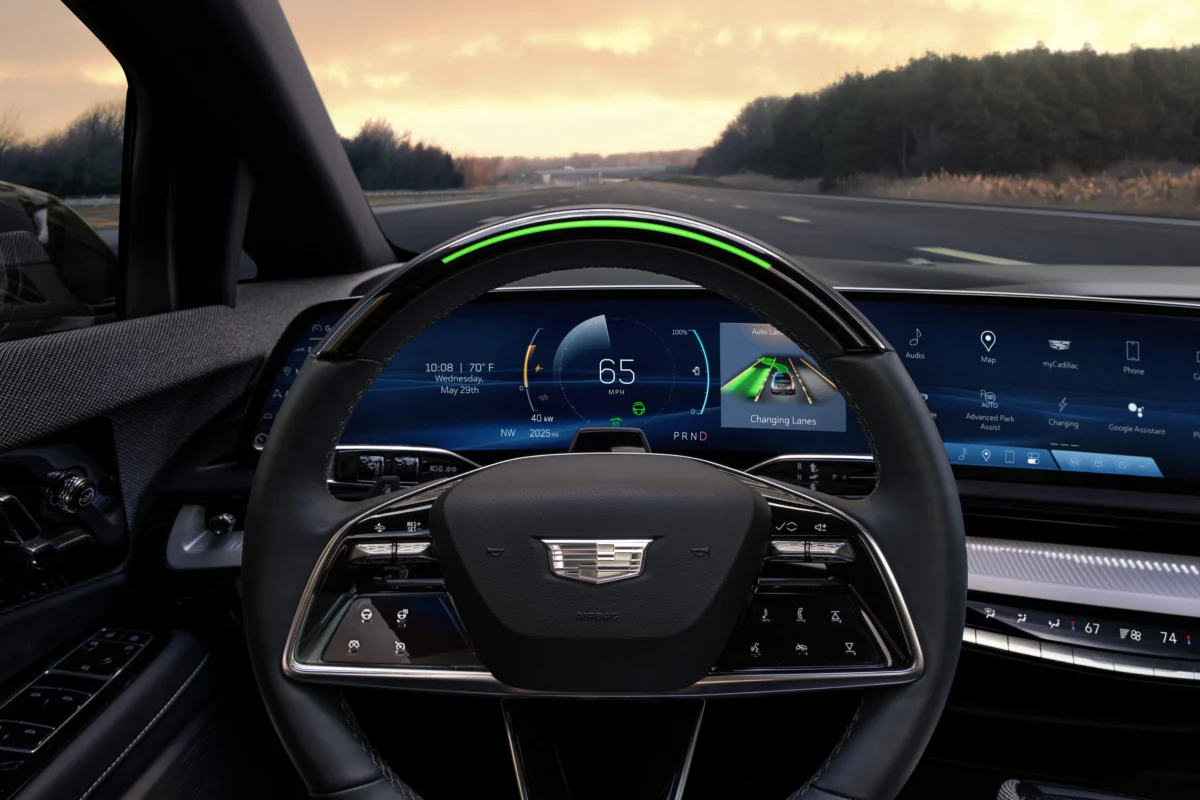
DETROIT – General Motors (GM) is set to launch a sophisticated, proprietary in-vehicle artificial intelligence (AI) system later this year, a strategic move designed to offer a deeply integrated and highly tailored experience for its customers. This new, native GM AI assistant will operate distinctly from the Google Gemini AI assistant, which GM began rolling out in eligible model year 2022 and newer Cadillac, Chevrolet, Buick, and GMC vehicles in the U.S. earlier this year, leveraging the Google Built-in ecosystem. The decision underscores a growing trend among major automakers to reclaim and personalize the digital cockpit experience, moving beyond general-purpose third-party solutions to create unique, brand-specific intelligent interfaces.
The Strategic Imperative: Beyond General-Purpose AI
The forthcoming GM AI assistant is expected to be significantly more integrated with the vehicle’s inherent capabilities, its extensive telematics information, and the robust OnStar intelligence than the currently deployed Google Gemini system. Anna Santos, GM director of product management of voice and AI/machine learning, articulated the company’s vision in an exclusive statement, highlighting the limitations of a universal AI in addressing specific automotive needs. "Later this year, we’ll be launching a more deeply integrated native AI assistant that combines conversational AI with GM vehicle knowledge and OnStar intelligence to create those capabilities that go beyond what a general purpose assistant can do," Santos explained. This initiative marks a crucial phase in GM’s broader AI journey, which commenced with the announcement last year of the Gemini AI bot’s integration, slated to precede the introduction of GM’s own AI assist technology.
While the Google Gemini integration provides a powerful, familiar, and conversational AI experience – allowing customers to interact naturally without memorizing complex commands, engage in "live sessions" for trivia or games, and manage basic vehicle functions like temperature and radio controls – its scope, by design, remains akin to a smartphone-based assistant. It offers convenience and broad utility but lacks the granular access and specialized understanding of a vehicle’s intricate systems. Santos emphasized this distinction, noting, "There’s a limit to what an AI that’s just sort of sitting at the top level of the vehicle can do." GM’s unnamed proprietary assistant, she affirmed, is engineered to "better understand the vehicle, the drive and our customers’ needs, and make everyday ownership simpler."
A Chronology of GM’s Digital Transformation
GM’s journey into advanced in-vehicle AI has been progressive and multi-faceted. The initial significant step was the adoption of Google Built-in, a comprehensive suite of Google services including Google Maps for navigation, Google Assistant for voice commands, and Google Play for apps. This integration, announced in 2019 and rolling out since late 2021 in various models, aimed to provide a seamless, smartphone-like experience directly within the vehicle’s infotainment system. It allowed GM to rapidly deploy cutting-edge software features and leverage Google’s vast ecosystem without the immense investment required to build everything from scratch.
The subsequent announcement last year regarding the integration of Google’s Gemini AI bot into millions of 2022 model-year vehicles and newer represented an upgrade to the conversational capabilities within the Google Built-in framework. Gemini, known for its advanced natural language processing and multimodal reasoning, offered a more intuitive and versatile voice interaction experience compared to previous iterations of Google Assistant. Its deployment earlier this year served as a significant enhancement to GM’s digital offerings, setting a high bar for conversational AI within its vehicles.
However, even as Gemini rolled out, GM was already laying the groundwork for its next, more ambitious phase: the development of its own deeply integrated AI assistant. This parallel development strategy highlights GM’s commitment to a hybrid approach – utilizing established third-party platforms for broad utility while simultaneously cultivating proprietary technology for strategic differentiation and control over core vehicle functions and customer data. The launch of this native GM AI, anticipated later this year, represents the culmination of this dual strategy, promising an unprecedented level of vehicle-specific intelligence.
The Power of Deep Integration: What GM’s AI Will Deliver
The core differentiator for GM’s proprietary AI lies in its ability to access and interpret a vast array of vehicle-specific data. Unlike a general-purpose AI, which operates somewhat independently of the car’s internal diagnostics and operational parameters, GM’s assistant will tap directly into the vehicle’s telemetry, sensor data, and OnStar systems. This deep integration allows for a range of advanced, auto-focused features that go far beyond infotainment and basic controls:
- Predictive Maintenance: By continuously analyzing vehicle performance data, engine diagnostics, fluid levels, tire pressure, and usage patterns, the GM AI can anticipate potential mechanical issues before they escalate. It could proactively alert the driver about an upcoming service requirement, suggest optimal times for maintenance, or even pre-book appointments with preferred dealerships. This capability transforms reactive repairs into proactive prevention, enhancing vehicle reliability and potentially reducing ownership costs.
- Enhanced OnStar Intelligence: OnStar, GM’s long-standing telematics and safety service, will be seamlessly integrated with the new AI. This could mean more intelligent emergency response, where the AI not only detects a crash but also provides first responders with critical vehicle and occupant information (e.g., number of occupants, impact severity, airbag deployment status). It could also facilitate advanced roadside assistance, remote diagnostics, and even personalized concierge services, all accessible through natural language commands.
- Hyper-Personalization: The concept of a "kids setting" mentioned by Santos exemplifies the potential for personalization. Imagine a single voice command that automatically adjusts climate control, sets specific seating positions, activates child locks on doors and windows, and initiates family-friendly music or entertainment, all tailored to pre-configured preferences. This level of customization can extend to individual driver profiles, adjusting everything from mirror positions and infotainment layouts to preferred driving modes and ambient lighting based on who is behind the wheel. The AI could learn driving habits, preferred routes, and even energy consumption patterns to offer optimized suggestions for efficiency or performance.
- Contextual Understanding of the Drive: The AI will not only understand the vehicle but also the "drive." This implies an awareness of external conditions (weather, traffic), route characteristics (terrain, speed limits), and even the driver’s emotional state (inferred through voice analysis, though this raises privacy considerations). Such contextual understanding could lead to more intelligent navigation, adaptive cruise control, and safety alerts that are highly relevant to the immediate driving environment.
- Leveraging Proprietary Data: GM’s emphasis on using "data that’s going to be proprietary to GM" is crucial. This means the AI will be trained and continuously refined using a vast dataset of real-world driving scenarios, vehicle performance metrics across millions of vehicles, and customer interaction data unique to GM. This proprietary knowledge base will enable the AI to develop a specialized "vehicle expertise" that a generic AI cannot replicate, ensuring responses and actions are highly relevant and accurate for GM vehicles. The company is working with an unnamed large language model (LLM) provider, suggesting they are fine-tuning a powerful LLM with their exclusive automotive data.
Implications for GM and the Broader Automotive Industry
The launch of GM’s proprietary AI carries significant implications, not only for the automaker but for the entire automotive landscape:
- Competitive Differentiation: In an increasingly competitive market where hardware features are converging, software and in-vehicle experiences are becoming key differentiators. By developing its own deeply integrated AI, GM positions itself to offer a unique and superior user experience that rivals cannot easily replicate simply by adopting third-party solutions. This move is akin to Tesla’s strategy of owning its software stack, providing a seamless, integrated experience from vehicle controls to over-the-air updates.
- Enhanced Customer Loyalty and Engagement: A highly personalized and intuitive in-vehicle AI can significantly improve customer satisfaction and foster brand loyalty. Drivers who feel their vehicle truly "understands" and anticipates their needs are more likely to remain committed to the brand. Moreover, the AI can become a constant companion, offering assistance, entertainment, and safety features that deepen the relationship between the customer and their GM vehicle.
- New Revenue Streams and Services: The advanced capabilities of GM’s AI open doors for new subscription-based services. Features like enhanced predictive maintenance alerts, personalized comfort settings, or advanced driver assistance tailored by AI could be offered as premium packages. This aligns with the broader industry trend of monetizing software and connected services, transforming vehicles into recurring revenue platforms.
- Data Ownership and Strategic Control: By developing its own AI, GM gains greater control over the vast amounts of data generated by its vehicles. This proprietary data is invaluable for product development, identifying trends, improving vehicle performance, and tailoring future offerings. It also reduces reliance on third-party data ecosystems, mitigating potential privacy concerns and allowing GM to define its own data governance policies.
- The Software-Defined Vehicle (SDV) Paradigm: GM’s move is a clear testament to the accelerating shift towards the software-defined vehicle (SDV) era. In an SDV, software dictates a significant portion of a vehicle’s functionality, performance, and user experience. Investing in proprietary AI is a critical step in becoming a leading SDV manufacturer, enabling GM to deliver continuous innovation through over-the-air (OTA) updates and adapt quickly to evolving customer demands and technological advancements.
- Industry Trends and Reactions: Other major automakers, such as Mercedes-Benz with its MBUX system and BMW with its iDrive intelligent personal assistant, have also invested heavily in proprietary AI. The industry is witnessing a "digital arms race" where each manufacturer strives to create the most intuitive, integrated, and personalized in-car experience. GM’s strategy of a hybrid approach – leveraging Google for broad utility while building custom for deep integration – may become a blueprint for others looking to balance speed-to-market with strategic control. Tech giants like Apple are also vying for a deeper integration into the car, presenting both partnership opportunities and competitive pressures for traditional automakers.
Challenges and the Road Ahead
While the potential benefits are immense, GM’s proprietary AI venture is not without its challenges. Data privacy and security will remain paramount, requiring robust safeguards to protect sensitive driver and vehicle information. Ensuring the AI’s reliability, accuracy, and continuous improvement through OTA updates will be critical for user trust. Furthermore, the complexity of developing and maintaining such a sophisticated system necessitates significant ongoing investment in software engineering talent and infrastructure.
The forthcoming GM AI assistant represents a pivotal moment for the company, solidifying its commitment to being a leader in automotive technology. By blending the expansive capabilities of a general-purpose AI like Google Gemini with a deeply integrated, vehicle-specific intelligence, GM is charting a course for a future where the car is not just a mode of transport, but an intuitive, personalized, and proactive digital companion. This dual strategy promises to enhance safety, convenience, and enjoyment for millions of GM drivers, fundamentally redefining the in-vehicle experience.
