

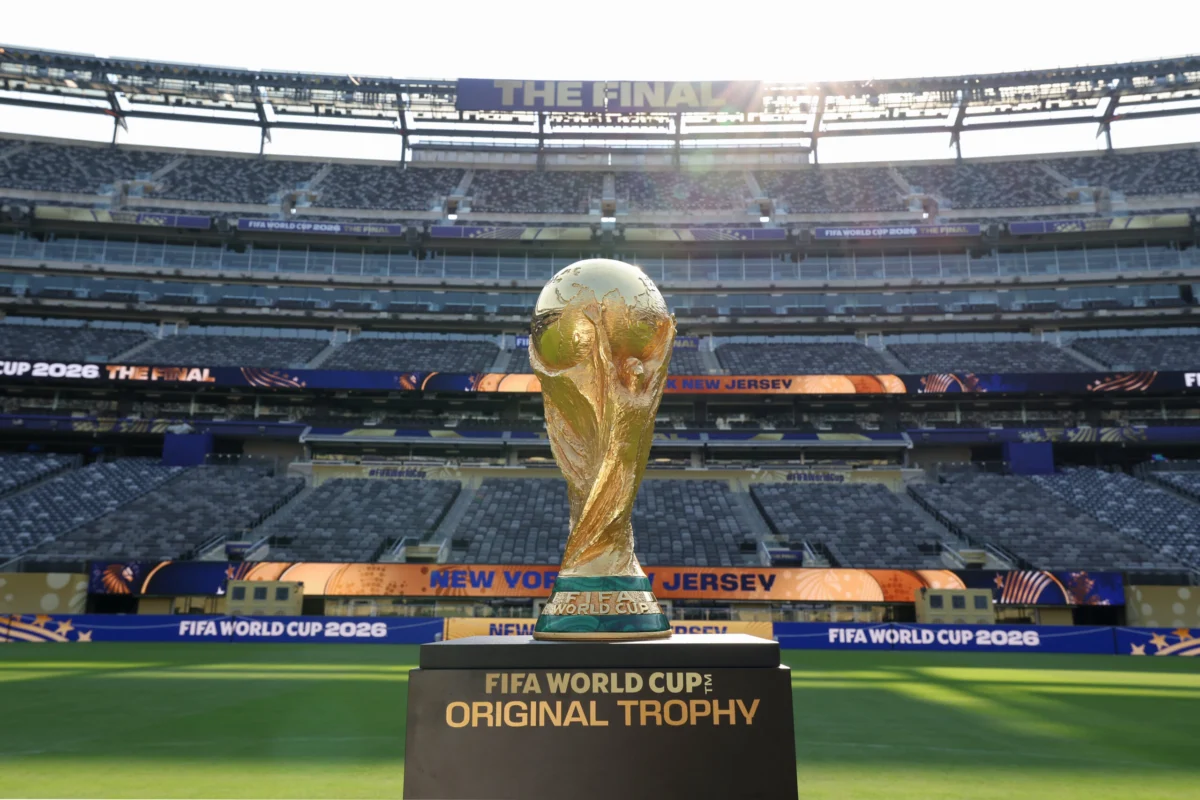
Global soccer’s governing body, FIFA, finds itself at the center of a burgeoning storm, grappling with significant resistance to its ambitious plan to sell a minority stake in a new commercial entity. This proposed venture, dubbed FIFA Forward Enterprise (FFE), aims to control the lucrative business operations of the quadrennial World Cup, the sport’s flagship tournament. The initiative, intended to raise a substantial $4.2 billion from third-party investors, valuing the FFE at an estimated $20 billion, has triggered a swift and vehement backlash from influential continental federations, raising fundamental questions about the future governance and commercialization of the world’s most beloved sport.
The Proposal Unveiled: A New Commercial Frontier for FIFA
Earlier this week, FIFA formally announced its intention to establish the FIFA Forward Enterprise (FFE), a new subsidiary designed to manage the commercial rights and business aspects of the FIFA World Cup. The proposal outlines a strategy to attract significant private investment by offering a minority stake in this new entity. FIFA stated its goal to raise $4.2 billion from external parties, which would effectively value the FFE at approximately $20 billion. Among the early proponents and potential investors, Thrive Capital, a private equity firm led by Joshua Kushner, has reportedly thrown its support behind the plan. The funds generated from this sale are ostensibly earmarked for reinvestment into global football development, a common justification for such commercial endeavors.
Immediate and Vehement Backlash from Key Confederations
Almost immediately following the announcement, two of the most powerful and influential continental football confederations, UEFA (the Union of European Football Associations) and Concacaf (the Confederation of North, Central America and Caribbean Association Football), publicly rejected FIFA’s proposal. Both organizations voiced profound concerns regarding the potential for undue outside influence on the sport’s pinnacle event. Their apprehension stems from the belief that ceding any commercial control of the World Cup to private investors could fundamentally alter the tournament’s ethos and decision-making processes, prioritizing financial returns over sporting integrity and development.
UEFA, representing the powerful European football landscape, articulated its opposition in no uncertain terms. "The World Cup cannot be treated as an investment product," UEFA declared in a forceful statement. "No part of it should ever be surrendered to private investors. The World Cup is not for sale." This statement underscored a deep-seated philosophical disagreement, positioning the World Cup not merely as a commercial asset but as a global cultural heritage. Concacaf echoed these sentiments, expressing similar worries about external entities dictating the direction of a tournament that holds immense global significance.
A Threat of Boycott and High-Profile Resignation Deepens the Crisis
The tension escalated dramatically when UEFA, on Thursday, issued a stark warning, threatening to boycott FIFA competitions and even the World Cup itself if the commercialization plan were to proceed. Such a boycott by European nations, many of whom are traditional powerhouses in global football, would severely undermine the credibility, commercial viability, and sporting quality of any FIFA tournament, particularly the World Cup. It represents a significant escalation of the dispute, highlighting the gravity of the rift between FIFA and its largest confederations.
Further compounding FIFA’s challenges, Carlos Cordeiro, a senior advisor to FIFA President Gianni Infantino, announced his immediate resignation in protest of the proposed FFE plan. Cordeiro, a highly respected figure in international sports administration, made his stance unequivocally clear in a statement posted to LinkedIn on Friday. "Let me be clear: I had no involvement in this proposal, and I oppose it unequivocally. It is a bad deal for FIFA’s Member Associations, a bad deal for football, and a bad deal for the long-term future of the game," Cordeiro asserted. His public dissent from within FIFA’s inner circle signals a deep internal division and lends significant weight to the opposition’s arguments. Cordeiro’s resignation is not merely a personal departure but a powerful symbolic act that could embolden other critics and sway undecided member associations.
FIFA’s Defense and the Path Forward: A Divisive Vote Looms
In response to the mounting criticism, FIFA defended its proposal late Thursday night, expressing its intent to move forward with a vote among its 211 member associations despite the public outcry. The global governing body maintained that its plan was designed to generate funds for football development worldwide and reiterated its commitment to an "open and democratic consultation." FIFA also sought to downplay the significance of the opposition, stating, "No single entity can claim to represent all 211 member associations around the world." This statement seemingly aimed to diminish the collective power of UEFA and Concacaf, which together represent 96 of FIFA’s member associations.
FIFA also attempted to deflect criticism by blaming "incorrect media reports" for the negative response to the plan. It assured that without the support of a majority of the member associations, its commercial activities would remain unchanged, and the FFE would not materialize. Furthermore, FIFA pushed back on the characterization of its plan as "selling" the World Cup, stating, "Nobody is selling football. This is not something FIFA would ever entertain." This clarification suggests an attempt to reframe the narrative, emphasizing that the proposal involves a minority stake in a commercial entity rather than outright ownership of the tournament itself. However, for many critics, the distinction remains a semantic one, with the core concern revolving around the introduction of profit-driven external actors into the governance of the sport.
The Shadow of Governance and Commercialization: A Recurring Theme

The current controversy is not an isolated incident but rather the latest chapter in a long-running debate about the balance between commercial interests and sporting integrity within FIFA. The organization has faced intense scrutiny over the years, notably regarding past allegations of bribery and corruption that led to significant reforms and a change in leadership. While neither UEFA nor Concacaf explicitly referenced FIFA’s historical ties to alleged bribery in their statements against the FFE proposal, the underlying concerns about governance and transparency undoubtedly inform their skepticism.
UEFA’s statement directly addressed the "soft pressure" of shareholder influence, a subtle yet powerful mechanism that can reshape an organization’s priorities. "Football’s future cannot be dictated by the expectations of those whose first duty is to maximise financial return," UEFA emphasized. "The moment external investors acquire ownership interests in FIFA competitions, football changes forever. Commercial return becomes a permanent obligation. Investor expectations become a daily pressure." This perspective highlights the inherent tension between the non-profit, developmental mandate of a sports governing body and the profit-maximizing imperative of private equity firms. The fear is that such an arrangement could lead to decisions driven by quarterly earnings reports rather than the long-term health and accessibility of the sport globally. This could manifest in anything from scheduling changes to accommodate lucrative markets, alterations to tournament formats, or even a shift in the allocation of resources towards financially attractive projects rather than grassroots development in less profitable regions.
Private Equity’s Growing Footprint in the Global Sports Arena
The dispute over FIFA’s proposal also underscores a broader trend of private equity firms increasingly seeking investment opportunities in the global sports market. Investors are drawn to the sector’s steady cash flows, robust growth opportunities, and its perceived resilience as an "anti-artificial intelligence bet" – live sports content remains highly valuable and difficult to replicate. The global sports market, valued in the hundreds of billions of dollars, offers attractive prospects for financial players looking for stable, high-growth assets.
Sam Porter, Chief Strategy Officer at Apollo Sports Capital, articulated this sentiment earlier this month at a Wall Street Journal Sports conference: "I think anywhere where there’s a product that people are turning up for that’s entertainment, and it’s creating an economic environment, I think it’s possible that [private equity investment] will happen."
Major professional leagues in North America have already opened their doors to private capital, albeit with carefully defined limits. The NFL, for instance, began allowing sales of up to 10% of teams to select private equity firms in 2024. Major League Baseball (MLB) permits a single fund to own up to 15% of a club, with total private equity ownership capped at 30%. The NBA and NHL also maintain a 30% aggregate maximum for private equity ownership, with individual fund thresholds set at 20%. These examples demonstrate a cautious integration of private capital, often with minority stakes that come with limited or no governance control, specifically designed to inject capital without fundamentally altering the operational control or ethos of the leagues.
However, the "next frontier" for private equity could extend into college sports, including direct investment in teams, though this remains largely uncharted territory due to a pervasive uneasiness at the collegiate level regarding the ramifications of taking on private money. As valuations for major league ownership stakes continue to soar, pushing traditional buyers out of the market, private equity firms are actively seeking new ventures. Marc Lasry, co-founder of private equity firm Avenue Capital Group, observed in an interview with CNBC Sport last year, "People view that sports is pure. The hurdle is, at the end of the day, always, no one wants to be first." FIFA’s proposal for the World Cup, a global cultural phenomenon rather than a single league or team, represents a significant leap into this evolving landscape, pushing the boundaries of what is considered acceptable commercialization in sports.
The Unique Stakes of Global Soccer: More Than Just a Game
The FIFA World Cup transcends typical sporting events; it is a quadrennial global spectacle that unites nations, embodies national pride, and serves as a powerful symbol of international camaraderie and competition. Its immense cultural, social, and economic impact makes it unique. Unlike individual club teams or even national leagues, the World Cup’s revenue streams are intricately linked to its universal appeal and the participation of all member associations, many of whom rely on FIFA’s redistributed funds for their own football development.
The prospect of private investors, whose primary allegiance is to their limited partners and financial returns, gaining influence over such an event raises profound questions. Critics fear that this could lead to decisions prioritizing short-term gains over the long-term health and equitable development of football, particularly in smaller nations or less lucrative markets. The integrity of the sport, the fairness of competition, and the accessibility of the game for all could potentially be compromised if commercial imperatives overshadow foundational sporting principles.
The Path Ahead: A Divisive Vote and Uncertain Future
The upcoming vote among FIFA’s 211 member associations will be a pivotal moment for global football. The opposition from UEFA and Concacaf, coupled with the high-profile resignation of Carlos Cordeiro, signals a significant challenge to President Infantino’s vision for the FFE. The outcome will depend on FIFA’s ability to persuade a majority of its member associations, many of whom are smaller federations that could potentially benefit from the promised development funds, that the benefits outweigh the risks of external commercial influence.
The debate is not merely about a financial transaction; it is a battle for the soul of football, questioning who ultimately controls its destiny: the global sporting community or the world of private finance. The decision will set a precedent for how major global sporting events are managed and commercialized in an increasingly financially driven sports landscape. Regardless of the vote’s outcome, the controversy has already ignited a critical global conversation about the delicate balance between securing financial stability for sports development and safeguarding the integrity and independence of the beautiful game.
— Jessica Golden contributed to this report.
