

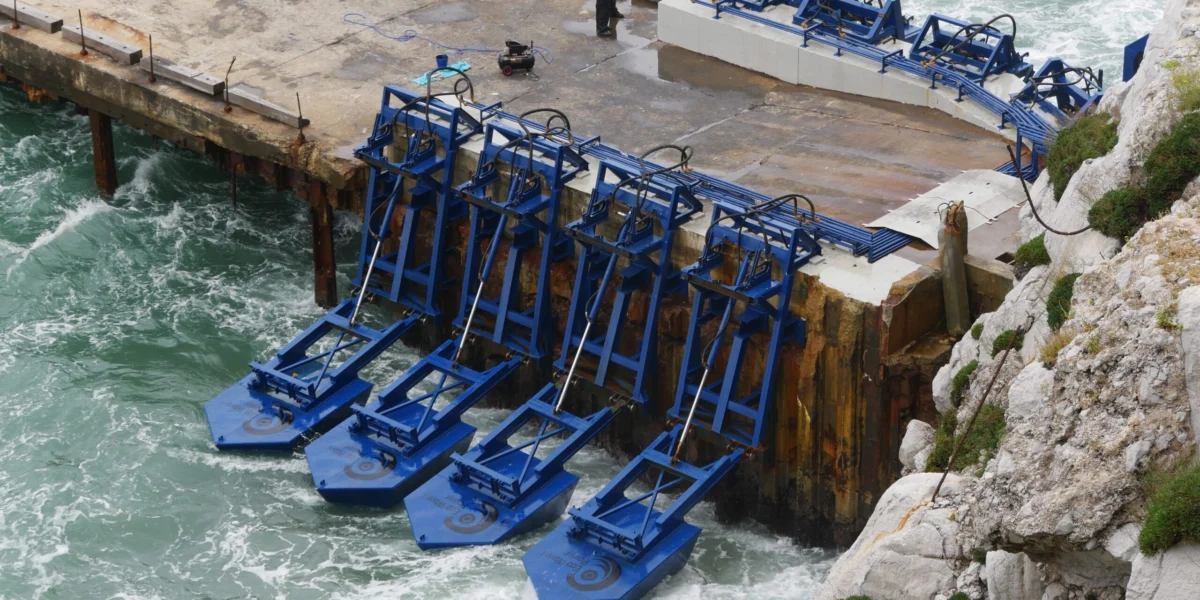
The convergence of renewable energy and artificial intelligence has reached a significant milestone as Eco Wave Power, a leading developer of onshore wave energy technology, deepens its collaboration with NVIDIA, the global leader in AI and accelerated computing. This partnership, highlighted by the inclusion of Eco Wave Power’s technology in NVIDIA’s high-profile GTC presentations and the induction of its U.S. subsidiary into the NVIDIA Inception program, signals a new era for the energy sector. As the global race for AI dominance intensifies, the massive electricity requirements of data centers and semiconductor manufacturing are driving a search for innovative, proximity-based power solutions. Eco Wave Power’s integration of digital twin technology and AI-driven optimization tools positions it as a critical player in meeting these burgeoning energy needs while maintaining a commitment to decarbonization.
The GTC Taipei Keynote: A Showcase of Industrial Digital Twins
The relationship between the two companies was prominently displayed during the NVIDIA GTC Taipei 2026 keynote, delivered by NVIDIA Founder and CEO Jensen Huang. This marked the second time Eco Wave Power’s technology was featured in an NVIDIA GTC presentation, underscoring the sustained interest the tech giant has in wave energy applications. During the keynote, Huang emphasized the transformative role of digital twins—virtual representations of physical assets—in optimizing real-world infrastructure.
The presentation showcased a sophisticated digital representation of Eco Wave Power’s wave energy converters. This simulation utilized NVIDIA’s advanced computing platforms to display real-time operational wave parameters and system responses. By creating a high-fidelity digital twin, Eco Wave Power can simulate how its floaters react to various sea states, ranging from calm waters to extreme storm conditions. This capability allows engineers to test system durability, refine energy conversion algorithms, and predict maintenance needs without the risks or costs associated with physical testing in the open ocean.
The use of NVIDIA’s Omniverse platform and simulation technologies provides Eco Wave Power with the ability to visualize fluid dynamics and mechanical stress in a virtual environment. This level of precision is essential for wave energy, a field that has historically struggled with the unpredictable nature of the marine environment. Through these simulations, Eco Wave Power can demonstrate to stakeholders and utility providers the reliability and efficiency of its systems before a single bolt is tightened at a project site.
Strategic Integration: The NVIDIA Inception Program
Beyond the visual showcase in Taipei, the partnership has taken a structural form through the NVIDIA Inception program. Eco Wave Power U.S., a wholly owned subsidiary of the parent company, has officially joined this prestigious initiative designed to nurture startups and established companies that are pushing the boundaries of AI, high-performance computing (HPC), and data processing.
Membership in the NVIDIA Inception program provides Eco Wave Power with access to a vast array of resources, including technical training, preferred pricing on NVIDIA hardware, and introductions to venture capital firms. For Eco Wave Power, the primary benefit lies in the access to NVIDIA’s developer tools. These tools will allow the company’s engineering team to accelerate the development of AI-driven applications specifically tailored for renewable energy infrastructure.
The focus of the U.S. subsidiary within this program is to serve as the global hub for the company’s "intelligent infrastructure" initiatives. This includes the development of proprietary software layers that can be integrated into wave energy power stations worldwide. By leveraging NVIDIA’s AI stack, Eco Wave Power aims to move beyond passive energy generation toward an active, intelligent management system that can interface seamlessly with modern smart grids.
The Taiwan Pilot Project: A Nexus of Energy and Tech
The timing of the Taipei keynote is particularly relevant given Eco Wave Power’s expanding footprint in Taiwan. Earlier this year, the company’s local partner, I-Ke International Ocean Energy Co., successfully secured a land-use agreement for a planned pilot installation at Suao Port. This project is a cornerstone of the company’s strategy to establish a presence in the Asia-Pacific region, a territory that is both energy-hungry and central to the global semiconductor supply chain.
Taiwan’s geography makes it an ideal candidate for wave energy. As an island with high coastal energy density, it faces the dual challenge of limited land for traditional solar and wind farms and a massive demand for electricity from its tech manufacturing hubs. The Taiwan Semiconductor Manufacturing Company (TSMC) and other industry leaders require a stable, 24/7 power supply to maintain production. Wave energy, which is more predictable and consistent than solar or wind, offers a viable "baseload" renewable option.
The Suao Port project will serve as a real-world testbed for the AI technologies developed through the NVIDIA partnership. By deploying sensors on the floaters and using AI to process the resulting data, Eco Wave Power can optimize energy output in real-time based on the specific wave patterns of the Philippine Sea. This proximity-based generation—placing power plants directly on piers and breakwaters near industrial centers—minimizes transmission losses and provides a direct energy link to the infrastructure that needs it most.
Technical Deep Dive: How AI Optimizes Wave Energy
The integration of artificial intelligence into Eco Wave Power’s operations is not merely a marketing endeavor; it is a fundamental technical evolution. The company is currently evaluating several key areas where AI can provide a competitive edge:
- Predictive Maintenance: Using machine learning algorithms to analyze vibration and stress data from mechanical components. This allows the system to predict when a part is likely to fail, enabling maintenance teams to perform repairs during scheduled downtime or calm sea states, thereby increasing the overall uptime of the power station.
- Operational Optimization: AI can control the hydraulic systems that convert the motion of the floaters into electricity. By adjusting the resistance of the pistons in real-time to match the frequency and height of incoming waves, the system can maximize energy capture.
- Grid Integration and Forecasting: AI models can predict energy output based on weather forecasts and historical wave data. This information is crucial for grid operators who must balance supply and demand in real-time.
- Storm Protection Protocols: When waves exceed a certain height, the system must automatically "lock" the floaters in an upright position to prevent damage. AI-driven sensors can provide faster and more accurate triggers for these safety mechanisms than traditional manual or threshold-based systems.
Addressing the AI Energy Paradox
The irony of the current technological landscape is that the very tools used to solve the climate crisis—advanced AI and high-performance computing—are themselves massive consumers of energy. A single AI query can consume ten times the electricity of a standard Google search. As data centers expand to accommodate the training of Large Language Models (LLMs), the demand for carbon-free, reliable power has skyrocketed.
Eco Wave Power’s CEO, Inna Braverman, has been vocal about this "AI energy paradox." During recent industry forums, she noted that the infrastructure supporting artificial intelligence must evolve in tandem with the technology itself. "By joining the NVIDIA Inception program, we aim to explore opportunities at the intersection of renewable energy infrastructure and AI-driven energy demand," Braverman stated.
The concept of "proximity-based renewable energy generation" is central to this vision. Traditional renewable energy projects often require vast tracts of land far from urban or industrial centers, necessitating expensive and inefficient long-distance transmission lines. Eco Wave Power’s technology, which attaches to existing coastal structures like breakwaters and piers, can be located within miles of major data centers and coastal cities. This provides a "plug-and-play" renewable solution that can scale alongside the digital economy.
Research and Development: The Florida Connection
As part of its U.S.-led AI initiative, Eco Wave Power is advancing discussions for research and development collaborations with academic institutions, particularly those based in Florida. Florida’s long coastline and vulnerability to sea-level rise make it a natural laboratory for marine energy research.
These collaborations are expected to focus on the "AI layer" of wave energy. Academic researchers will work with Eco Wave Power to refine the digital twin models and explore new materials that can withstand the corrosive marine environment while being monitored by smart sensors. Furthermore, these partnerships will investigate the potential for wave energy to power desalination plants and offshore charging stations for electric vessels, further diversifying the application of the technology.
The Florida initiatives are also seen as a gateway to the broader U.S. market. With the U.S. Department of Energy (DOE) increasing its funding for water power technologies, Eco Wave Power is positioning itself to capture federal grants and incentives aimed at domestic renewable energy innovation.
Chronology of the Partnership and Key Milestones
The path to the current NVIDIA collaboration has been marked by several years of steady progress:
- 2023: Eco Wave Power begins integrating basic simulation tools to model wave-to-energy conversion efficiency.
- Early 2024: The company’s technology is featured for the first time in an NVIDIA GTC keynote, highlighting the potential of industrial digitalization.
- Mid-2024: Eco Wave Power U.S. is established as the focal point for the company’s expansion into the North American market and its AI research.
- Late 2024: The company secures the Suao Port agreement in Taiwan, marking its most significant entry into the Asian market.
- Early 2026: Jensen Huang features Eco Wave Power in the Taipei GTC keynote, specifically showcasing the digital twin of the Taiwan project.
- Present: Eco Wave Power U.S. joins the NVIDIA Inception program, formalizing the technical partnership.
Market Implications and Future Outlook
The broader implications of this partnership extend to the entire renewable energy sector. For years, wave energy was considered the "forgotten" sibling of wind and solar. However, as the limitations of land-based renewables become more apparent—namely intermittency and land use conflicts—marine energy is receiving renewed attention.
According to data from the International Energy Agency (IEA) and the World Energy Council, the theoretical potential of wave energy is vast, estimated at over 30,000 TWh per year, which exceeds the total global electricity consumption. While only a fraction of this is technically and economically recoverable, the integration of AI significantly lowers the barriers to entry by reducing operational costs and improving reliability.
Industry analysts suggest that the endorsement from a tech giant like NVIDIA provides Eco Wave Power with a level of "tech-credibility" that is rare in the heavy-infrastructure world of energy. This could lead to further partnerships with cloud service providers and data center operators who are looking for innovative ways to meet their "net-zero" carbon pledges.
As Eco Wave Power continues to refine its AI-driven power stations, the focus will remain on scalability. The ability to mass-produce "intelligent" floaters that can be shipped and installed on any existing breakwater could revolutionize coastal energy dynamics. With the support of NVIDIA’s ecosystem, Eco Wave Power is not just generating electricity; it is building a data-driven energy network designed for the 21st century.
The collaboration between Eco Wave Power and NVIDIA serves as a blueprint for how traditional industrial sectors can embrace the AI revolution. By combining the physical power of the ocean with the virtual power of digital twins and machine learning, the two companies are addressing one of the most pressing challenges of the modern age: how to power the future of intelligence without sacrificing the future of the planet.
