

The 2026 IEEE Power & Energy Society (PES) General Meeting in Chicago served as a pivotal moment for the global utility industry, centering on a single, urgent theme: resilience. As climate change increases the frequency of extreme weather events and the transition to renewable energy introduces new variables to load management, utility leaders and engineers are moving away from traditional "hardening" strategies toward a more sophisticated, multi-tiered philosophy. The consensus among experts at the conference was clear: for electrical distribution systems to remain reliable in an increasingly complex era, resilience must be implemented in layers.
This shift in strategy marks a departure from the "one-off" repair model that has characterized utility maintenance for decades. Traditionally, utilities identified a specific problem area—often after a failure—and applied a localized fix. However, industry leaders now argue that this reactive approach is insufficient for the demands of a modern economy. To achieve grid-wide resilience that can scale effectively, utilities are now looking at holistic, interoperable upgrades that treat the entire distribution network as a unified, intelligent system.
The Evolution of Grid Resilience: A Chronological Shift
The journey toward modern grid resilience has evolved through several distinct phases. In the early to mid-20th century, the focus was almost entirely on physical durability—using thicker poles and more robust wiring to withstand wind and ice. By the 1990s and early 2000s, the industry began integrating basic supervisory control and data acquisition (SCADA) systems, allowing for remote monitoring but limited automated response.

The current era, highlighted at the 2026 IEEE PES event, represents the "Intelligence Phase." In this stage, the grid is no longer a passive conduit for electricity but an active, self-healing network. The timeline of this evolution has been accelerated by the Department of Energy’s (DOE) emphasis on grid modernization and the increasing frequency of billion-dollar weather disasters. According to the National Oceanic and Atmospheric Administration (NOAA), the United States has seen a significant uptick in weather events that cause over $1 billion in damages, many of which directly impact power infrastructure. This reality has forced a move toward "Layered Resilience," where automation technology is deployed at every critical juncture of the distribution system.
Defining the Layered Approach
Layered resilience involves the strategic placement of intelligent devices across different segments of the grid to ensure that if one component fails, the system can isolate the fault and maintain service for the majority of customers. This approach categorizes the grid into three primary layers: the substation and feeder level, the lateral line level, and the grid edge or underground level.
The logic behind this system is to prevent "cascading failures." By using automation to rapidly isolate faults, utilities can transform aging infrastructure into an agile system. Instead of a single fallen branch causing a blackout for an entire circuit of thousands of customers, intelligent devices can "segment" the grid, limiting the outage to the smallest possible area—sometimes just a few dozen homes—while automatically rerouting power to everyone else.
The Upstream Layer: Substations and Feeders
The first layer of resilience begins upstream at the head of the distribution system. Substations and feeders are the arteries of the grid, carrying high-capacity loads from transmission lines to local neighborhoods. Traditionally, a fault on a feeder line would require a manual patrol by a line crew to find the source of the trouble, a process that could take hours.

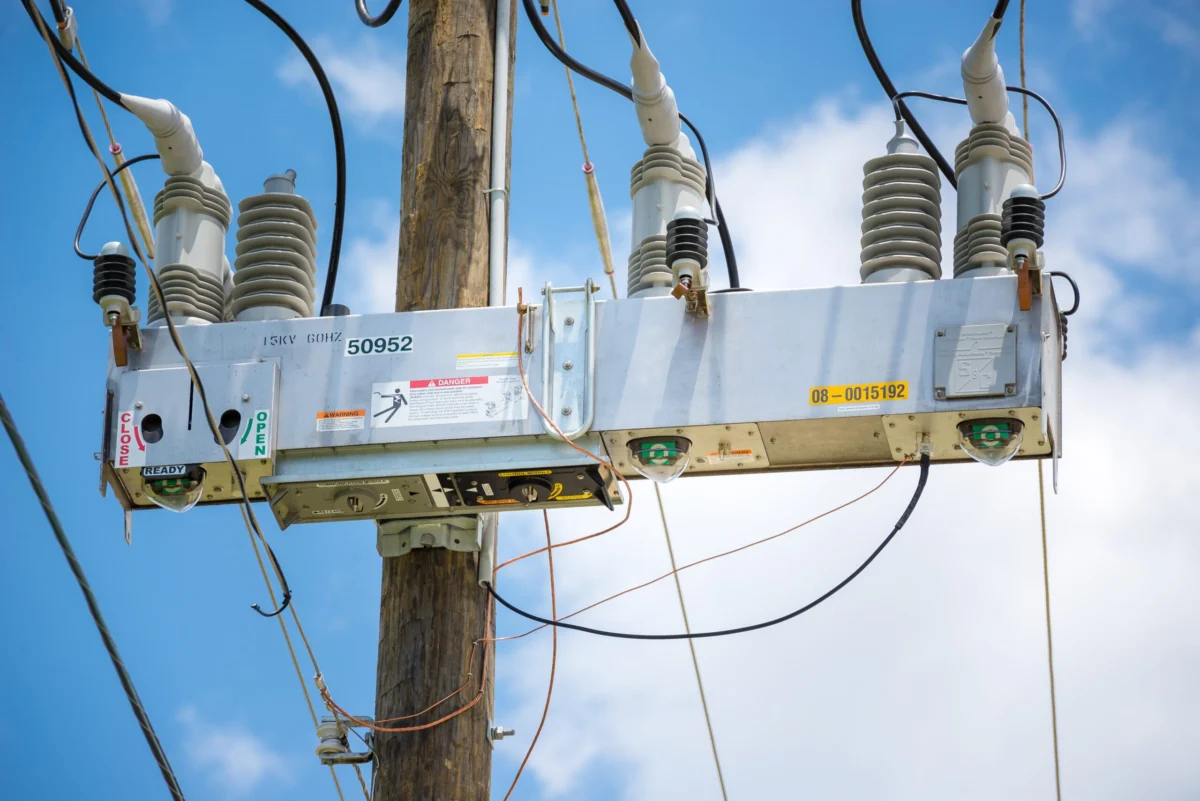
Modern solutions, such as the S&C IntelliRupter® PulseCloser® Fault Interrupter, are now being used to provide "unlimited segmentation." These devices use pulse-closing technology to test for faults without sending a high-current surge through the system, which protects equipment from unnecessary stress. Data from recent deployments in the Midwest highlights the efficacy of this technology. One utility reported a 32% improvement in its System Average Interruption Duration Index (SAIDI) after installing intelligent fault interrupters. This metric is a critical performance indicator for utilities, measuring the average outage duration for each customer served.
By retrofitting existing feeders with intelligent switches and reclosers, utilities can achieve a "self-healing" feeder. When a fault is detected, the devices communicate with one another to determine the fault’s location, open the necessary switches to isolate it, and close other switches to restore power from an alternate source—all within seconds.
The Mid-Stream Layer: Lateral Lines and Neighborhoods
Moving downstream from the main feeders, the second layer of resilience focuses on single-phase lateral lines. These are the lines that extend into residential neighborhoods and rural areas. Historically, these lines have been protected by conventional fuses. When a squirrel touches a line or a tree limb brushes against a wire, the fuse blows, and the entire neighborhood loses power until a utility truck arrives to replace it.
Statistics show that up to 80% of faults on overhead distribution lines are temporary. This means that if the power were simply turned off and then back on, the fault would be gone. This is where devices like the TripSaver® Single-Phase Recloser come into play. Acting as an electronic, self-resetting fuse, these reclosers can detect a fault, open to clear it, and then reclose to restore power.

The impact on customer experience is profound. What would have been a two-hour outage becomes a "momentary blink." For the utility, the benefits are equally significant; it eliminates the need for a "truck roll," saving thousands of dollars in operational costs per incident. The latest iterations of this technology, such as the TripSaver FXR, offer higher ratings and modular designs, allowing utilities to apply this automation to a wider variety of environmental and load conditions.
The Downstream Layer: Underground and Grid Edge
The final layer of resilience addresses the growing trend of undergrounding distribution lines. While underground lines are protected from wind and ice, they are susceptible to equipment failure, flooding, and accidental excavation. Furthermore, finding a fault underground is significantly more difficult and time-consuming than finding one on an overhead pole.
To address this, utilities are deploying automated, self-healing solutions designed specifically for underground environments. Systems like the S&C EdgeRestore® allow for the same level of rapid isolation and restoration seen on overhead lines. This ensures that even in densely populated urban areas where overhead lines are not an option, the grid remains resilient.
Strategic Implementation and Economic Implications
One of the most significant barriers to grid modernization has historically been the cost. A "rip-and-replace" approach, where old infrastructure is completely torn out and replaced with new equipment, is financially unfeasible for most utilities. However, the layered resilience model allows for an incremental, step-by-step upgrade.

By making strategic, targeted investments in automation, utilities can modernize their grids at a fraction of the cost of total replacement. This approach protects existing investments while delivering immediate improvements in reliability. Furthermore, many modern automated devices are designed with "plug-and-play" setups and familiar interfaces, ensuring that field crews can transition to new technology without extensive retraining.
The economic implications of these upgrades extend beyond the utility’s balance sheet. According to research from the Department of Energy, power outages cost the U.S. economy approximately $150 billion annually in lost productivity, spoiled goods, and damaged equipment. By reducing the frequency and duration of these outages through layered resilience, utilities are providing a direct economic benefit to their communities.
Future Outlook: The Interoperable Grid
As the industry moves toward 2030 and beyond, the focus will likely shift toward the integration of artificial intelligence (AI) and machine learning within these layers of resilience. Future devices will not only respond to faults but will also be able to predict them based on weather patterns, equipment age, and historical data.
The 2026 IEEE PES conference demonstrated that the technology required to build a resilient, automated grid already exists. The challenge now lies in deployment and the willingness of regulatory bodies to support these proactive investments. As one utility executive noted during a panel session in Chicago, "Resiliency in multiple layers is the only way it works at scale."

By embracing this layered approach, utilities are not just fixing today’s problems; they are building a foundation for a future where the grid is more agile, more reliable, and better equipped to handle the complexities of the 21st-century energy landscape. The transition from a reactive to a proactive, layered system of resilience is no longer a luxury—it is a necessity for the continued stability of the modern world.
