

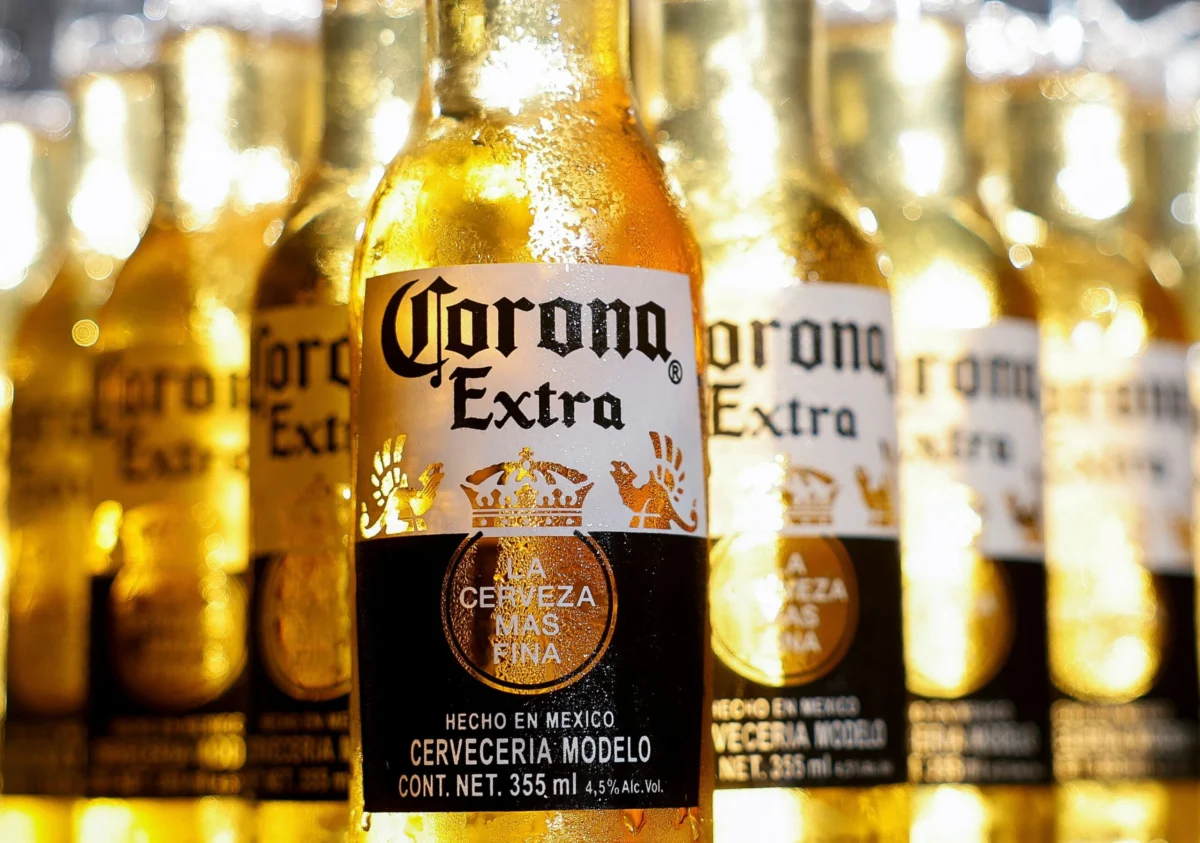
Constellation Brands, a dominant force in the alcoholic beverage industry, announced robust fiscal second-quarter results, surpassing Wall Street’s expectations for both earnings and revenue. The company, known for its leading beer brands like Modelo Especial, Corona, and Pacifico, reported adjusted earnings of $3.74 per share on $2.63 billion in revenue, outperforming analyst consensus estimates of $3.56 and $2.54 billion, respectively. This strong financial performance underscores the company’s ability to gain market share even as it grapples with a challenging economic landscape marked by persistent consumer caution and elevated costs. However, beneath the headline figures, the company’s executives detailed a nuanced market environment, prompting strategic shifts focused on occasion-based consumption and significant diversification into the rapidly expanding ready-to-drink (RTD) spirits segment.
The financial disclosure, made on Tuesday, was followed by a comprehensive earnings call on Wednesday where company leadership elaborated on the factors contributing to their success and outlined their strategic responses to evolving market dynamics. While beer revenue saw a healthy 5% increase to approximately $2.47 billion, accompanied by a 5.5% rise in beer shipments, a critical metric – beer depletions – showed a slight decline during the quarter. Depletions, which measure sales from distributors to retailers and ultimately to consumers, offer a more direct indication of end-user demand compared to shipments. This subtle dip signaled a softening in consumer demand, suggesting that shipment growth was partly driven by the rebuilding of distributor inventory levels rather than solely by surging consumer purchases.
Navigating a Complex Market Landscape: Inventory and Consumer Sentiment
Nicholas Fink, CEO of Constellation Brands, addressed the depletion figures directly during the earnings call, acknowledging the company’s efforts in the first half of the fiscal year to replenish distributor inventories. "We have spent much of the first half rebuilding distributor inventory levels," Fink stated, indicating a strategic move to ensure product availability across channels. He expressed optimism regarding recent trends, noting, "While there is always going to be month-to-month variability, September depletions are trending in the right direction." This forward-looking statement suggested a potential stabilization or recovery in consumer purchasing patterns as the quarter drew to a close.
The broader backdrop for beer sellers across the United States remains challenging. Data from Nielsen for the two weeks ending September 19 revealed a 1.8% year-over-year decline in U.S. beer sales, underscoring a prevailing industry-wide struggle. This decline is attributed to a confluence of factors, including inflationary pressures on household budgets, shifting consumer preferences towards other alcohol categories, and a general tightening of discretionary spending. Despite this industry headwind, Fink highlighted that Constellation’s September beer depletions showed improvement, even beyond the benefit of a later Labor Day holiday, suggesting a broad-based recovery across various retail channels. He emphasized widespread consumer engagement with the category, indicating that while overall sales might be down, Constellation’s brands are retaining their appeal.
Economic Pressures and Strategic Adjustments
Analysts closely monitoring Constellation Brands have pointed to macroeconomic factors as key influencers of the company’s performance. Bill Kirk, an analyst at Roth Capital, commented on the impact of elevated energy costs: "Progress [for Constellation] had accelerated to start 2026, but has been derailed by higher fuel costs." Kirk, who maintains a "buy" rating on the stock with a $209 price target (significantly above the approximate $116 per share price as of Wednesday), nevertheless affirmed Constellation’s continued progress against its fiscal 2027 plan. The sentiment reflects a recognition that while external economic pressures present hurdles, the company’s underlying strategy and execution remain sound.
The impact of high food and fuel prices has reshaped consumer shopping habits, making shoppers more "choosy" and value-conscious. Constellation Brands has responded by observing and adapting to these shifts. Fink noted a particular strength in club stores, which have become favored destinations for cash-strapped shoppers seeking deals on groceries and other household essentials, including alcoholic beverages. In response, the company is actively working to better tailor its product and pack sizes across different retail channels. This granular approach acknowledges that consumers make diverse purchasing decisions based on their shopping environment and the specific occasion, ranging from large-format party packs for gatherings to smaller, more convenient options for everyday consumption.
This focus on specific occasions extends to younger demographics, where purchasing patterns are increasingly driven by moments rather than routine. Fink explained that consumers are increasingly buying beer for particular events rather than treating it as a default purchase. To capitalize on this trend, Constellation is strategically investing in activations around sports, music festivals, beach events, and other social occasions, aiming to integrate its brands seamlessly into consumers’ lifestyles and drive sales through experiential marketing.
Pricing Strategy and Demographic Sensitivity
In light of widespread consumer caution around spending, Constellation Brands has adopted a deliberate and selective pricing strategy. Garth Hankinson, the company’s Chief Financial Officer, elaborated on this approach, stating that price increases have been kept at the low end of the company’s usual range. This conservative stance is a direct response to the "macroeconomic backdrop and the impact that that’s having on our consumer." Hankinson articulated the rationale behind this strategy, emphasizing that it is "much more cost-effective to retain your consumers than it is to try to regain your consumers." This long-term view prioritizes customer loyalty and market share stability over short-term revenue gains from aggressive price hikes.
This price sensitivity is particularly crucial for Constellation Brands due to its significant reliance on Hispanic shoppers. Company data indicates that approximately 40% of spending on Constellation’s beer brands comes from Hispanic consumers, a disproportionately high figure compared to roughly 15% for the overall beer category. This demographic segment has faced exacerbated economic concerns, including pressures on the labor market and household finances. Previous analyses by CNBC and other outlets have linked these challenges, in part, to broader economic conditions and specific policy impacts, such as those stemming from President Donald Trump’s policy of mass deportation, which can create uncertainty and financial strain within communities. Constellation Brands has previously acknowledged that beer demand has been weaker in areas with larger Hispanic populations, though it has also noted improving trends in some specific markets as economic conditions evolve. The company’s nuanced approach to pricing and product offerings reflects a deep understanding of its core consumer base and the unique economic pressures they face.
Diversification into Canned Spirits: The SpikedAde Acquisition
Beyond its core beer business, Constellation Brands is making strategic moves to diversify its portfolio and tap into burgeoning growth categories. The company announced on Tuesday its intention to acquire SpikedAde, a spirit-based ready-to-drink (RTD) beverage brand. The deal involves an upfront payment of $75 million, with potential additional payments of up to $278 million contingent on future performance milestones. This acquisition marks a significant foray for Constellation into a segment that has garnered increasing consumer interest and seen explosive growth.
CEO Nicholas Fink underscored the strategic importance of the acquisition, stating that it allows the company to "remain relevant to our consumers and to our customers." He also highlighted that distributors have actively urged Constellation to expand into growing categories beyond traditional beer, signaling a broader industry shift and demand for diversified offerings. The RTD segment, particularly spirit-based options, has emerged as a key area of growth in the alcoholic beverage market.
Analysts have largely welcomed the move. Michael Lavery, an analyst at Piper Sandler, described the acquisition as "attractive," noting that it grants Constellation "exposure to the fast-growing RTD subcategory." Lavery also drew parallels to the success of Stateside Vodka’s competing Super Lyte brand, which has experienced a "very strong start" on the East Coast, underscoring the market potential for such products. Lavery currently holds a "neutral" rating on Constellation’s stock with a $161 price target.
The market for premixed cocktails, including spirits-based RTDs, has shown remarkable expansion. According to the Distilled Spirits Council of the United States (DISCUS), sales in this category grew by a robust 16.4% in 2025, reaching an impressive $3.8 billion. This makes RTDs the spirits industry’s strongest growth category, driven by consumer demand for convenience, variety, and lower-calorie options. While Fink affirmed that beer will undoubtedly remain the company’s primary source of value creation, he characterized SpikedAde as a "long, wide-open runway" for Constellation to leverage its formidable brand-building expertise and extensive distribution capabilities. This strategic move positions Constellation Brands to capitalize on evolving consumer preferences and secure future growth avenues beyond its traditional strongholds.
Broader Industry Context and Future Implications
Constellation Brands’ Q2 performance and strategic maneuvers are set against a backdrop of dynamic shifts within the broader alcoholic beverage industry. The market has witnessed an ongoing evolution in consumer tastes, moving from the craft beer boom to the rise of hard seltzers, and now increasingly towards premium spirits and convenient RTD formats. Inflationary pressures have also led to a bifurcation in consumer spending, with some consumers trading down to value options while others continue to seek premium experiences, particularly for "special occasions."
The company’s dual strategy of fortifying its core beer brands while venturing into high-growth segments like RTD spirits reflects a comprehensive approach to market resilience. By focusing on retaining its existing consumer base through careful pricing and tailored offerings, especially within its significant Hispanic demographic, Constellation aims to protect its dominant market share in beer. Simultaneously, the SpikedAde acquisition positions it to capture new growth opportunities and diversify its revenue streams, mitigating risks associated with potential stagnation in mature categories.
The long-term implications of these strategies are significant. For Constellation, success hinges on its ability to effectively integrate new brands like SpikedAde into its distribution network and leverage its marketing prowess to resonate with new consumer cohorts. For investors, the company presents a compelling case for growth, balancing the stability of its established beer portfolio with the high-growth potential of emerging categories. As macroeconomic conditions continue to evolve, Constellation Brands’ proactive adaptation and strategic diversification appear to be crucial elements in its pursuit of sustained leadership within the competitive alcoholic beverage market. The company’s ability to navigate current economic headwinds while strategically investing in future growth areas will be a key determinant of its trajectory in the coming years.
