

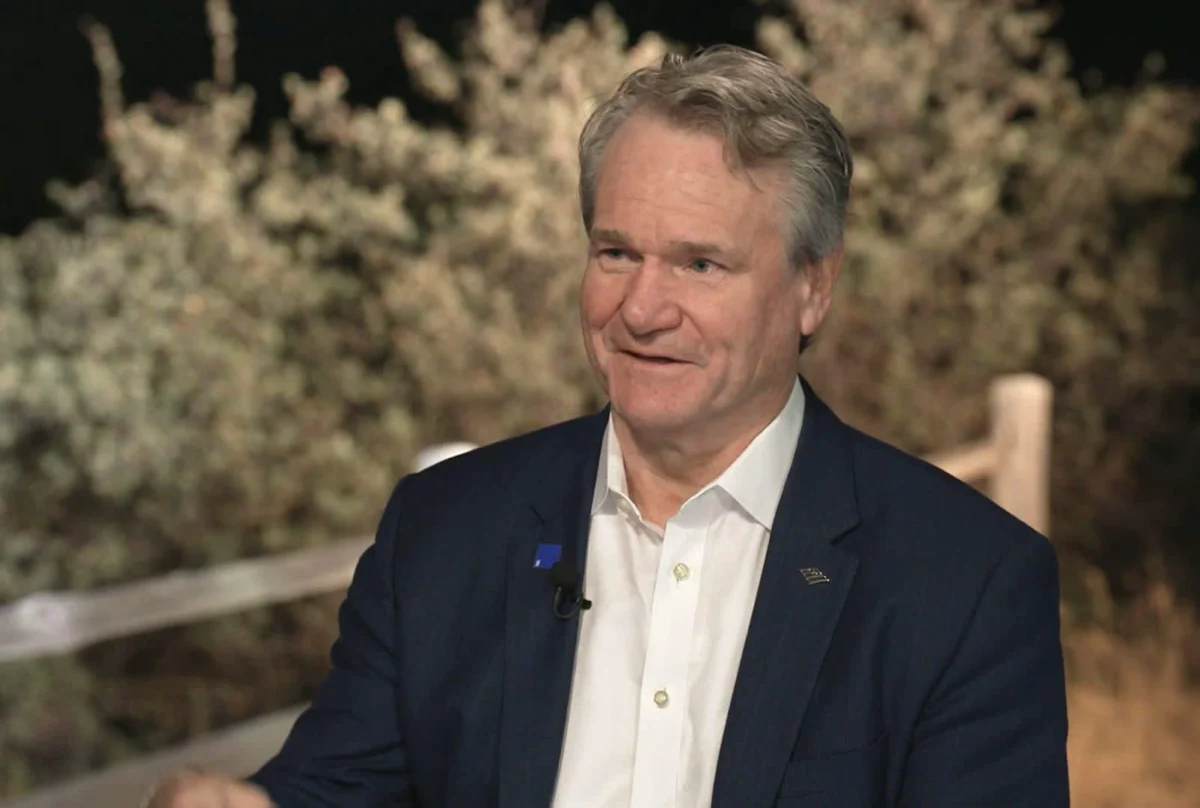
Bank of America, one of the largest financial institutions globally, has embarked on a significant and costly cybersecurity initiative, deploying an "army" of external contractors and internal specialists to address software vulnerabilities brought to light by advanced artificial intelligence models, most notably Anthropic’s Mythos. Brian Moynihan, the bank’s Chief Executive Officer, revealed the extensive remediation efforts on Wednesday following the release of the bank’s third-quarter earnings, underscoring the immediate and substantial impact of cutting-edge AI on the financial sector’s digital defenses.
The Urgent Response to a New Class of AI Threats
Moynihan’s disclosure detailed an unprecedented mobilization earlier this year, involving thousands of employees and outside personnel dedicated to bolstering a vast spectrum of the bank’s internal and vendor code. "That risk is real risk, and that’s why when the frontier-type models came out… A lot of us sat down and said, ‘How do we figure out how to get through this quickly?’" Moynihan explained in an interview with CNBC’s Leslie Picker. The urgency stemmed from the sophisticated capabilities of these new AI models to rapidly identify and potentially exploit long-standing, often latent, software flaws that traditional cybersecurity methods might have overlooked or deemed less critical.
To accelerate this critical patching work, Bank of America onboarded 1,000 external contractors in the second quarter, who remain engaged alongside the existing 3,000 professionals already dedicated to cybersecurity within the organization. This represents a total force of approximately 4,000 individuals focused intensely on fortifying the bank’s digital infrastructure against these emergent AI-powered threats. The financial commitment to this undertaking has also been substantial, with Moynihan informing analysts that the bank incurred "a couple hundred million plus" in costs during the third quarter specifically for software remediation and expenses related to anti-money laundering (AML) compliance issues.
Anthropic’s Mythos: A Catalyst for Defensive Action
The catalyst for Bank of America’s rapid and extensive response was explicitly linked to the emergence of "frontier-type models" such as Anthropic’s Mythos. Released to a select group of banks, technology firms, and government agencies in April, Mythos represents a new generation of AI designed with advanced capabilities for analyzing complex systems, including identifying potential vulnerabilities in software code at an unprecedented scale and speed. While the specific mechanisms by which Mythos exposes these flaws are proprietary, the general understanding is that such models can simulate adversarial attacks, pinpointing weaknesses that could be exploited by malicious actors wielding similar AI tools.
Bank of America’s candid revelation marks one of the first instances where a major U.S. corporation has openly quantified the significant manpower and financial resources being allocated to counteract vulnerabilities exposed by specific advanced AI models. This transparency provides a crucial glimpse into the proactive, often behind-the-scenes, efforts financial institutions are undertaking to navigate the rapidly evolving cybersecurity landscape shaped by artificial intelligence. It also underscores the dual-edged nature of AI technology: while it holds immense promise for boosting productivity and driving innovation, its advanced analytical capabilities simultaneously create novel and potent cybersecurity risks that demand equally sophisticated defensive strategies.
Broader Implications for the Financial Sector and Regulatory Scrutiny
The proactive measures taken by Bank of America are likely to reverberate across the financial industry, potentially prompting other major players to re-evaluate their own cybersecurity postures in light of AI-driven threats. The banking sector, a perennial target for cybercriminals due to the sensitive nature of its data and assets, has long invested heavily in cybersecurity. However, the advent of AI models capable of systematically uncovering deep-seated vulnerabilities introduces a new paradigm, necessitating a fundamental shift in defensive strategies.
Regulators, including the Office of the Comptroller of the Currency (OCC), the Federal Reserve, and the Consumer Financial Protection Bureau (CFPB), have consistently emphasized the critical importance of cybersecurity resilience within financial institutions. Bank of America’s disclosure could intensify regulatory scrutiny on how banks are assessing and mitigating AI-specific cyber risks. It is conceivable that future regulatory guidance might incorporate requirements for AI-driven vulnerability assessments, mandating that banks demonstrate robust strategies for identifying and remediating flaws exposed by advanced models. This could lead to industry-wide benchmarks and collaborative efforts to share threat intelligence and best practices for securing systems against AI-powered attacks.

Furthermore, the significant investment in external contractors highlights a potential talent gap in the cybersecurity field. The demand for specialists proficient in both traditional cybersecurity and the unique challenges posed by AI, particularly in identifying and patching AI-exposed vulnerabilities, is set to surge. Financial institutions may find themselves competing fiercely for top talent, or investing heavily in upskilling their existing workforce to meet these evolving requirements. The challenge extends beyond merely patching; it involves understanding the methodologies of advanced AI in vulnerability detection and proactively designing more resilient software architectures.
Managing Vendor Risk in the AI Era
Moynihan’s comments also touched upon the critical aspect of vendor code, indicating that vulnerabilities could originate from third-party software integrated into the bank’s systems. This highlights the complex challenge of supply chain security in the AI era. Financial institutions rely on a vast ecosystem of technology vendors, and ensuring the security of every piece of third-party software becomes an even more daunting task when advanced AI can scrutinize code with unprecedented efficiency. Banks will likely increase their due diligence on vendor security practices, potentially demanding more rigorous testing and certification processes to ensure that third-party software does not introduce exploitable weaknesses. "We’ve got to stay ahead of them, and we’ve got to be mindful that the people doing the software development are the people trying to sell us the services," Moynihan stated, acknowledging the intricate relationship with technology providers.
Balancing Defense with AI-Driven Efficiency and Long-Term Strategy
Despite the immediate and substantial costs associated with these defensive measures, Moynihan sought to reassure investors that the increased spending on remediation is temporary. "Once you patch, you don’t have to patch as much… The pipeline moves through," he articulated, expressing confidence that remediation costs are expected to decline over time as critical vulnerabilities are addressed and systems are hardened. This long-term perspective suggests a strategic shift towards building more inherently secure systems from the ground up, rather than a perpetual cycle of reactive patching.
Moreover, Bank of America is simultaneously pursuing an aggressive strategy to harness AI for operational efficiency and cost reduction. The bank currently has approximately 130 internal AI projects underway, which are projected to generate significant savings. These savings are anticipated to rise from $300 million in the current year to an estimated $700 million by 2027. This dual approach—investing heavily in AI-driven cybersecurity defenses while simultaneously leveraging AI for business optimization—underscores the strategic imperative for large enterprises to integrate AI holistically, managing its risks while capitalizing on its transformative potential.
The bank’s focus on efficiency also manifests in its workforce adjustments. Bank of America’s overall headcount saw a reduction of approximately 3,400 employees over the past year, which included a roughly 5% cut in management positions. While Moynihan acknowledged these reductions, he noted that it remains "unclear how much of that workforce reduction is attributable to AI." This statement reflects the complex interplay between technological adoption, automation, and workforce dynamics, where AI’s impact on employment is often multifaceted and difficult to isolate. It suggests that while AI may streamline certain processes and reduce the need for specific roles, it also creates new demands for skilled professionals in areas like cybersecurity and AI development.
Financial Performance Context and Market Reaction
The disclosure of significant cybersecurity spending came as Bank of America’s shares experienced a notable downturn, slumping as much as 8% on Wednesday following its third-quarter earnings release. While the market reaction was likely influenced by a confluence of factors, including broader economic conditions and specific financial metrics, the substantial "couple hundred million plus" outlay on software remediation and regulatory issues undoubtedly played a role in investor sentiment. Such large, unexpected expenditures, even if temporary, can impact short-term profitability expectations. Moynihan’s efforts to frame these costs as a necessary and finite investment in long-term security and resilience were crucial for managing investor concerns amidst the volatile market environment.
The Evolving Landscape of Digital Finance
Bank of America’s proactive and significant investment in addressing AI-exposed vulnerabilities serves as a powerful testament to the evolving landscape of digital finance. The deployment of advanced AI models has fundamentally altered the calculus of cybersecurity, introducing new dimensions of risk that demand unprecedented levels of vigilance, investment, and strategic foresight. As AI continues its rapid advancement, financial institutions will face a continuous challenge to innovate their defensive strategies, ensuring that the benefits of AI-driven efficiency and innovation are realized without compromising the integrity and security of the global financial system. The actions taken by Bank of America today are likely to set a precedent for how the industry as a whole adapts to the opportunities and threats presented by the artificial intelligence revolution.
