

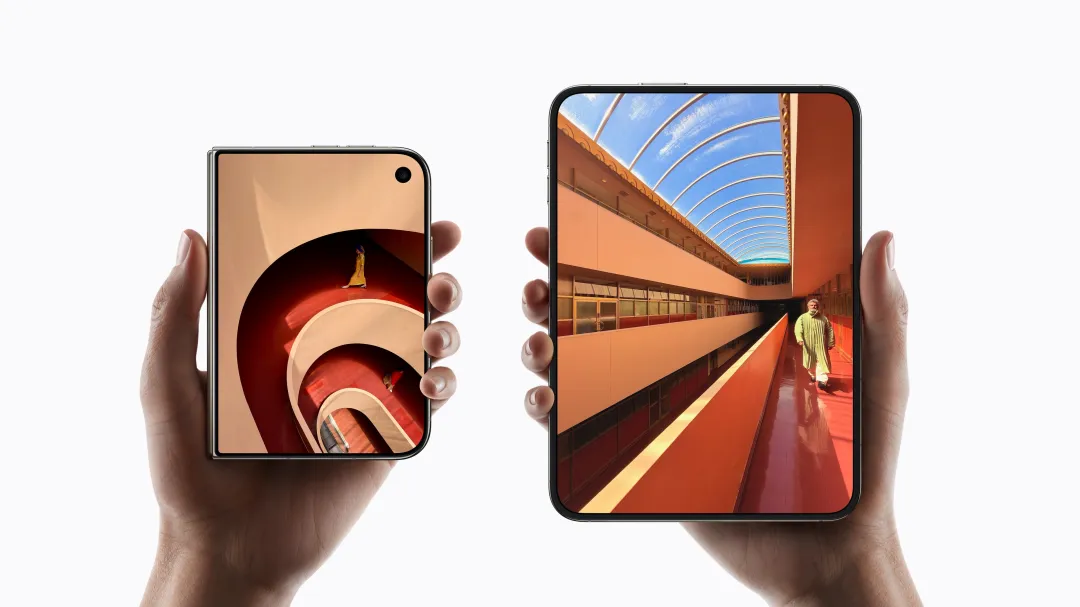
Apple’s revolutionary iPhone Duo, the company’s inaugural foray into the foldable smartphone segment, has rapidly established itself as a monumental success since its unveiling. Launched to considerable fanfare and anticipation, the device has swiftly surpassed market expectations, leading to unprecedented consumer demand that has significantly outstripped Apple’s initial production capabilities. As of mid-November 2026, the iPhone Duo remains a highly sought-after commodity, with Apple acknowledging persistent supply constraints and indicating challenges in predicting when these will fully resolve. This overwhelming popularity, while a testament to Apple’s brand power and the allure of its innovative design, simultaneously introduces a distinct set of user experience adjustments, particularly concerning the device’s unique interaction methods, including the reintroduction of Touch ID for authentication, a reimagined interface for its dual-screen display, and novel photographic functionalities. Early adopters and technology reviewers have quickly identified a series of optimal settings and usage patterns that can significantly enhance the everyday usability of this groundbreaking device, easing the transition for users accustomed to traditional iPhone models.
A New Chapter for Apple: The Genesis of the iPhone Duo
The journey to the iPhone Duo has been a protracted one, marked by years of intense industry speculation and a multitude of patent filings hinting at Apple’s eventual entry into the foldable arena. For nearly a decade, whispers of an "iPhone Fold" or "iPhone Flip" have circulated, with analysts and enthusiasts meticulously dissecting every patent application and supply chain rumor. Apple, known for its deliberate and often cautious approach to new product categories, notably allowed competitors like Samsung, Huawei, and Google to pioneer and iterate within the foldable market before making its definitive move. This strategic delay afforded Apple the opportunity to observe market trends, learn from early design and durability challenges faced by rivals, and refine its own vision for a premium foldable experience.
The official announcement of the iPhone Duo on September 9, 2026, during a highly anticipated keynote event, marked a pivotal moment for the smartphone industry. Tim Cook, Apple’s CEO, introduced the device as a "leap forward in personal technology," emphasizing its seamless integration of two high-resolution displays into a single, compact form factor that unfolds to reveal an expansive canvas. Initial reviews lauded the Duo’s robust hinge mechanism, the vibrant clarity of its flexible OLED displays, and Apple’s characteristically polished software integration, which intelligently adapted iOS to the new hardware. The device quickly garnered praise for its premium build quality and the innovative ways it leveraged its foldable design for enhanced productivity and entertainment.
Following its initial release in late September, the iPhone Duo experienced immediate and overwhelming demand. Online storefronts reported rapid sell-outs within minutes of availability, and physical Apple Stores saw queues reminiscent of classic iPhone launches. This robust performance continued into October, with supply chain analysts reporting that production was struggling to keep pace with global appetite. Apple’s subsequent earnings call, referenced in early November, confirmed these challenges, with executives attributing the bottlenecks to the complexity of manufacturing the Duo’s bespoke components, particularly its advanced flexible display panels and intricate hinge system. This scenario, while frustrating for consumers, underscored the immense market validation for Apple’s foldable vision.

Navigating the Shift: The Return of Touch ID
One of the most significant departures from recent iPhone design, and consequently a primary point of user adaptation, is the iPhone Duo’s reliance on Touch ID rather than the familiar Face ID for biometric authentication. Modern iPhones have exclusively featured Face ID since its introduction with the iPhone X in 2017, leading to a decade of users being accustomed to effortless, glance-based unlocking. The return to a physical fingerprint sensor, integrated into the device’s side power button, necessitates a conscious adjustment for many.
Apple’s decision to re-embrace Touch ID for the Duo is largely attributed to the engineering complexities inherent in foldable designs. Integrating the sophisticated TrueDepth camera system required for Face ID into a flexible display or within the confines of a foldable chassis presents significant challenges related to durability, space, and optical alignment. While future iterations of foldable technology may eventually accommodate Face ID, Apple’s initial approach prioritizes a robust and reliable user experience for its debut foldable. This choice, while practical from an engineering standpoint, requires users to re-learn the habit of physically placing a finger on the sensor for unlocking, authenticating app purchases, and authorizing Apple Pay transactions.
To ease this transition and optimize the Touch ID experience on the iPhone Duo, several adjustments are highly recommended:
- Register Multiple Fingerprints: Unlike traditional iPhones where users might only register their primary thumb, the Duo’s versatile form factor means it can be held in various orientations – folded, unfolded, or in "tent mode." Registering fingerprints from both thumbs and potentially both index fingers allows for more natural and ergonomic unlocking regardless of how the device is being held. Furthermore, consider registering each finger twice, at slightly different angles, to improve recognition accuracy. This redundancy can significantly reduce failed authentication attempts.
- Practice Finger Placement: The side-mounted Touch ID sensor requires precise placement. Users should consciously practice positioning their registered fingers squarely over the sensor until it becomes second nature. Adjusting grip subtly to ensure full contact can make a substantial difference in the speed and reliability of unlocks.
- Enable "Rest Finger to Open": Within the Accessibility settings, ensuring "Rest Finger to Open" is activated (Settings > Accessibility > Touch > Home Button, though the Duo doesn’t have a traditional Home Button, this setting applies to the Touch ID sensor) can streamline the unlocking process. With this feature enabled, a gentle rest of the registered finger on the sensor will unlock the device without needing to fully press the power button, mimicking the more passive interaction of Face ID.
- Review Touch ID & Passcode Settings: Regularly review the "Touch ID & Passcode" section in Settings to ensure all desired functions are enabled for Touch ID, such as "iPhone Unlock," "Apple Pay," and "iTunes & App Store." Familiarizing oneself with these options ensures a comprehensive and secure integration of Touch ID into daily usage.
- Security Best Practices: Reinforce good security habits by ensuring a strong passcode is set as a fallback and understanding that Touch ID, while convenient, should always be paired with a robust alphanumeric passcode for maximum security.
Usability Enhancements: Mastering the Dual-Screen Interface
The iPhone Duo’s foldable design fundamentally redefines how users interact with iOS. The transition between its compact, folded state and its expansive, unfolded tablet-like display introduces new paradigms for multitasking, navigation, and content consumption. While iOS is renowned for its intuitive interface, the Duo’s unique form factor necessitates a learning curve to fully exploit its potential.
Apple has meticulously engineered iOS to adapt dynamically to the Duo’s various states, offering seamless app continuity as the device folds and unfolds. Features like Split View, which allows two apps to run side-by-side on the larger screen, and an enhanced version of Stage Manager, optimized for the expansive display, transform the Duo into a highly capable productivity tool. However, optimizing these features requires proactive configuration:

- Display Zoom and Text Size Optimization: The ability to switch between a smaller outer screen and a larger inner screen means display preferences should be carefully considered. Users can adjust "Display Zoom" (Settings > Display & Brightness > Display Zoom) to "More Space" on the larger display to fit more content, or "Standard" for a larger, more readable interface. Similarly, "Text Size" (Settings > Display & Brightness > Text Size) should be calibrated for comfortable viewing across both screen sizes, potentially favoring a slightly smaller default for the unfolded view to maximize screen real estate.
- Customizing the Dock and Home Screen Layouts: The Duo’s ability to switch between different screen sizes offers unique opportunities for Home Screen customization. Users can create distinct Home Screen layouts for the folded and unfolded modes, prioritizing essential apps on the smaller screen and productivity suites or entertainment apps on the larger canvas. The Dock can also be optimized to hold more apps when unfolded, providing quick access to frequently used tools.
- Enhanced Gesture Controls: Apple has introduced new gesture controls specific to the iPhone Duo to facilitate navigation across its dual screens. These include gestures for quickly sending an app from one screen to another, invoking Split View, or seamlessly switching between single-app and multi-app modes. Spending time in the "Tips" app or reviewing Apple’s official documentation for the Duo can unlock these powerful shortcuts, dramatically improving workflow efficiency.
- Reachability for Large Displays: Even with its foldable nature, the unfolded Duo presents a large screen that can be challenging to navigate one-handed. Enabling "Reachability" (Settings > Accessibility > Touch > Reachability) allows users to pull the top half of the screen down with a simple swipe gesture, making it easier to access elements without adjusting grip. This feature is particularly valuable when using the Duo in its fully unfolded, tablet-like configuration.
- AssistiveTouch for Quick Actions: For users who desire even greater control or have specific accessibility needs, "AssistiveTouch" (Settings > Accessibility > Touch > AssistiveTouch) can be customized to create on-screen shortcuts for common actions like taking screenshots, invoking Siri, or accessing the Control Center, all without stretching across the large display.
- Optimizing Dynamic Island Behavior: The Dynamic Island, a feature introduced in recent flagship iPhones, adapts intelligently to the Duo’s display. Users should observe how the Dynamic Island behaves in both folded and unfolded states, particularly with multitasking activities. While its core functionality remains, its visual presentation and interactive elements may subtly shift, requiring users to understand these nuances for optimal interaction.
Special Camera Tricks: Unlocking the Duo’s Photographic Potential
The iPhone Duo’s unique form factor isn’t just for productivity; it also opens up entirely new avenues for mobile photography and videography. The ability to partially fold the device allows for creative shooting angles and hands-free operation, transforming the iPhone into a versatile photographic tool unlike any predecessor.
- Flex Mode Photography: One of the most compelling camera features is the Duo’s "Flex Mode" (or "Tabletop Mode" as some users call it). By partially folding the device and setting it on a flat surface, the Duo acts as its own tripod, allowing for stable long-exposure shots, time-lapses, and hands-free video calls without additional accessories. The camera interface automatically adjusts, placing controls on the lower screen while the upper screen displays the viewfinder. This mode is revolutionary for capturing group shots, self-portraits, or stable video in challenging conditions.
- Cover Screen Preview for Subjects: The iPhone Duo ingeniously leverages its outer display to enhance portrait photography. When taking photos of others with the main camera, an option can be toggled to show a live preview on the cover screen, allowing subjects to see themselves and adjust their pose or expression. This feature, often found in high-end mirrorless cameras, dramatically improves the quality and spontaneity of people-centric photography.
- Enhanced Self-Portrait Capabilities: With the Duo, users can utilize the significantly more powerful main camera system for high-quality self-portraits and vlogging, rather than being limited to the less capable front-facing camera. By simply folding the device and using the cover screen as a viewfinder, users gain access to superior lenses and computational photography features, elevating the quality of their personal content.
- Advanced Camera Controls and Editing: The larger, unfolded screen provides a superior canvas for precise camera controls and post-capture editing. Apps like Halide or Apple’s native Photos app benefit immensely from the increased screen real estate, allowing for more granular adjustments to exposure, focus, and color grading. Reviewing captured photos and videos on the expansive display also provides a more immersive and critical viewing experience.
- Quick Capture Customization: Users can customize the side buttons (volume rockers) to act as quick capture triggers, especially useful when the device is folded or held in unusual orientations. Enabling burst mode (holding down the volume up button) or quickly switching between photo and video modes can ensure no moment is missed, regardless of the Duo’s configuration.
Broader Implications: Reshaping the Smartphone Landscape
The resounding success of the iPhone Duo marks a significant inflection point for both Apple and the broader smartphone industry. Apple’s entry into the foldable market, characterized by its signature blend of premium design and sophisticated software, has not only validated the category but also accelerated its mainstream adoption.
Industry analysts predict that the Duo’s performance will spur rival manufacturers to redouble their efforts in foldable innovation, potentially leading to a new wave of advanced, more durable, and competitively priced foldable devices. This intensified competition is likely to benefit consumers, driving faster technological advancements and a wider array of form factors. For Apple, the Duo represents more than just a new product; it’s a strategic expansion that diversifies its iPhone lineup and positions the company at the forefront of mobile innovation, attracting new demographics and reinforcing its premium market standing.
The supply chain challenges faced by Apple, while immediate hurdles, also highlight the complexities and nascent nature of foldable manufacturing. Over time, as production processes mature and economies of scale are achieved, these constraints are expected to ease. Apple’s
