

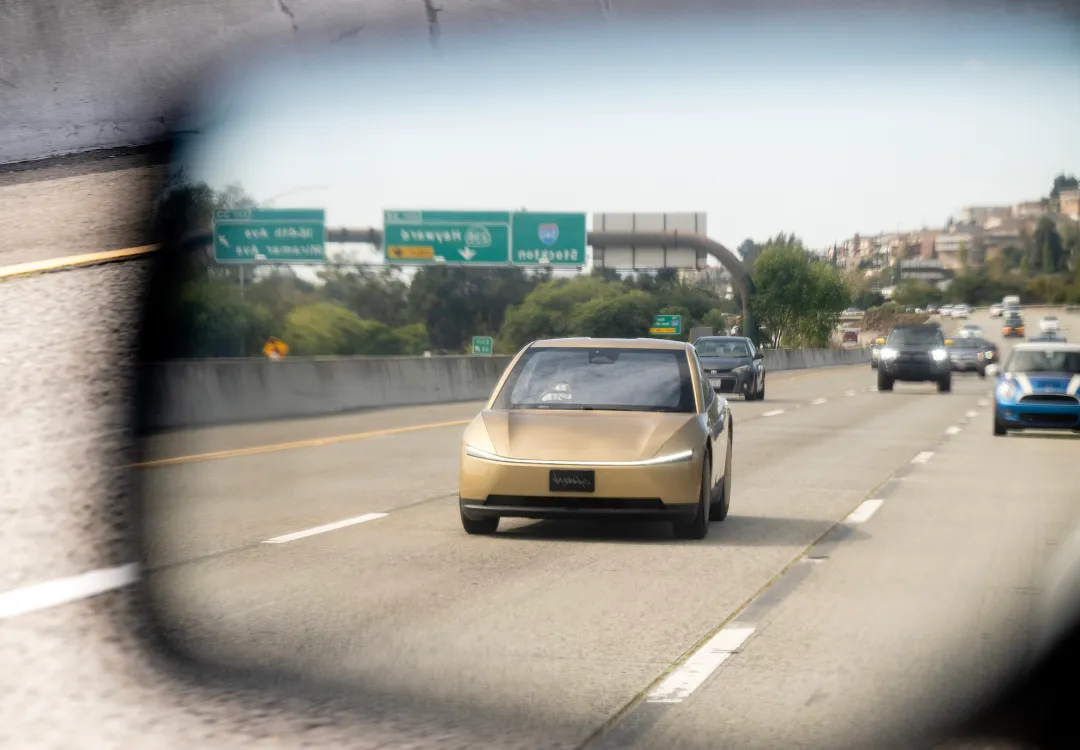
Tesla has officially announced the commencement of pre-orders for its autonomous "golden Cybercab" for "personal use," initially targeting "select customers" with a series of specific conditions that shed light on the company’s evolving strategy in the autonomous vehicle (AV) market. This move, communicated late Friday evening, marks a significant pivot for the electric vehicle giant, coming on the heels of its decision to cease Cybertruck production next year to reallocate resources towards Cybercab manufacturing.
The initial rollout of the Cybercab pre-order program revealed a detailed set of requirements and costs. Prospective buyers are presented with a purchase price of $29,990 for the autonomous vehicle. In addition to this upfront cost, owners will incur a monthly operational fee of $299. The initial availability is highly geographically restricted, with customers mandated to accept delivery in one of a handful of designated Texas cities. Furthermore, the Cybercab’s operation will be confined to specific geofenced areas within these locales, highlighting a cautious, phased deployment strategy. The estimated delivery timeline for these early adopters is December 2026. These crucial details were first brought to broader public attention by tech reviewer Marques Brownlee, who posted insights gleaned from the order page on social media.
Following Brownlee’s disclosure, Tesla CEO Elon Musk swiftly responded, providing further clarifications and indicating potential adjustments to the announced terms. Musk affirmed that the Cybercab "will be available nationwide, as we receive regulatory approval," suggesting that the initial geographic limitations are a temporary measure tied to current regulatory and operational readiness. More notably, Musk expressed dissatisfaction with the proposed $299 monthly fee, stating it was "too high" and should align more closely with the cost of Tesla’s Full Self-Driving (FSD) software and connectivity for other models, which he estimated to be "more like ~$115/month." This public re-evaluation by the CEO points to a dynamic pricing strategy and an ongoing assessment of market acceptability and revenue models for autonomous services.
Further details regarding the geofencing were provided by Ashok Elluswamy, Tesla’s Director of Autopilot Software. Elluswamy clarified that the Cybercab would function "unsupervised inside all the same geo locations as @robotaxi, just serving the owners’ needs." This statement underscores that the personal Cybercab leverages the same underlying autonomous technology and operational maps developed for Tesla’s broader Robotaxi network, differentiating it primarily by ownership model rather than core technological capability.
The Strategic Shift: From Cybertruck to Cybercab
The introduction of the Cybercab for personal ownership comes at a pivotal moment for Tesla, particularly in light of its recent announcement on November 6, 2026, that it would discontinue Cybertruck production in 2027. This decision, attributed to the Cybertruck "falling far short of projected sales," represents a significant strategic redirection. The additional factory capacity freed up by the cessation of Cybertruck manufacturing is slated to be repurposed for Cybercab production, signaling a clear prioritization of autonomous mobility solutions over niche electric truck segments.
This pivot is not merely a production adjustment but a profound reorientation of Tesla’s long-term vision. For years, Elon Musk has championed the concept of a vast network of autonomous Tesla vehicles operating as a "robotaxi" fleet, fundamentally reshaping urban transportation and car ownership. The Cybercab, whether owned personally or as part of a shared fleet, is a tangible step towards realizing this ambitious future. It suggests that Tesla is increasingly viewing itself not just as an automotive manufacturer but as a mobility-as-a-service provider, with autonomous technology at its core. The challenges faced by the Cybertruck, from production complexities to market reception, appear to have accelerated this strategic shift, pushing the company to double down on what it perceives as its most transformative offering.
A Decade of Autonomous Ambitions: Tesla’s FSD Journey
Tesla’s journey towards full autonomy has been marked by bold predictions, iterative development, and considerable public scrutiny. The company first introduced its Autopilot driver-assistance system in 2014, gradually expanding its capabilities. The "Full Self-Driving" (FSD) package, launched years later, promised Level 5 autonomy – where a vehicle can operate completely without human intervention under all conditions. However, FSD has remained a Level 2 advanced driver-assistance system (ADAS), requiring active driver supervision.
Musk famously predicted "a million robotaxis" on the road by 2020, a target that was not met. Despite these delays and the ongoing debate surrounding FSD’s capabilities and safety, Tesla has continued to invest heavily in its AI and vision-based autonomous technology. The FSD Beta program, which allows select owners to test advanced features on public roads, has generated vast amounts of real-world driving data, crucial for refining the system. The Cybercab’s emergence can be seen as the culmination of these years of development, moving beyond software upgrades for existing vehicles to a purpose-built autonomous platform. The integration of FSD with a dedicated autonomous vehicle like the Cybercab aims to minimize human interaction, moving closer to the long-promised truly driverless experience.

The Broader Autonomous Vehicle Landscape and Regulatory Hurdles
Tesla’s aggressive push into personal autonomous vehicles places it squarely in a competitive and complex landscape. Companies like Waymo (Google’s self-driving division) and Cruise (General Motors’ AV unit) have been operating limited robotaxi services in select cities for several years, albeit with significant safety drivers or strict geofencing. These companies typically deploy purpose-built autonomous vehicles equipped with lidar, radar, and camera arrays, often contrasting with Tesla’s camera-centric "vision-only" approach. The entry of a mass-market personal autonomous vehicle from Tesla could disrupt the current duopoly of ride-hailing focused AV companies and accelerate the broader adoption of autonomous technology.
Regulatory approval remains the most significant hurdle for widespread autonomous vehicle deployment. Different states and countries have varying legal frameworks and testing requirements for AVs. The National Highway Traffic Safety Administration (NHTSA) in the United States, along with state Departments of Motor Vehicles, plays a critical role in setting safety standards and issuing operational permits. Tesla’s plan for nationwide availability "as we receive regulatory approval" acknowledges this fragmented regulatory environment. Regulators typically focus on aspects such as collision avoidance, cybersecurity, human-machine interface, and the ability of the vehicle to operate safely in diverse weather and road conditions. The ongoing public debate about the safety record of ADAS systems, including Tesla’s Autopilot and FSD, means regulatory bodies are likely to exercise extreme caution before granting widespread approval for unsupervised autonomous vehicles. Liability in the event of an accident involving an autonomous vehicle is another complex legal area that needs clearer frameworks.
Market Implications and Economic Analysis
The Cybercab’s initial pricing and subscription model present an interesting economic proposition. A $29,990 purchase price, while substantial, is significantly lower than many premium EVs and could make personal autonomy more accessible. However, the $299 monthly operational fee, even if reduced to Musk’s suggested ~$115, adds a recurring cost similar to a car payment or a comprehensive insurance premium. This blended ownership model—part upfront purchase, part subscription for ongoing autonomous functionality—is a novel approach for a personal vehicle.
Should the monthly fee indeed drop to around $115, it would align more closely with Tesla’s FSD subscription for existing vehicles, which is currently around $199/month, or the connectivity package. This adjustment would likely enhance the Cybercab’s appeal and reduce the total cost of ownership over time, potentially accelerating adoption. The economic viability for consumers will depend on factors such as their annual mileage, the cost of alternative transportation (e.g., traditional car ownership, ride-hailing), and the perceived value of hands-free autonomous travel. For Tesla, a high-volume personal autonomous vehicle could generate significant recurring revenue streams, shifting its business model further towards software and services.
The decision to halt Cybertruck production and reallocate resources underscores Tesla’s commitment to maximizing its manufacturing capacity for its most strategic products. The Cybertruck, despite its polarizing design and initial hype, struggled with production ramp-up and market penetration, suggesting that its unique aesthetic and utility did not translate into the anticipated sales volumes. By pivoting to the Cybercab, Tesla is making a clear statement about where it believes the future of transportation and its own core business lies: in mass-market autonomous mobility. This move could also free up engineering talent and capital, allowing Tesla to focus its innovation efforts more intensely on AI and robotics.
Potential Societal and Urban Impact
The widespread adoption of personal autonomous vehicles like the Cybercab could have profound societal and urban impacts. On an individual level, it promises to revolutionize personal mobility, offering convenience, increased productivity during commutes, and potentially greater accessibility for those unable to drive. For cities, it could lead to reduced traffic congestion (if vehicles are optimized for flow), fewer parking requirements (if vehicles can self-park remotely or become part of shared fleets when not in use), and potentially a reduction in traffic accidents attributed to human error.
However, challenges remain. The "golden" aesthetic of the Cybercab, reminiscent of the Cybertruck, suggests a distinctive design that may not appeal to all. Furthermore, the concept of a personal autonomous vehicle also raises questions about the future of car ownership versus mobility-as-a-service. If Cybercabs are designed for personal use but also have the capability to operate autonomously as part of a ride-hailing network when not needed by their owner, it could create a hybrid model that blurs the lines between private and public transportation. This could lead to a more efficient utilization of vehicle assets, but also complex logistical and regulatory challenges.
Beyond urban planning, the ethical implications of autonomous vehicles are still being debated, particularly concerning accident responsibility, data privacy, and the potential for job displacement in sectors like trucking and ride-hailing. Tesla’s move to offer personal Cybercabs will undoubtedly intensify these discussions, pushing regulators, policymakers, and society at large to confront the realities of a truly autonomous future. The December 2026 delivery timeline and the phased rollout represent the initial steps in what promises to be a long and transformative journey for Tesla and the broader transportation industry.
