

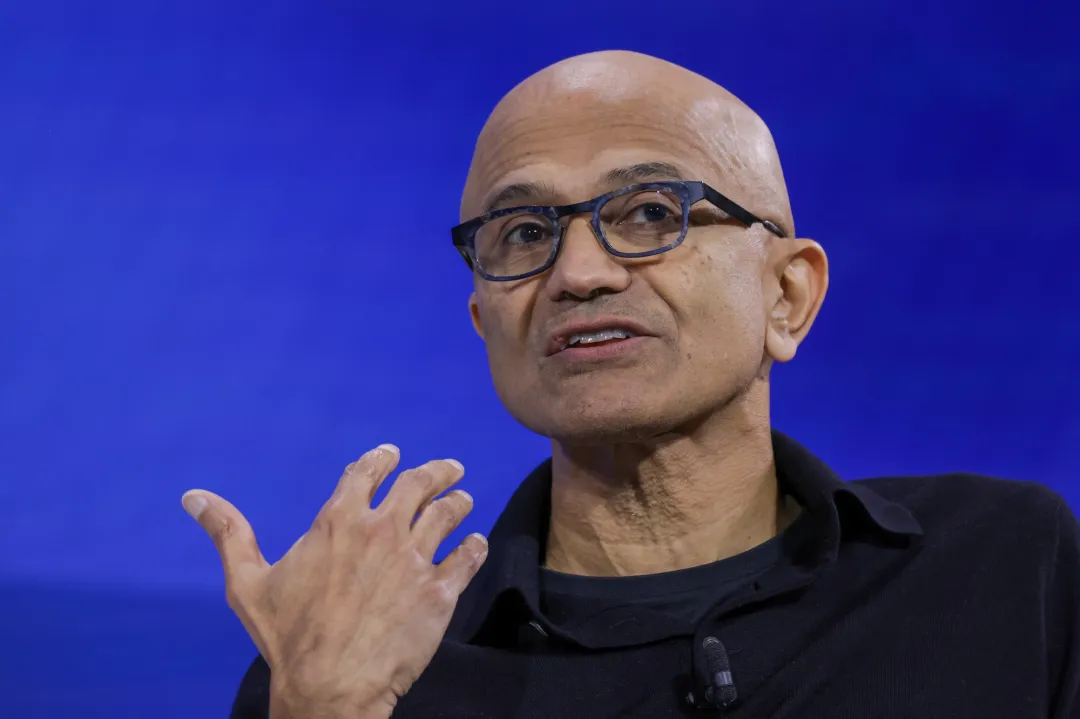
Redmond, WA – In a significant strategic maneuver that sent ripples across the global technology sector, Microsoft CEO Satya Nadella offered buyouts to approximately 60,000 employees in October, a decision he clarified publicly in November. This substantial voluntary separation program, rather than a traditional layoff, was framed by Nadella not as a direct consequence of artificial intelligence replacing human jobs, but as an integral step in fundamentally reorganizing Microsoft into an "AI-first" company where every role is redefined through the lens of AI utilization and management. His explanations, delivered at the prestigious DealBook Summit and later elaborated on The Pragmatic Engineer podcast, underscore a profound shift in corporate philosophy and operational structure, signaling a new era for one of the world’s most influential technology giants.
The Strategic Imperative: Redefining Work in the Age of AI
Nadella’s core thesis is that while AI will not broadly replace human workers, it will radically transform the nature of their work. He vehemently countered the pervasive narrative that AI, particularly generative AI, is poised to eliminate vast swaths of jobs, especially those requiring complex cognitive functions like software engineering. Instead, he articulated a vision where human expertise evolves from direct task execution to the strategic orchestration and management of AI agents. "We’re not saying he’s replacing employees with AI, especially software engineers. He’s saying he’s reorganizing Microsoft into a company where everyone uses AI to do their work, and their jobs become focused on managing that AI," the original reporting highlighted, capturing the essence of his message.
For Nadella, the journey of understanding AI’s role in software development has been a dynamic one. He described a progression from initial skepticism ("Well, we don’t buy that AI can ever do software") to an overzealous belief ("Wow, it can do all software, and why do we need software engineers?") before settling on a more nuanced reality: "software engineering is very much alive and, in fact, is going to thrive, except the way the team is organized and the work that a software engineer does has now got a new operating point." This "new operating point" signifies a paradigm shift where engineers, rather than writing every line of code manually, leverage sophisticated AI tools to generate, test, and deploy code, effectively becoming architects and overseers of automated software factories.
An illustrative example provided by Nadella was the team behind Microsoft’s "Cowork" AI agent within Microsoft 365. This team, remarkably lean with just 11 developers, doesn’t directly build the product in the traditional sense. Instead, "They build a software factory that builds the product. They don’t build the product." This model, Nadella posits, represents the future across all job functions, where employees become "managers of agents," guiding AI systems to accomplish tasks that previously required direct human labor. This profound shift requires a new set of skills, a different mindset, and a willingness to embrace continuous learning and adaptation.
A Voluntary Exodus: The Context of the 60,000 Buyout Offer
The decision to offer buyouts to such a large segment of its workforce—roughly 25% of its estimated 270,000 global employees at the time—was a deliberate choice, distinct from the mass layoffs that have characterized parts of the tech industry in recent years. Nadella emphasized that the buyout was "to make sure that at least everyone felt like they had agency in making choices." This statement suggests a desire to empower employees to opt out if they found the impending transformation incompatible with their career aspirations or skill sets, rather than facing involuntary termination.
This move comes after a period of significant workforce adjustments within Microsoft. In January 2023, the company announced it would lay off 10,000 employees, citing global economic uncertainties and a need to align its cost structure with revenue growth. Further targeted reductions occurred throughout 2023 and early 2024 in various divisions. The October 2026 buyout offer, therefore, represents a different kind of restructuring, one focused less on immediate cost-cutting in the face of economic headwinds and more on a proactive, forward-looking strategic realignment driven by technological evolution.
The timing of the buyout also aligns with Microsoft’s aggressive push into artificial intelligence. Following its multi-billion-dollar investment in OpenAI, Microsoft has rapidly integrated AI capabilities across its product ecosystem, from Azure AI services and Copilot in Microsoft 365 to new AI-powered features in Windows and its developer tools. This rapid integration necessitates a workforce capable of not just building these AI tools, but also leveraging them to enhance productivity and innovation across all departments. The buyouts, in this context, can be seen as a mechanism to facilitate a faster cultural and skill-set transition within the company, allowing individuals who prefer not to navigate this new landscape to exit gracefully.
Navigating the AI Revolution: Nadella’s Public Discourse
Nadella has been remarkably candid about the psychological impact of the AI revolution on the workforce. During his discussion with Gergely Orosz on The Pragmatic Engineer podcast, he acknowledged the "enormous anxiety in people sort of feeling that they don’t have control of their own destiny because the way we have talked about this AI revolution." He specifically called out the sensationalized discussions around "the singularity" and dire predictions of AI taking away all jobs, labeling them as counterproductive. Such narratives, he argued, paralyze individuals who might otherwise be willing to adapt.
His message is one of proactive engagement and structural change. Rather than succumbing to fear, Nadella urged a pragmatic approach: "You have to sort of walk the hard walk of really making the structural changes, getting people slotted, giving them opportunity." This implies a commitment from Microsoft to retraining, upskilling, and re-allocating talent to fit the new AI-centric operational model. However, it also implicitly acknowledges that for some, this "hard walk" might be too challenging or simply not align with their personal career trajectory, hence the voluntary buyout option.
Microsoft’s Transformation Journey: An Incumbent’s Challenge
As a company founded in 1975, Microsoft is a 51-year-old institution with deep-seated corporate cultures, established workflows, and a vast global workforce. Transforming such an incumbent into an "AI-first" enterprise presents unique challenges compared to a startup born in the AI era. Nadella himself articulated this dilemma: "So the question is, how quickly can an incumbent transform the work, the workflow, and the work artifact, and with all the wage support that goes with it?" This highlights not just the technical and cultural hurdles, but also the significant financial implications of retraining and potentially re-leveling compensation for roles that are fundamentally changing.
Microsoft’s history, particularly under Nadella’s leadership, has been marked by successful transformations. The pivot from a desktop-centric software company to a cloud computing powerhouse with Azure is a prime example of its capacity for reinvention. This current AI-driven restructuring can be seen as the next major chapter in this ongoing evolution. The company has invested tens of billions into AI research and development, particularly through its partnership with OpenAI, which has yielded cutting-edge models like GPT-4. Microsoft’s integration of these technologies into its flagship products, such as Microsoft 365 Copilot, GitHub Copilot, and Azure AI services, demonstrates its commitment to leading the AI frontier.
However, the scale and speed of this AI transformation are unprecedented. It requires not just new tools, but a fundamental rethinking of how work is conceived, organized, and executed. The voluntary buyout program, therefore, acts as a mechanism to accelerate this transition, creating space for new talent aligned with the AI-first vision, while offering a dignified exit for those for whom the shift is too profound or undesirable. It acknowledges that organizational change, especially at this scale, is not a uniform process and some individuals may naturally choose different paths.
Broader Industry Implications and the Future of Work
Microsoft’s aggressive push into an AI-first operating model carries significant implications for the broader technology industry and the future of work globally. Other incumbent tech giants, as well as companies across various sectors, are closely watching Microsoft’s strategy. If successful, this model could become a blueprint for how large enterprises navigate the AI revolution, demonstrating that adaptation, rather than direct replacement, is the primary workforce challenge.
The shift towards "managing agents" rather than "doing work" suggests a future where critical thinking, problem-solving, prompt engineering, and ethical AI governance become paramount skills. Educational institutions and corporate training programs will need to rapidly adapt to equip the workforce with these new competencies. The demand for roles that understand how to design, implement, and oversee AI systems, as well as those focused on human-AI collaboration, is likely to surge.
Economically, the promise of AI lies in enhanced productivity. Nadella’s vision aligns with this, suggesting that a lean, AI-augmented workforce can achieve significantly more. However, the societal implications of such widespread transformation are complex. While Nadella insists AI won’t take away all jobs, the redefinition of roles on such a massive scale inevitably raises questions about job security for those unable or unwilling to adapt, potential wage pressures in certain sectors, and the equitable distribution of AI’s productivity gains. Governments and policymakers will need to grapple with these challenges, potentially exploring new social safety nets, retraining initiatives, and regulatory frameworks for AI in the workplace.
Analyst Perspectives and Employee Reactions
Industry analysts have largely viewed Microsoft’s strategic pivot as a necessary and bold move. The company’s strong financial performance—consistently reporting robust revenue and profit growth, largely driven by its cloud services and increasing AI investments—provides a solid foundation for such a large-scale transformation. Market capitalization, which has repeatedly placed Microsoft among the world’s most valuable companies, reflects investor confidence in its long-term strategy. However, analysts will be keen to observe the execution of this restructuring, particularly its impact on employee morale, talent retention, and the speed at which the "AI-first" culture permeates the organization.
For employees, the buyout offer presents a mixed bag. For some, it might be a welcome opportunity to pursue new ventures or retire, especially given the potential severance packages and the acknowledgment of "agency" in their choices. For others, it could be a source of anxiety, forcing a decision between embracing a radically changed job description or seeking opportunities elsewhere. Nadella’s direct acknowledgment of "enormous anxiety" within the workforce speaks to the genuine human element at play in such large-scale technological shifts. Labor market experts suggest that companies undertaking such transformations must invest heavily in transparent communication, robust retraining programs, and mental health support to mitigate negative impacts and ensure a smooth transition for those who choose to stay.
In conclusion, Satya Nadella’s explanation for the 60,000 employee buyout offer paints a vivid picture of Microsoft’s ambitious strategy to re-architect itself for the age of artificial intelligence. It’s a vision where human ingenuity is amplified by AI, where roles evolve from direct execution to strategic management of intelligent agents, and where a 51-year-old company is once again demonstrating its capacity for profound transformation. This strategic shift, while offering voluntary exits, underscores an unwavering commitment to an AI-first future, setting a precedent that will undoubtedly influence the trajectory of corporate restructuring and the future of work for years to come. The "hard walk" Nadella describes is not just for Microsoft, but for the global workforce adapting to a rapidly evolving technological landscape.
