

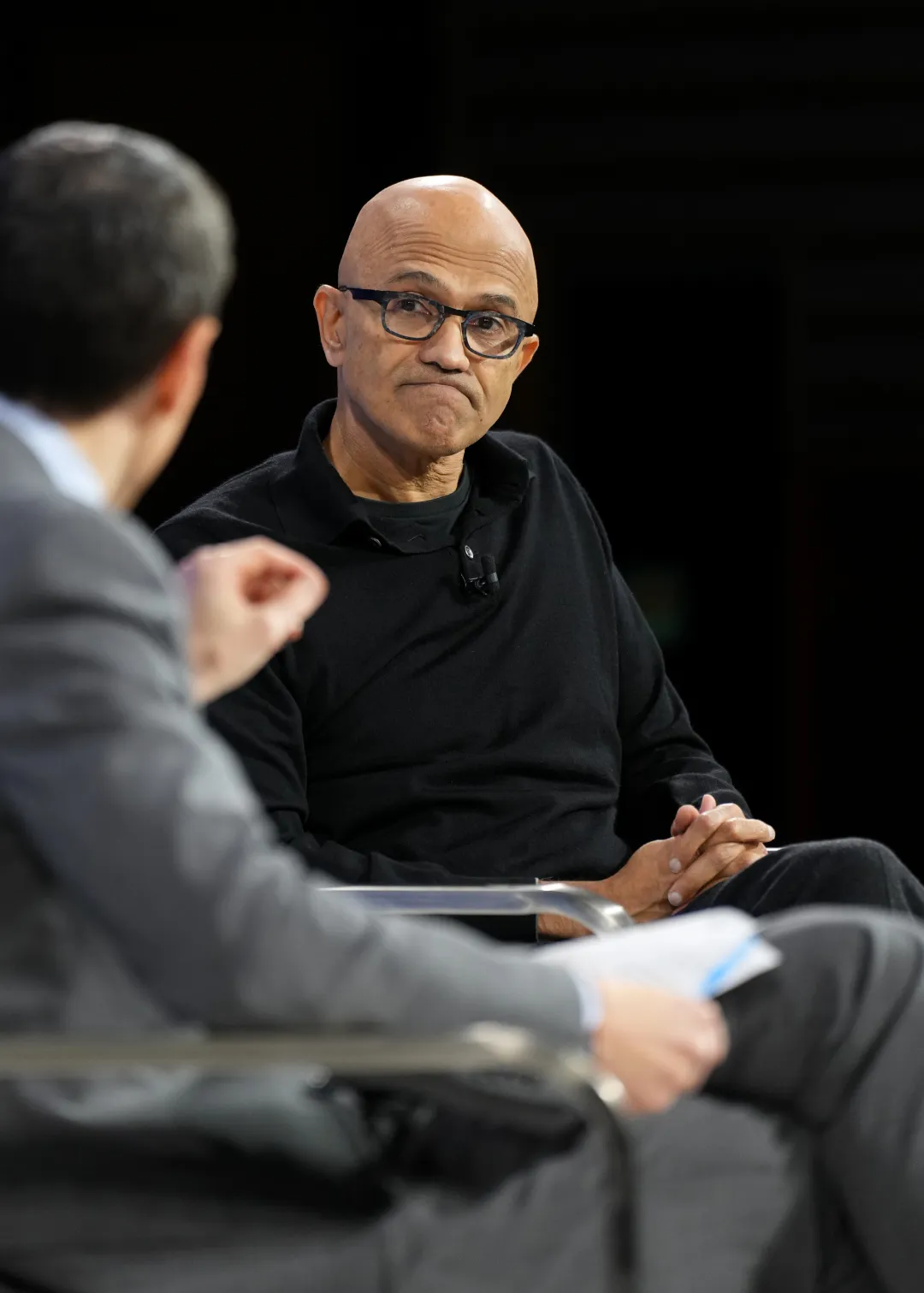
During his appearance at The New York Times’ DealBook Summit on Wednesday, Microsoft CEO Satya Nadella delivered a sobering assessment of the cybersecurity landscape, highlighting what he described as a pervasive and deeply concerning issue: the widespread presence of unfixable software vulnerabilities within America’s critical infrastructure. These vulnerabilities, embedded in systems ranging from everyday hardware to vital transportation networks, are, in Nadella’s stark view, primed for exploitation, particularly in an era increasingly defined by AI-aided cyberattacks. His remarks underscore a growing anxiety among tech leaders and national security experts about the profound risks posed by an interconnected world built upon aging, insecure foundations.
"Remember, there is a lot of stuff in our critical infrastructure that’s unpatchable," Nadella cautioned the audience. He elaborated, pointing to specific examples that are often overlooked in general cybersecurity discussions. "I mean, think about all the firmware and the chillers [a cooling device often used in data centers] and the HVAC systems everywhere else. So all of that, by the way, they’re on the internet." This direct connection to the internet, a hallmark of the "smartification" trend, transforms what were once isolated, "dumb" devices into potential entry points for sophisticated adversaries. The sheer volume and pervasiveness of these integrated systems, from industrial control mechanisms to building management systems, create a vast and largely undefended attack surface.
The Peril of Legacy Systems and the IoT Expansion
Nadella’s warning strikes at the heart of a significant paradox of the modern digital age. The drive for increased efficiency, automation, and remote management has led to the integration of operational technology (OT) and industrial control systems (ICS) with IT networks and the broader internet. This convergence, while offering undeniable benefits, has simultaneously exposed inherently insecure legacy systems to a world for which they were never designed. Many of these systems, including the firmware governing crucial hardware components in energy grids, water treatment plants, manufacturing facilities, and transportation networks, were developed decades ago without security as a primary design principle. Updates, or "patches," for these embedded systems are often complex, costly, or simply impossible without physically replacing the hardware, a logistical and financial nightmare for operators.
The Internet of Things (IoT) revolution has only amplified this challenge. What began as a promise of seamless connectivity and smart environments has, in many sectors, devolved into a sprawling network of devices, many with minimal security protections, long support lifecycles, and infrequent updates. The market for IoT devices is projected to continue its rapid expansion, with billions of new devices coming online annually. Each new connected thermostat, sensor, or industrial robot adds another potential vector for attack, contributing to a collective vulnerability that security professionals are struggling to manage. Nadella’s mention of chillers and HVAC systems, seemingly innocuous components, highlights how even seemingly peripheral elements of infrastructure can become critical weak points when networked. These systems, once air-gapped or managed locally, are now frequently accessible remotely, often through internet-facing interfaces that may not have received adequate security hardening.
The AI Catalyst: Accelerating Cyber Threats
The urgency of Nadella’s message is intensified by the rapid advancement of artificial intelligence. AI is not merely a tool for defense; it has become an increasingly potent weapon in the arsenal of cyber attackers. AI-aided cyberattacks can leverage machine learning to automate the discovery of zero-day vulnerabilities, craft highly convincing phishing campaigns, and orchestrate complex, multi-stage attacks with unprecedented speed and scale. Attackers can use AI to analyze vast datasets of software code, identifying subtle flaws that human analysts might miss, and then develop highly targeted exploits. This capability dramatically shortens the window between a vulnerability’s discovery and its exploitation, forcing defenders into a perpetual, high-stakes race against time.
The sophistication of AI-powered reconnaissance and penetration tools means that even systems considered "hardened" might be compromised more quickly. Furthermore, AI can be used to generate polymorphic malware that constantly changes its signature, evading traditional signature-based detection systems. The ability of AI to adapt and learn from defensive measures makes it a formidable adversary, creating a dynamic threat landscape where traditional reactive security postures are increasingly inadequate. This reality means that Nadella’s "unpatchable" systems are not just vulnerable; they are facing an exponentially growing threat from intelligent, autonomous attack agents.
Recent Outages: A Troubling Precedent and Heightened Anxiety
The conversation at the DealBook Summit took place against the backdrop of a series of recent large-scale outages that have fueled public concern and underscored the fragility of interconnected digital systems. While the exact causes of all these incidents remain under investigation or have been attributed to technical glitches, the specter of cyberattack looms large, influencing public discourse and corporate responses.
Microsoft itself experienced a significant global inconvenience with its Outlook service, which Nadella addressed directly. He attributed the incident to a "latent bug" that created a "perfect storm" of conditions leading to widespread disruption. "We put out an incident response, and we’re going to obviously take all of the learnings, both upstream architectural, as well as operational, and fix that," he stated, acknowledging the severity of the incident and Microsoft’s commitment to remediation. While the Outlook outage was characterized as a technical flaw rather than a cyberattack, its impact highlighted how deeply integrated and reliant modern society is on critical digital services.
Beyond Microsoft, other high-profile incidents have involved major institutions. Reports of outages affecting the National Security Agency (NSA), the Federal Aviation Administration (FAA), and Apple have circulated, prompting intense scrutiny. While officials have largely denied that these specific incidents were the result of cyberattacks, the pervasive anxiety within the cybersecurity community and among the public points to a growing awareness of systemic vulnerabilities. The FAA outage, for instance, which grounded flights across the United States, was attributed to a damaged database file, but it immediately raised questions about the resilience of critical air traffic control systems against potential malicious interference. These events, regardless of their immediate cause, serve as potent reminders of the catastrophic potential should similar disruptions be caused by hostile state actors or sophisticated criminal enterprises leveraging AI.
The Dilemma of Rapid Patching: Instability and Risk
Nadella also delved into a less obvious but equally critical challenge: the accelerated pace of software patching. Historically, patches for software vulnerabilities would undergo rigorous testing before broad deployment, allowing developers and system administrators to ensure stability and compatibility. However, the current threat environment, particularly with AI-aided exploitation, has compressed this timeline dramatically.
"We now have a very powerful tool that finds vulnerabilities," Nadella observed, referring to the advanced capabilities (both benevolent and malicious) that can quickly identify software flaws. The critical shift, he explained, is that "the patch [now] needs to go instantly from being available to being patched in production, because it’s being exploited in the wild, right? So that’s going to create instability." This acceleration creates a precarious balancing act: deploy a patch too slowly, and systems are vulnerable to active exploitation; deploy it too quickly, and the patch itself might introduce new bugs, cause system crashes, or lead to unforeseen operational disruptions.
This rapid deployment cycle is particularly problematic for complex, interdependent systems, where a seemingly minor patch can have cascading effects. Organizations are often forced to choose between security and stability, a choice that can have severe consequences for critical infrastructure. The inherent complexity of modern software ecosystems, coupled with the pressure to update instantly, means that even well-intentioned security measures can inadvertently become sources of operational risk, leading to further outages and potential vulnerabilities.
Industry Reactions and Expert Consensus
Nadella’s remarks resonate deeply within the cybersecurity community, where experts have long warned about the precarious state of critical infrastructure. Government agencies, industry bodies, and academic researchers have consistently highlighted the systemic risks. The U.S. Cybersecurity and Infrastructure Security Agency (CISA), for example, regularly issues advisories and emphasizes the need for proactive security measures, including vulnerability management and segmentation of networks, to protect critical infrastructure sectors.
Cybersecurity thought leaders often echo Nadella’s concerns, emphasizing the unique challenges of operational technology (OT) environments compared to traditional IT. OT systems, which control physical processes, often have different priorities (e.g., uptime and safety over immediate patching) and significantly longer lifecycles, making them harder to secure. Many experts advocate for a "security by design" approach, where security is integrated from the initial planning stages of any new system or device, rather than being an afterthought. There is also a strong consensus that collaborative defense, involving information sharing between government and industry, is essential to counter increasingly sophisticated threats.
Economic and National Security Ramifications
The implications of widespread, unpatchable vulnerabilities, particularly when exposed to AI-enhanced cyberattacks, extend far beyond technical glitches. The economic ramifications of successful attacks on critical infrastructure are staggering. A single major disruption to the power grid, transportation systems, or financial networks could lead to billions, if not trillions, of dollars in economic losses, supply chain disruptions, and widespread public panic. The Colonial Pipeline attack in 2021, which temporarily shut down a major fuel artery, offered a stark glimpse into the economic and societal chaos that can ensue from a targeted cyber incident.
From a national security perspective, the threat is existential. State-sponsored actors and sophisticated criminal groups are actively probing and exploiting these weaknesses. The ability to disrupt an adversary’s critical infrastructure—its energy, communications, water, and transportation—is a powerful tool in modern geopolitical conflict. The weaponization of AI in this context elevates the risk of cyber warfare to unprecedented levels, making proactive defense and modernization of these systems a paramount national security imperative. The potential for such attacks to cause physical damage, loss of life, or widespread societal collapse is a scenario that policymakers and defense strategists are increasingly grappling with.
The Path Forward: Modernization and Proactive Defense
Nadella concluded his remarks with a call to action, emphasizing the urgent need for modernization and a re-evaluation of defense strategies. "Somebody was telling me about sort of even the transportation systems and the amount of stuff that’s discoverable but with unpatchable firmware," he reiterated, underscoring the pervasive nature of the problem. "So we’ll have to really modernize for sure… and then we will have to assess what the threat vector looks like, what our own ability to both detect and then defend in real time looks like."
Modernization, in this context, entails more than just software updates. It requires a holistic overhaul of infrastructure, prioritizing security from the ground up. This includes:
- Replacing Legacy Systems: Phased replacement of truly unpatchable hardware and software with modern, secure alternatives.
- Secure by Design Principles: Embedding security features into the very architecture of new systems and IoT devices.
- Enhanced Visibility and Monitoring: Implementing advanced monitoring tools, often leveraging AI, to detect anomalies and potential threats in real time across OT and IT networks.
- Incident Response and Resilience: Developing robust incident response plans and building systems with inherent resilience to withstand and quickly recover from attacks.
- Supply Chain Security: Ensuring the security of the entire software and hardware supply chain, from development to deployment.
- Talent Development: Investing in cybersecurity education and training to build a skilled workforce capable of addressing these complex challenges.
- Regulatory Frameworks: Developing and enforcing stricter cybersecurity standards for critical infrastructure sectors, potentially including mandates for secure IoT device manufacturing.
Microsoft, as a major player in cloud computing and enterprise software, is actively involved in these efforts, both in securing its own vast infrastructure and providing cybersecurity solutions to its customers. Nadella’s acknowledgment of the "latent bug" in Outlook and the commitment to learning from it reflects an industry-wide recognition that even leading tech companies must continuously evolve their security posture.
The challenge is immense, requiring a concerted effort from governments, industry, and the public. The clock is ticking on these "unpatchable" vulnerabilities, with AI-aided cyberattacks raising the stakes significantly. Nadella’s warning serves as a crucial reminder that the security of our digital future hinges on our collective ability to address the vulnerabilities of our physical present. The future stability of nations and economies depends on how swiftly and effectively these deep-seated infrastructure weaknesses are addressed in the face of an ever-evolving threat landscape.
