

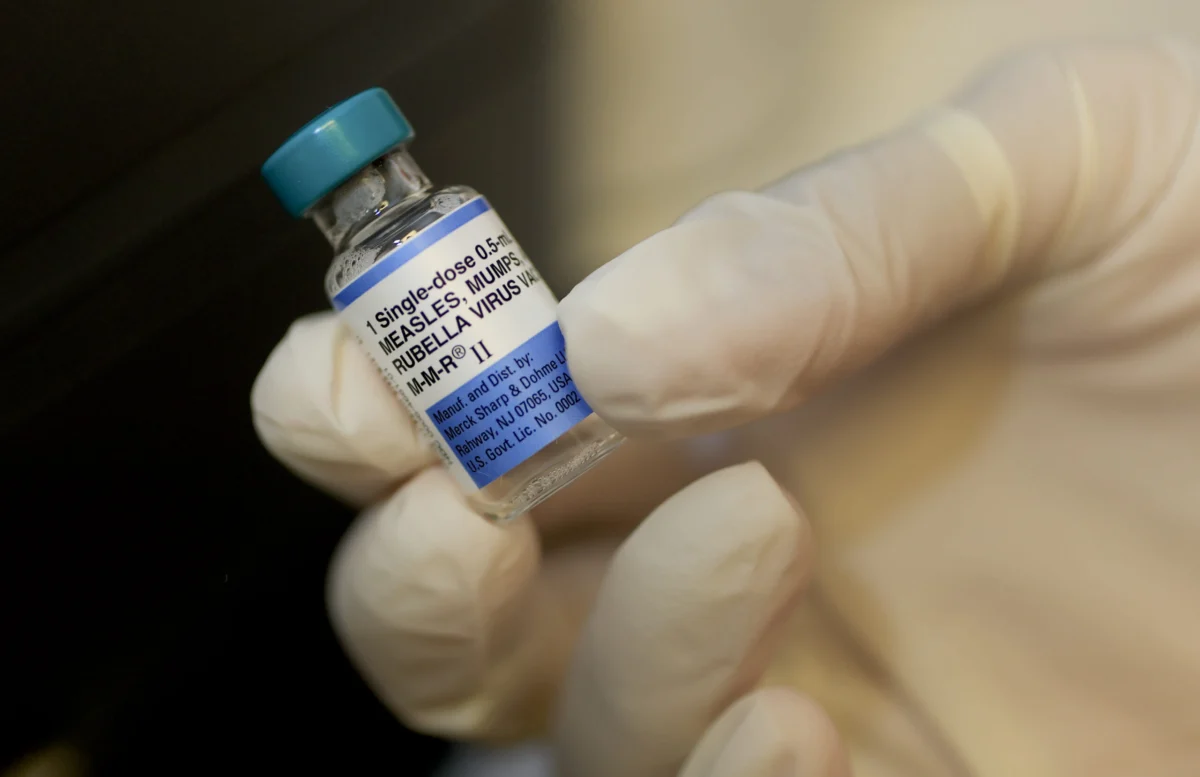
In a devastating blow to American public health, the United States on Tuesday officially lost its designation as a measles-free nation, more than 25 years after it declared the highly contagious virus eliminated. The Pan American Health Organization (PAHO), the regional branch of the World Health Organization (WHO), announced the decision, confirming what many public health experts have warned for months: measles is once again endemic – meaning continuously present and spreading – within U.S. borders. This reversal follows a rigorous review by an independent panel of eight scientific experts, who last week considered the country’s epidemiological evidence, concluding that 12 months of uninterrupted transmission had occurred.
Dr. Jarbas Barbosa, PAHO director, delivered the somber news during a briefing, stating, "The commission concluded that endemic measles transmission has now been reestablished in Bolivia, Mexico and the United States, and recommended that their measles elimination status be withdrawn – a recommendation which I have accepted." This pronouncement signals a profound regression for a nation that once served as a beacon of success in vaccine-preventable disease control, now grappling with ongoing outbreaks that have sickened thousands and tragically claimed preventable lives.
A Quarter-Century of Elimination Undone
The journey to measles elimination in the U.S. was a monumental public health achievement. Before the introduction of the measles vaccine in 1963, measles was a common childhood disease, with an estimated 3 to 4 million Americans infected each year. Of these, approximately 48,000 were hospitalized, 1,000 developed chronic neurological conditions like subacute sclerosing panencephalitis (SSPE), and 400 to 500 died annually. The widespread adoption of the measles-mumps-rubella (MMR) vaccine dramatically reduced case numbers, leading to the Centers for Disease Control and Prevention (CDC) declaring measles eliminated in the U0.S. in 2000. Elimination, in this context, meant the absence of continuous measles transmission for at least 12 months within a defined geographic area, despite imported cases. The U.S. had maintained this status for over two decades, a testament to its robust vaccination programs and public health infrastructure.
However, the foundation of this success – high vaccination coverage – began to erode in recent years. Fueled by declining childhood vaccination rates and a growing tide of vaccine hesitancy, often amplified by misinformation on social media, the country has seen a steady increase in measles cases, culminating in the current crisis. The 2026 outbreak is the nation’s worst in more than three decades, with over 5,400 measles cases reported nationwide as of mid-November. The human cost has been stark, with 10 confirmed deaths associated with the disease in 2026: seven in Pennsylvania, one in New York, and two in Wisconsin. Among the reported fatalities, all individuals were unvaccinated, underscoring the vaccine’s protective efficacy.
The Unraveling: A Chronology of Escalation
The path to losing elimination status was a gradual but alarming one, marked by a series of escalating outbreaks that demonstrated continuous, internal spread rather than isolated imported cases.
- Late 2024 – Early 2025: Initial clusters of measles cases began to emerge in various communities, often linked to international travel but quickly spreading locally due to pockets of unvaccinated individuals. Public health officials issued early warnings about declining vaccination rates.
- January 2025 – January 2026 (Reporting Period): This critical 12-month window saw an unprecedented surge in measles activity. PAHO Assistant Director Dr. Rhonda Sealey-Thomas reported during the briefing that out of 52 U.S. states and territories tracked by the commission, a staggering 48 experienced measles outbreaks. These outbreaks, often concentrated in areas with lower immunization coverage, demonstrated sustained person-to-person transmission for prolonged periods, exceeding the criteria for elimination.
- Throughout 2026: The outbreaks intensified, leading to thousands of infections. Public health resources were stretched thin as local and state health departments scrambled to manage contact tracing, vaccination campaigns, and public information efforts. Notable severe outbreaks and associated fatalities occurred in states like Pennsylvania, New York, and Wisconsin.
- November 2026: With cases surpassing 5,400 nationally and a growing death toll, the epidemiological evidence strongly pointed towards re-established endemic transmission.
- Last Week of November 2026: An independent panel of eight scientific experts convened by PAHO reviewed the extensive data, assessing the patterns of transmission and the inability of existing public health measures to contain the spread effectively enough to prevent continuous chains of infection.
- Tuesday, December 2026: PAHO Director Dr. Jarbas Barbosa formally announced the withdrawal of the U.S.’s measles elimination status, following the commission’s recommendation.
This timeline illustrates a persistent failure to interrupt transmission, a direct consequence of insufficient community immunity.
The Immunity Gap: A Critical Factor
At the heart of the measles resurgence lies a significant decline in childhood vaccination rates. The MMR vaccine is highly effective, offering 93% protection against measles after a single dose and 97% protection after two doses, according to the CDC. Public health officials generally recommend a 95% vaccination coverage rate to achieve herd immunity – a level of community protection that makes widespread transmission unlikely, even protecting those who cannot be vaccinated (infants, immunocompromised individuals).
However, data aggregated by the CDC reveals a troubling trend: vaccination coverage for the MMR shot among U.S. kindergarteners fell to 92.4% in the 2025-2026 school year. This figure, though seemingly close to the 95% threshold, represents millions of unvaccinated or under-vaccinated children across the country, creating vulnerable pockets where the virus can easily take root and spread. In some specific communities and regions, vaccination rates have plummeted much lower, sometimes into the 70s or even 60s, turning these areas into fertile ground for outbreaks. The reasons for this decline are multifaceted, ranging from genuine concerns about vaccine safety (often fueled by debunked claims) to a general erosion of trust in public health institutions, particularly exacerbated by the highly polarized information environment.
Official Reactions and Plans for Reclamation
The announcement prompted swift reactions from leading health organizations and government officials, underscoring the gravity of the situation and the urgent need for corrective action.
PAHO Director Dr. Jarbas Barbosa emphasized that while the decision is a setback, the affected countries, including the U.S., are already engaged in efforts to control outbreaks. He highlighted strategies such as strengthening vaccination campaigns, enhancing surveillance for timely case detection, and improving outbreak response. Dr. Daniel Salas, executive manager of PAHO’s Special Program for Comprehensive Immunization, noted that the U.S. has ramped up vaccination efforts to close immunity gaps, particularly in areas experiencing outbreaks with low immunization coverage. PAHO expects the U.S. to present a comprehensive corrective action plan in the coming weeks, outlining its strategies to regain its elimination designation.
The Centers for Disease Control and Prevention (CDC) responded with a release affirming its commitment to restoring the U.S.’s measles elimination status. CDC Director Dr. Erica Schwartz stated unequivocally that the measles elimination designation "is not what protects Americans. Vaccination does." She underscored the agency’s proactive measures, including an investment of $100 million in state and local health departments specifically to reach communities where transmission is occurring and to bolster local response capabilities. Dr. Schwartz had previously told Reuters that the agency would not alter its measles response strategy if the U.S. lost its status, indicating that aggressive vaccination and outbreak control measures were already underway.
The Trump administration’s Health and Human Services (HHS) Secretary, Robert F. Kennedy Jr., whose past public statements have questioned vaccine safety, also issued a statement via an X post. Kennedy acknowledged the gravity of the situation, stating, "We are working to close vaccination gaps and rebuild public trust." Importantly, he affirmed, "I continue to recommend MMR vaccination as the most effective way to prevent measles," adding that HHS would "answer families’ questions honestly about vaccine benefits and risks and work with trusted health care providers and community leaders to prevent measles, limit its spread, and support timely treatment." This statement marks a crucial alignment with established public health guidance, signaling a potential shift in emphasis for the administration.
Broader Implications: A Canary in the Coal Mine
The loss of measles elimination status extends beyond the immediate health crisis, exposing fundamental weaknesses in the nation’s public health system and raising broader concerns. CNBC previously reported that the return of measles in the U.S. highlights vulnerabilities that could lead to the re-emergence of other eliminated diseases. The resurgence reflects eroding trust in health institutions, a growing challenge in persuading individuals to protect themselves, their children, and their communities, and a strain on public health resources.
Economically, the outbreaks carry a substantial burden. Researchers at Johns Hopkins University, utilizing a new cost estimate tool, project that the 2026 outbreaks will incur an economic cost of nearly $83 million. This substantial figure encompasses $56 million in public health response costs, including personnel, investigations, and emergency vaccination clinics; almost $25 million in lost productivity due to illness, caregiving, and school closures; and over $1.8 million in direct medical expenses for hospitalizations and treatments. These costs represent resources diverted from other critical public health initiatives and place an undue strain on families and the healthcare system.
Globally, the U.S. now joins Canada, Spain, and the U.K., all of which recently lost their measles-free status after reviews by WHO experts. While the U.S. formally withdrew from the WHO, it remains a member of PAHO, its Americas branch, which governs regional health designations. The cumulative loss of status among developed nations serves as a stark warning to other countries about the fragility of elimination efforts in the face of vaccine hesitancy and fragmented public health responses. It also complicates global efforts towards complete measles eradication, as endemic transmission in any major nation creates ongoing risks of international spread.
Calls to Action and the Path Forward
In the wake of PAHO’s announcement, leading medical and pharmaceutical organizations reiterated urgent calls for action. The American Medical Association (AMA) urged the public to get vaccinated, with AMA President Dr. Willie Underwood stating, "We must treat the current measles outbreaks as an urgent call to rebuild trust in science-based recommendations and restore strong, fully-funded public health infrastructure to protect families and communities and prevent the return of diseases once eliminated."
The Pharmaceutical Research and Manufacturers of America (PhRMA), the industry’s largest lobbying group, issued a separate statement advocating for policymakers to provide "clear, accurate information about the seriousness of measles infection and the effectiveness of vaccines against it, restore and sustain high vaccination coverage in every community, strengthen vaccination efforts, and invest in disease surveillance and rapid outbreak response." Dr. Michael Ybarra, PhRMA’s chief medical officer, concluded, "We have the tools to eliminate measles again and what we need now is the commitment to use them."
Public health experts universally agree that the ultimate solution lies in restoring and maintaining high vaccination coverage. The MMR vaccine, a cornerstone of pediatric preventative care for decades, remains the most effective tool against measles. Rebuilding public trust, countering misinformation, and ensuring equitable access to vaccination services across all communities will be paramount. The task ahead is formidable, requiring a concerted, multi-pronged effort from government agencies, healthcare providers, community leaders, and the public to reverse this troubling trend and reclaim the nation’s measles-free status. The health and economic well-being of the United States depend on it.
