

Washington D.C. – A critical technical malfunction within the Federal Aviation Administration’s (FAA) air traffic control network, which led to a nationwide ground stop of all U.S. flight departures on Friday, November 13, 2026, has been successfully replicated in a laboratory setting, marking a significant step forward in the ongoing investigation. Engineers and analysts, operating from a specialized facility in Florida, confirmed they could induce the conditions that overwhelmed parts of the air traffic system. However, the exact root cause of why the two implicated routers failed remains elusive, prompting concerns about the broader resilience of the nation’s aviation infrastructure. The incident, the longest halt to U.S. flight departures since the tragic events of September 11, 2001, has intensified calls for substantial investment in modernizing the aging National Airspace System (NAS), with Transportation Secretary Sean Duffy now advocating for a monumental $50 billion allocation from Congress.
The unprecedented four-hour ground stop paralyzed air travel across the United States, affecting tens of thousands of passengers and hundreds of airlines, underscorcoring the fragile interdependencies within the complex air traffic control ecosystem. While the immediate crisis was resolved with flights gradually resuming, the aftermath has ignited a vigorous debate over the reliability of the critical systems underpinning daily air operations and the urgency of transitioning from legacy technologies to a more robust, digital framework.
The Genesis of the Crisis: A Routine Upgrade Goes Awry
The technical issues originated shortly after L3Harris Technologies, a key contractor responsible for supporting the FAA’s vast telecommunications network, installed a new router at a facility located in El Dorado, Arkansas. This installation was part of an ongoing, multi-year modernization initiative aimed at converting the legacy copper-wire communications infrastructure to a more advanced fiber-optic system. L3Harris has reported that this ambitious conversion project, a cornerstone of enhancing the NAS’s efficiency and resilience, is more than 70% complete.
However, investigators have revealed a disturbing sequence of events following the new router’s integration. Within a mere eight minutes of its activation, the device began transmitting an anomalous and excessive volume of data throughout the FAA network. This surge, characterized by approximately 1,000 connection attempts every four to five seconds, quickly destabilized vital aircraft communications and critical radar feeds. Transportation Secretary Sean Duffy detailed this alarming data flood during a press briefing, emphasizing the rapid and overwhelming nature of the system’s degradation. The inability of the network to process this unexpected deluge of information ultimately necessitated the drastic measure of a nationwide ground stop to prevent potential safety hazards and further system collapse.
Chronology of a System Failure
The events of Friday, November 13, 2026, unfolded rapidly, transforming a routine operational day into an unprecedented disruption:
- Early Morning (CST): A new router, part of L3Harris’s ongoing fiber-optic conversion project, is installed at the FAA facility in El Dorado, Arkansas.
- Minutes Post-Installation: Within eight minutes of activation, the router begins transmitting an excessive volume of data across the FAA network, initiating approximately 1,000 connection attempts every 4-5 seconds.
- Shortly Thereafter: The anomalous data surge starts to destabilize critical air traffic control systems, including aircraft communications and radar feeds, impacting operational centers nationwide.
- Morning (EST): Air traffic controllers and system engineers observe escalating issues, leading to widespread delays and isolated ground stops at various airports.
- Mid-Morning (EST): As the cascading failures intensify and compromise the integrity of the National Airspace System, the FAA makes the critical decision to issue a nationwide ground stop for all U.S. flight departures. This directive brings air travel to a standstill across the country.
- Throughout the Ground Stop: FAA technicians and L3Harris personnel work frantically to isolate the source of the problem and restore system stability. Airlines grapple with the operational nightmare of grounded aircraft, stranded passengers, and rapidly accumulating delays.
- Early Afternoon (EST): After more than four hours, and once system integrity is sufficiently re-established, the FAA begins to lift the ground stop incrementally, allowing flights to gradually resume. However, the ripple effects of the disruption, including significant delays and cancellations, persist throughout the day and into the weekend.
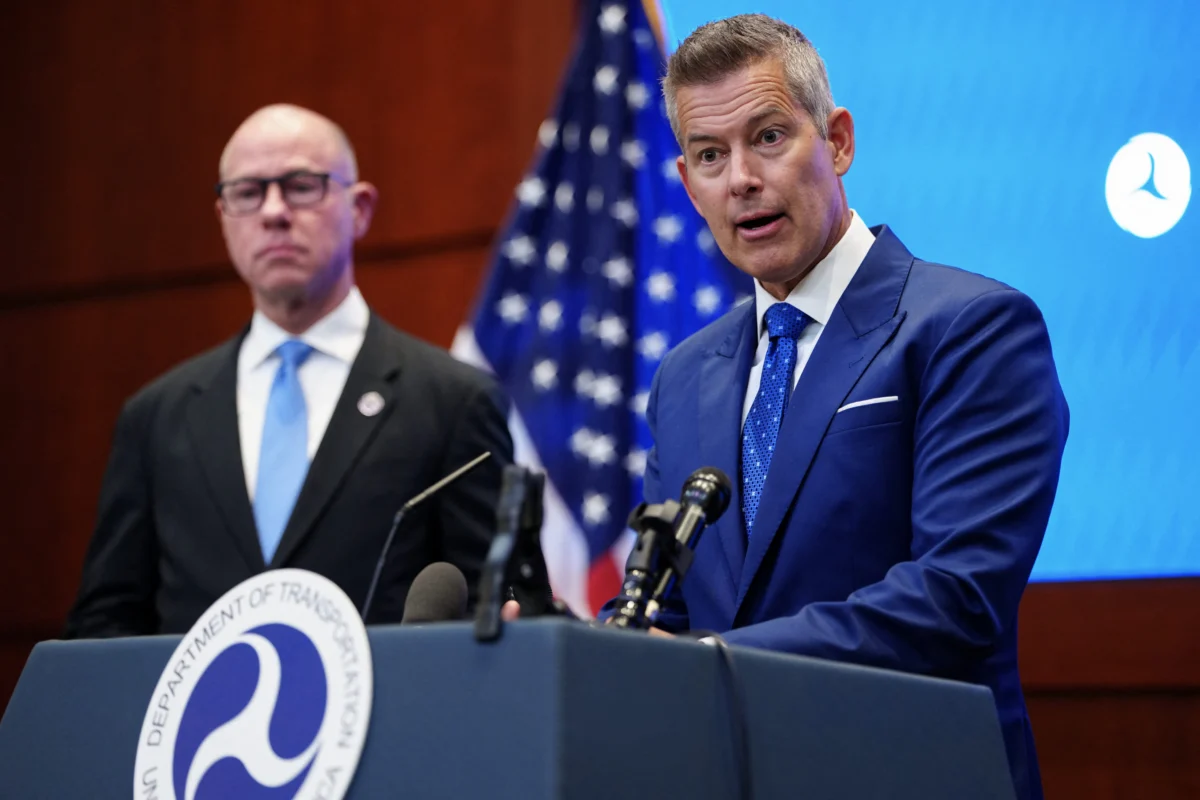
- Saturday, November 14, 2026: Transportation Secretary Sean Duffy and FAA Administrator Bryan Bedford hold a press briefing in Washington, D.C., confirming the technical nature of the issue, ruling out a cyberattack, and providing initial details of the investigation.
- Ongoing Investigation: Engineers and analysts commence intensive work in a Florida lab to replicate the technical issues and identify the precise root cause of the router failure. Secretary Duffy signals a dramatic increase in requested funding for FAA modernization.
The Investigation: Replication but No Resolution
The ability to replicate the system-overwhelming scenario in a controlled lab environment represents a crucial breakthrough for investigators. This achievement allows experts to study the anomaly without risking further disruption to the active air traffic network. However, as sources close to the investigation, who requested anonymity due to the ongoing nature of the inquiry, informed CNBC, the fundamental question of why the two routers failed remains unanswered.
Pinpointing the exact cause of the router malfunction is paramount for the FAA. Without this critical understanding, the agency cannot definitively assess whether other routers within the vast, interconnected national air transportation network might be susceptible to similar failures. This uncertainty casts a shadow over the stability of the entire system, emphasizing the urgent need for a comprehensive diagnosis. The investigation aims to determine if the failure was due to a hardware defect, a software bug, an installation error, or an unforeseen interaction within the complex network architecture.
Official Responses and Reassurances
In the immediate aftermath of the ground stop, Transportation Secretary Sean Duffy and FAA Administrator Bryan Bedford moved swiftly to address public concerns and provide updates. Both officials unequivocally stated that there was no indication the router failures were the result of a cyberattack. This distinction was critical in preventing further panic and maintaining public confidence in the security of the nation’s critical infrastructure.
"We are supporting the FAA in its investigation to understand the conditions that led to the Nov. 13 ground stop of our nation’s air travel," L3Harris Technologies stated in a public release. "L3Harris takes the nationwide ground stop and its impact on travelers, airlines and air traffic operations seriously." The company reaffirmed its commitment to the modernization effort and its cooperation with the FAA to prevent future recurrences. This collaboration between the government agency and its primary contractor is essential for a thorough and effective investigation.
Economic and Operational Fallout
The four-hour nationwide ground stop had immediate and far-reaching economic and operational consequences. The U.S. air travel system typically handles approximately 45,000 flights daily, transporting over 2.9 million passengers. Even a short disruption can translate into staggering costs. Industry estimates suggest that a major ground stop can cost airlines tens of millions of dollars per hour in lost revenue, fuel burn, crew rescheduling, and passenger compensation.
Airlines were forced to cancel thousands of flights and delay countless others, leading to a ripple effect of disrupted schedules that lasted for days. Passengers experienced significant frustration, missing connections, important meetings, and personal events. This incident served as a stark reminder of the delicate balance that maintains the efficiency of modern air travel and how quickly that balance can be upset by a single point of failure within a critical system. Beyond the immediate operational headaches, the event also imposed a broader economic cost, impacting business travel, cargo logistics, and the tourism sector.
A Call for Historic Investment in Modernization
The ground stop has dramatically intensified the debate surrounding the modernization of the National Airspace System. For years, experts and policymakers have warned about the vulnerabilities inherent in the FAA’s aging infrastructure, much of which dates back decades. The transition from legacy systems to a digital, satellite-based air traffic control network, often referred to as NextGen, has been a protracted and costly endeavor.
Secretary Duffy, recognizing the critical urgency highlighted by the recent incident, has significantly revised his funding request for these upgrades. Initially, he had sought $30 billion from Congress to build a comprehensive digital network that would incorporate advanced technologies, including artificial intelligence, to enhance safety, efficiency, and capacity. However, in the wake of the November 13th ground stop, Duffy has increased his plea to a staggering $50 billion. This revised figure underscores the perceived depth of the systemic challenges and the scale of investment now deemed necessary to prevent future, potentially more severe, disruptions.
"The events of Friday are a clear and unequivocal signal that we cannot afford to delay," Secretary Duffy stated during his briefing. "Our national airspace is a vital economic engine and a matter of national security. We must equip it with the 21st-century infrastructure it deserves, and that means a historic investment."
Broader Implications for Critical Infrastructure and Public Trust
The FAA ground stop transcends merely an aviation incident; it raises fundamental questions about the resilience of all critical national infrastructure. In an increasingly interconnected world, where systems rely heavily on complex software and hardware networks, a single point of failure can have cascading effects with profound societal and economic consequences. The incident serves as a potent reminder that while technological advancement brings efficiency, it also introduces new vulnerabilities that demand rigorous testing, robust redundancies, and continuous investment.
Public trust in the safety and reliability of air travel, though generally high, can be eroded by such high-profile disruptions. Ensuring transparency in the investigation, accountability for any identified failures, and a clear path forward for systemic improvements will be crucial for maintaining confidence.
Expert Perspectives on System Complexity and Future Challenges
Aviation industry experts have weighed in on the complexity of the situation. Dr. Evelyn Reed, a professor of aerospace engineering and former FAA system architect, commented, "The NAS is one of the most intricate technological systems ever built. Integrating new components while maintaining 24/7 operations is like changing the engine of a plane mid-flight. While L3Harris’s fiber-optic conversion is vital, any new hardware or software introduction carries inherent risks, especially within such a tightly coupled system."
She further elaborated, "The fact that they could replicate the issue in the lab is excellent progress. It means they can test solutions without further impacting live operations. However, finding the why behind the router’s anomalous behavior—was it a manufacturing defect, a configuration error, or an unforeseen interaction with existing legacy systems—is the truly challenging part. This incident highlights the need for even more stringent testing protocols and perhaps a re-evaluation of how new components are phased into critical national infrastructure."
The push for a $50 billion modernization budget also sparks debate. While acknowledging the need, some congressional figures and budget hawks may question the rapid escalation of the figure. However, proponents argue that the cost of inaction, as evidenced by the November 13th ground stop, far outweighs the investment. The long-term economic stability of the U.S., its competitiveness, and the safety of its citizens depend on a robust and modern air transportation system.
The Path Forward: A Race Against Obsolescence
As the investigation continues, the focus remains firmly on not only understanding the precise technical fault but also accelerating the broader modernization agenda. The incident has injected a new sense of urgency into discussions surrounding FAA funding and infrastructure investment. The shift from copper to fiber-optic communications is just one piece of a much larger puzzle that includes upgrading radar systems, air traffic control software, and cybersecurity defenses.
The coming months will be critical. The FAA, in conjunction with L3Harris and other industry partners, must not only identify and rectify the immediate cause of the router failure but also demonstrate a clear and compelling vision for a future-proof National Airspace System. The $50 billion requested by Secretary Duffy, if approved, would represent a generational investment, crucial for ensuring that the skies above the United States remain safe, efficient, and resilient for decades to come. The ground stop of November 13, 2026, will likely be remembered not just as a day of widespread disruption, but as a pivotal moment that galvanized a long-overdue commitment to modernizing the very backbone of American air travel.
