

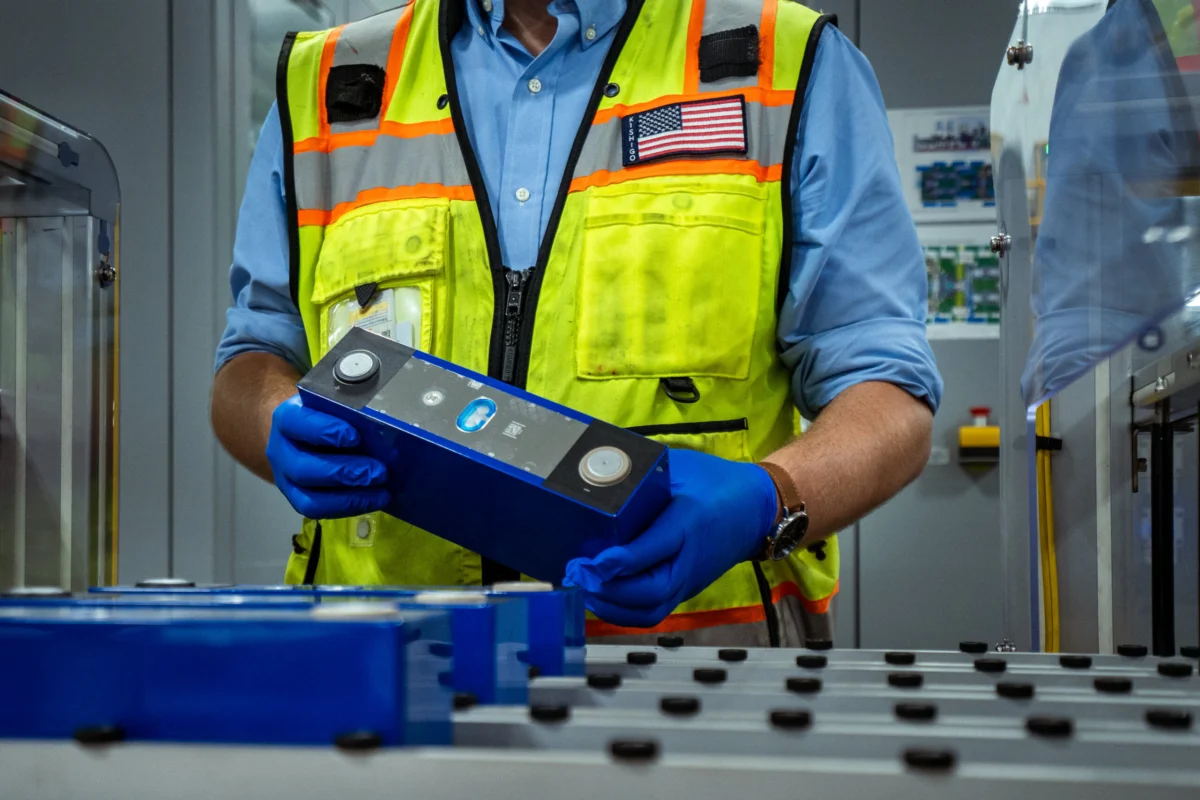
MARSHALL, Mich. – Ford Motor Company has initiated the production of lithium iron phosphate (LFP) battery cells within the United States, a significant development for its burgeoning electric vehicle (EV) lineup. This milestone, announced Wednesday, involves cells manufactured at a sprawling $3 billion facility in Marshall, Michigan, leveraging advanced technologies licensed from the Chinese battery manufacturing behemoth, CATL (Contemporary Amperex Technology Co. Limited). Production commenced last month, with the initial batches of cells now being shipped for integration into prototype vehicles, notably Ford’s highly anticipated Fathom small electric pickup truck.
This strategic move represents a critical juncture for the Dearborn-based automaker, underscoring its commitment to domestic EV manufacturing while simultaneously embracing a cost-effective battery chemistry crucial for broader market adoption. The LFP technology, while originating from American innovation, found its most extensive commercialization and scaling in China, making the licensing agreement with CATL a pragmatic, albeit politically charged, pathway for Ford to rapidly introduce these batteries into its U.S.-produced vehicles.
The Marshall Plant: A New Industrial Anchor in Michigan
The 2 million-square-foot facility, officially known as the "BlueOval Battery Park Michigan," is situated approximately 100 miles west of Detroit, positioning it strategically within Michigan’s automotive heartland. This immense investment, initially projected at $3.5 billion but refined to $3 billion, is designed to be a highly automated production powerhouse. According to Ford, the plant is engineered to churn out an impressive 40 battery cells per minute, translating to an annual capacity of 20 gigawatt-hours (GWh) once fully operational. These cells are earmarked not only for Ford’s electric vehicles but also for its burgeoning energy storage business, signaling a holistic approach to electrification.
The decision to establish such a large-scale manufacturing operation in Michigan aligns perfectly with Ford’s long-standing narrative of American roots and job creation, a theme frequently emphasized by both the Biden and Trump administrations in their push to onshore and expand U.S. production capabilities. The plant is expected to create thousands of direct and indirect jobs, providing a substantial economic boost to the region and contributing to the revitalization of American manufacturing. While the facility is designed for high automation, it is currently in the crucial early stages of certifying its processes, with plans to significantly ramp up cell production throughout the coming year, leading up to the expected launch of the Fathom pickup in the fourth quarter of 2027. The plant’s design also incorporates flexibility, allowing for additional capacity expansion should future EV demand dictate, demonstrating Ford’s foresight in planning for long-term growth.
Strategic Shift to LFP: Balancing Cost, Performance, and Supply
Ford’s embrace of LFP battery chemistry marks a pivotal strategic pivot, driven primarily by economic and supply chain considerations. Unlike the more common nickel-manganese-cobalt (NMC) batteries, LFP cells utilize readily available iron and phosphate, significantly reducing reliance on costly and geopolitically sensitive materials like nickel and cobalt. This translates directly into lower manufacturing costs for battery packs, a critical factor in making electric vehicles more affordable and accessible to a wider consumer base.
Alan Clarke, Ford’s vice president of advanced development projects, articulated this imperative during a recent tour of the Marshall facility. "If we want to get to being able to produce affordable EVs in the United States, we need to also do it the fastest way possible," Clarke stated, underscoring the urgency. He further elaborated on the choice of CATL as a technology partner: "CATL being the biggest in the world means that they’re the best supplier to get us that technology and help us learn ourselves how to produce LFP cells." This candid assessment highlights a pragmatic approach: leveraging global expertise to accelerate domestic capabilities.
Beyond cost, LFP batteries offer distinct advantages in terms of thermal stability and cycle life. They are less prone to thermal runaway, enhancing safety, and typically withstand more charge-discharge cycles, contributing to longer battery lifespan. While LFP batteries historically had a lower energy density compared to NMC, meaning less range for a given weight, continuous advancements in cell design and vehicle integration have significantly narrowed this gap, making them increasingly viable for mainstream applications, particularly in vehicles like pickup trucks where weight distribution and cost are paramount. This move positions Ford to offer a competitive product that rivals the affordability and performance of key competitors, including Tesla and various Chinese EV manufacturers, which have already heavily adopted LFP technology.
The CATL Partnership: A Nexus of Innovation and Geopolitical Tensions
The licensing agreement with CATL, while lauded by Ford as a pragmatic solution for rapid LFP integration, has not been without its detractors. The partnership has drawn considerable scrutiny from certain U.S. lawmakers and officials, who express concerns over Ford’s ties to a Chinese entity amid escalating U.S.-China geopolitical tensions. U.S. Transportation Secretary Sean Duffy, for instance, sent a letter to Ford CEO Jim Farley in September, articulating "profound concern" about potential detrimental impacts on the Detroit carmaker and the broader U.S. automotive industry due to these connections.

The criticism stems from broader anxieties regarding supply chain vulnerabilities, national security implications, and the desire to reduce reliance on China for critical technologies. The timing of Ford’s announcement also coincided with a period of heightened diplomatic activity, including President Donald Trump’s meeting with Chinese leader Xi Jinping and Russian President Vladimir Putin, underscoring the complex geopolitical backdrop against which such commercial ventures are viewed.
Despite the political headwinds, Ford has steadfastly defended its strategy. The automaker emphasizes that the Marshall plant is 100% Ford-owned and operated, with its employees producing the cells. The arrangement is structured as a technology license, not a joint venture or direct ownership stake by CATL. This distinction is crucial for Ford, as it allows the company to rapidly acquire proven LFP technology and manufacturing expertise without ceding ownership or operational control of its U.S. facilities. The White House, a day after Secretary Duffy’s letter, offered a more nuanced response, commending Ford for its commitment to domestic jobs and manufacturing, implicitly balancing the concerns over foreign ties with the administration’s overarching goal of strengthening American industrial capacity. Ford, as the largest producer of U.S. vehicles, consistently highlights its deep American roots, extensive job creation, and substantial manufacturing footprint as a testament to its national economic contribution.
Ford’s Evolving EV Ambitions Amidst Market Shifts
The Marshall plant’s initial annual production capacity of 20 GWh represents a slight recalibration from earlier plans, which projected up to 40 GWh. This adjustment reflects a broader industry trend of an "EV pullback" by several automakers, including Ford, and across the industry. While the long-term trajectory toward electrification remains firm, a temporary deceleration in EV demand growth has prompted companies to reassess their production timelines and investment scales. Factors contributing to this slowdown include higher interest rates impacting consumer purchasing power, concerns over charging infrastructure availability, and the premium pricing of many current EV models.
Despite this adjustment, Ford’s commitment to its electric future remains robust. The LFP battery production is integral to the success of vehicles like the Fathom small electric pickup truck, which CEO Jim Farley has positioned as a direct competitor to Tesla’s offerings and emerging Chinese rivals. The Fathom is expected to embody Ford’s vision for an affordable yet capable electric utility vehicle, targeting a critical segment of the American market. The reduced battery costs enabled by LFP technology are pivotal to achieving the price points necessary for mass-market adoption and for Ford to achieve profitability in its EV division, which has historically faced significant losses during this transitional phase.
Broader Implications: Geopolitics, Supply Chains, and the Future of Manufacturing
Ford’s investment in U.S. LFP battery production carries significant geopolitical, economic, and environmental implications. From a geopolitical standpoint, it highlights the complex dance between globalized supply chains and national security interests. While the U.S. aims to reduce its reliance on China for critical technologies, the sheer scale and maturity of Chinese manufacturing, particularly in batteries, often necessitate partnerships or licensing agreements to accelerate domestic capabilities. This project serves as a microcosm of this broader tension, where economic efficiency often clashes with strategic autonomy.
Domestically, the Marshall plant aligns squarely with the objectives of the Inflation Reduction Act (IRA), which offers substantial tax credits and incentives for EVs and battery components produced in North America. By manufacturing LFP cells in the U.S., Ford’s vehicles become eligible for these crucial consumer tax credits, further enhancing their competitiveness. This policy framework is designed to spur a robust domestic supply chain for EVs, from raw material processing to final assembly, creating a resilient and localized industrial ecosystem.
Economically, the plant is a major boon for Michigan, creating not only direct manufacturing jobs but also stimulating growth in ancillary industries, from logistics and construction to local services. It represents a substantial reinvestment in American manufacturing prowess, echoing the historical significance of the automotive industry in the U.S. From an environmental perspective, localizing battery production can reduce the carbon footprint associated with long-distance shipping of heavy battery components, although the overall environmental impact will depend on the energy sources used for manufacturing and the responsible sourcing of raw materials.
Conclusion: Navigating the Complexities of an Electric Future
Ford’s commencement of LFP battery cell production in Marshall, Michigan, is more than just a manufacturing update; it’s a profound statement about the company’s strategic direction, its navigation of a rapidly evolving global landscape, and its commitment to an electrified future. By leveraging licensed technology from CATL, Ford is fast-tracking the adoption of a cost-effective battery chemistry essential for making EVs affordable for the mainstream.
This achievement, however, is set against a backdrop of intense geopolitical scrutiny, highlighting the delicate balance automakers must strike between global collaboration for technological advancement and national imperatives for supply chain security and domestic job creation. As Ford moves towards the anticipated launch of its Fathom pickup in late 2027, the success of the Marshall plant will be a critical indicator of the company’s ability to innovate, scale, and compete effectively in the dynamic and highly competitive electric vehicle market, while simultaneously addressing the complex economic and political realities of the 21st century. The journey towards a fully electric future is fraught with challenges, but Ford’s latest stride in Michigan underscores its determination to lead the charge.
