

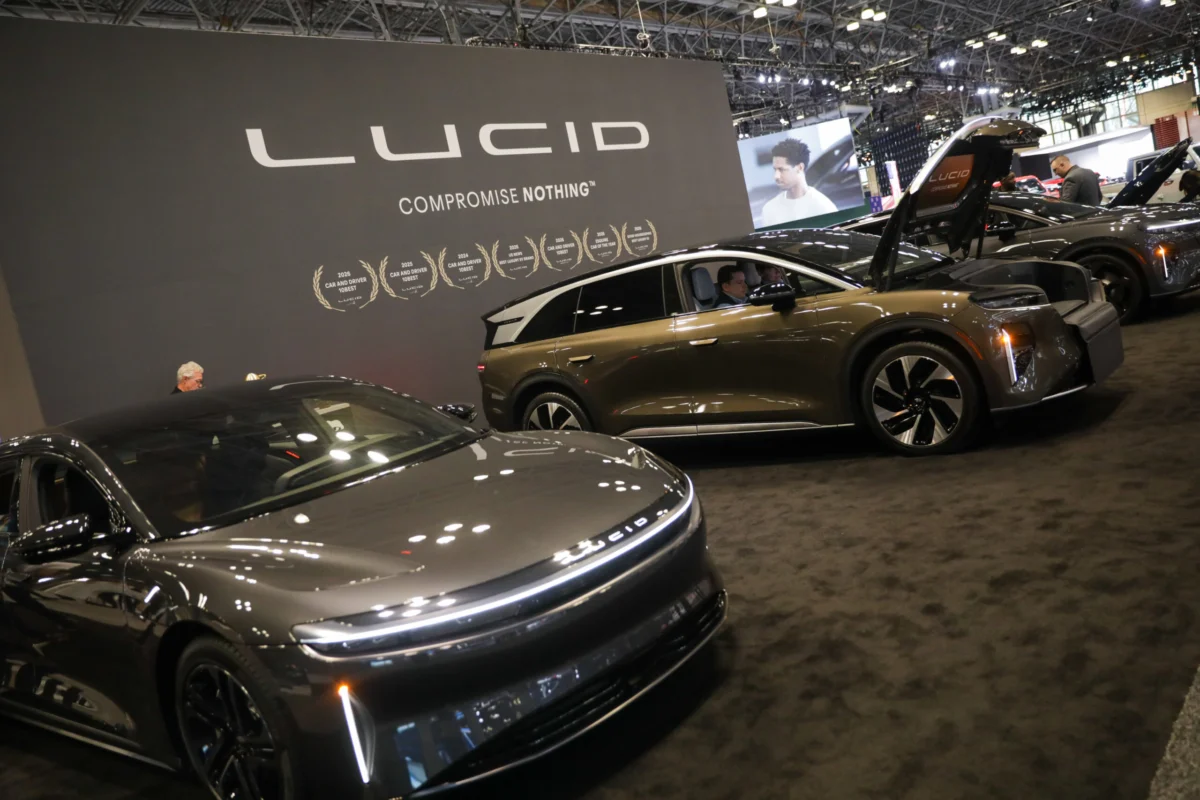
Lucid Group, the luxury electric vehicle manufacturer, today announced a pivotal leadership change, naming Silvio Napoli, former chairman and CEO of Swiss industrial industrial giant Schindler Group, as its new Chief Executive Officer. The appointment comes alongside a significant financial boost, with the company securing an additional $750 million in investments, comprising $550 million from an affiliate of its largest shareholder, Saudi Arabia’s Public Investment Fund (PIF), and $200 million from Uber Technologies. This dual announcement marks a critical juncture for Lucid as it navigates a challenging EV market and seeks to accelerate its production and technological development.
Napoli’s arrival fills a leadership void left by the abrupt departure of Lucid founder Peter Rawlinson in February 2025, making him the all-electric vehicle maker’s second CEO. Marc Winterhoff, who served as interim CEO, will transition to Chief Operating Officer, retaining his deep automotive expertise within the company’s executive structure. Napoli is expected to assume his new role in the coming weeks, contingent upon the completion of his relocation from Switzerland and the necessary U.S. visa processes. Despite the substantial investment news, shares of Lucid experienced a decline of approximately 5% in midday trading following the announcement. This market reaction underscores investor uncertainty surrounding a leadership transition coupled with ongoing concerns about the company’s production ramp-up, cash burn, and profitability timeline, even as it secures vital capital infusions.
A New Era for Lucid’s Leadership
The appointment of Silvio Napoli as CEO signals a distinct shift in Lucid’s strategic direction, moving from a founder-led, engineering-centric approach under Peter Rawlinson to one emphasizing operational efficiency and financial discipline. Rawlinson, a former Tesla executive, was instrumental in developing the Lucid Air sedan, focusing heavily on groundbreaking technology, range, and performance. However, Lucid has faced considerable challenges in scaling production and meeting delivery targets, leading to significant financial losses and a high cash burn rate. His departure in February 2025, just as the company was attempting to double its production, left a vacuum that interim CEO Marc Winterhoff, an automotive veteran with experience at major consulting firms, temporarily filled. Winterhoff’s retention as Chief Operating Officer suggests a strategic move to combine Napoli’s operational acumen with existing automotive industry knowledge crucial for manufacturing and supply chain management.
Lucid Chairman Turqi Alnowaiser underscored the rationale behind Napoli’s selection in a statement, emphasizing that Napoli’s "deep operational expertise, financial discipline and track record of leadership in innovation" would be critical as Lucid endeavors to scale and execute its ambitious strategy. This strategy includes the launch of upcoming midsize EVs and new autonomy initiatives, areas that demand meticulous capital allocation and a relentless focus on operational excellence.
The Strategic Significance of Silvio Napoli’s Appointment
Silvio Napoli brings a unique and extensive professional background to Lucid Group, having spent nearly 31 years at Schindler Group, a global leader in elevators, escalators, and related services. His tenure culminated in roles as Chairman and CEO, giving him comprehensive experience in managing complex industrial manufacturing operations on a global scale. While his background is not directly in the automotive industry, the skills honed at Schindler are highly transferable to the challenges faced by an EV manufacturer. Schindler operates in a capital-intensive sector, characterized by long product lifecycles, intricate supply chains, rigorous safety standards, and the need for precision engineering and efficient installation and maintenance networks.
Industry observers suggest that Napoli’s expertise in these areas could be precisely what Lucid needs. The company has demonstrated its capability in design and engineering with the critically acclaimed Lucid Air, but translating that innovation into consistent, high-volume production has been a persistent hurdle. Napoli’s proven ability to optimize operations, manage large-scale projects, and drive financial discipline within a global industrial enterprise could be instrumental in streamlining Lucid’s manufacturing processes, improving efficiency, and ultimately, reducing its path to profitability. His experience in capital allocation, as highlighted by Alnowaiser, will also be vital as Lucid continues to invest heavily in new product development, including its forthcoming Gravity SUV and future midsize platforms. Furthermore, Napoli’s role on the board of American-Irish multinational power management company Eaton Corp. adds another layer of industrial and technological insight, albeit still outside direct automotive manufacturing.
The Crucial Capital Influx: PIF and Uber’s Expanded Commitment
The $750 million investment package is a lifeline for Lucid, a company that has been significantly cash-intensive since its inception. The larger portion, $550 million, comes from an affiliate of Saudi Arabia’s Public Investment Fund (PIF), which already holds a majority stake in Lucid. The PIF’s continuous backing of Lucid is a cornerstone of its broader strategy to diversify the Saudi economy away from oil, investing heavily in technology, sustainable industries, and future-forward mobility solutions. The fund has been a steadfast supporter, participating in multiple funding rounds and providing substantial capital injections, including a significant investment in 2018 that was crucial for Lucid to bring the Air sedan to market. This latest investment reaffirms the PIF’s long-term commitment to Lucid’s success and its belief in the company’s potential to become a leading global luxury EV brand, aligning with Saudi Arabia’s Vision 2030 goals. For Lucid, this capital is vital for ongoing research and development, scaling production, and expanding its global footprint.
Complementing the PIF’s investment is a $200 million infusion from Uber Technologies, an expansion of a previously announced strategic partnership. This enhanced collaboration builds on an initial agreement from July 2025, which saw Uber committing $300 million and agreeing to purchase 20,000 Lucid vehicles. The new deal increases Uber’s investment to a total of $500 million ($300M + $200M) and boosts the vehicle commitment to at least 35,000 Lucid vehicles. These vehicles are specifically designed for use as part of Uber’s future global robotaxi service, signaling a significant B2B opportunity for Lucid.
Uber’s Robotaxi Ambitions and Lucid’s Role
Uber’s increased investment and expanded vehicle order underscore its serious intent to enter the autonomous robotaxi market, a sector projected to revolutionize urban transportation. The selection of Lucid vehicles for this ambitious project is a testament to Lucid’s advanced electric vehicle technology, particularly its industry-leading range and performance. For robotaxi services, range efficiency and reliability are paramount to minimize downtime for charging and maximize operational hours. Lucid Air’s impressive EPA-estimated range, coupled with its luxurious interior and potential for robust autonomous driving hardware integration, makes it an attractive platform for premium robotaxi services.

This partnership with Uber provides Lucid with a crucial alternative revenue stream beyond its direct-to-consumer luxury vehicle sales. While Lucid has focused on the high-margin premium segment, diversifying into fleet sales for autonomous services offers a pathway to higher production volumes and economies of scale. The commitment to 35,000 vehicles represents a substantial order that can help Lucid stabilize its manufacturing output and potentially lower per-unit costs over time. Furthermore, it places Lucid at the forefront of the burgeoning autonomous mobility sector, positioning its technology as a viable solution for future transportation networks. The collaboration also implies a deeper technological integration, with Lucid likely working closely with Uber on software and hardware adaptations necessary for autonomous operation, thus accelerating Lucid’s own autonomy initiatives.
Lucid’s Evolving Product Roadmap and Autonomy Initiatives
Lucid’s future growth strategy hinges on expanding its product portfolio beyond the Air sedan. The company has already unveiled plans for the Lucid Gravity SUV, a luxury electric SUV designed to compete in a rapidly growing segment of the EV market. The Gravity is expected to leverage the same advanced technology platform as the Air, offering exceptional range and performance in a more versatile package. Beyond the Gravity, Lucid has indicated plans for "upcoming midsize EVs," suggesting a move into more accessible, albeit still premium, market segments. These new models are crucial for increasing Lucid’s overall sales volume and market penetration.
Napoli’s operational expertise and focus on capital allocation will be vital in bringing these new vehicles to market efficiently and cost-effectively. Developing new vehicle platforms requires massive investment in R&D, tooling, and manufacturing facilities. His experience in managing complex industrial projects could help Lucid streamline these processes and avoid the production delays that have plagued many EV startups.
Simultaneously, the mention of "new autonomy initiatives" highlights Lucid’s commitment to advancing self-driving technology. This commitment is synergistically linked with the Uber partnership, as the development of robust autonomous capabilities will be essential for Uber’s robotaxi service. Lucid’s proprietary software and hardware architecture, designed for high performance and efficiency, could provide a strong foundation for developing advanced driver-assistance systems (ADAS) and eventually full autonomous driving capabilities. Integrating these features effectively and safely will be a key competitive differentiator in the evolving EV landscape.
Navigating a Competitive and Capital-Intensive EV Landscape
Lucid operates in an intensely competitive global electric vehicle market, dominated by established players like Tesla and increasingly challenged by legacy automakers such as Mercedes-Benz, Porsche, and Audi, all rapidly electrifying their luxury lineups. These competitors often boast larger production capacities, more extensive dealer networks, and deeper financial reserves. For a startup like Lucid, securing consistent funding and achieving production efficiency are paramount to survival and growth.
The company’s financial health has been a persistent concern for investors. While the Lucid Air has garnered critical acclaim for its design, performance, and range, production volumes have consistently lagged initial projections. In 2024 and early 2025, Lucid continued to grapple with supply chain disruptions, manufacturing bottlenecks, and the high cost of raw materials, contributing to substantial quarterly losses. The capital infusion from PIF and Uber is therefore not merely growth capital but also a critical component of shoring up its balance sheet and providing liquidity to fund ongoing operations and strategic initiatives. Analysts have frequently pointed to Lucid’s cash burn rate as a key metric to watch, and these investments provide a much-needed buffer.
Investor Sentiment and Future Outlook
The market’s immediate negative reaction, with Lucid shares falling despite the significant investment, reflects a complex investor sentiment. On one hand, the capital infusion is undoubtedly positive, mitigating immediate liquidity concerns and reaffirming strong institutional backing. On the other hand, the appointment of an outsider CEO, even one with an impressive industrial background, introduces an element of uncertainty. Investors often prefer automotive veterans in leadership roles for EV companies, especially during critical production ramp-ups. The "abrupt" nature of Rawlinson’s departure likely also contributed to nervousness, suggesting potential internal challenges that a new CEO will need to address.
Furthermore, while the Uber deal is a positive sign for future revenue and production scale, the dilution effect of new share issuance (implied by capital injections) could be a factor in the short-term stock performance. Investors will be closely watching Napoli’s initial actions and strategic announcements to assess his vision for Lucid and his ability to execute on aggressive production and profitability targets. The success of the Gravity SUV launch and the efficient scaling of production for both consumer and fleet vehicles will be crucial determinants of Lucid’s trajectory under its new leadership.
The Road Ahead for Lucid Group
The dual announcement of a new CEO and expanded investments marks a defining moment for Lucid Group. Silvio Napoli’s leadership, characterized by operational rigor and financial discipline, could be the catalyst Lucid needs to transition from an innovative startup to a high-volume, profitable luxury EV manufacturer. The substantial backing from the Saudi PIF provides the financial muscle required to navigate the capital-intensive EV market, while the expanded partnership with Uber opens up a significant B2B revenue stream and positions Lucid at the forefront of future mobility solutions.
The immediate challenge for Napoli will be to stabilize and optimize Lucid’s manufacturing operations, accelerate the production ramp-up, and ensure the successful launch of upcoming models like the Gravity SUV. His non-automotive background may present a learning curve, but his decades of experience in complex industrial environments offer a fresh perspective and a proven track record in achieving efficiency and scale. As Lucid continues its journey to redefine luxury electric mobility, the effectiveness of this new leadership and the strategic utilization of the newly secured capital will be under intense scrutiny from investors, competitors, and the broader automotive industry. The coming months will be critical in shaping the narrative of Lucid Group’s future trajectory.
