

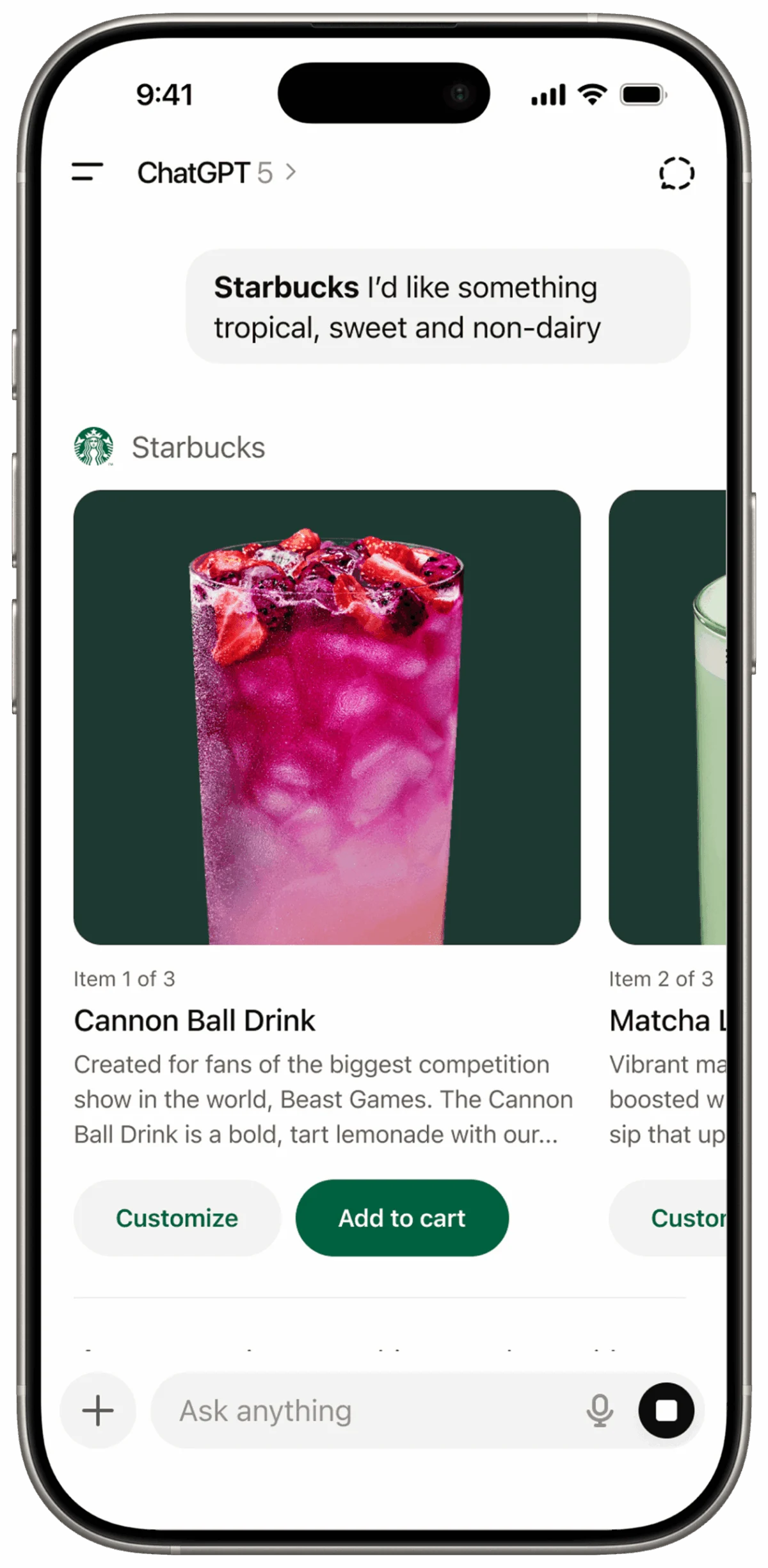
Starbucks has strategically launched a beta application within ChatGPT, aiming to revolutionize how customers discover and order their preferred beverages by offering personalized inspiration directly through the conversational AI platform. This innovative move, announced Wednesday, is designed to tap into evolving consumer behaviors, particularly the desire for customized experiences and seamless digital interaction. The initiative represents a significant step in the coffee giant’s ongoing digital transformation and its broader "Back to Starbucks" turnaround strategy, which seeks to re-engage customers and drive sustained growth in a competitive market. By leveraging generative artificial intelligence, Starbucks is positioning itself at the forefront of retail innovation, seeking to create a more intuitive and engaging customer journey that transcends traditional menu browsing.
The Mechanism of Digital Discovery and Loyalty Integration
To access the new beta app, customers must first enable the Starbucks application through ChatGPT’s dedicated app directory. Once activated, users can initiate a dialogue with the chatbot by including "@Starbucks" in their prompts, signaling their intent to interact with the coffee brand’s AI assistant. This integration allows for a highly interactive and personalized experience, where consumers can articulate their mood, cravings, or even specific dietary preferences, and receive tailored drink recommendations in return. For instance, a user might prompt, "I’m looking for a refreshing, non-caffeinated drink for a hot afternoon, @Starbucks," and the AI could suggest a customized iced tea or a specific Starbucks Refresher.
A crucial distinction of this new beta app is that while it facilitates order customization and even allows users to select their preferred pickup location, the final transaction must be completed on the official Starbucks app or through its website. This design choice is not incidental; it underscores Starbucks’ unwavering commitment to its highly successful Starbucks Rewards loyalty program. By directing users back to its proprietary platforms for checkout, the company ensures continued engagement with its direct digital ecosystem, fostering loyalty, capturing valuable customer data, and maintaining control over the end-to-end ordering process. This strategy reinforces the value proposition of the Starbucks Rewards program, which boasts tens of millions of active members globally and is a cornerstone of the company’s customer retention and sales growth initiatives.
Strategic Context: The "Back to Starbucks" Turnaround Initiative
The launch of the ChatGPT beta app is not an isolated technological experiment but a deliberate component of Starbucks’ comprehensive "Back to Starbucks" turnaround strategy. This multi-faceted initiative was conceived to address a period of significant challenges for the company, including two years of declining customer traffic that preceded its recent fiscal first-quarter rebound. The challenges stemmed from a confluence of factors, including the lingering impacts of the COVID-19 pandemic on consumer routines, increased competition from independent coffee shops and rival chains, and internal operational strains, some of which were exacerbated by a growing unionization movement within its U.S. stores.
Paul Riedel, Starbucks’ senior vice president of digital and loyalty, articulated the core philosophy behind this digital pivot, stating, "Over the past year, one thing has become clear: Customers aren’t always starting with a menu. They’re starting with a feeling… We wanted to meet customers right in that moment of inspiration and make it easier than ever to find a drink that fits." This statement highlights a profound shift in consumer behavior, moving beyond purely transactional ordering to a more experiential and emotionally driven discovery process. The "Back to Starbucks" strategy has involved several key operational and experiential enhancements:
- Re-emphasizing the "Third Place": The company has invested in adding more comfortable seating options back into its cafes and optimizing store layouts to restore its identity as a welcoming "third place" – a space distinct from home and work where communities can gather and connect. This move aims to recapture the in-store experience that has historically been a significant differentiator for the brand.
- Menu Optimization: Starbucks has undertaken a strategic trimming of its menu, streamlining offerings to reduce operational complexity, improve speed of service, and focus on high-demand, high-margin beverages and food items. This optimization helps baristas manage orders more efficiently and reduces waste.
- Loyalty Program Re-tiering: The company has also announced plans to reintroduce tiers to its loyalty program. While details of the specific tiers and their benefits are still emerging, this move is intended to further incentivize customer engagement, reward frequent visitors with more exclusive perks, and potentially drive higher average spending by offering aspirational loyalty levels. Historically, tiered loyalty programs have proven effective in deepening customer relationships and fostering brand advocacy.
Starbucks’ Expanding Digital Ecosystem and AI Integration Timeline
Starbucks has long been recognized as a digital pioneer in the retail food and beverage sector, with its mobile app and mobile order-and-pay system setting industry benchmarks years ago. The existing Starbucks mobile app already features robust drink discovery tools, including a "trending beverage" category and a "secret menu" housed under its "offers" tab. These features cater to customers seeking novelty and customization, particularly among younger demographics. The integration with ChatGPT represents an evolutionary step in this digital journey, moving beyond curated lists to truly personalized, AI-driven recommendations that respond dynamically to individual preferences.
The company’s foray into generative artificial intelligence is not limited to customer-facing applications. In a significant move last year, Starbucks unveiled "Green Dot Assist," an AI assistant specifically designed for its baristas. Developed in collaboration with Microsoft Azure’s OpenAI platform, Green Dot Assist serves as an invaluable operational tool, providing baristas with instant access to information on drink recipes, inventory levels, training modules, and troubleshooting guides. This internal AI deployment aims to enhance operational efficiency, ensure consistency in beverage preparation, reduce training times for new employees, and ultimately free up baristas to focus more on direct customer interaction and service. The dual implementation of AI – both externally for customer engagement and internally for operational support – underscores Starbucks’ holistic approach to leveraging advanced technology across its entire value chain. This timeline of AI adoption, from early mobile app dominance to sophisticated generative AI for both customers and employees, positions Starbucks as a forward-thinking leader in retail technology.
Meeting the Modern Consumer: Focus on Gen Z and Personalization
The emphasis on "drink discovery" and personalized recommendations is particularly pertinent for winning over Generation Z consumers. This demographic, broadly comprising individuals born between the mid-1990s and early 2010s, exhibits a distinct affinity for unique, customizable beverages at U.S. restaurant chains, a preference that often surpasses that of older generations. Gen Z are digital natives who grew up with unprecedented access to information and customization options across various platforms. They value authenticity, self-expression, and experiences that can be shared on social media. The phenomenon of "secret menu" drinks, often popularized through platforms like TikTok, is a testament to this demographic’s desire for novelty and personalization.
The ChatGPT beta app directly addresses this desire by providing a conversational interface that mimics how Gen Z often discovers trends and information online. Instead of sifting through a static menu, they can engage in a dynamic dialogue, describing their mood or desired flavor profile, and receive a bespoke recommendation. This approach resonates with their digital fluency and preference for interactive experiences over traditional browsing. By meeting customers "in that moment of inspiration," as Paul Riedel noted, Starbucks is strategically aligning its offerings with the psychological drivers of this influential consumer segment, potentially fostering deeper brand loyalty and increasing visit frequency among a demographic that will shape future market trends.
Industry-Wide Embrace of Generative AI and Open AI’s Enterprise Role
Starbucks’ integration of ChatGPT is indicative of a broader industry trend among major consumer companies leveraging generative artificial intelligence to enhance sales and customer engagement. The rapid advancements in AI, particularly in natural language processing and conversational AI, have opened new avenues for brands to interact with their customer base. Companies like Walmart, Etsy, and Booking.com are among the prominent names that have been actively exploring and testing shopping and purchasing experiences through ChatGPT’s interface.
Walmart, for instance, has been experimenting with AI-powered search capabilities that allow customers to find products based on broader contextual queries rather than specific item names. Etsy, an online marketplace known for unique handmade and vintage items, could leverage AI to offer hyper-personalized product recommendations or assist sellers with listing descriptions. Booking.com might use generative AI to help users plan entire trips, suggesting destinations, accommodations, and activities based on conversational input. These examples highlight the versatility of generative AI in streamlining discovery, personalizing recommendations, and simplifying complex decision-making processes for consumers. Starbucks’ partnership with OpenAI for this beta app, following its earlier collaboration with Microsoft Azure’s OpenAI platform for Green Dot Assist, further solidifies OpenAI’s growing role as a key technology provider for enterprise-level AI solutions across diverse industries. This trend signals a fundamental shift in how businesses are approaching digital transformation, moving beyond static websites and apps to dynamic, intelligent, and conversational interfaces.
Financial Rebound and Market Response
The timing of this digital innovation coincides with a notable turnaround in Starbucks’ financial performance. After two consecutive years of traffic declines, the coffee chain reported rising customer transactions in its fiscal first quarter, which concluded on December 28. This positive shift suggests that the "Back to Starbucks" turnaround strategy, encompassing operational improvements, menu adjustments, and loyalty program enhancements, is beginning to yield tangible results. The renewed focus on the in-store experience, coupled with continued digital innovation, appears to be resonating with consumers and driving foot traffic back to cafes.
Industry analysts are likely to view the ChatGPT beta app as a positive, forward-thinking move that could further bolster these encouraging financial trends. While the immediate impact on sales might be incremental, the long-term implications for customer engagement, loyalty program enrollment, and brand perception could be substantial. By making drink discovery more accessible and personalized, Starbucks stands to increase order frequency and average transaction values, particularly among tech-savvy demographics. The market’s reaction to such innovative digital initiatives often reflects investor confidence in a company’s ability to adapt to changing consumer landscapes and maintain a competitive edge. The consistent positive reports from analysts often highlight Starbucks’ strong brand equity and its capacity for innovation.
Implications and Future Considerations
While the integration of the ChatGPT beta app offers significant opportunities for Starbucks, it also presents several implications and considerations for the company and the broader industry.
Firstly, data privacy and security remain paramount. As Starbucks integrates with a third-party AI platform like ChatGPT, ensuring the secure handling of customer data and maintaining compliance with evolving privacy regulations will be critical. Transparent communication with users about data usage and robust security protocols will be essential to build and maintain trust.
Secondly, user adoption and experience will determine the ultimate success of the beta app. While innovative, the transition from a traditional app interface to a conversational AI platform may require a learning curve for some users. Starbucks will need to monitor user feedback closely, iterate on the app’s functionality, and potentially educate customers on how to best leverage the new discovery tool. The effectiveness of the AI’s recommendations and its ability to consistently deliver inspiring and accurate suggestions will be key to widespread adoption.
Thirdly, brand consistency and quality control must be meticulously managed. The AI-generated recommendations must align perfectly with Starbucks’ brand image, product availability in specific locations, and the company’s high standards for beverage quality. Any discrepancies could dilute brand perception or lead to customer dissatisfaction.
Finally, this strategic move is likely to intensify the competitive landscape within the food and beverage industry. As Starbucks demonstrates the potential of generative AI in customer engagement, competitors will undoubtedly accelerate their own exploration and implementation of similar technologies. This could lead to an "AI arms race," where brands vie to offer the most personalized, convenient, and innovative digital experiences, ultimately benefiting consumers through enhanced options and services. Moreover, while Green Dot Assist helps baristas, an increase in highly customized, AI-inspired orders could potentially add complexity to in-store operations if not managed effectively, requiring continuous optimization of both technology and human processes. Starbucks’ latest innovation serves as a significant benchmark for how established brands are leveraging cutting-edge AI to redefine customer interaction and drive business growth in the digital age.
