

Goldman Sachs, the global investment banking giant, announced a significantly stronger-than-anticipated performance for the first quarter of 2024, reporting record equities trading results and an impressive surge in investment banking revenue. The firm posted a substantial 19% increase in profit compared to the prior year, reaching $5.63 billion, or $17.55 per share, on revenues that climbed 14% to $17.23 billion. These figures comfortably surpassed analysts’ expectations, primarily propelled by heightened market activity and strategic positioning in key growth areas. However, the stellar top-line performance was accompanied by notable underperformance in its fixed income division and an unexpected rise in credit loss provisions, prompting questions about underlying credit market health and future stability amidst an evolving geopolitical landscape.
A Deeper Dive into Q1 Financial Highlights
The first quarter of 2024 proved to be a period of both significant opportunity and nuanced challenges for Goldman Sachs. The bank’s overall revenue of $17.23 billion represented its second-highest quarterly revenue on record, a testament to the bustling activity across Wall Street, particularly as institutional investors recalibrated portfolios in response to artificial intelligence-led market disruptions and shifting macroeconomic signals.
Record Equities Trading Fuels Growth: A standout performer, Goldman’s equities revenue soared by an impressive 27% year-over-year, reaching an unprecedented $5.33 billion. This figure exceeded StreetAccount estimates by approximately $420 million, underscoring the strength of its trading franchise. The surge was primarily driven by two key areas: increased financing activity from hedge fund clients within its prime brokerage business and a robust performance in matching buyers and sellers in cash equities products. The heightened demand for leverage and liquidity from sophisticated institutional clients, coupled with efficient market-making capabilities, allowed Goldman to capitalize on elevated trading volumes and volatility throughout the quarter. The environment, characterized by significant sector rotation and thematic investing around AI, provided ample opportunities for active managers, directly benefiting Goldman’s equities desks.
Investment Banking Rebounds Strongly: The firm’s investment banking division experienced a significant revitalization, with fees climbing 48% to $2.84 billion. This figure was approximately $340 million above expectations, signaling a robust recovery in deal-making activity. The primary driver was a surge in advisory revenue stemming from the completion of previously announced mergers and acquisitions (M&A) transactions. After a subdued period in M&A, the quarter saw a renewed appetite for strategic consolidations, with companies increasingly willing to engage in transformative deals. Furthermore, higher revenues in both equity and debt underwriting contributed meaningfully to the division’s strong performance. The revival of capital markets, spurred by a more stable interest rate outlook and improved corporate confidence, created a fertile ground for new issuances and refinancing activities.
Fixed Income Underperforms Expectations: While equities and investment banking shone, the firm’s fixed income, currencies, and commodities (FICC) operations faced headwinds. Revenue in this segment fell 10% to $4.01 billion, representing an unusually large miss of $910 million against StreetAccount estimates. Goldman attributed this decline to "significantly lower" revenues in interest rate products, mortgages, and credit. This underperformance suggests that while some areas of the market saw increased activity, the fixed income space may have been more susceptible to specific market dynamics, such as tighter spreads, reduced client activity in certain segments, or an adverse positioning relative to interest rate movements. The divergence between strong equities and weaker fixed income performance highlights the fragmented nature of market activity during the quarter.
Mixed Results in Asset & Wealth Management: The asset and wealth management division reported a 10% jump in revenue to $4.08 billion. However, this figure was approximately $140 million below expectations. The increase was primarily driven by higher management fees, benefiting from rising assets under supervision (AUM) due to market appreciation and net inflows. This positive trend was partially offset by lower private banking revenues, suggesting potential pressures or shifts in client activity within that specific segment of the wealth management business. The competitive landscape in wealth management remains intense, with firms continually investing in technology and client services to attract and retain high-net-worth individuals and institutional clients.
Rising Credit Loss Provisions Raise Eyebrows: A point of particular scrutiny for analysts was the firm’s provision for credit losses, which rose nearly 10% from a year earlier to $315 million. This amount was more than double the StreetAccount estimate of $150.4 million. Goldman attributed this increase to loan growth and impairments on wholesale loans. This marks the bank’s largest increase in loan loss provisions since 2020, a period characterized by significant economic uncertainty during the initial phase of the global pandemic. Wells Fargo banking analyst Mike Mayo highlighted this as a critical concern, stating in a Monday note, "This raises questions as to what Goldman executives see developing in credit markets." Such a proactive increase in reserves typically signals a more cautious outlook on credit quality and potential future defaults, suggesting that despite robust market activity, there may be underlying vulnerabilities in certain loan portfolios or a broader expectation of softening credit conditions.
Broader Market Context and Chronology of Q1 2024
The first quarter of 2024 unfolded against a backdrop of dynamic macroeconomic forces and geopolitical shifts that significantly influenced global financial markets. As the year commenced, investor sentiment was cautiously optimistic, buoyed by receding inflation fears and expectations of potential interest rate cuts by the Federal Reserve later in the year. This environment fostered increased risk appetite, particularly in growth-oriented sectors like technology, which continued to benefit from the pervasive enthusiasm around artificial intelligence.
January: The quarter began with a strong equity market rally. The S&P 500 reached new all-time highs, driven by robust corporate earnings reports and optimism regarding the economic outlook. Goldman Sachs’ trading desks likely saw early benefits from this positive momentum, as institutional clients adjusted their portfolios for the new year, initiating fresh positions and rebalancing existing ones. Investment banking activity, particularly M&A, began to show nascent signs of recovery, spurred by improved CEO confidence and strategic imperatives.
February: Market dynamics became more nuanced in February. While equity markets largely maintained their upward trajectory, some inflation data proved stickier than anticipated, leading to a recalibration of interest rate cut expectations. This introduced a degree of volatility, which, for a firm like Goldman Sachs with substantial trading operations, often translates into increased client activity and revenue opportunities. The month, however, also saw the escalation of geopolitical tensions, particularly in the Middle East, with the Iran conflict beginning on February 28. This event immediately injected uncertainty into commodity markets and global supply chains, foreshadowing potential headwinds for the financial sector.
March: The final month of the quarter was characterized by increased market churn. While the broader equity rally continued, the geopolitical situation, particularly the implications of the Middle East conflict, began to weigh on investor sentiment and corporate decision-making. The conflict’s potential to disrupt oil supplies and fuel inflationary pressures became a key concern. For Goldman’s investment banking arm, this translated into some hesitancy for new capital markets deals, such as IPOs, even as M&A completions remained strong. The fixed income segment likely felt the brunt of these uncertainties, as interest rate products and credit markets reacted to the evolving macro and geopolitical outlook.

Throughout this period, the "churn of artificial intelligence-led disruption" played a significant role. The narrative around AI’s transformative potential continued to drive investment flows into technology stocks, creating opportunities for Goldman’s equities desks to facilitate large block trades, provide derivatives hedging, and offer financing solutions to funds actively participating in this theme. This broad market trend was a critical underlying factor in the firm’s record equities performance.
Leadership Perspectives and Strategic Outlook
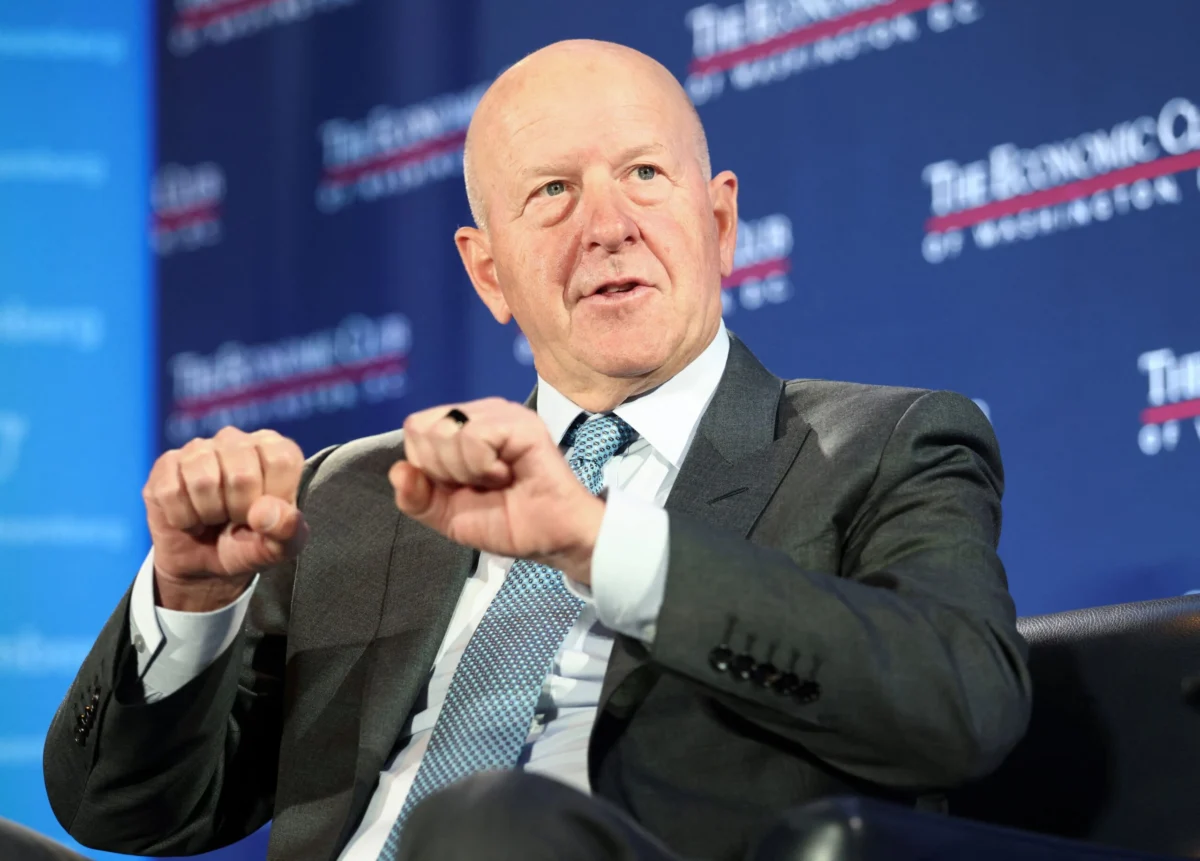
Goldman Sachs CEO David Solomon provided critical insights into the firm’s performance and the broader market environment during the earnings release and subsequent analyst call. Solomon acknowledged the firm’s "very strong performance for our shareholders this quarter," even as he recognized that "market conditions became more volatile." This dual perspective highlights the firm’s ability to capitalize on market activity while navigating an increasingly complex global landscape.
Navigating Geopolitical Headwinds: A significant portion of Solomon’s commentary focused on the implications of the escalating geopolitical tensions, particularly the Iran conflict. He emphasized the "very complex" geopolitical landscape and reiterated that "disciplined risk management must remain core to how we operate." Solomon elaborated on the potential impact, stating that if "the resolution of the conflict drags, that probably will be a headwind in some of these areas, particularly inflation trends as we get further into the second and the third quarter." This directly addresses concerns about future capital markets deals, as disruptive events that impact commodity prices, like the Iran conflict, can force corporate clients to the sidelines, thereby threatening future mergers or debt issuance activities. He specifically noted that market churn from the war had cooled IPO listings in March, although he still saw a robust pipeline of large IPOs awaiting more favorable market conditions to come to market.
Resilience Amidst Uncertainty: Despite the geopolitical concerns, Solomon conveyed a sense of resilience regarding the M&A and deals environment. While closely monitoring the Middle East situation, he indicated that the fundamental drivers for mergers and other transactions remained largely intact. This suggests that while external shocks can cause temporary pauses, the underlying strategic rationale for corporate consolidation and capital raising continues to be compelling for many businesses.
Analyst Contributions to the Narrative: Beyond the firm’s internal commentary, external analysts offered additional perspectives on the drivers of Goldman’s strong Q1. Barclays banking analyst Jason Goldberg noted that the bank’s results were also bolstered by a lower-than-expected tax rate, a favorable compensation ratio, and a larger-than-expected stock buyback program. These factors, while not directly related to core business performance, contribute significantly to net income and earnings per share, enhancing shareholder value. The stock buyback, in particular, signals confidence from management in the firm’s valuation and capital strength.
Broader Impact and Implications
Goldman Sachs’ first-quarter results offer a multifaceted view of its current standing and the challenges ahead. As a firm heavily reliant on its trading and investment banking franchise, the strong performance in these core areas reaffirms its strategic focus and competitive strength in a dynamic market.
Affirmation of Core Strengths: The record equities trading and surging investment banking fees underscore the enduring power of Goldman’s institutional client franchise. Its ability to generate significant revenue from these segments, even amidst volatility, demonstrates its deep relationships with corporate and institutional clients, sophisticated market insights, and robust technological infrastructure. This performance validates its strategic decision to lean into these capital-intensive, high-return businesses.
Challenges and Strategic Adjustments: The underperformance in fixed income, coupled with the rising credit loss provisions, highlights areas requiring closer attention. The fixed income miss could prompt an internal review of strategies in interest rate products, mortgages, and credit, potentially leading to adjustments in trading positions, client focus, or risk management frameworks. The significant increase in credit loss provisions is a more profound signal, suggesting that Goldman’s executives are bracing for potential credit deterioration in certain loan categories. This could influence future lending strategies, risk appetite, and capital allocation decisions. For investors, this raises a flag about the broader health of credit markets, even as equity markets soar.
Geopolitical Sensitivity: The explicit mention of the Iran conflict’s potential impact by CEO Solomon underscores the growing sensitivity of global financial markets to geopolitical events. Investment banks, by their very nature, are exposed to macroeconomic and geopolitical risks that can quickly alter market sentiment and corporate behavior. Goldman’s focus on "disciplined risk management" will be crucial in navigating these uncertainties, which could manifest as reduced M&A activity, slower IPO pipelines, or increased market volatility in the coming quarters. This also implies that the firm’s future performance will, to some extent, hinge on the de-escalation or containment of global conflicts.
Competitive Landscape: In a fiercely competitive environment, Goldman’s Q1 results position it strongly against peers, particularly in areas like M&A advisory and equity capital markets. However, the mixed performance across divisions indicates that no single firm is immune to market-specific headwinds. The ability to diversify revenue streams and adapt quickly to changing market conditions will remain paramount for all major investment banks.
Investor Sentiment: While the headline figures were strong, the initial nearly 2% dip in the bank’s shares on Monday suggests that investors are carefully weighing the positives against the emerging concerns. The significant credit loss provisions and the fixed income miss likely tempered some of the enthusiasm generated by the record equities and investment banking performance. Investor focus will likely shift to how Goldman manages these challenges in subsequent quarters, particularly its ability to contain credit risks and stabilize performance in underperforming segments while capitalizing on its strengths.
In conclusion, Goldman Sachs delivered a powerful first-quarter performance, showcasing its formidable capabilities in equities trading and investment banking, which capitalized on the prevailing market optimism and AI-driven activity. However, the quarter was not without its complexities, as evidenced by the fixed income challenges and a notable increase in credit loss provisions. As CEO David Solomon articulated, the firm operates within a "very complex" geopolitical landscape, making disciplined risk management and agile strategic adjustments critical for sustaining its strong momentum and navigating potential headwinds in the quarters ahead. The financial community will be closely monitoring how Goldman Sachs addresses these nuanced challenges while continuing to leverage its core strengths in the evolving global financial ecosystem.
