

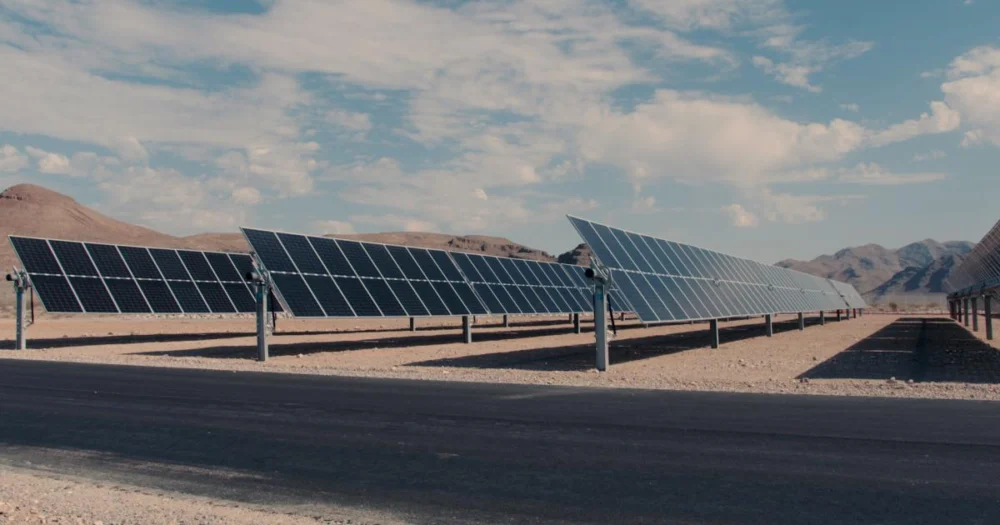
The landscape of renewable energy in the American West underwent a significant transformation in 2025, marked by a precipitous decline in new solar power installations across the state of Nevada. According to a comprehensive industry report released Tuesday by the Solar Energy Industries Association (SEIA) and the energy research firm Wood Mackenzie, Nevada’s standing as a premier hub for solar development has faltered. Once consistently ranked among the top ten states for annual solar growth—a position it held firmly throughout 2023 and 2024—Nevada plummeted to 27th in the nation for new installations over the past year. This downturn comes as a direct consequence of a fundamental shift in federal priorities, where the Trump administration has increasingly emphasized the expansion of fossil fuel production while implementing a series of restrictive policies that have curtailed the momentum of the renewable energy sector.
Despite this sharp annual decline, Nevada remains a formidable player in the overall transition to clean energy. The state currently maintains the sixth-highest total solar capacity in the United States, with a cumulative output of 8.2 gigawatts. This existing infrastructure is capable of powering approximately 1.4 million homes annually, underscoring the deep-rooted integration of solar technology within the state’s power grid. Furthermore, solar energy managed to retain its status as the primary source of new electricity generation added to both the Nevada and national grids in 2025. However, the volume of these additions has been severely hampered by recent administrative actions, creating a climate of uncertainty for developers and investors alike.
The Federal Pivot and Its Impact on Nevada’s Public Lands
The primary catalyst for Nevada’s solar stagnation appears to be a series of federal mandates aimed at centralizing control over energy development on public lands. In July 2025, the Trump administration issued a directive requiring that all solar and wind energy projects proposed for federal land receive personal approval from Interior Secretary Doug Burgum. In a state like Nevada, where the federal government manages approximately 85% of the land, this policy change has created a significant regulatory bottleneck.
Nevada Governor Joe Lombardo has voiced concerns regarding this threshold, noting that the requirement for high-level federal sign-off has effectively stalled numerous projects that were otherwise ready for construction. According to the SEIA, federal actions targeting the clean energy sector could potentially halt as many as 10 major solar and storage projects currently sited on a mix of federal and private lands. These projects are not peripheral to the state’s energy future; they represent nearly 95% of all planned new power generation in Nevada. The interruption of these developments threatens to derail the state’s long-term goal of increasing its in-state electricity generation from renewable sources, which has more than tripled since 2016.
National Trends: A Broad Contraction in Solar Growth
The challenges facing Nevada are reflective of a broader national trend. Across the United States, solar power installations saw a 14% decrease in 2025 compared to the previous year. While the industry still managed to install 43.2 gigawatts of new capacity—accounting for more than half of all new electricity generation added to the national grid—the rate of growth has slowed significantly.
Analysts from Wood Mackenzie attribute this decline to a combination of factors, including rising tariff-related expenses and the reversal of key renewable energy tax credit policies. These shifts have led to widespread delays and cancellations across various segments of the solar market. The utility-scale sector, which involves large-scale arrays that feed directly into the grid, saw a 16% decline in 2025. Meanwhile, the residential solar sector experienced a more modest dip of 2%, as homeowners navigated a changing landscape of incentives and financing options.
The Crisis in Community Solar and the "Solar for All" Program
The most severe impact was felt in the community solar segment, which plummeted by 25% nationally compared to 2024 levels. Community solar projects are designed to allow multiple customers—often those who cannot install panels on their own roofs, such as renters or low-income households—to share the benefits of a single solar array.
In Nevada, the decline of community solar was exacerbated by the federal government’s decision to freeze $156 million in grant funding under the "Solar for All" program. This program, originally administered by the Environmental Protection Agency (EPA), was intended to finance solar initiatives specifically benefiting low-income households. The "clawback" of these funds has left many vulnerable communities without the means to access affordable, clean energy, further widening the gap between different socioeconomic tiers of energy consumers.

Commercial Solar: A Lone Bright Spot
In contrast to the overall decline, the commercial solar segment grew by 6% in 2025, adding more than 2,300 megawatts of new capacity across the country. This growth was largely isolated to regions with favorable state-level policies. California, in particular, served as a primary driver for this segment due to its robust net metering program. This policy allows businesses and homeowners to receive financial credits for the excess energy their solar panels feed back into the grid, making the investment more economically viable despite federal headwinds.
The disparity between California’s growth and Nevada’s decline highlights the critical role of state-level autonomy and policy stability in the absence of federal support. While Nevada has leaned into solar energy—generating nearly one-third of its electricity from solar sources—the heavy reliance on federal land makes it uniquely susceptible to changes in Washington’s regulatory climate.
Battery Storage: Nevada’s Resilient Asset
One area where Nevada continues to lead is in energy storage. The state currently ranks fourth in the nation for battery storage capacity, with over 6.3 gigawatt-hours installed. This infrastructure is essential for managing the intermittent nature of solar power, allowing the grid to store excess energy generated during the day for use during peak demand hours in the evening.
The strength of Nevada’s storage sector suggests that the technical appetite for renewable integration remains high. However, without a corresponding increase in generation capacity, the long-term utility of these storage assets may be limited. Industry experts suggest that the synergy between solar generation and battery storage is the most effective way to meet the rapidly rising energy demands of the 21st century, particularly as data centers and electrification increase the load on the national grid.
Chronology of the Decline: 2023 to 2025
The trajectory of Nevada’s solar industry over the last three years provides a clear timeline of how policy changes can alter market dynamics:
- 2023-2024: Nevada enjoys a "golden era" of solar expansion, consistently ranking in the top ten states for new installations. State mandates and federal incentives under previous administrations drive record-breaking utility-scale projects.
- Early 2025: The new federal administration shifts focus toward "energy dominance" through fossil fuels. Initial freezes on EPA grants, including the Solar for All program, begin to impact community-level projects.
- July 2025: The Department of the Interior implements the "Burgum Threshold," requiring personal secretarial approval for all renewable projects on public lands. This creates an immediate backlog of environmental assessments and permit approvals.
- Late 2025: Tariff increases on imported solar components and the repeal of certain tax credits lead to a 14% national decline. Nevada’s ranking falls to 27th as 95% of its planned capacity is caught in regulatory limbo.
- Present: Industry reports confirm the significant drop in installations, leading to calls from state leaders and trade organizations for greater policy certainty.
Industry Reactions and Economic Implications
The reaction from the renewable energy sector has been one of urgent concern. Darren Van’t Hof, the Interim President and CEO of the Solar Energy Industries Association, emphasized that the demand for solar and storage has not waned among consumers, but rather is being stifled by political friction.
"Solar and storage continue to dominate new capacity additions to the grid despite policy headwinds," Van’t Hof stated. "American households and businesses of all sizes are demanding solar plus storage because they deliver fast, affordable power to help meet rapidly rising demand. Washington must deliver policy certainty for the market to work and to keep pace with growing energy demands. Without this certainty, less solar will get built and Americans will pay the price with higher energy bills."
Economists warn that the continued stalling of solar projects could have long-term repercussions for Nevada’s economy. The solar industry has historically been a significant source of high-paying, local jobs in construction, engineering, and maintenance. Furthermore, as the state experiences rising temperatures and increased demand for air conditioning, the failure to expand solar capacity could lead to greater reliance on expensive out-of-state energy imports or older, less efficient fossil fuel plants.
The current situation presents a paradox: Nevada possesses the natural resources and the existing infrastructure to be a global leader in clean energy, yet it finds itself constrained by a regulatory environment that prioritizes traditional energy sources. As 2026 approaches, the focus of state policymakers and industry advocates will likely remain on navigating federal hurdles and seeking ways to decouple Nevada’s energy future from the shifting political winds in Washington. Without a resolution to the current permitting and funding freezes, the state’s transition to a fully modernized, renewable grid may remain in a state of arrested development.
