

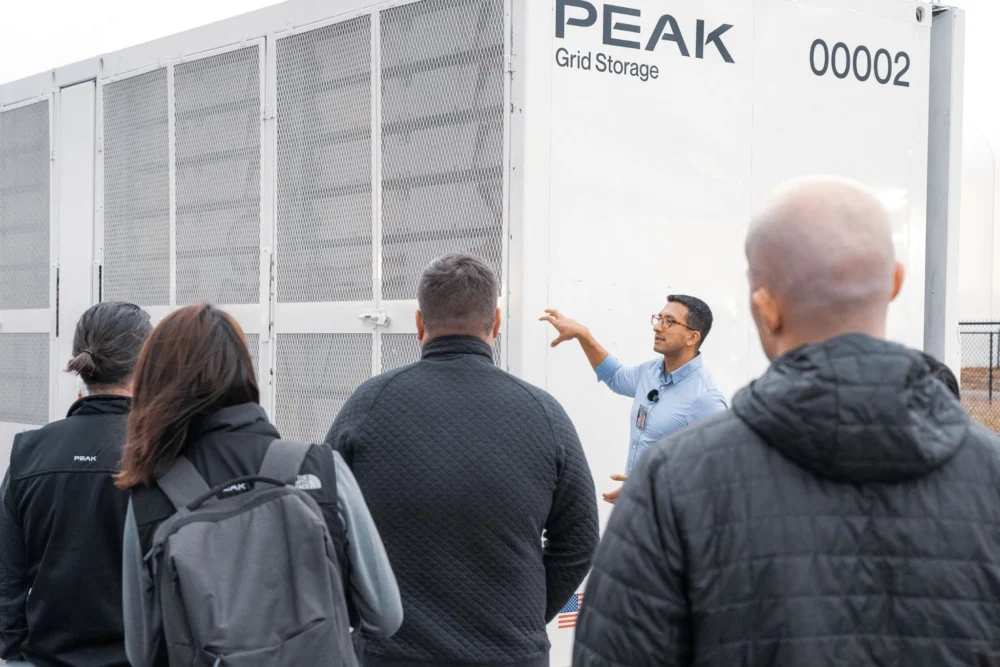
The landscape of the American energy grid is undergoing a fundamental shift as utilities and developers seek alternatives to traditional lithium-ion battery chemistry. In a significant move for the domestic energy storage sector, Denver-based Peak Energy has finalized an agreement with RWE Americas, one of the world’s largest renewable energy developers, to deploy a proprietary sodium-ion grid storage system. The project, slated for the RWE Lab near Milwaukee, Wisconsin, represents a critical milestone: the first deployment of sodium-ion battery technology on the Midcontinent Independent System Operator (MISO) network. This partnership signals a growing industrial confidence in sodium-based chemistries as a viable, low-cost, and safer alternative to the lithium-ion systems that currently dominate the global market.
The deployment focuses on Peak Energy’s flagship sodium-ion phosphate pyrophosphate (NFPP) technology. Unlike the lithium iron phosphate (LFP) or nickel manganese cobalt (NMC) batteries typically found in electric vehicles and grid-scale storage, sodium-ion batteries utilize sodium—an element that is abundant, inexpensive, and geographically diverse in its availability. For RWE Americas, the pilot project at their Milwaukee facility serves as a testing ground for next-generation, capital-efficient energy storage that could eventually be scaled across their massive North American portfolio.
The Evolution of Sodium-Ion Technology and the NFPP Advantage
The energy industry has long sought a "holy grail" of storage: a battery that is as energy-dense as lithium but without the associated supply chain risks and thermal management complexities. Peak Energy’s approach centers on a 3.5 megawatt-hour (MWh) battery energy storage system (BESS) that utilizes a fully passive cooling architecture. By eliminating active cooling components—such as fans, pumps, and liquid refrigerants—Peak Energy claims to have removed 85% of the root causes associated with historical BESS failures.

The technical specifications of the NFPP cells allow for safe operation across a wide temperature spectrum. This is particularly relevant for the Midwestern United States, where seasonal temperature fluctuations can range from sub-zero winters to humid, high-heat summers. Traditional lithium-ion batteries require significant auxiliary power to maintain an optimal internal temperature; in contrast, Peak Energy’s system reduces auxiliary power consumption by up to 90%. According to company data, this efficiency can translate into approximately $1 million in annual savings per gigawatt-hour (GWh) installed when compared to standard LFP systems.
Furthermore, the "overbuild" requirement—the industry practice of installing more capacity than needed to account for degradation over time—is significantly reduced with sodium-ion chemistry. Peak Energy’s calculations suggest a reduction in the lifetime cost of stored energy by an average of $70 per kilowatt-hour (kWh), effectively halving the total price of a battery system over its operational life.
A Chronology of Peak Energy’s Market Entry
The agreement with RWE Americas is the latest in a series of rapid-fire developments for Peak Energy. The company first made headlines in the summer of 2024 when it shipped its inaugural grid-scale system for a shared pilot program involving nine major utilities and independent power producers (IPPs). That deployment was hailed as the first-ever fully passive MWh-scale battery system and the largest NFPP installation in the world.
Following the success of its initial pilot, Peak Energy secured a multi-year phased agreement in November 2024 with Jupiter Power. That contract, which covers the period between 2027 and 2030, involves the supply of up to 4.75 GWh of sodium-ion BESS. The partnership with RWE Americas provides the necessary real-world validation on the MISO grid, which is one of the world’s largest energy markets, spanning 15 U.S. states and the Canadian province of Manitoba.

The rise of Peak Energy occurs against a backdrop of volatility in the sodium-ion sector. While companies like Natron Energy had previously announced ambitious plans—including a $1.4 billion "giga-factory" in Edgecombe County, North Carolina—market pressures and operational hurdles led Natron to cease operations in late 2025. Peak Energy’s ability to secure large-scale contracts with developers like RWE suggests a consolidation of the market toward players with proven deployment capabilities and integrated engineering solutions.
Strategic Impact on the MISO Network and Ratepayer Economics
The integration of storage into the MISO network is not merely a technical achievement; it is an economic necessity. A recent report by Aurora Energy Research highlighted the stakes, concluding that the installation of 10 GWh of battery storage capacity over the next decade could slash total MISO system costs by as much as $27 billion. These savings stem from the ability of batteries to provide dispatchable, reliable energy during peak demand periods, thereby reducing the need for expensive "peaker" plants and mitigating the volatility of wholesale electricity prices.
If MISO were to adopt sodium-ion solutions like Peak’s GS1.1 systems, the financial benefits could be even more pronounced. The startup estimates that its technology could reduce total storage system costs by more than 25% compared to conventional lithium-ion solutions. For ratepayers in states like Wisconsin, who have faced rising bills due to infrastructure upgrades and fuel price fluctuations, the transition to lower-cost storage is a critical component of long-term price stability.
"Energy storage is central to providing dispatchable, reliable energy on demand," stated Landon Mossburg, Chief Executive Officer of Peak Energy. "Delivering the lowest cost electron is Peak Energy’s north star, and we’re proud to work with RWE Americas to deploy our cost-optimized batteries on the grid."

RWE Americas and the 2025 Renewable Surge
The partnership with Peak Energy is a tactical piece of a much larger strategic puzzle for RWE Americas. In 2025, the developer added a staggering 2 gigawatts (GW) of operating capacity to the U.S. grid, bringing its total domestic footprint to nearly 13 GW. This expansion involved 15 completed projects across seven states, including solar, wind, and battery storage installations.
RWE’s 2025 portfolio highlights include:
- Solar and Storage: Six major solar sites and four dedicated BESS facilities launched in states like Arizona, Texas, and New York.
- Wind Power: Five wind projects commissioned, primarily in the central and southern U.S.
- Economic Contribution: The company’s 2025 activities supported more than 3,500 construction jobs and generated over $500 million in local tax revenue and community benefits.
Andrew Flanagan, CEO of RWE Americas, emphasized the urgency of this expansion. "The U.S. is at a pivotal moment for electricity demand," Flanagan noted. "These projects are more than just getting steel in the ground; they are about delivering power and generating lasting impact in the communities we serve."
By piloting Peak Energy’s sodium-ion technology, RWE is positioning itself as a "first mover" in a technology class that could eventually decouple the American energy transition from the volatile global lithium market. As of 2025, the U.S. energy storage industry reached a record-breaking 57.6 GWh of new capacity—a 30% increase over 2024. With projections suggesting that over 600 GWh of storage will be installed by 2030, the demand for diversified battery chemistries has never been higher.

Broader Implications for the Global Battery Supply Chain
The move toward sodium-ion technology carries profound geopolitical and supply chain implications. Currently, the lithium-ion supply chain is heavily concentrated, with a significant portion of processing and cell manufacturing occurring in China. Sodium, conversely, can be sourced from soda ash, which is abundant in the United States (particularly in Wyoming).
The shift to NFPP and other sodium-based chemistries allows U.S. manufacturers to build a "circular" domestic supply chain that is less susceptible to trade disputes and shipping bottlenecks. Furthermore, because sodium-ion batteries do not require cobalt—a mineral often associated with ethical concerns in mining—the technology aligns more closely with the Environmental, Social, and Governance (ESG) goals of major global developers like RWE.
As the Wisconsin pilot progresses, the industry will be watching closely for data on cycle life, round-trip efficiency, and long-term thermal stability. If the Milwaukee deployment meets its performance targets, it could catalyze a broader shift away from lithium for stationary grid applications, reserving that more energy-dense chemistry for the weight-sensitive electric vehicle market.
The collaboration between Peak Energy and RWE Americas represents a maturation of the sodium-ion sector. It moves the conversation from laboratory potential to grid-scale reality, offering a glimpse into a future where the "salt of the earth" provides the foundation for a more resilient and affordable American power grid. For the MISO network and the broader U.S. energy market, the Milwaukee pilot is a small step in terms of megawatt-hours, but a giant leap for the commercialization of sustainable energy storage.
