

On Friday, November 13, 2026, the United States aviation system experienced an unprecedented nationwide ground stop, bringing air travel to a standstill for over four hours. The Federal Aviation Administration (FAA) cited "extraordinary circumstances and for reasons of safety" as it halted all departing flights, a measure not seen in its scale since the aftermath of the September 11, 2001, terrorist attacks. The disruption, later attributed to a critical router malfunction in southern Arkansas amidst a routine system upgrade, cascaded into a weekend of widespread cancellations and delays, impacting hundreds of thousands of travelers and reigniting urgent calls for significant investment in the nation’s aging air traffic control infrastructure. The incident quickly transformed from a technical glitch into a national conversation about the fragility of essential public services and the political will to modernize them.
Chronology of a Crisis: From Ground Stop to Lingering Disruption
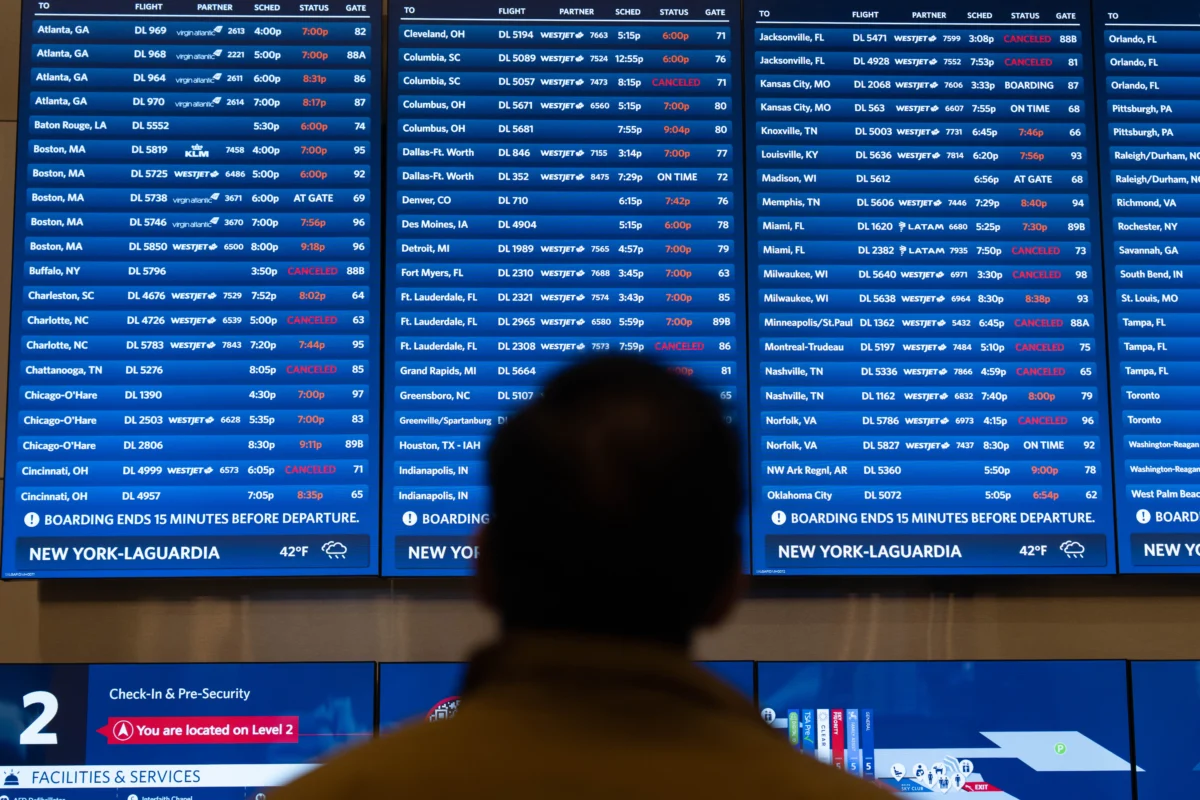
The crisis began unfolding on Friday, November 13, 2026, when the FAA initiated the nationwide ground stop just before 4 p.m. Eastern Time. The directive ordered all departing flights across the U.S. to remain on the tarmac, effectively paralyzing air travel. For more than four agonizing hours, airports like New York’s LaGuardia, shown with departure boards flashing endless delays and cancellations, became scenes of growing frustration and confusion. The ground stop persisted until after 8 p.m. ET, marking a profound halt to air operations that immediately raised questions about the robustness of the nation’s air traffic control systems.
While the ground stop was eventually lifted, its effects were far-reaching and prolonged. The ripple effect began immediately, forcing airlines to scramble to resequence flights and crews. By Saturday, the aviation network was in severe disarray. Passengers, many of whom had already faced disruptions from adverse weather conditions on Thursday and Friday, found themselves stranded in terminals, desperately seeking alternative travel arrangements. The backlog of aircraft and passengers created a monumental challenge for carriers, leading to a cascade of further cancellations and delays throughout the weekend.
Sunday saw some signs of improvement, with disruptions starting to ease, but the system remained fragile. Many travelers, like Beth Martin and her daughter, found themselves spending an unplanned night at LaGuardia Airport, resorting to sleeping in wheelchairs outside security after their Delta flight to Birmingham, Alabama, was canceled. Their experience underscored the deep personal impact of the system failure, turning a birthday trip into an unexpected ordeal.
By Monday, U.S. flight delays had considerably eased, indicating a slow return to normalcy. However, the operational scars of the weekend remained visible. Nearly 300 U.S. flights were still canceled, and close to 1,000 were delayed on Monday alone, according to FlightAware data, a fraction of the previous day’s turmoil but still significant. The entire period from Friday through Monday morning tallied a staggering 18,000 U.S. flight cancellations, profoundly disrupting the lives and plans of hundreds of thousands of travelers.
The Technical Malfunction: A Deep Dive into System Vulnerabilities
The root cause of the unprecedented ground stop was quickly identified and linked to a technical malfunction within a critical component of the FAA’s infrastructure. Transportation Secretary Sean Duffy disclosed over the weekend that the issue originated from a router located in southern Arkansas. This router, a vital piece of network hardware responsible for directing data traffic, was undergoing updates as part of a larger project to transition from an outdated copper wire system to a more modern and efficient fiber-optic network. This modernization effort is overseen by L3Harris Technologies, a major aerospace and defense technology company.
FAA Administrator Bryan Bedford characterized the ongoing upgrades as "routine maintenance" designed to switch over to the fiber optic system. However, the "instability" in data feeds caused by the router malfunction demonstrated that even routine procedures within a complex, interconnected system could have catastrophic consequences. Such data feeds are absolutely essential for the safe and efficient operation of air traffic control, providing real-time information to controllers and pilots about flight paths, weather, and potential hazards. A disruption in these feeds can compromise safety, necessitating immediate action like a ground stop to prevent potential accidents.
The investigation into the incident intensified, with Secretary Duffy confirming on Sunday that two routers—the primary problematic unit from southern Arkansas and another from Amarillo, Texas—were transported to an L3Harris lab in Florida for thorough analysis. L3Harris Technologies, acknowledging its role, issued a statement Saturday afternoon asserting, "We are supporting the FAA in its investigation to understand the conditions that led to the Nov. 13 ground stop of our nation’s air travel." This collaborative investigative effort aims to pinpoint the precise failure points and prevent recurrence. The incident highlighted the inherent risks associated with upgrading legacy systems that are critical to national infrastructure, underscoring the delicate balance between modernization and operational continuity.

Widespread Disruption: A Traveler’s Ordeal
The human cost of the ground stop was immense, manifesting in widespread travel chaos and personal hardship. The cancellation of approximately 18,000 U.S. flights from Friday through Monday morning, coupled with thousands of delays, left hundreds of thousands of passengers stranded in airports, at gates, or even on aircraft. The scale of disruption was particularly acute for major carriers. According to aviation data firm Cirium, American Airlines bore the brunt of the cancellations, grounding 5,367 flights, which represented close to 22% of its entire schedule. Delta Air Lines followed closely with 3,434 cancellations, or 17% of its schedule. Southwest Airlines and United Airlines each canceled more than 16% of their respective schedules, illustrating the systemic impact across the industry.
Travelers recounted tales of frustration, resilience, and extraordinary detours. Beth Martin, attempting to return home to Birmingham, Alabama, from New York’s LaGuardia Airport with her daughter after a birthday trip, experienced the full extent of the disruption. Booked for a Saturday night flight, their plans were upended by Delta’s continuous delay announcements, culminating in a cancellation. Faced with grim standby lists and an exorbitant $700 charge for an additional night at their midtown hotel, Martin and her daughter spent Saturday night sleeping in wheelchairs outside security at LaGuardia. Their journey home would be further extended, with Delta rebooking them to Memphis, requiring Martin’s husband to drive four hours from Birmingham for pickup.
Justine Fritz, a sales professional for a consumer goods company, found herself caught in a logistical nightmare while trying to return to Minneapolis from a business event in New York. She attempted to board five different flights before finally securing a seat on one bound for Houston, a four-hour detour out of her way. Her original Saturday flight to Minneapolis had been canceled, forcing her through a circuitous route. Fritz described the experience as "bananas," accumulating so many boarding passes that the Transportation Security Administration initially hesitated to clear her through security. Despite making the best of a bad situation by shopping and getting a haircut, her disappointment was palpable, lamenting, "I’m missing the first hour of the Vikings game." These anecdotes painted a vivid picture of the personal sacrifices and inconveniences imposed by the unexpected failure of a critical national system.
Airline Industry Response and Recovery Efforts
In the immediate aftermath of the ground stop and throughout the recovery period, U.S. airlines moved swiftly to mitigate the impact on passengers and their own operations. Recognizing the extraordinary circumstances, most carriers waived change fees and fare differences for affected travelers, allowing them greater flexibility to rebook flights without additional financial penalty. This measure aimed to ease the burden on stranded passengers and help them navigate the complex rebooking process.
Internally, airlines implemented various strategies to incentivize their crews and get flights back on schedule. Many offered pilots and flight attendants extra pay to work additional shifts or altered routes, an essential step to ensure adequate staffing as the system struggled to recover. The goal was to quickly clear the backlog of delayed aircraft and stranded passengers, a monumental task given the sheer volume of cancellations. However, even with these efforts, the interconnected nature of air travel meant that crew availability, aircraft positioning, and airport slot restrictions created significant challenges in restoring a smooth operational flow. The ground stop exposed the delicate equilibrium of airline schedules, where a single major disruption can take days to fully resolve, despite the best efforts of individual carriers.
Official Reactions and Accountability
The federal response to the ground stop was immediate, albeit with varying tones from different officials. Transportation Secretary Sean Duffy quickly became a central figure, providing updates and outlining the steps being taken. Beyond identifying the router malfunction and L3Harris Technologies’ involvement in the fiber-optic upgrade, Duffy used the incident as a platform to call for substantial new investments in the nation’s air traffic control system. He publicly announced that he would be asking Congress for as much as $50 billion for comprehensive upgrades to what he described as an aging infrastructure.
FAA Administrator Bryan Bedford, while acknowledging the seriousness of the event, maintained that the technical issue occurred during "routine" maintenance, suggesting that the underlying modernization efforts were standard procedure. This characterization, however, stood in stark contrast to the extraordinary outcome of a nationwide ground stop, raising implicit questions about the robustness of "routine" processes for critical national systems.
L3Harris Technologies, as the contractor involved in the system upgrades, promptly issued a statement pledging its full cooperation with the FAA’s investigation. Their commitment to understanding the conditions that led to the ground stop was crucial, given their integral role in the modernization project.
Perhaps the most notable political reaction came from President Donald Trump, who, when questioned about the incident on Monday, stated that he "didn’t take any responsibility" for the ground stop. This declaration quickly became a talking point, diverting attention to the broader issue of governmental accountability for infrastructure failures. His administration had overseen significant infrastructure discussions, and the incident immediately placed a spotlight on federal oversight and investment priorities.

Political Fallout and the Infrastructure Debate
The FAA ground stop rapidly escalated into a heated political debate, particularly concerning the funding and modernization of America’s aviation infrastructure. Secretary Duffy’s call for $50 billion in congressional funding for air traffic control upgrades was met with immediate skepticism and pushback from Democratic lawmakers. Representatives Rick Larsen (D.-Wash.), the ranking member of the House Committee on Transportation and Infrastructure, and Andre Carson (D.-Ind.), the ranking member of the aviation subcommittee, issued a joint statement challenging the administration’s request.
Their primary contention was the existence of unspent money from existing funding allocations. They pointed to Congress’s approval just the previous year of $12.5 billion specifically for airport and air traffic control improvements over five years. The lawmakers argued that rather than immediately seeking new, massive appropriations, the administration should first account for how existing funds were being utilized and why they hadn’t prevented such a catastrophic failure. "Our committee, on behalf of the flying public, will hold the administration accountable for what happened to make sure this chaos does not happen again," their statement asserted, signaling an impending legislative inquiry into the incident and the broader state of aviation infrastructure.
This standoff highlighted a perennial challenge in U.S. infrastructure policy: the tension between perceived urgent needs for investment and the scrutiny of how allocated funds are managed. The debate surrounding the ground stop underscored long-standing concerns about the aging nature of U.S. air traffic control systems, which rely on a patchwork of technologies, some dating back decades. While efforts like the "NextGen" initiative have aimed to modernize the system, progress has often been slow and subject to political and budgetary constraints. The November 2026 ground stop provided stark evidence of the potential consequences of deferred maintenance and underinvestment, forcing the issue back onto the national legislative agenda with renewed urgency.
Historical Context and Precedent
The nationwide ground stop of November 13, 2026, holds a significant place in the annals of U.S. aviation history due to its unprecedented scale and duration. FAA officials confirmed that the four-hour halt to all departing U.S. flights was the longest and most comprehensive since the aftermath of the September 11, 2001, terrorist attacks. The 9/11 attacks prompted an immediate and total shutdown of U.S. airspace for several days, an extraordinary measure taken in response to an act of war. The 2026 incident, while technically driven, invoked a similar level of systemic paralysis, albeit for a shorter period.
This comparison underscores the severity of the technical malfunction. While previous localized outages or weather events have caused significant disruptions, a nationwide ground stop originating from a technical glitch is exceptionally rare and alarming. It demonstrated the critical vulnerability of the highly interconnected air traffic control network, where a single point of failure in a seemingly routine upgrade process could cascade into a complete system freeze. The incident serves as a stark reminder that even in an era of advanced technology, the fundamental infrastructure supporting global air travel remains susceptible to unexpected failures, with immense consequences for commerce, national security, and individual mobility.
Looking Forward: Investigations and Future Resilience
As the immediate chaos subsided, the focus shifted towards a thorough investigation and proactive measures to prevent similar occurrences. The ongoing analysis of the faulty routers at the L3Harris lab in Florida is central to understanding the precise mechanisms of failure. This forensic examination is expected to yield critical insights into both the router’s performance and the protocols surrounding the copper-to-fiber-optic system upgrade. The findings will likely inform future maintenance procedures, system redundancies, and security protocols for the entire national airspace system.
Beyond the immediate technical investigation, the incident has undoubtedly accelerated the broader conversation about the long-term resilience and modernization of U.S. aviation infrastructure. The calls for increased funding, although politically contentious, highlight a consensus that significant investment is needed to safeguard the future of air travel. This includes not only replacing aging hardware but also implementing more sophisticated software, enhancing cybersecurity measures, and building greater redundancy into critical systems to ensure that no single point of failure can trigger such a widespread shutdown again.
The FAA, in conjunction with industry partners and congressional oversight, faces the complex challenge of balancing the urgent need for upgrades with the imperative of maintaining operational safety and continuity. The Great American Air Travel Shutdown of November 2026 serves as a potent and costly lesson, emphasizing that the invisible infrastructure supporting modern life demands constant vigilance, robust investment, and unwavering political commitment to ensure its stability and reliability for the millions who depend on it daily.
