

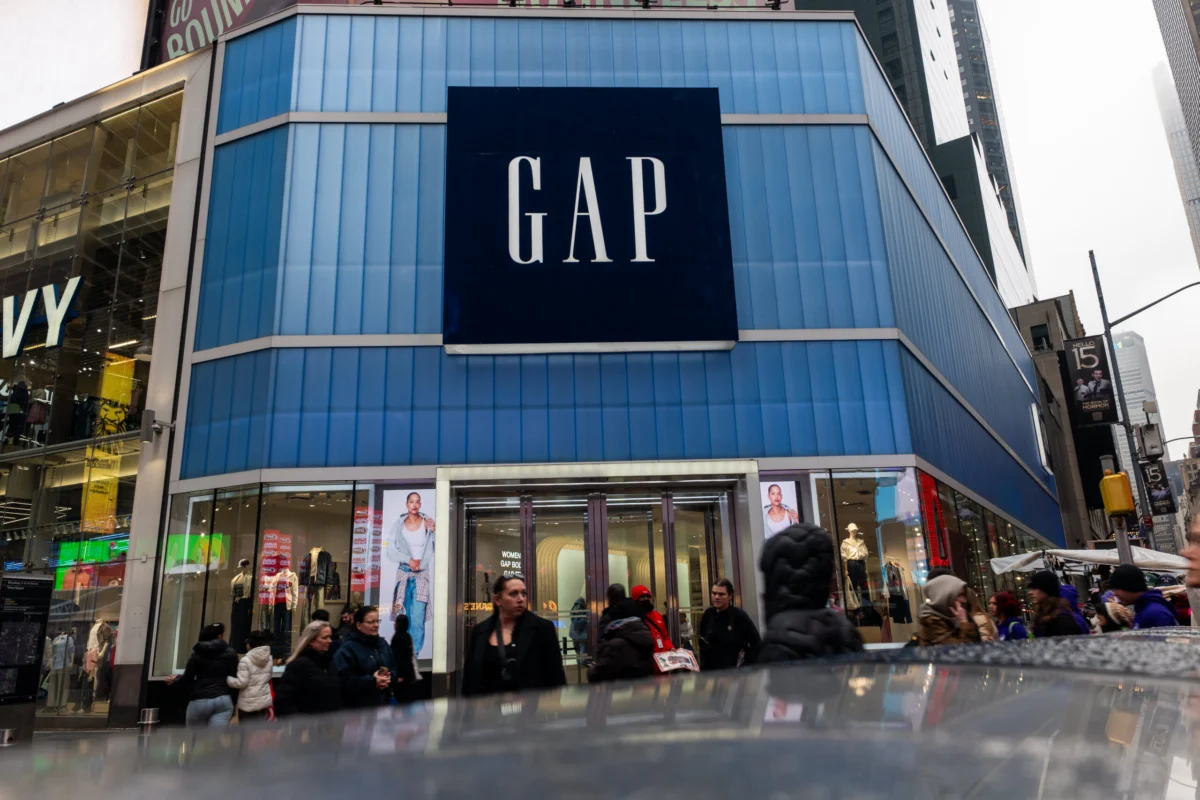
Gap Inc. on Thursday announced a significant leadership change at its Athleta brand, naming Ashley Kechter as the new president and CEO, effective December 14. This appointment arrives as the apparel giant navigates a period of mixed financial results, reporting a flat overall comparable sales performance for its fiscal third quarter and subsequently lowering its full-year guidance. The move underscores Gap Inc.’s intensified focus on revitalizing Athleta, a brand critical to its portfolio diversification, amidst a highly competitive activewear market.
Athleta’s Strategic Reorientation and New Leadership
Ashley Kechter’s return to Gap Inc. marks a pivotal moment for Athleta, a brand that has recently faced performance challenges. Kechter, a seasoned executive in the activewear sector, joins Athleta from Vuori, where she served as global president. In that role, she was instrumental in shaping Vuori’s global business strategy, marketing initiatives, and financial oversight, contributing to its rapid ascent in the premium activewear segment. Her prior experience also includes a tenure as global brand president of Fabletics, another prominent player in the direct-to-consumer activewear space, and an earlier career stint at Gap Inc., making her return a full-circle moment for the company.
"I’m excited to return to Gap Inc. and partner with [Gap CEO Richard Dickson] and the team to strengthen our connection with customers and shape the brand’s next chapter," Kechter stated, signaling her readiness to tackle the brand’s current challenges.
Kechter’s appointment follows a period of transition for Athleta, most notably the departure of its former CEO, Maggie Gauger, who was recruited by competitor Lululemon to serve as its chief product officer last month. This leadership vacuum, coupled with Athleta’s underperformance, prompted Gap Inc. CEO Richard Dickson to openly acknowledge the brand’s struggles. "Clearly, we’re disappointed with Athleta’s performance, and we recognize there’s a lot of work ahead," Dickson told CNBC. He further clarified the company’s strategic shift, stating, "We had been in rebuild mode, but now we’re really in turnaround mode."
Dickson emphasized a renewed focus on core product fundamentals: fabrications, feature, form, function, and fit. These five pillars represent a back-to-basics approach aimed at ensuring Athleta’s merchandise resonates more effectively with its target demographic. Kechter’s immediate mandate includes conducting a "comprehensive review" of the brand, a critical step toward repositioning Athleta for future success and regaining market share in a fiercely competitive landscape dominated by established players like Lululemon and emerging brands like Vuori. While the execution of Athleta’s previous strategy had "fallen short," Dickson expressed confidence that this new approach, under Kechter’s leadership, will allow Athleta to fully realize its potential as a purpose-driven activewear brand.
Gap Inc.’s Third-Quarter Financial Performance
In parallel with the leadership announcement, Gap Inc. reported mixed fiscal third-quarter earnings, which ended October 28, 2026, failing to meet some Wall Street expectations. The company posted flat overall comparable sales, falling short of the 1.3% increase anticipated by analysts surveyed by StreetAccount. Despite this, net sales for the quarter saw a modest 2% growth, reflecting some resilience in specific segments of its portfolio.
A key factor impacting demand, particularly in October and early November, was attributed to warmer-than-average weather. This environmental influence notably affected sales of cold-weather apparel categories, a crucial segment for retailers heading into the colder months. Breaking down sales channels, store sales increased by 1%, while online sales demonstrated stronger growth, climbing by 3%.
The company also disclosed significant financial adjustments for the year-to-date. These included a $420 million adjustment to cost of goods sold and a $21 million adjustment to interest income, both stemming from tariff refunds. These refunds typically represent reimbursements for duties previously paid on imported goods, often related to shifts in trade policies or successful appeals against tariffs, providing a one-time boost to the company’s financials.
For the fiscal third quarter, Gap Inc. reported a net income of $311 million, or 86 cents per share, a notable improvement compared to $236 million, or 62 cents per share, in the same period last year. Total sales increased slightly to $3.94 billion from the prior year’s $3.86 billion, demonstrating overall top-line growth despite the comparable sales challenges.
Revised Full-Year Outlook and Market Implications
In light of the third-quarter performance and prevailing market conditions, Gap Inc. revised its full-year net sales outlook to be "roughly flat," a downgrade from its previous guidance of an increase between 1% and 1.5%. Concurrently, the company also lowered its expectation for adjusted earnings per share, now forecasting between $2.29 and $2.34, down from an earlier projection of $2.35 to $2.45 per share.
Richard Dickson attributed much of this lowered guidance to the "warmer weather in the first two weeks of the quarter," which directly impacted seasonal merchandise sales. However, he expressed optimism for a "meaningful acceleration" in shopping activity leading into the crucial peak holiday season, suggesting that consumer demand might rebound as temperatures drop and festive shopping commences. Dickson emphasized the company’s commitment to flexibility, stating, "We’re monitoring the trends, and we’re going to remain agile as we respond to the changing business trends." This adaptability will be crucial in navigating the dynamic retail environment characterized by fluctuating consumer confidence and unpredictable weather patterns.
The revised outlook suggests that while Gap Inc. is making strides in certain areas, the broader economic landscape and specific brand challenges continue to exert pressure on its overall profitability and growth trajectory. Market analysts will likely scrutinize the company’s ability to drive sales during the holiday quarter and the effectiveness of its brand-specific strategies.
Deep Dive into Brand-Specific Performance
The third quarter revealed a disparate performance across Gap Inc.’s portfolio of brands, highlighting both areas of strength and persistent challenges.
Athleta’s Persistent Headwinds:
Athleta’s performance continued to be a significant concern, with net sales plummeting 14% compared to last year, settling at $220 million. Comparable sales for the banner sank an even steeper 15%. The company explicitly attributed this decline to "limited traction" from its efforts to modernize merchandise and marketing. This suggests that recent product assortments and brand messaging have not resonated effectively with consumers, a critical misstep in a highly fashion-sensitive and competitive activewear market. The brand’s struggle contrasts sharply with the broader activewear trend, where consumer demand for comfortable and versatile clothing remains robust, underscoring the urgency of Kechter’s mandate.
The Resurgence of the Gap Brand:
In stark contrast, the namesake Gap brand demonstrated remarkable resilience and growth. It recorded an impressive 9% comparable sales growth for the quarter, with net sales reaching $1.1 billion, an 11% increase compared to the previous year. This marks the brand’s twelfth consecutive quarter of positive comparable sales, a testament to its sustained turnaround efforts. Richard Dickson lauded the brand’s performance, stating, "Gap is really firing on all cylinders, and the consistency of the brand is really giving us confidence in the brand’s ability to continue its momentum." The Gap brand’s success is often attributed to a renewed focus on its core denim and casual wear offerings, effective marketing campaigns, and strategic collaborations that have recaptured consumer interest.
Old Navy’s Stagnation and New Leadership:
Old Navy, Gap Inc.’s largest brand by revenue, reported flat comparable sales for the quarter, with net sales growing a modest 1% to $2.3 billion. This performance indicates a continued struggle for the value-oriented brand, which has experienced sluggish sales in recent periods. This earnings report is the first since Michael Francis was appointed as its new CEO last quarter, with Francis officially beginning his role on November 2. His leadership comes at a critical juncture for Old Navy, tasked with revitalizing sales and strengthening its market position in the highly competitive family apparel segment, where it faces intense pressure from discounters and fast-fashion retailers.
Banana Republic’s Seasonal Setback and Recovery Hopes:
Banana Republic also faced headwinds, with its net sales sinking 3% compared to last year. This performance fell short of Wall Street’s expectation of 1.5% growth, according to StreetAccount. The company attributed the decline primarily to "delayed demand for cold-weather categories" due to the unseasonably warm weather, alongside a "women’s fall assortment that fell flat." This indicates product missteps or a disconnect with consumer preferences for the season. However, Dickson expressed optimism for a recovery, noting that the brand has since introduced new products and seen demand "rebound" as cooler weather has finally set in across the country. "We’ve been encouraged by the early customer response, and we should see sequential improvement in the fourth quarter," he stated. He acknowledged the work ahead but conveyed confidence in the team’s focus to "ultimately position Banana well for growth," particularly with the peak selling season still ahead.
Broader Strategic Implications and Future Outlook
The third-quarter results and strategic leadership changes underscore the complex dynamics at play within Gap Inc. CEO Richard Dickson, who took the helm with a mandate to revitalize the company, has been systematically addressing the portfolio’s challenges. The strong and consistent performance of the Gap namesake brand stands as a beacon of success, demonstrating that focused strategies can yield positive results. However, the uneven performance across the portfolio, particularly the struggles at Athleta and Old Navy, highlights the magnitude of the turnaround efforts still required.
The activewear market, a high-growth segment, remains a priority for Gap Inc., making Athleta’s resurgence under Ashley Kechter’s leadership critical. Her background with successful activewear brands like Vuori and Fabletics positions her well to recalibrate Athleta’s product strategy and marketing approach, aiming to reconnect with its core customer base and differentiate itself in a crowded market.
For Old Navy, Michael Francis’s appointment is a clear signal of Gap Inc.’s commitment to reigniting growth in its largest brand. His challenge will be to balance value propositions with evolving fashion trends and consumer expectations, a task that has proven difficult for the brand in recent years. Banana Republic’s path to recovery hinges on its ability to deliver compelling assortments that align with seasonal demand and its premium positioning.
Looking ahead, the holiday season will be a crucial test for Gap Inc. and the broader retail sector. Consumer spending patterns, influenced by inflation and economic uncertainty, will significantly impact results. Gap Inc.’s "agility" in responding to these trends, as articulated by Dickson, will be key to navigating the competitive landscape. The leadership changes and strategic reviews underway across key brands suggest a proactive approach to addressing weaknesses and leveraging strengths. The coming quarters will reveal whether these strategic shifts can translate into sustained growth and improved profitability for the retail conglomerate.
